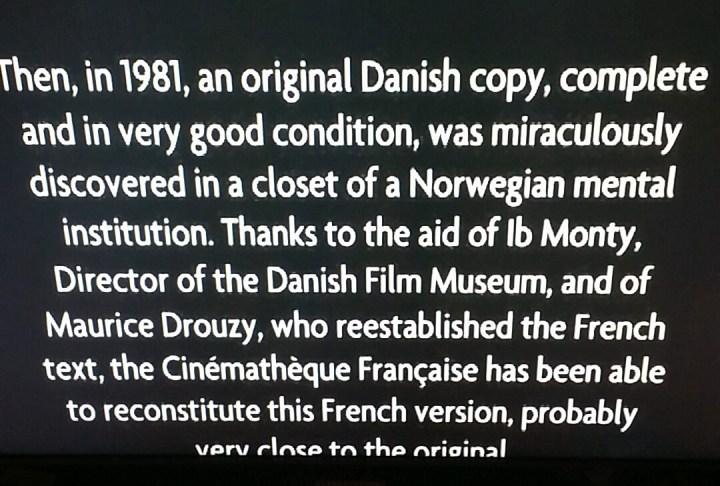
After several comedies (and other uplifting films) in a row, the time had come for something more disturbing. La Passion de Jeanne d’Arc (original title – check out our French skills!) tells the story of the trial and (spoiler alert!) execution of Joan of Arc. It was believed to be a lost masterpiece for many years until a copy was found in 1981, and check out where:
Ah! Norwegian mental institutions. Sources of lost art, every last one of them!
The film is a disturbing display of the time-honoured tradition of men standing in judgment of women. Joan, aged 19, is tried for heresy by the church after leading French troops by order from, according to her, God. The judges use torture and extortion to make her confess and lecherous guards ridicule and tease her, but she does not break. While a few of the judges are sympathetic and kindly towards her, most of them are treacherous and very “unchristian” indeed.
“What do you mean this hairdo makes me look demonic? I’m a fucking priest!”
Joan is played by Maria Falconetti who gives an outstanding performance. It is worth watching the film for her alone (as well as the gorgeous lighting). Whether Joan was a saint or just a mentally ill teenager is never made clear, but that is not really important. The villains are the priests and judges either way with their lust for power and fear of anything that might take some of that power away. And their fear and hatred destroy something beautiful and innocent.
This was a disturbing watch (whisky had to be brought out at one point), but well worthwhile. However, is this really what they used to show mentally ill Norwegians? I think we just discovered the origins of black metal.
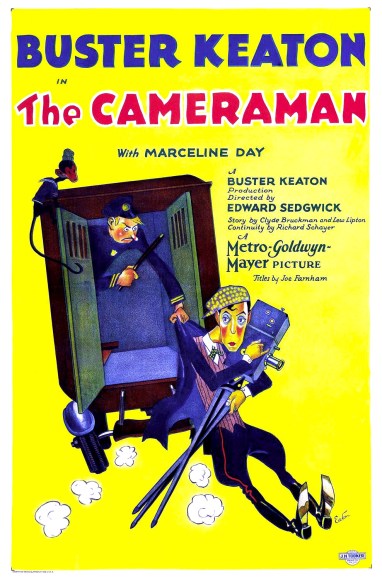
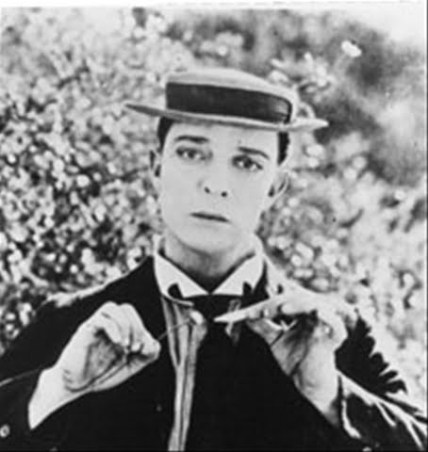
In this rollercoaster ride, the exquisite Buster Keaton portrays a slightly creepy hair-sniffing tintype photographer who falls instantly in love with a charming young lady played by the beautiful Marceline Day. He finds out that she works for MGM News Reel and promptly decides to get a job there as a cameraman. Which is kind of stalkery, but he is so nonthreatening that he gets away with it. He is also adorably uncoordinated with the camera, and slapstick ensues.
The characters are very likable. Probably for the first time (in terms of films we’ve watched for this project), the hero has fallen for a lady worth making good for. Sally is sweet and kind, and she tries to help him and give him advice when he accidentally double exposes all of his footage. She does not seem to care that he has very little money, and she appears to genuinely enjoy his company. No wonder, considering all the other douches creeping on her. At least Buster can do magic tricks!
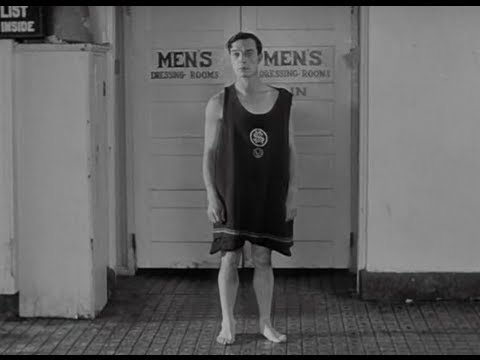
The physical comedy is this film is wonderful. There’s an amazing one-man baseball scene, a hilarious stair-running bit, a brilliant scene on a bus and a very enjoyable running gag with a police officer. As well as a delightful scene in a dressing room, which I’m sure we would have enjoyed even if he didn’t get undressed…
Oh, what is this picture doing here? Must have snuck in by mistake
Among its many merits, The Camerman has a shoot out scene which rivals that of Spaced (1999-2001), and there’s a bit with a monkey. It is considered by many Keaton’s last masterpiece as he lost creative control of his movies around this time and eventually descended into alcoholism. Which is not funny. But the film is. So if, like us, you have developed a major crush on Buster Keaton, this is a definite must-see.
Only the second Buster Keaton film and we’re already in love. He is so incredibly physically gifted, and when you combine that with his stony face you cannot avoid falling for him.
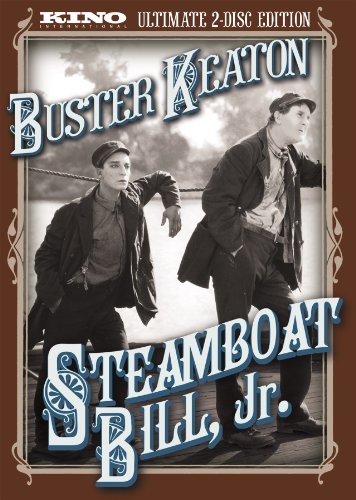
The plot is not overly complicated, but it works. A boat captain, Steamboat Bill, is being forced out of the business by a mogul named King(!). Simultaneously, the captain’s estranged son, the eponymous hero, is coming to see him for the first time since he was a baby (the son that is – not the father). Bill, Jr. is nothing like his father pictured or wanted which leads to one of the best make-over scenes in history.
Bill Jr.’s relationship with King’s daughter is also a source of discord between father and son. They have a kind of Romeo and Juliet-thing going on except with more slapstick and less murder and suicide.
If you ever need an excuse to watch Buster Keaton being awesome this is it (not that anyone needs an excuse). The main part of the film is just him doing spectacular stunts and showing off his (pre-B-Boy) power moves. It’s hilarious and awe-inspiring, and you can watch the whole thing here. It’s also educational; among other things we have now learned that coconut shells were the legos of the 1920s (in terms of damage to bare feet). If you need further prompting, Steamboat Bill, Jr. includes one of Keaton’s most memorable moments; the house falling-scene.
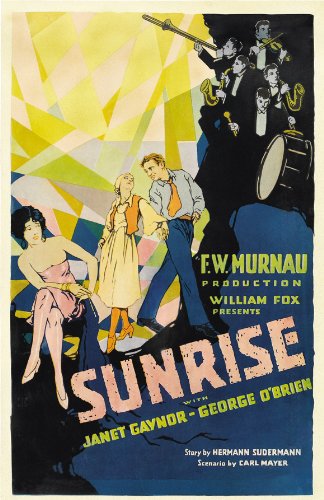
This was a new one for us. In a small town, a farmer is having an affair with a woman (read: femme fatale) who’s on vacation. Naturally, she suggests he kills his wife, sells his farm and goes to live with her in the big city. She has the whole plan worked out to the smallest detail, and he goes along with it.
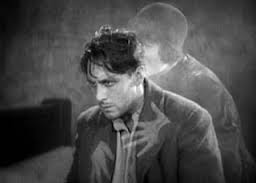
“Scary ghost mistress lady made me do it. Honest!”
The farmer’s wife knows about the affair (and is sad yet extremely passive about the whole thing) but when he suggests a boat ride, she seems to think that everything is fine once more. She is, of course, wrong (and naive – even the dog knows what’s up!). Once in the water, the husband attempts to go through with his diabolical plan. However, he cannot do it, and rows them to shore, where she promptly runs away (good girl!) and he chases after her.
Considering trying to murder your spouse will put a strain on any marriage, they deal with it in the best way possible: cake! Also flowers, wedding crashing, photography and dancing. And this is what I meant by saying it will toy with your emotions. The thing is, what he has done is despicable and unforgivable. Yet, the two of them are so sweet and adorable running around the city, drinking wine, dancing, chasing pigs and trying to put a head on a Venus de Milo statue, you end up wanting them to live happily ever after!
Nothing like attempted murder to spice up a marriage!
I suppose he realises that it was the lure of the exciting city that attracted him rather than the mistress or something to that effect, because he ends up doing everything the mistress talked about with his wife instead. And they’re adorable, which they have no right to be after what he almost did.
Now, the film doesn’t end here, but we don’t want to spoil the ending for you. It is worth watching in full, and you can easily find it on Youtube.
The film is beautifully shot with great use of light and darkness (which of course is very symbolic throughout). The wife is completely adorable (though annoyingly passive in the beginning), but the husband we’re not too sure about. The title suggests their humanity and that we shouldn’t judge them too harshly so we won’t. (It also suggests that the mistress is somehow less than human as she is clearly part of the story but it only involves two humans.) Sunrise: A Song of Two Humans is still a bit of a feelgood movie and worth watching for the photography scene alone. Or the dog. Whatever rubs your Buddha.
Another classic we’ve seen before (also the second film so far that we actually own on DVD), but it’s been years and this is definitely a masterpiece worth rewatching. It’s a sort of dystopian biblical apocalypse story which follows this old, worn-out narrative:
Boy sees girl; boy follows girl; boy finds out father is an evil tyrant; boy goes undercover among the oppressed; boy presents as Messiah to girl; girl is replaced by evil robot; evil robot instigates murder and riot; girl tries to save the children; girl is accused of being a witch; and you know how this all goes. If you don’t, we don’t want to spoil it for you. Yes, the film is almost 90 years old, but a lot of people have not seen it and they should!
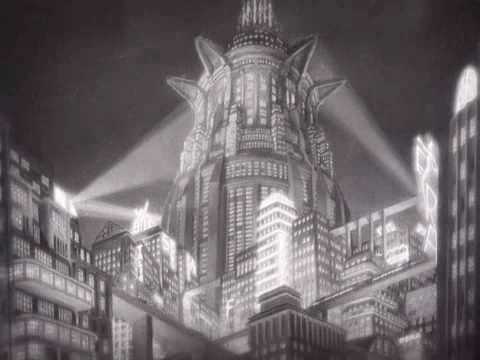
Nothing could possibly go wrong if you build a huge tower and call it “The New Tower of Babel”
This is a stunning piece of cinema in every sense. It is epic in scope, beautifully shot, superbly acted, has amazing choreography (especially the sequence with the workers in the beginning) and incredible visual effects.
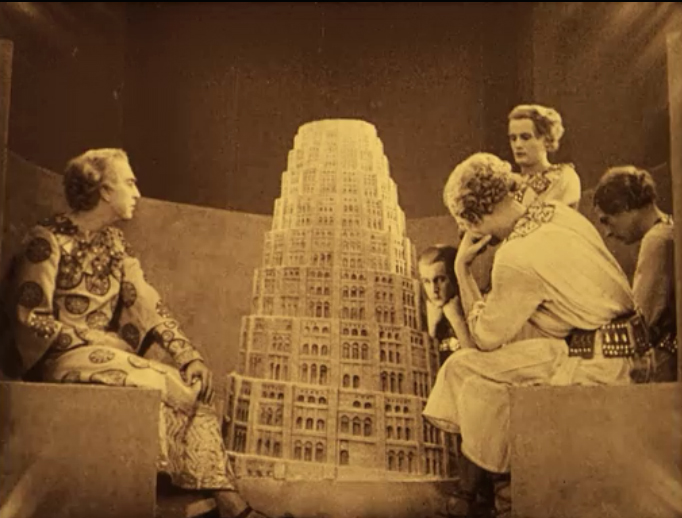
Much of the film seems an obvious source of inspiration for other works, and there are naturally many biblical allusions; to Babylon, the Great Flood, the seven cardinal sins, the Golden Calf and the Tower of Babel in particular.
“What is this? A Tower of Babel for ANTS? It needs to be at least three times bigger!”
One can spend months analysing this film, and perhaps one should, but we still have atleast 994 films to go (damn you, fluctuating list!) so we’re going to have to wrap this up. If you haven’t seen this film, you should. Go watch it right now! It’s on YouTube – you have no excuse.
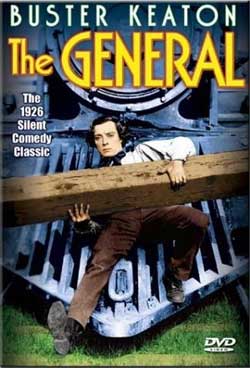
After the soulshattering experience of watching a penniless prospector becoming a multi-millionaire and getting together with the woman he loves in The Gold Rush, we needed something heartwarming to lift our spirits. What better then, than a comedy about a train engineer working against the odds to become a lieutenant in the Confederate Army during the American Civil War!
Buster Keaton plays Johnnie Gray, a train engineer who tries to join the Confederate Army during the Civil War but is rejected. His girlfriend, whose brother and father both enlist, believes him a coward and breaks up with him. A year later he gets the chance to prove himself when Union soldiers highjack a train and inadvertently kidnap Gray’s now ex-girlfriend. He follows them, finds out about the Union Army’s plans, rescues his girl and highjacks another train to get back and warn of the oncoming attack.
The stunts and train sequences in this film are spectacular, and the main character is likeable. Even the girlfriend isn’t completely useless, which was a nice departure from some of the other films we’ve watched so far. Also Buster Keaton has the best face ever in show business.
The General is funny, beautifully shot in places (such as when he sits on the side of the train and it starts running), and it has some amazing comedic and dramatic scenes on the moving train. Never has rooting for the Confederate Army been more fun!
We continue our epic quest through the silent film era with The Gold Rush (a.k.a. WHAT HAPPENED TO THE DOG??? Until someone can prove otherwise, we’re just going to assume it did a White Fang and found a lovely pack of wolves to hang with and lived happily ever after). This Charlie Chaplin classic deals with lighthearted themes such as poverty, betrayal, murder, potential cannibalism and bullying while incorporating plenty of humour, his signature physical comedy and a (probably disastrous) romance. It also has the best bear fight scene since (or I suppose before?) The Revenant (2015).
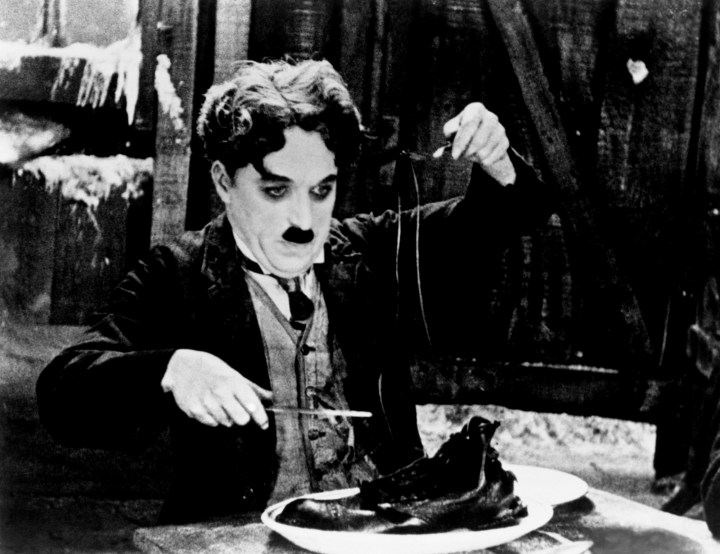
Chaplin’s the Tramp is a lone prospector during the gold rush when he gets caught up in a snow storm. He finds a cabin which is inhabited by a wanted criminal and the two of them, together with another prospector and the aforementioned dog, all try to ride out the storm. Lack of food leads to the criminal (and the dog) going out looking for supplies and also to the famous shoe-eating scene. We never see the dog again…
The Tramp survives the ordeal only to give up on the whole gold-finding-thing and retire to a nearby gold boom town where he meets bitchy dance hall girl Georgia and her rapey douchebag boyfriend, Jack. He of course falls in love with Georgia (despite her making fun of him and treating him like crap) and tries his best to woo her. Which takes us to the part where my sister and I both had a mental breakdown.
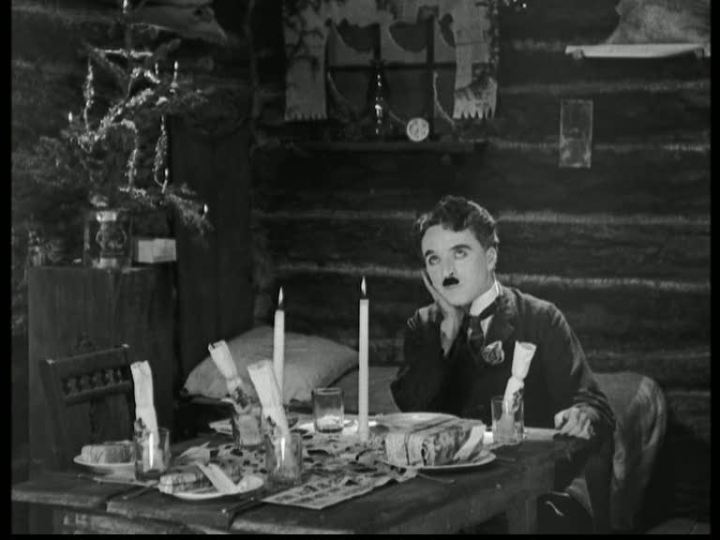
Bitchy Georgia and her even bitchier friends tell the Tramp that they will come for New Years dinner. He works and works to make the dinner perfect, but they never show up as they are busy laughing about him at the big party in the dance hall (which he could have gone to as well had they not lied to him). Just in case this didn’t inform the audience of just how worthless these people are, they then proceed to go over to his place to mock him even further. At this point we needed to take a break until we had stopped crying.
Pass me the kleenex. The single saddest image in the world.
Let me tell you about our childhood trauma. When we were young there was a sort of comedy show on NRK (Norwegian TV) every Friday called Go ‘Elg. In every episode there was a segment where they would show names of viewers whose birthday it was, and during this there was a video with a song where an old lady is celebrating her birthday and one by one her friends and family members call her to tell her they cannot make it. Now, the old lady was the male host in drag which was supposed to be funny, but this did not take away from the fact that this was the saddest video ever shown on television! Every Friday, around 17:30, we would sit in our living room and cry about this fictional old lady’s sad, sad birthday. The memory has never left us. This may be relevant to our reaction at this point in the film.
Anyway, once we were ready to return, things were looking up. Georgia did redeem herself a bit by seeming genuinely sorry about what they had done to the Tramp, and he himself stumbled on some good luck. Watch the film to see what we mean. But bring kleenex. Yes, it’s a comedy in many ways, but there is a sadness and melancholy to it which you cannot escape. It is well worth your time, though. And I’m sure the dog is living a happy life somewhere.
Safety Last! was a new one for us, although the above image of Harold Lloyd dangling from the clock was familiar. This is a classic silent comedy with some laugh-out-loud moments and some very real suspense. There are visual gags, hilarious jokes, neck-breaking stunts (though thankfully not literally), and some good instances of misdirection.
The plot is simple enough. A young man travels to the big city to “make good” before he can marry his girlfriend. He proceeds to fuck everyone over while lying to his delusional girlfriend about his success. OK, that may have been a bit harsh, but let’s look at his actions:
He tells his girlfriend he’s successful and makes lots of money
He steals(!) his best friend’s phonograph and pawns it to buy a necklace for said girlfriend
He doesn’t pay his rent because all his money goes to buying her pretty, pretty pressies
He gets his best friend in trouble with the law
He constantly brags (mostly about things that are not true)
He marries his girlfriend under false pretenses (still keeping up the charade that he is rich and successful)
Yes, dear, all managers have to climb the buildings they work in. It’s how it is in the city.
That being said, he is strangely likeable at times. He is very good at thinking on his feet and getting out of scrapes, and like Charlie Chaplin and Buster Keaton, Lloyd was a gifted physical comedian which is the source of many of the funniest moments in the film. The slapstick and minor stunts are often hilarious and compelling to watch. In fact, here’s a song in praise of Harold Lloyd (sung to the tune of Gaston):
Noooo oooone crawls like Harold,
no one squats like Harold,
no one puts on a coat and hangs up like Harold! (watch the movie to see what I mean)
As for the girlfriend, she is completely delusional and actually believes all his insane claims despite all the evidence to the contrary. It is also sad that he feels the need to lie to her and “buy” her love, but it is unclear whether this is her doing or his.
Still, the plot is secondary to the stunts – particularly the extremely suspenseful climb scene towards the end. In fact, when the protagonist climbed the building, my sister could not even bear to watch most of it. It was a very tense moment in our living room, I tell you!
It’s a comedy, so of course there’s a happy ending. They go off to be married, in true Shakespearean-comedy-tradition. Huzzah!
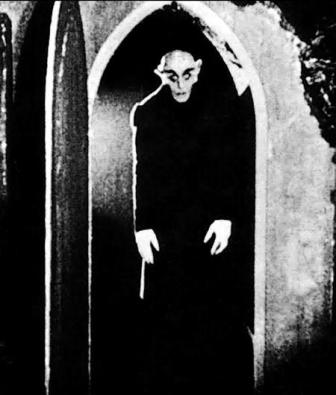
As many of you will know, Nosferatu is an adaptation of Bram Stoker’s epistolary novel Dracula (1897). However, due to copyright problems, the names and places had to be changed. Thus, the vampire is (the now iconic) Count Orlok, portrayed by (the equally iconic) Max Schreck. If there were ever a name more suitable for playing movie monsters, I do not know what it would be. This was one of the films I had on DVD, but it is also available on Youtube (though with the names changed to ones more similar to those in Stoker’s novel).
The plot should be well known to most: a young man (here: a happy-go-lucky simpelton) is dispatched to Transylvania to help a Count buy property in Wisborg/London. At the mention of Count Orlok/Dracula, the local villagers are frightened and beg him not to proceed on his journey. And rightly so. The Count turns out to be a vampire, feeds on the young man and then leaves him prisoner in his castle while travelling to Wisborg/London to eat/seduce his wife/fiancé. There is also a professor who does research on vampiric stuff, but he is not that important in this version.
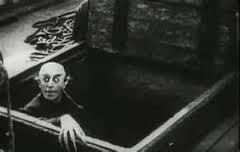
This is another German Expressionist film, although the sets are vastly different from those in Dr. Caligari. They are realistic rather than stylized, although the director plays a lot with light and shadows (as seen in the picture above) which we also saw in Caligari. There are nods to the epistolariness (is that a word? I’ll pretend it is) of Stoker’s work in that a lot of the intertitles are excerpts from letters and/or books.
Max Schreck portrays a very creepy Count, a far cry from Gary Oldman’s sexy, sexy beast in Francis Ford Coppola’s 1992 Dracula. Schreck’s character is more about the feeding and less about the ladies, if you know what I mean (although only a woman can lure him to his death). Count Orlok is very batlike (but not like Batman. More like an actual bat) whilst Oldman’s Dracula has more of the wolf about him. A sexy, sexy wolf…
In conclusion, this is an entertaining and spooky bit of cinema that everyone needs to watch at least once in their lives. We also recommend watching Sexy Oldman in Coppola’s 1992 Dracula. Cause Gary Oldman…
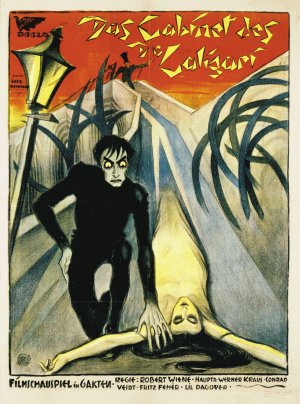
This was a rewatch for us, of a classic German Expressionist horror film, and as it’s from 1920 it is readily available on Youtube. The protagonist tells the story of horrible events that transpired during his and his fiancé’s dealings with Dr. Caligari and his somnambulist (aka sleepwalker) Cesare.
The make-up is excellently creepy and so are the costumes (good shoes, lady!). However, the biggest visual voice is the set. It is mostly painted canvas, and the lines, angles and sizes are all distorted, adding to the nightmarish quality of the film in general.
There is also some very good use of shadows, which is something we’ll see again in the next film, Nosferatu, if memory serves. And, as always, there are fragile women and swooning.
For a Norwegian viewer, being exposed to German is fun! As we both did French in school, our German has limited itself to such phrases as “Was ist das?” and “Ich bin ein wiener schnitzel,” which are not very useful. But watching this film in the original language confirmed the similarities between Norwegian and German, and we can now add to our German vocabulary such words as “somnambuler” which is sure to come in handy!
Despite this being a silent film, it is not inaccessible nor does it demand too much of the viewer. It shares many qualities with “modern” horror films, and it is a good example of great storytelling. It is entertaining, creepy, beautiful and grotesque, with a disturbing, eerie atmosphere throughout. All in all, we thoroughly recommend it!















 1000 Films Blog