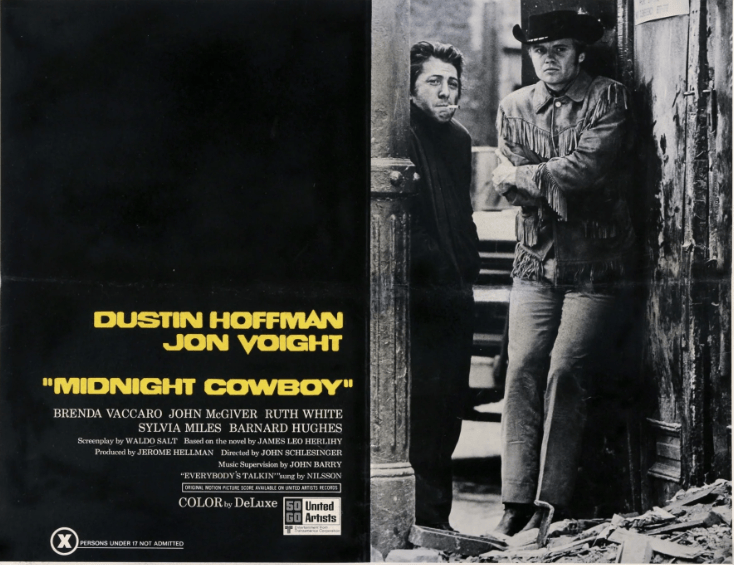
Starring: Dustin Hoffman, Jon Voight, Sylvia Miles, John McGiver, Brenda Vaccaro, Barnard Hughes, Ruth White, Jennifer Salt
Year: 1969
Runtime: 1h 53min
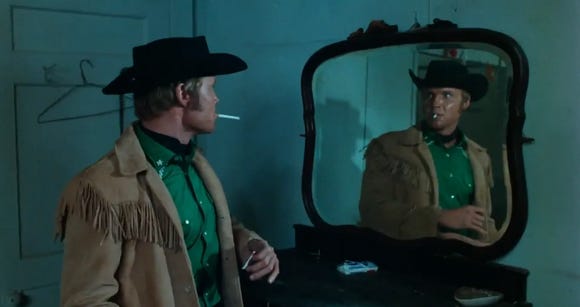
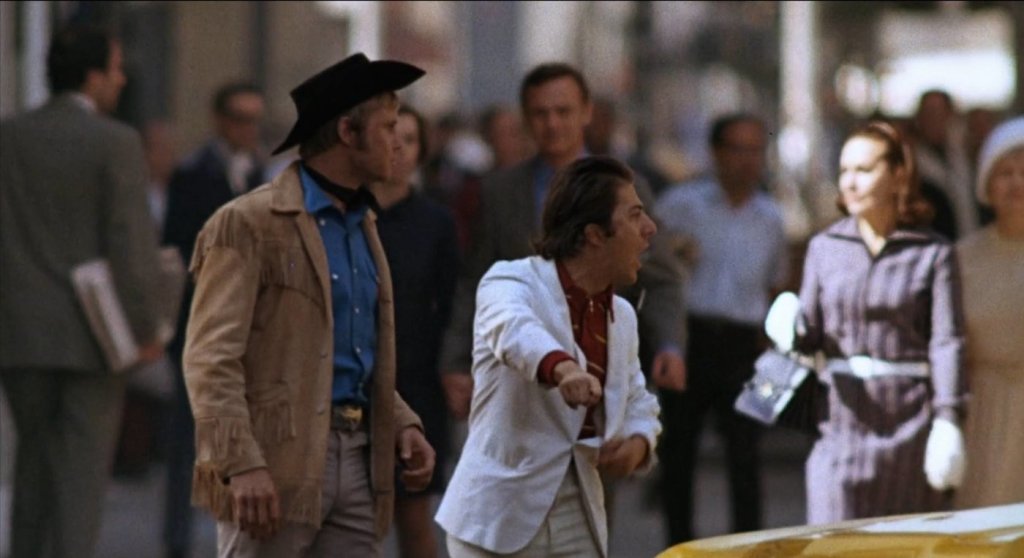
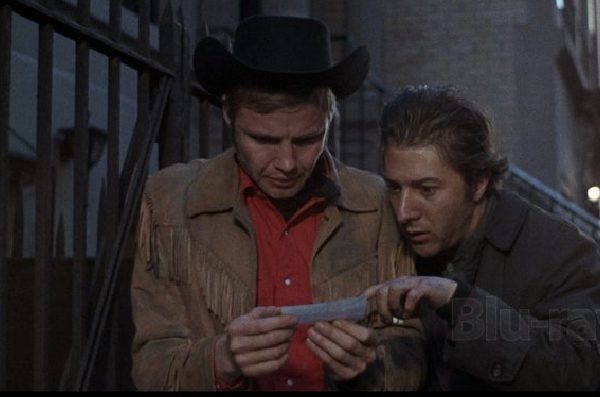
Joe Buck (Voight) is coming east to be a prostitute! The naive (and a bit simple) cowboy tries to establish a career as a “hustler” but is ridiculously bad at the business side of things. Then he meets Ratso/Rizzo (Hoffman) who offers to set him up with a pimp for a cut of the proceeds. What could possibly go wrong?
“Oh my God! I’m GORGEOUS!” (IYKYK)
This could be the setup for either a comedy or a tragedy. Fortunately for the movie, but unfortunately for our mental states, it definitely lands in the latter category. Finding rich women willing to pay for sex is a harder job than Joe imagined. but at least he develops an unlikely but kind of beautiful relationship with the equally weird and lonely outsider Rizzo, who dreams of going to sunny Florida.
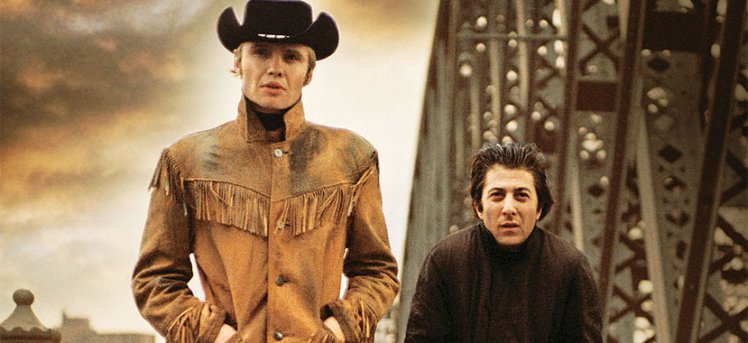
But for now, he’s busy walkin’ here
Joe’s past seems a Cimmerian cocktail of childhood abuse, religious trauma, sexual trauma and isolation. Homeless Rizzo is a tragic character as well, squatting in squalor (that’s fun to say ten times fast!) and trying to survive by any means necessary in an inhospitable city.
“So, I see a suave cowboy hustler.” “No, no, this is definitely a bachelor. Confirmed.”
We loved their relationship, the flashbacks and mysteries of Joe’s past, the dream sequences and the fantasies. Hansel and Gretel’s party seemed to us the quintessential ’60s New York party, and that whole sequence was exciting. Also, there’s a not-so-secret homosexual subtext here that’s really great. But we loved a lot of that in the worst way possible – this movie is just incredibly sad. That being said – it’s a classic for very good reasons and we would recommend it to everyone.
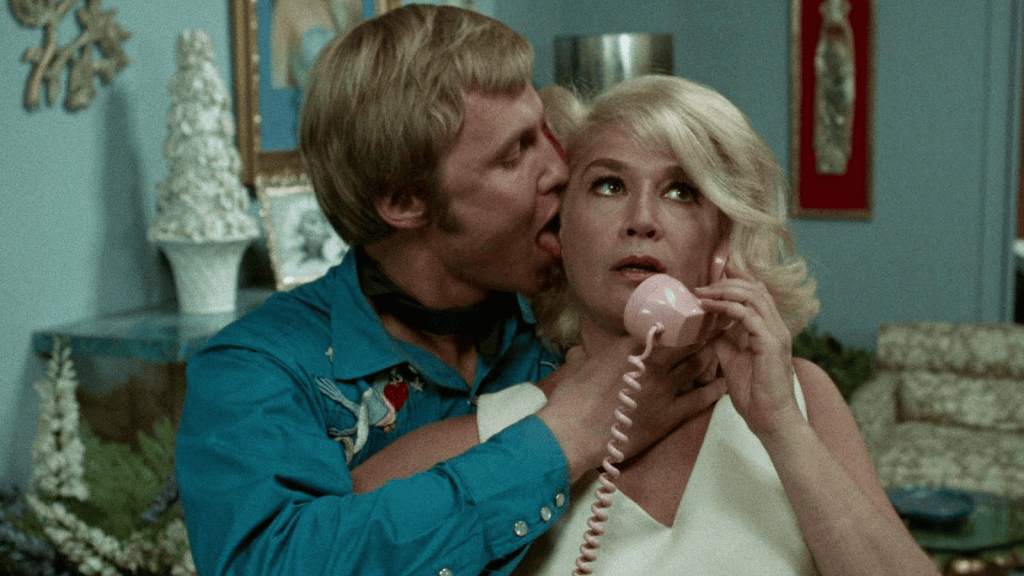
“Well Deborah, I’m not gonna pay him to lick my FACE!”
Again though Edgar, why do you make us watch these emotionally devastating movies? There have been three in a row that have gradually chipped away at our will to live. Reality is bad enough right now – we don’t need our entertainment to make things even worse…
Oh, all right, we forgive you. Mostly because these heartbreaking and depressing movies have all been very good. But also partly because you’re not actually forcing us to do this and we kind of brought it on ourselves…
What we learned: We need Jesus! More specifically, we each need a flashing Jesus statue in our bathroom.
Starring: Barbara Hershey, Catherine Burns, Richard Thomas, Bruce Davison
Year: 1969
Runtime: 1h 35min
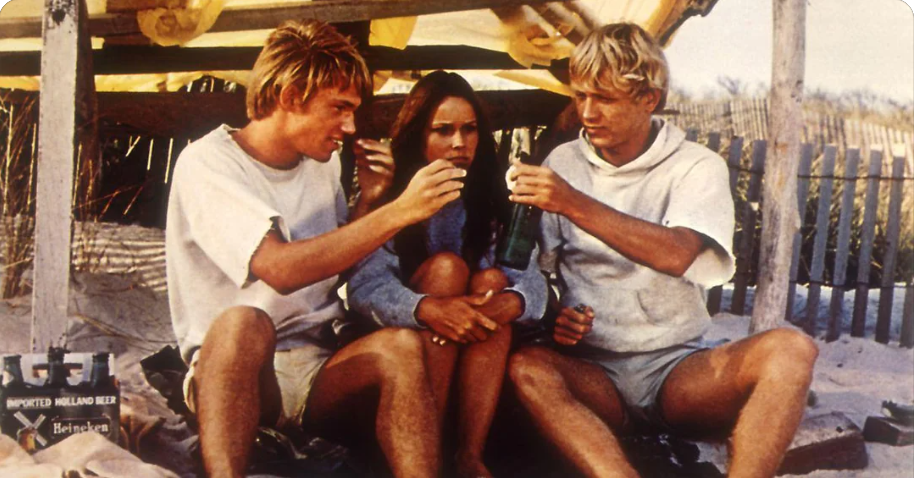
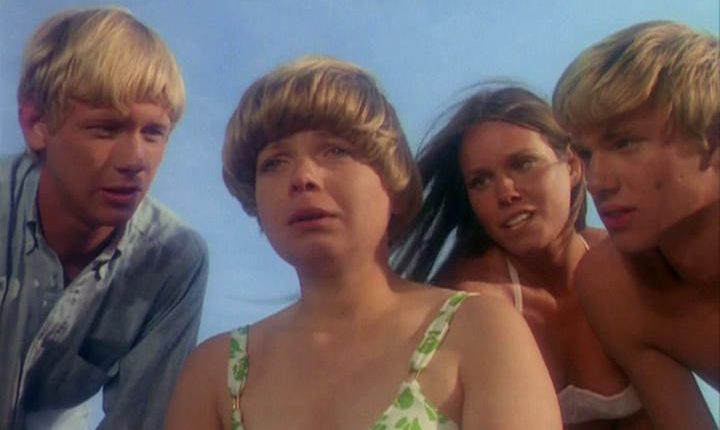
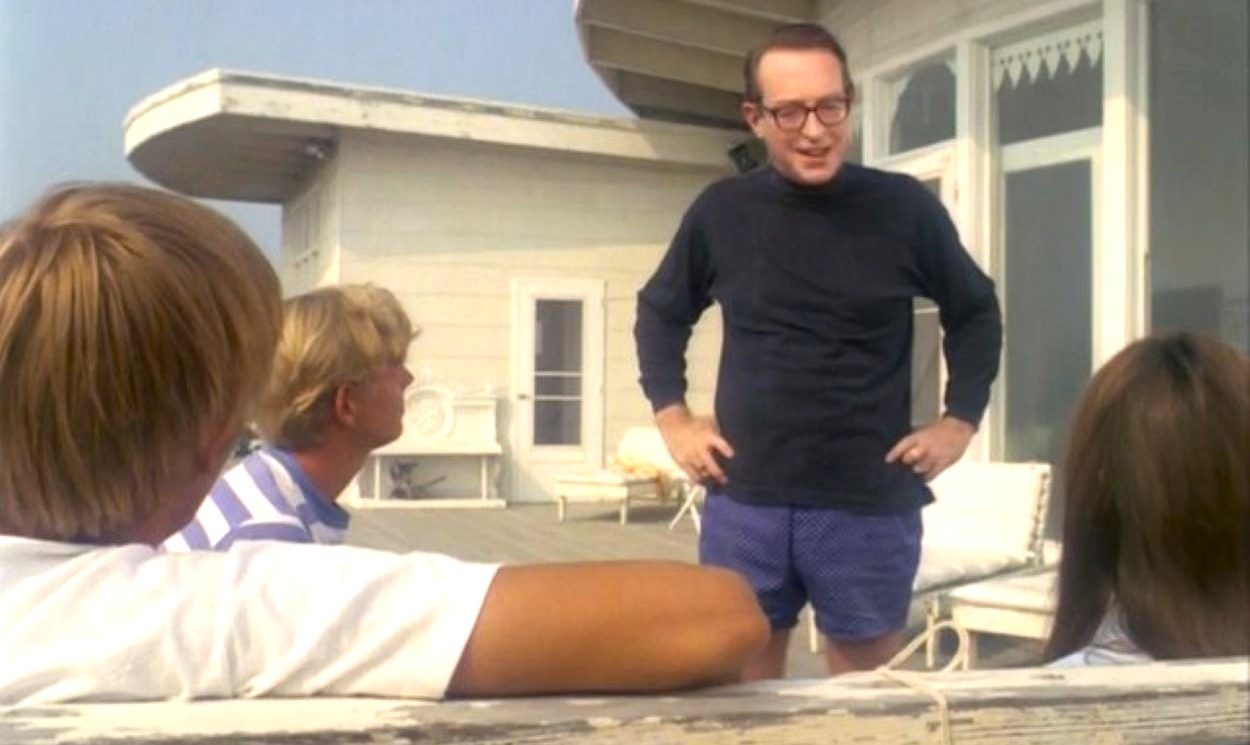
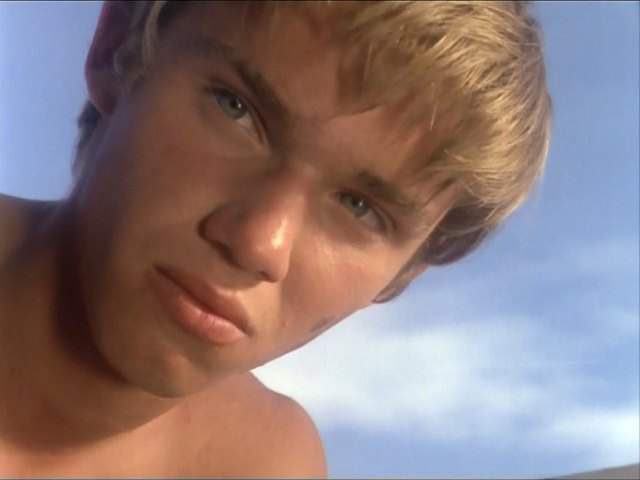
We continue our streak of feelbad movies with this horrible gem from Frank Perry. Teenagers Sandy (Hershey), Dan (Davison) and Peter (Thomas) meet on Fire Island one summer and bond over a dying seagull. After some improvised veterinary (ornithological?) surgery, Peter becomes Sandy’s new hero and the three of them become inseperable for the season. Both boys are smitten with the fairly uninhibited Sandy, and as they nurse the seagull back to health, get up to drunken shenanigans and laugh together about sexual assault (WTF Sandy’s stepdad???), they develop an unhealthy us-against-the-world mentality.
Fortunately, nothing has ever gone wrong when you mix horned up teenagers, drugs and alcohol, and no adult supervision with summer, sun and rivalry.
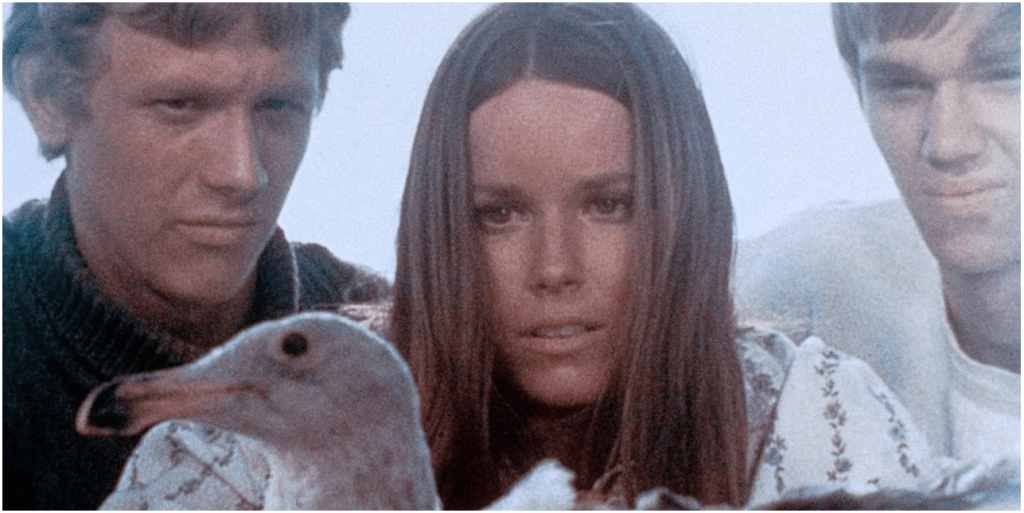
Sandy keeps the gull as a pet, but when it does what wild animals do and bites her, she takes it into the woods and brutally murders it. This is what we in the business refers to as “Chekov’s Seagull™” (ok, so it’s not really that, just your run-of-the-mill foreshadowing, but the phrase is just too good to pass up).
“Hot girls keep literary devices as pets”
The trio gradually start hanging out with Rhoda (Burns) who, despite seeming younger, or at least less worldly than them, is not initially intimidated by Sandy and her two minions. They follow the mean girl playbook of adopting her and including her just enough for her to crave their approval, but not enough to actually become part of the crew. More of a pet, really… The only exception is Peter, who seems to genuine like the new girl, at least most of the time.
When he isn’t busy liking Sandy and Dan’s approval more, that is.
We went into this blind, and were intrigued from the start. There are a lot of WTF-moments, such as the normalization of sexually assaulting young girls (both girls have stories about their parents’ friends that are NOT ok). Also, the three guys chasing after them after they’ve been to the cinema (to watch Bergman, it seems – our old dog would have loved it!) – they really decided to go after a girl flanked by two men in order to rape and/or rob her? Seems a bit much, even for rapists. Then there’s Sandy’s psychopathic tendencies and the seagull…
“I may or may not be sleeping with your mother, little girl, but that doesn’t mean a guy can’t shoot his shot?”
Last Summer is a very tense movie and it made us extremely worried, stressed and scared. Rhoda (and Catherine Burns!) was amazing though – despite her insecurities she was the only one who would stand up to Sandy and even in the end, she challenged her “superiority.” Sandy and Dan were just bullies, but we ended up hating Peter the most. He followed along with everything the other two decided to do but then felt really bad afterwards, ok? Like, he’s actually a really nice guy, you see. He didn’t really mean the things he did, he swears. In fact, he didn’t even reeeeally do any of it, he just sort of… participated. But not actively. So you can’t exactly blame him, all right? The other two initiated everything, so they’re the bad guys, really. Honestly, he’s a victim too! Really!
“Besides, if (other) people don’t want to be victims, they should stop putting themselves in vulnerable positions. Such as hanging out with their friends. Or trying to find love through dating ads.”
What we learned: If you keep doing horrible things but then feel bad about them afterwards, it actually changes nothing. You are the literal worst.
Starring: David Bradley, Brian Glover, Freddie Fletcher, Lynne Perrie, Colin Welland, Bob Bowes
Year: 1969
Runtime: 1h 51min
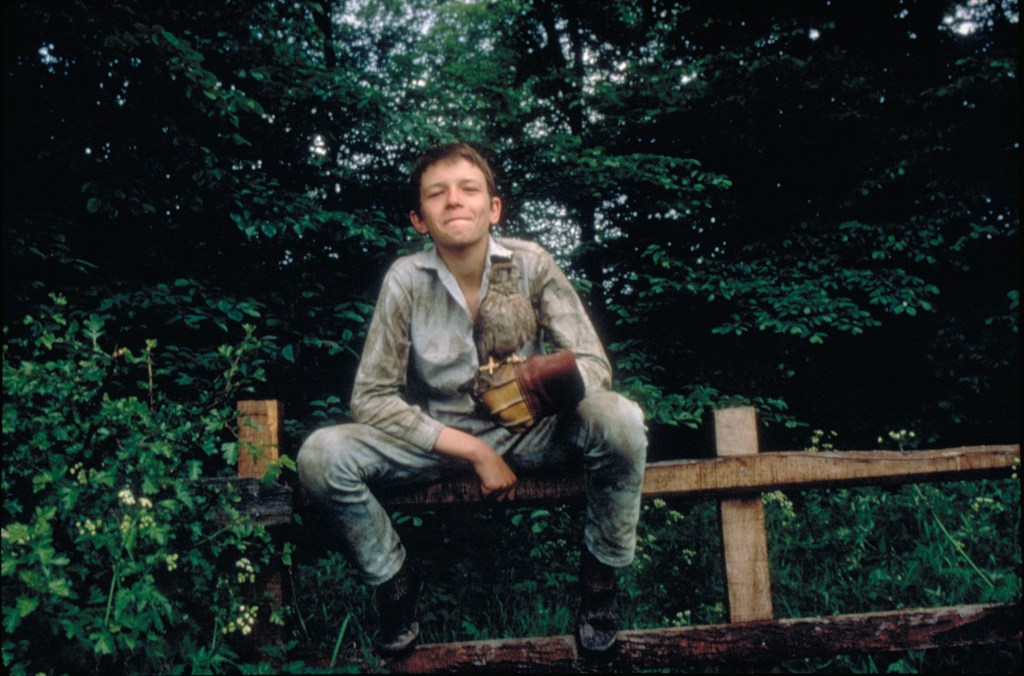
Billy Casper (Bradley) is a working class boy who lives with his mum (Perrie) and his asshole big brother Jud (Fletcher) in Yorkshire. When he’s not in school, he helps support the household through his paper route and petty crime. He’s a cheeky little bastard, but overall very charming and likeable. He is also the poster boy for ADHD.
Literally the poster for ADHD* *citation needed
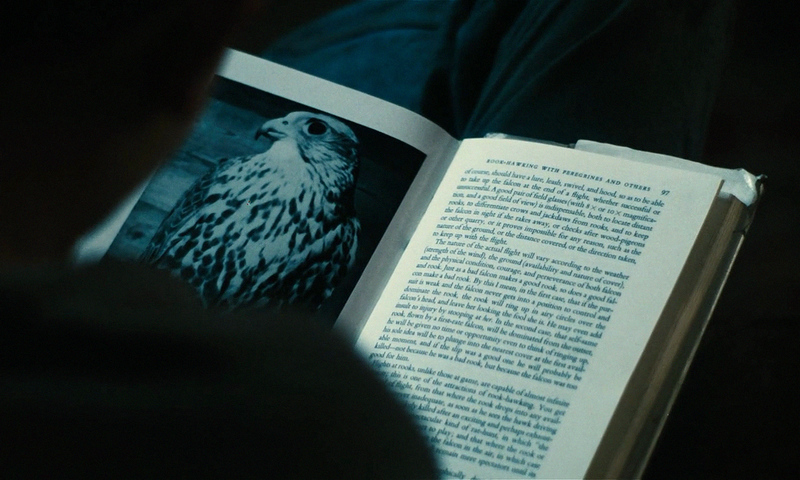
Billy decides he’s in his kestrel era when he comes across a nest of the birds. After an unsuccessful attempt at conning a librarian into giving him a library card, he ends up (quite elegantly) stealing a book on falconry from a book shop instead. And then he starts studying.
The librarian clearly did not know about the code of librarians everywhere – if a child wants to learn, you let them fool you into giving them a library card. (There is of course the possibility that she is a Night Vale Librarian… In which case Billy’s lucky to escape with his life.)
Now, Billy may not be the brightest or most attentive student in school, and several people tease him for not being able to read, but when that hyperfocus kicks in it really kicks in. He reads diligently, kidnaps (chicknaps..?) one of the young kestrels and, with the book to guide him, starts training her.
Ah – the time before YouTube tutorials! Just a boy and his stolen book.
One of his teachers, Mr Farthing (Welland), picks up on his student’s new obsession and gets him to explain and teach his process to the other kids in his class. This in particular is a lovely scene which seems to be the only time Billy has ever been given any sort of praise and positive attention in school.
Thank the gods for Mr Farthing. Every other faculty member in the film is perpetuating the harmful stereotype that all teachers are failures, sadists, making up for being losers in school themselves, or just there to relive their glory days as they never amounted to anything. In reality, that is only true of some of us…
OK, Edgar, we know we haven’t exactly been vigorous in our blogging and we may have been letting you down a bit, but why are you determined to break our hearts like this??? We swear we’re good people deep down. Just easily distracted and somewhat lacking in the follow-through department. But we don’t deserve to be hurt this way…
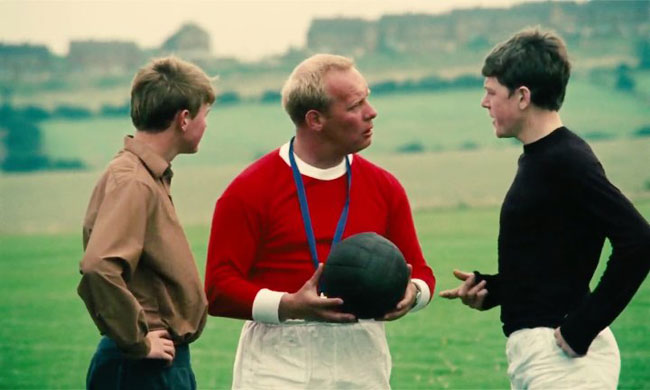
Low key the best football scene in movie history though. We were more engaged than during the World Cup!
That being said, we loved a lot of things about this movie. Billy was awesome, Mr Sugden (Glover) was hilarious in the absolute worst way possible, the aforementioned scene where Billy is given the stage in class was beautiful, and there was a lot of good people and things sprinkled in amid all the horrible and depressing stuff. The overall feeling after watching it isn’t entirely bleak either – there is a lot of hope here. Still, the second half of the movie had us increasingly stressed as we suspected a happy ending was not forthcoming… Is it worth the watch? Yes, definitely. However, be prepared to feel many things.
Don’t worry – Billy and Kes became a rich and famous falconry act and lived happily ever after. Cheeky bastards.
What we learned: We stand by our decision that this movie should be titled Exploring ADHD With Kestrels.
Starring: Jenny Agutter, Bryan Marshall, Clare Sutcliffe, Simon Ward, Gregory Phillips, Lana Morris, Billy Russell, Madge Ryan, Michael Feast
Year: 1969
Runtime: 1h 45min
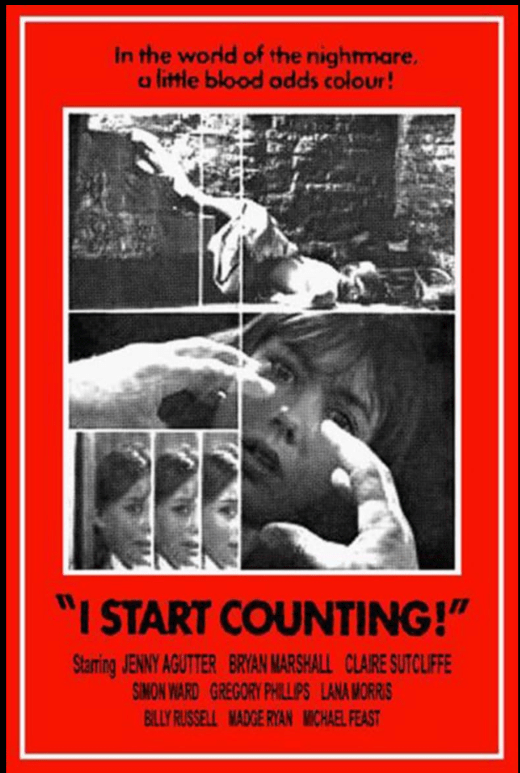
The List has once more been updated, and thus our numbering has changed. For details on how we deal with this, look here. While we skip back a couple of numbers, we’re still in 1969, and today we’re serving up a movie we had never heard of (which honestly says more about us than the film) but that we ended up enjoying very much indeed: I Start Counting. (Also, as an added note, we’re having more and more trouble finding movie posters in landscape format, which works a lot better in a blog context than the more classic format above. We rue the day lobby cards went out of fashion…)
Word of warning – the creep factor in this is fairly high at times…
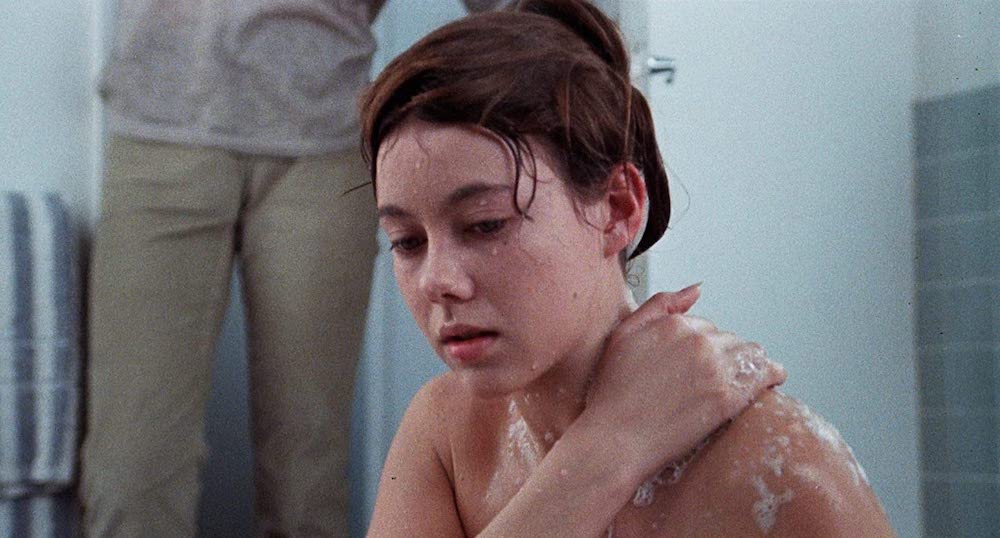
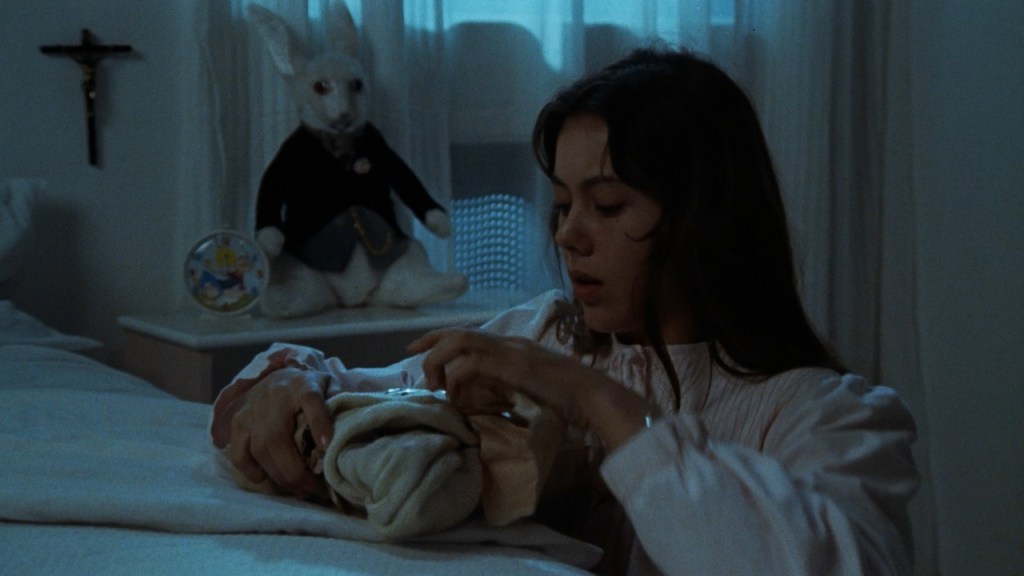
15 (or 14..? De lærde strides [Norwegian expression meaning something along the lines of “the scholars (in this case, the internet) are not in agreement.” Did this minor detail deserve such a long digression? Probably not. But you’re welcome for the language lesson. Now back to our regularly scheduled broadcast]) year old Wynne (Agutter) lives with her adopted family and haunted stuffed rabbit. Her hobbies include Catholicism, brushing her hair, and having secret and inappropriate sexual thoughts about her 32 year old “brother” George (Marshall). We did mention that she’s adopted, right..? Somehow, that fact only makes it slightly less disturbing…
The teenager might be the one with the crush, but honestly the 32-year-old doesn’t do much to make their relationship more appropriate…
As if the fact that the object of her sexual awakening is part of her immediate family (and over twice her age) didn’t complicate things enough, Wynne begins to suspect that George is also the local serial killer, responsible for the deaths of several young women in the area. Particularly the area surrounding their former residence, where a lot of the action takes place. She starts investigating, occasionally aided by her best friend Corinne (Sutcliffe). Can this messy situation ever be happily resolved?
“I take it this suspicion immediately quelled any romantic feelings you’ve been nursing for him, right?” “Weeeeeeell…….”
I Start Counting was a great watch! Jenny Agutter is amazing as Wynne, and we also thoroughly enjoyed Clare Sutcliffe as her bff. We loved the portrayal of teenage girls impatient to grow up, although their focus on older men was creepy af. Then again, the boys their age weren’t exactly positively portrayed in the movie either, so we can sort of see where they were coming from. Additionally, we loved Wynne’s other brother Len the Stoner (Phillips) (and his friend Jim [Feast]), the school girls during the priest’s visit (“What does the pope have against the pill?”), the soundtrack, drunk Wynne, and most of all the teenage dynamic between the two best friends.
No, but what DOES the pope have against the pill though???
We always enjoy a good murder mystery. However, in this case, the murder part was definitely the least interesting thing about the film, which says a lot about the rest of it. This movie is intriguing, occasionally tense, often hilarious, and overall a good time, with some great performances. Whether you’re here for crime or the coming-of-age story of a young girl (both of which could easily be classified under “horror”), I Start Counting is definitely worth the watch.
We mentioned the haunted (or possible possessed, cursed, bedevilled, damned or similar) stuffed rabbit, right? We spent half the movie scared that Wynne might accidentally spill blood on it and bring it to life in a sort of Dusk Till Dawn/Parasite-esque genre shifting twist. We will not spoil anything by revealing more…
Have you ever wanted to watch a reinterpretation of Oedipus Rex, but with drag, drugs and documentary-style digressions? Well, you won’t believe what we have for you today! (Also, if you know a word on “d” which means nonlinear, let us know at 1000filmsblog@gmail.com. We had to make a terrible choice between alliteration and accuracy in our opening line.)
Don’t worry. We’ll take a long, hard look at ourselves in the mirror.
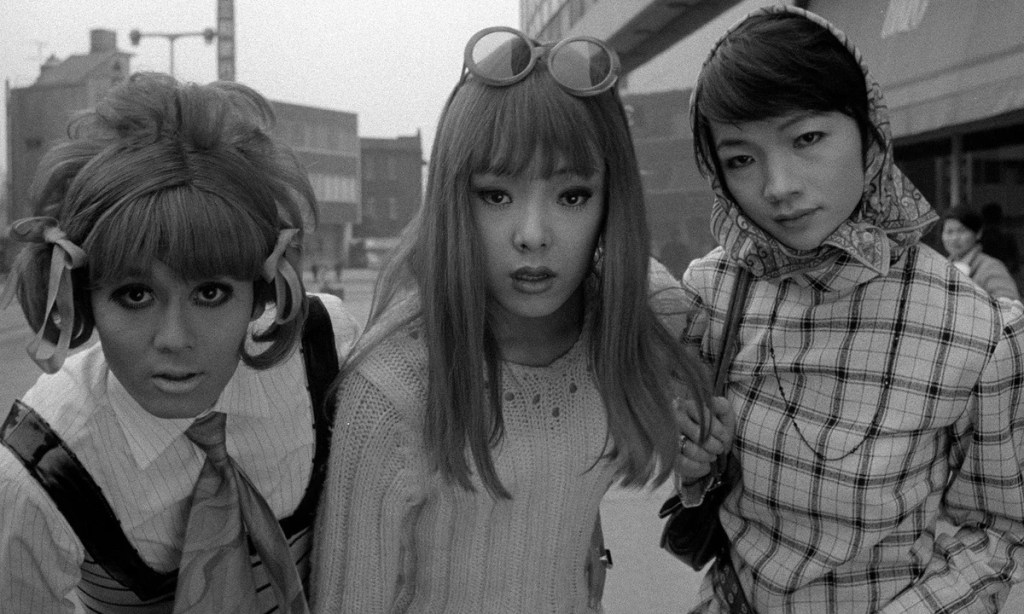
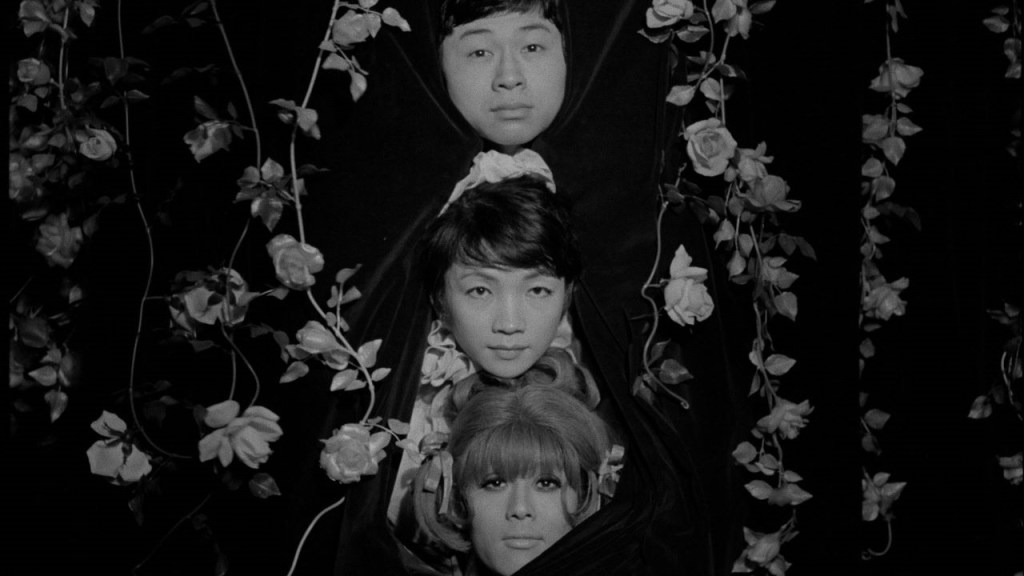
Funeral Parade of Roses is a movie that should be experienced, so we’ll keep our summary brief. In short, we’re in Japan in the swinging sixties, moving through the gay-, trans- and drag-scene(s) via nonlinear storytelling, interviews and intertitles. The main narrative follows Eddie, a gei boi who works at a bar in Tokyo and is sexually involved with its manager, Gonda. Gonda is also in a relationship with the madam of the club, Leda, who is basically Eddie’s boss/superior. We’re introduced to several side characters from Tokyo’s underground culture – young people from all walks of life who take drugs and make art while enjoying the sexual liberation of the 1960s.
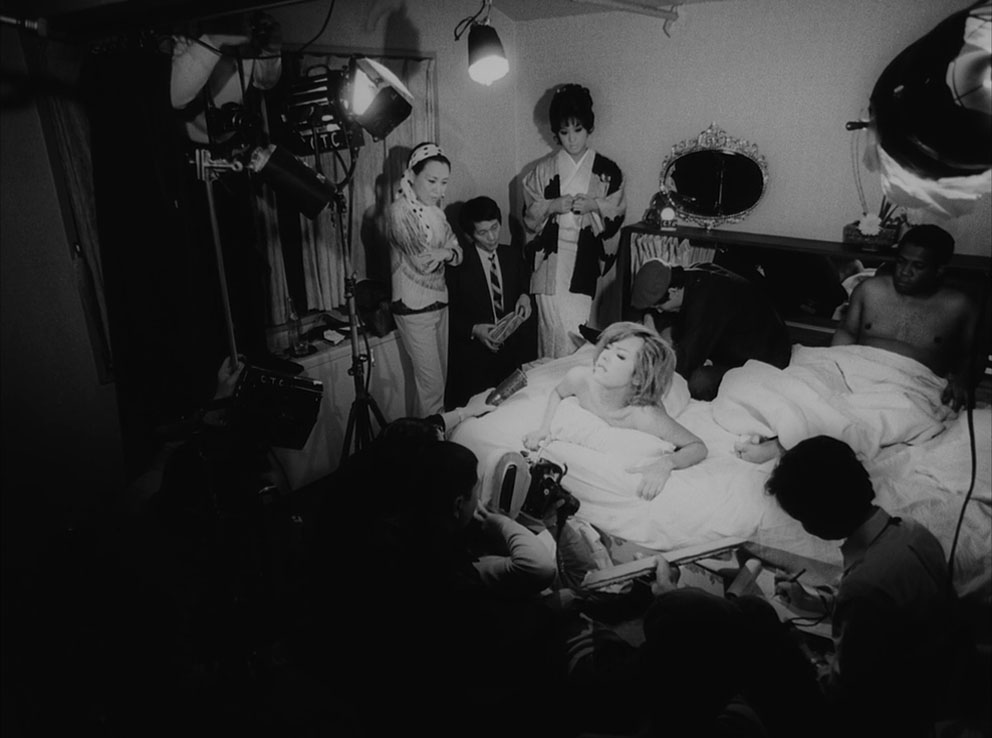
Pictured: an awkward glimpse behind the scenes of a sex scene. We particularly enjoy the jealous partner of one of the participants lurking in the corner and judging everyone’s performance.
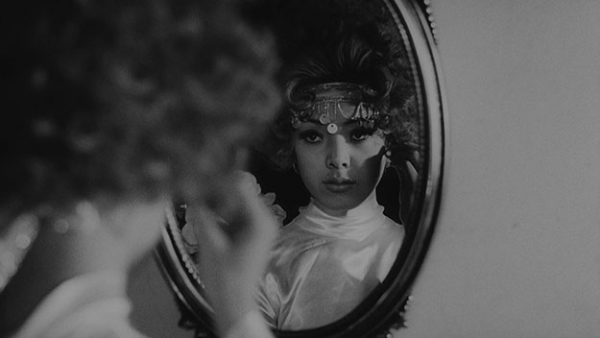
This movie is very experimental, very ’60s and very stylish. It’s a fascinating look into queer culture in ’60s Japan, and we loved the way it blurred the line between reality and fiction. It’s beautifully shot, and Pîtâ’s Eddie in particular is compelling to watch. We also loved Guevara with his feux beard, the soundtrack, the editing and the general vibe. Not to mention the twist!
“Are you serious??? You’re going to mention the twist? Motherfu…”
Funeral Parade of Roses is cool, subversive, bold and brave for its time. Though, to be completely honest, if we met the group of artists depicted in this movie today, we’d be terribly bored by their drug enduced self indulgence. Times have changed a bit in that regard… We still found the film both moving and engaging. And experiencing new sides of drag and queer culture from a non-western point of view is always refreshing and interesting.
The decapitations were unexpected though. Did not see that coming at all.
What we learned: Something about absent fathers, maybe? And that drag and gender expressions come in many forms.
MVP: Eddie. And her wig game. Or possibly Sofokles.
Starring: Peter Cushing, Veronica Carlson, Simon Ward, Freddie Jones, Thorley Walters, Maxine Audley, George Pravda, Geoffrey Bayldon
Year: 1969
Runtime: 1h 41min
Can you ever get enough Frankenstein? The only acceptable answer is “Hell no!” So off we go again.
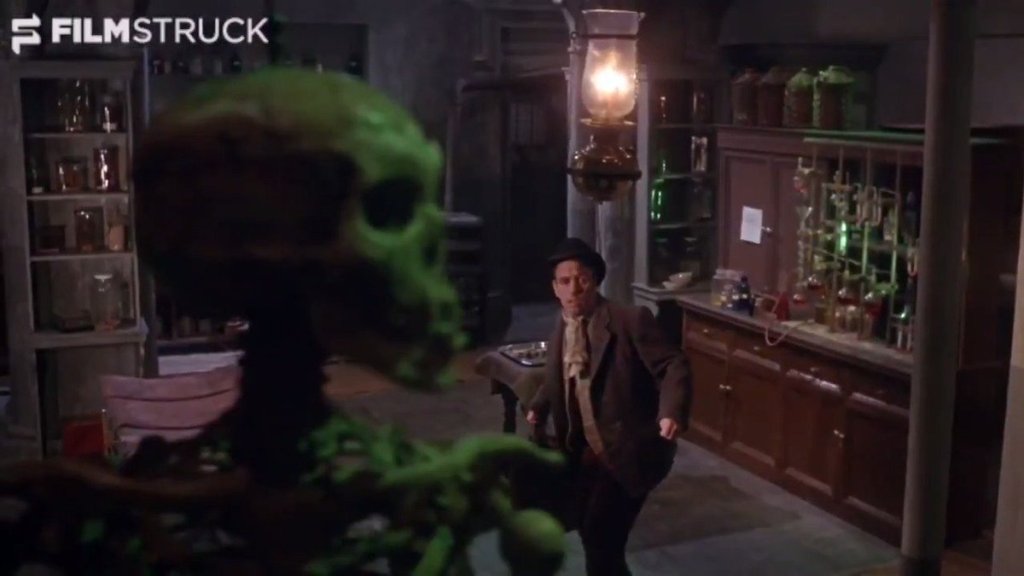
Baron Frankenstein (Cushing) is up to his usual hijinks, collecting human parts to reanimate the dead. However, one cannot live off of already deceased body parts alone – sometimes one requires fresher ingredients. So a-slaying one must go! Unfortunately, an ill-fated burglar has chosen the Baron’s hideout for his own latest exploits, and when the hapless thief stumbles across Frankenstein’s current project he panics and notifies the authorities. Thus, the Baron must abandon his work and find a new base of operations.
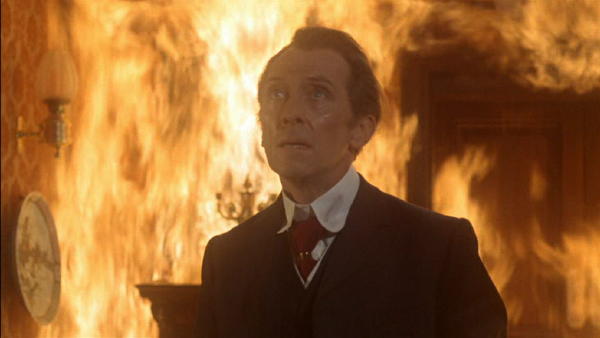
Pro tip: if you break into a secret lair and this is the style of decorations, don’t stick around. It’s never worth it. Well, maybe once, but the odds are not in your favour.
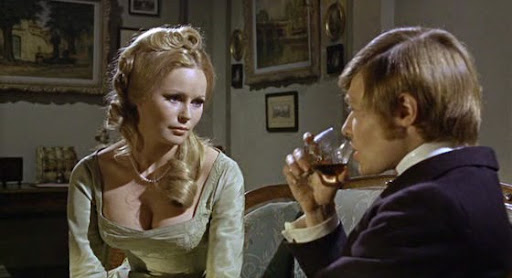
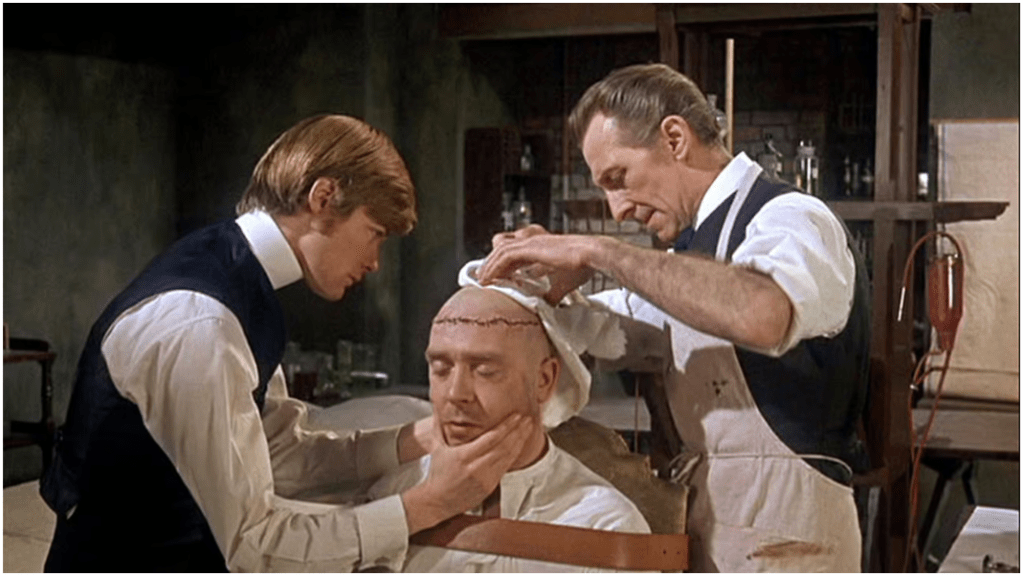
Frankenstein takes a room in a boarding house run by Anna Spengler (Carlson). It takes him about 5 minutes to alienate the other lodgers. Then another 5 minutes to find blackmail material on his landlady and her fiancé Dr. Holst (Ward), which he then uses to usurp control of her house as well as procure the services of Spengler and Ward. As is tradition, the Baron’s obsession is still the idea of cheating death, but his new version of this is to develop a method for brain transplantation, allowing brilliant men (let’s face it…) to continue their lives even after their bodies no longer function.
“In hindsight, perhaps we should have tried to hide our shady drug dealings from our random, unvetted tenants at least a tiny little bit…”
This is quite a dark version of the legendary character. In fairness, the original novel is also very dark, but one can argue that at least Frankenstein’s motives were fairly good, and he wasn’t overly cruel to anyone. Except his creation… Ok, so he’s always been a cunt. But this incarnation is cruel and sadistic, which isn’t always the case in portrayals of Frankie-boy.
He may not always know where his next brain is going to come from, but his heart is usually in the right place! (We’ll see ourselves out…)
Is that the justification for the rape-scene, we wonder? Because that felt very gratuitous and out of character. The only reason we could come up with (once our theory of possible impregnation and thus a continuation of the legacy or similar turned out to be wrong) was that the scene was included to really cement how horrible this man is. Let’s face it – Peter Cushing is going to have us rooting for him unless his character is quite literally the worst! We were happy to watch him murder, kidnap, and perform illegal medical experiments – a man has to have his hobbies, right? But we draw the line at rape, and that is where he lost us and our sympathies turned to his opponents instead. In that respect, we suppose the scene was not so much gratuitous as it was neccessary to snap us out of our adoration of the magical being that was Peter Cushing.
“I have seriously broken the law!” Actual quote from movie
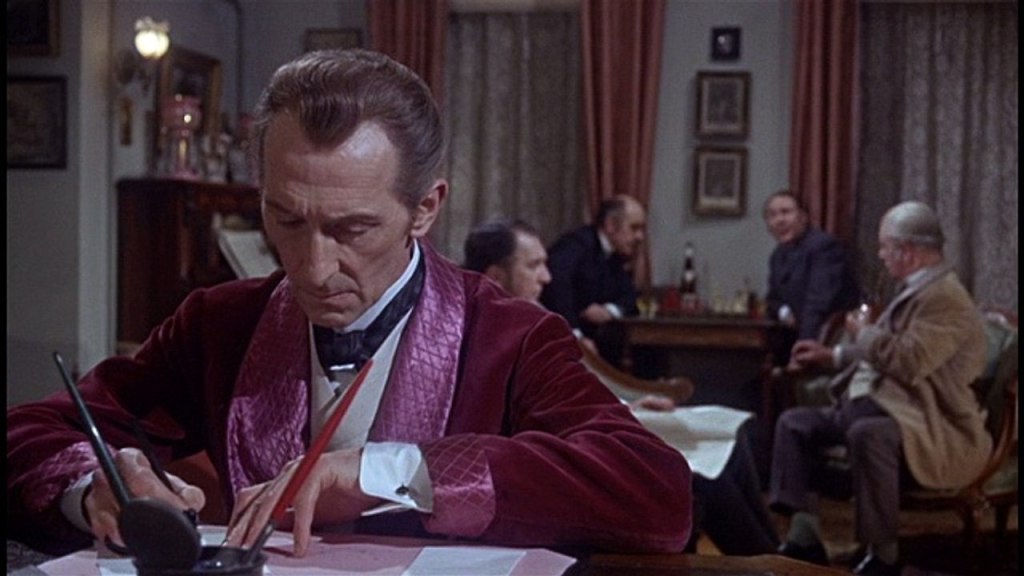
We absolutely loved this. The opening scene with the unfortunate Dr. Heidecke and the almost equally unfortunate burglar, the light and shadow-work, Cushing in all his glory (and his smoking jacket), the exposition dialogue, Frankenstein’s arrogance and demeanor, the costumes (the hat game was especially strong!), and the investigators led by Inspector Frisch (Walters) were all amazing, and we enjoyed every second of it. Except the rape scene. But we have landed on the side of it being necessary as nothing less could have turned us against this Baron.
It’s a scientific impossibility to thoroughly hate a man in such a fancy smoking jacket.
What we learned: Don’t bury bodies by a water main.
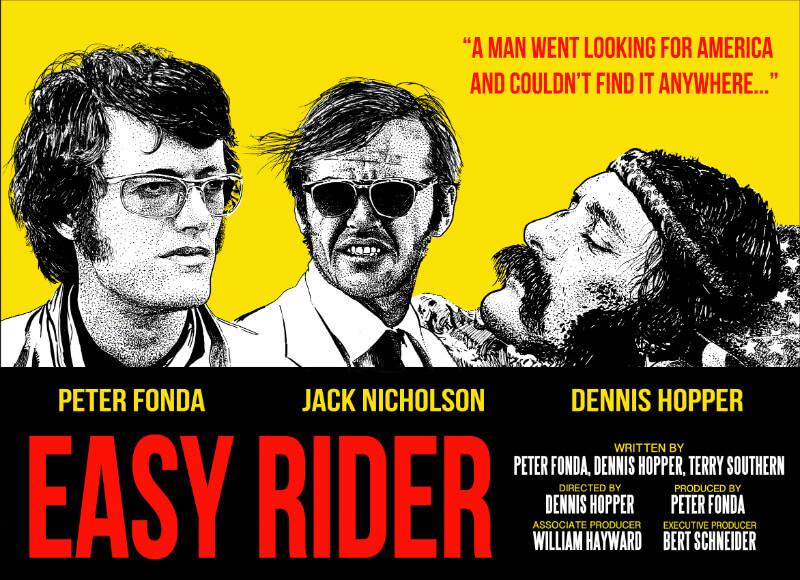
Starring: Peter Fonda, Dennis Hopper, Jack Nicholson, Toni Basil, Karen Black
Year: 1969
Runtime: 1h 35min
So, our plan was to post this very quickly after Butch Cassidy and the Sundance Kid, as the two are a natural double feature. Then suddenly Easter was upon us, and if you know anything about Norwegian Easter you know that we were bound by centuries old oaths to leave civilization, huddle up in a cabin somewhere with no electricity or wifi, and eat our weight in pølse and kvikk lunsj while reading crime novels. In other words, writing a post was out of the questions unless we wanted to carve it into a tree or rock in rune format. Which we did. But have no proof of since we had no electricity and thus our phones died before our masterpiece was done. Alas! Still, we shall attempt to reproduce our musings in digital form here.
Let’s ride!
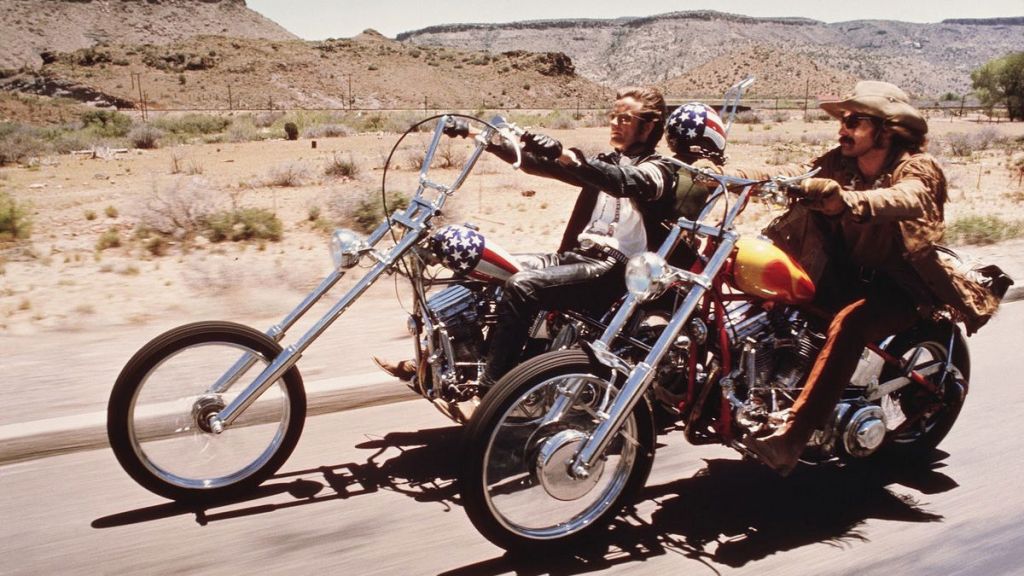
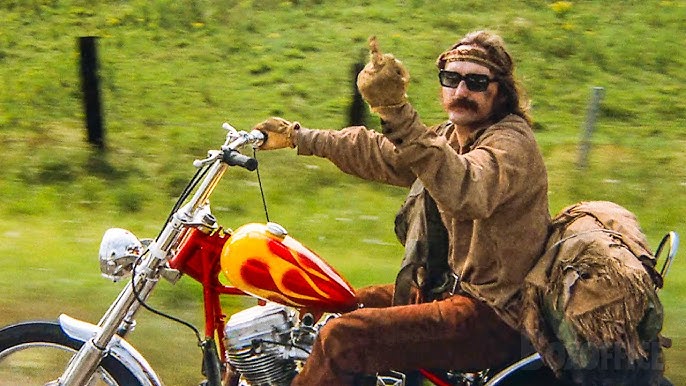
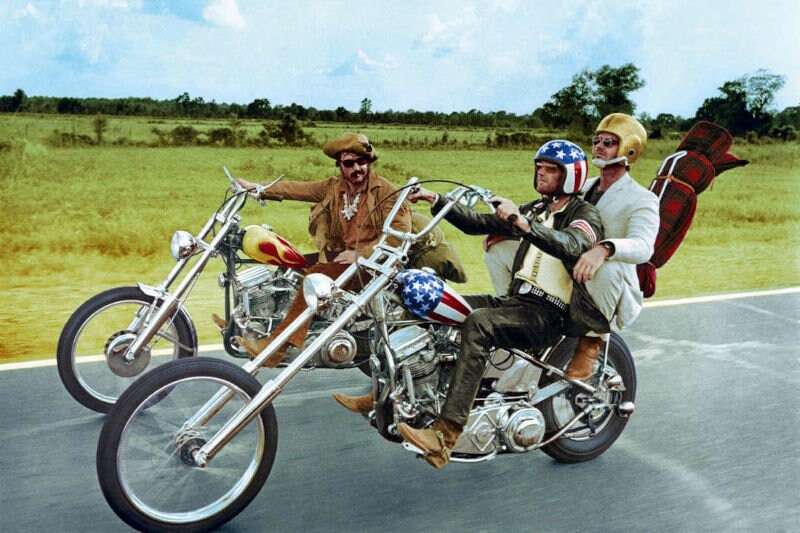
Billy (Hopper) and Wyatt (Fonda) are born to be wild. And free. They are fond of drugs and less so of helmets. After a successful drug deal they take their now large amount of cash and ride their motorcycles towards New Orleans, destined for Mardi Gras. Along the way, they encounter characters and adventures aplenty!
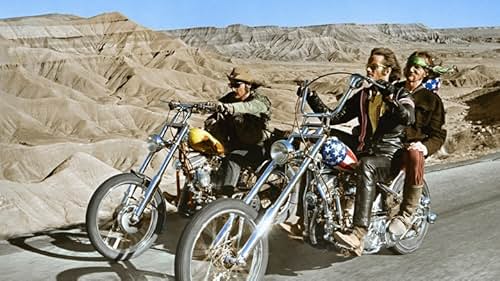
It’s not that they don’t own helmets. Protective accessories just kind of mess up their vibe, you know.
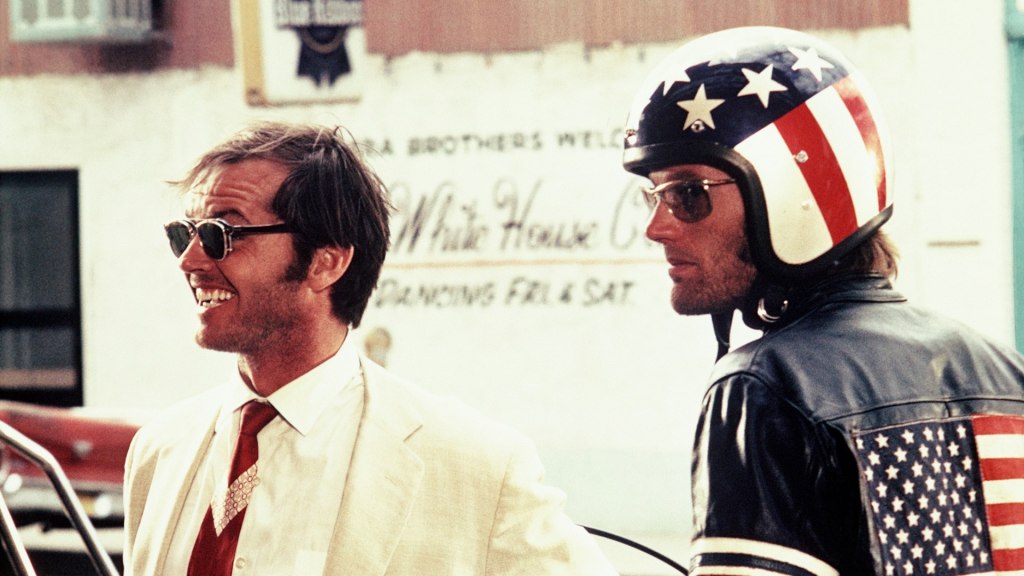
Among their adventures are a mysterious hitchhiker who brings them to a hippie commune. After that, they are arrested for parading without a permit, which seems like a rule made up solely to suck all the fun out of the world. Still, their stint in the local jail is not for naught – they hit it off with fellow inmate George Hanson (Nicholson), an alcoholic lawyer well known to local law inforcement. After they are all released, Hanson tags along towards Mardi Gras.
He’s just happy to be included, bless him!
While the travellers encounter helpful and kind people, such as the hippies and the cowboys that lend them tools and a place to fix their choppers, not everyone takes kindly to hairy, freewheeling strangers passing through their towns. Because this America is not the land of the free so much as the land of the easily threatened and viciously cruel…
Is this rude? Sure. Was it justified? Absolutely. Was the retaliation in proportion to the offense? Not even adjacent to the same realm.
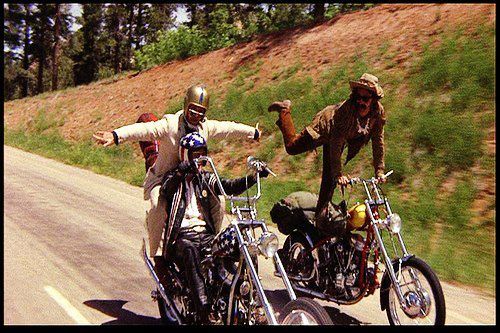
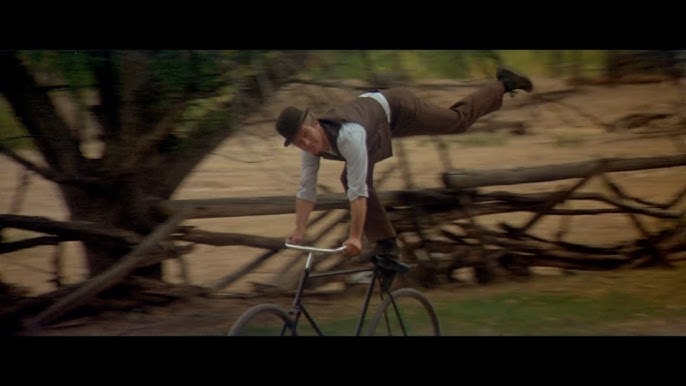
The similarities between Easy Rider and Butch Cassidy and the Sundance Kid are many, though their stories are set a century apart. We have our two bffs, rootless outlaws with free spirits and even freer idea of laws, rules and boundries. They also very much enjoy doing acrobatics on bikes, which is a bit more niche than the other similarities. Motorcycles are the new horses and their riders are the new Western heroes – even their names connote their Western roots. Easy Rider is the darker one of the two movies though, both in its general tone and because it is portraying its contemporary America with all the violence and prejudice that is rampant. And yes, we say “is” even though this is set in 1969…
We’re not mad at it, we’re just surprised it happened twice in the same year…
We loved the soundtrack, the people helping people, the night out in New Orleans and the general tension we felt throughout. While parts of the movie felt slightly dated, it is a classic for a reason and definitely one to watch. If nothing else, the soundtrack alone makes it a must-see.
Now, you may think that we should have varied the imagery a bit more in this post, but to that we say: you try searching for pictures from this movie and see how much variation you can find! We’re happy to have found pics both with and without helmets. That’s about as much variety as we could hope for.
Yeah, we think this is more or less what we carved into that massive rock outside out cabin, give or take a word or two.
What we learned: It’s real hard to be free when you’re bought and sold in the marketplace.
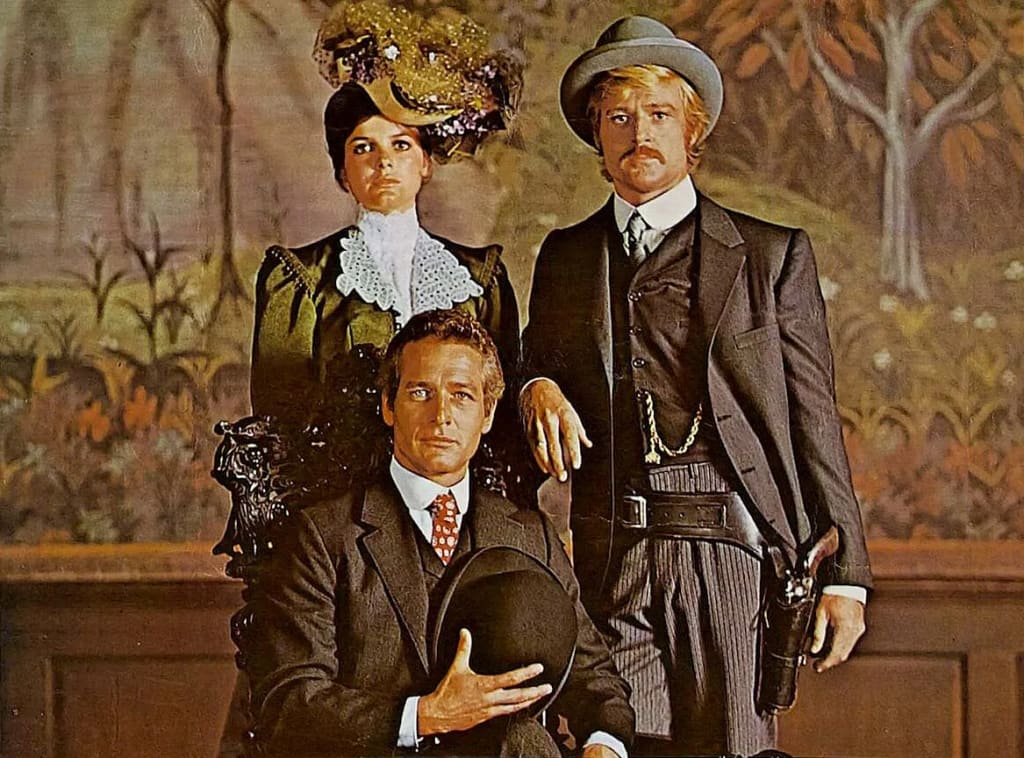
Starring: Paul Newman, Robert Redford, Katharine Ross, Strother Martin, Cloris Leachman, George Furth
Year: 1969
Runtime: 1h 50min
Remember our ongoing series of discovering we enjoy westerns a lot more than we thought we did? Here’s another entry! To be fair, this one we knew we liked – we’ve seen it several times before, and we’re pretty sure our dad had it recorded from TV when we were growing up. It’s been about 20 years since our last rewatch though, so we were pleasantly surprised by how good it actually is!
In fact, we were blown away! Hah! We’ll see ourselves out…
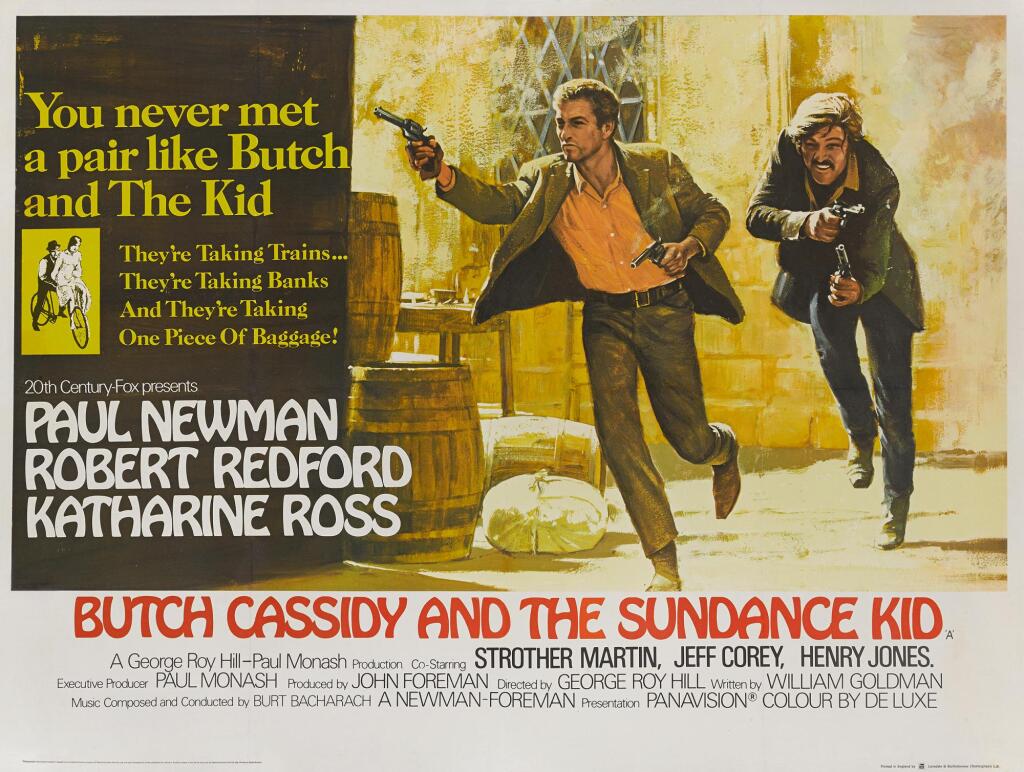
Butch Cassidy (Newman) is the leader of the infamous Hole in the Wall-gang, a group of outlaws who rob things. Trains, banks, you name it! His position as leader is supported by his bff, sharpshooter Sundance Kid (Redford), made evident when another gang member tries to usurp control.
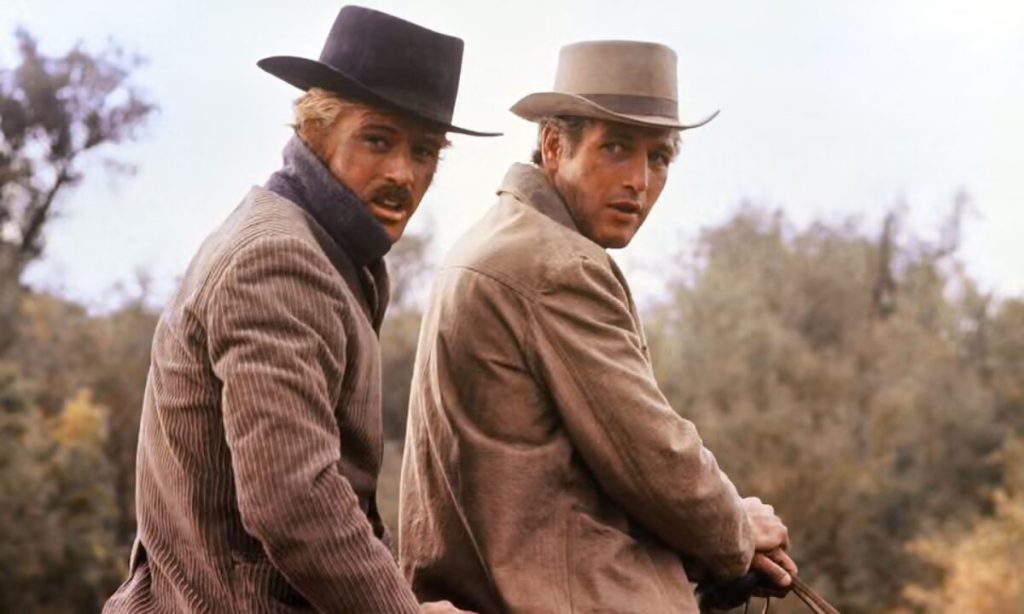
Cowboys who ride together, chide together! Or something…
After a successful (and very polite) train robbery (shoutout to our man Woodcock!), the pair get reckless and decide to go for a second one. With way too much dynamite (another shoutout to our man Woodcock!). However, by this point the authorities and E. H. Harriman of the Pacific Railroad have had enough and hired an elite group of trackers and hunters to ambush and kill the gang. So Butch and Kid must go on the run – they pick up Kid’s girlfriend Etta Place (Ross), and decide to go to Bolivia. Pretty much on a whim.
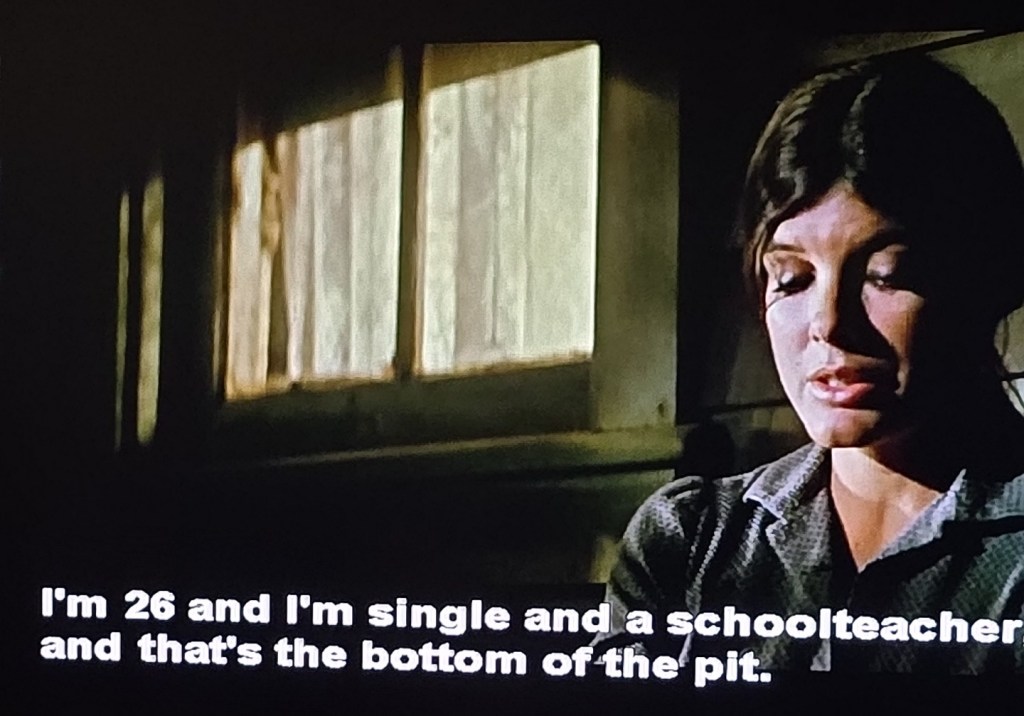
Etta’s reasoning for joining them. I have never felt more personally attacked by a movie character in my entire life…
Butch Cassidy and the Sundance Kid is fantastic! We love the relationship and banter between the two leads, the myriad of entertaining side characters, the projection opening, the use of sepia, the montages, the soundtrack, the bicycle salesman, how Etta’s hats kept growing, Butch’s committment to giving sex workers orgasms, and Woodcock. The movie is very funny, very charming, and filled with excitement and adventure. It is easy to root for the outlaws despite them being criminals – in addition to their charm they are mostly nice, polite and non-violent in their interactions with their victims.
Her hat has not yet even reached its final form
We are left with some questions though: 1: How do you ride DOWN to La Paz? 2: Where is the line between a couple plus one of their best friends, and a throuple? And how (un)healthy is it to be kind of indifferent to which person in a friend group you actually date? (This miiiight go for all three of them) 3: Who are those guys?
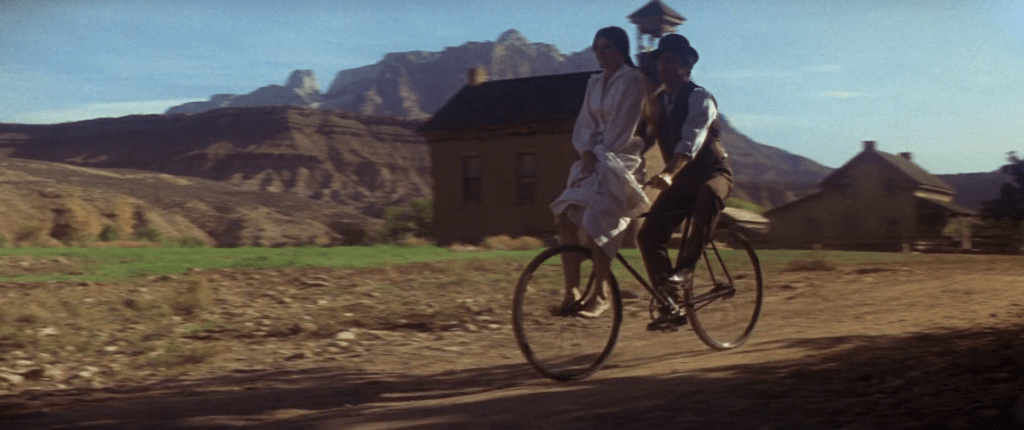
And why leave the bicycle behind?
What we learned: Swimming lessons save lives! As do Spanish lessons. So always bring a teacher along when you go on adventures.
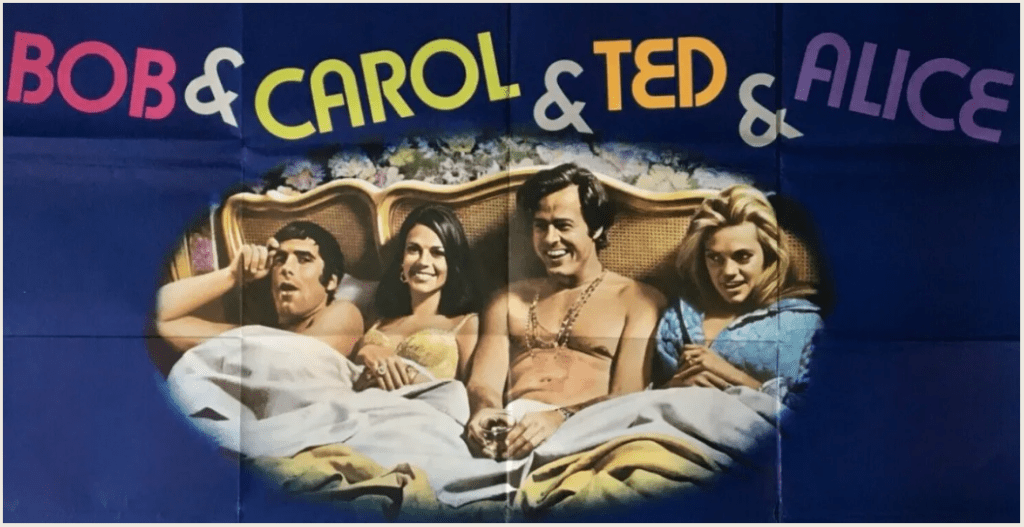
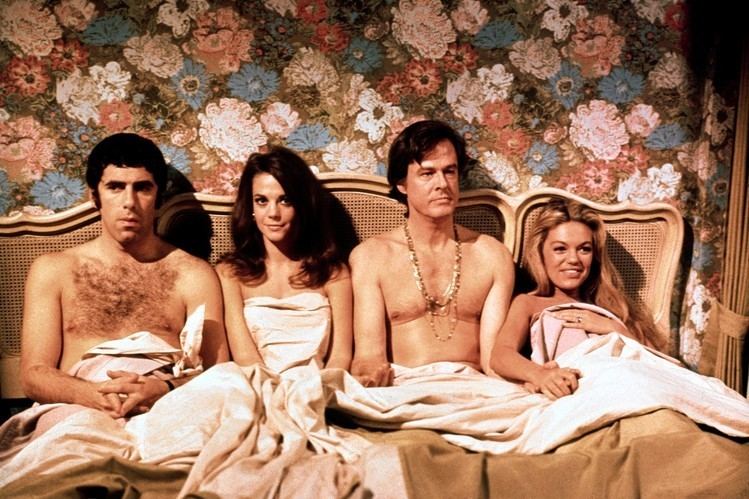
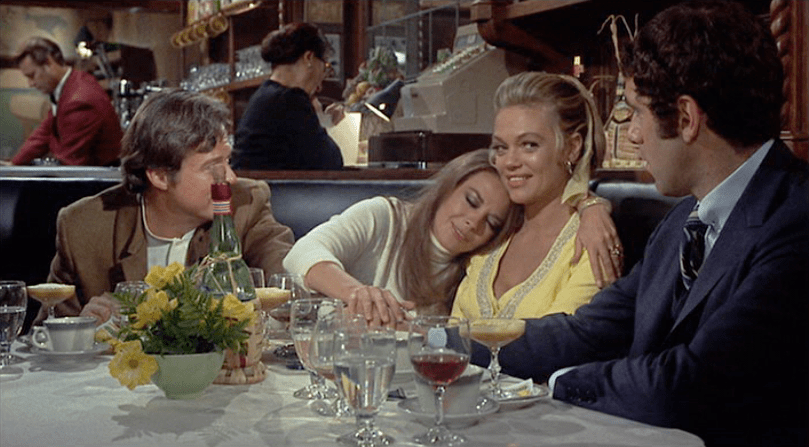
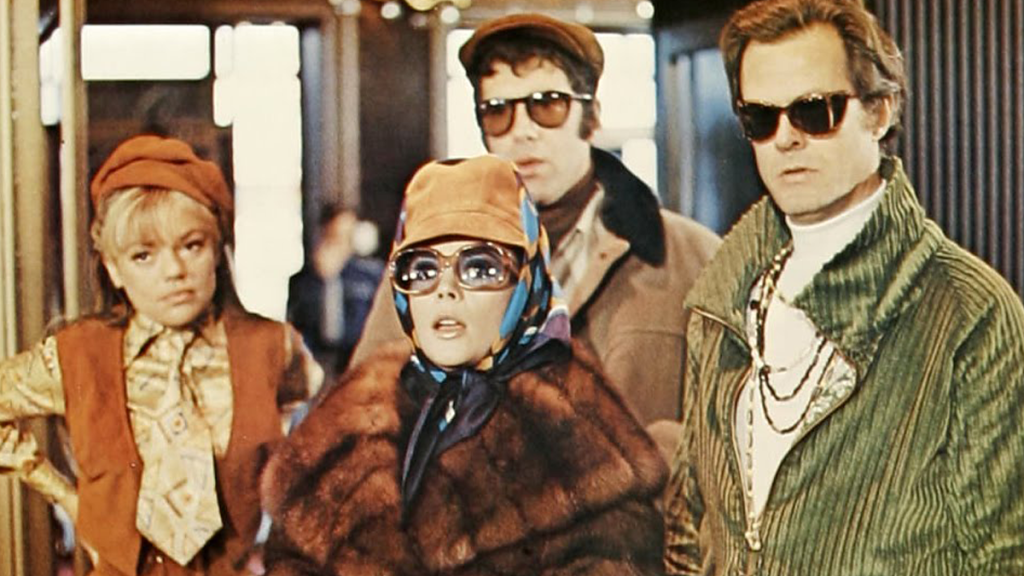
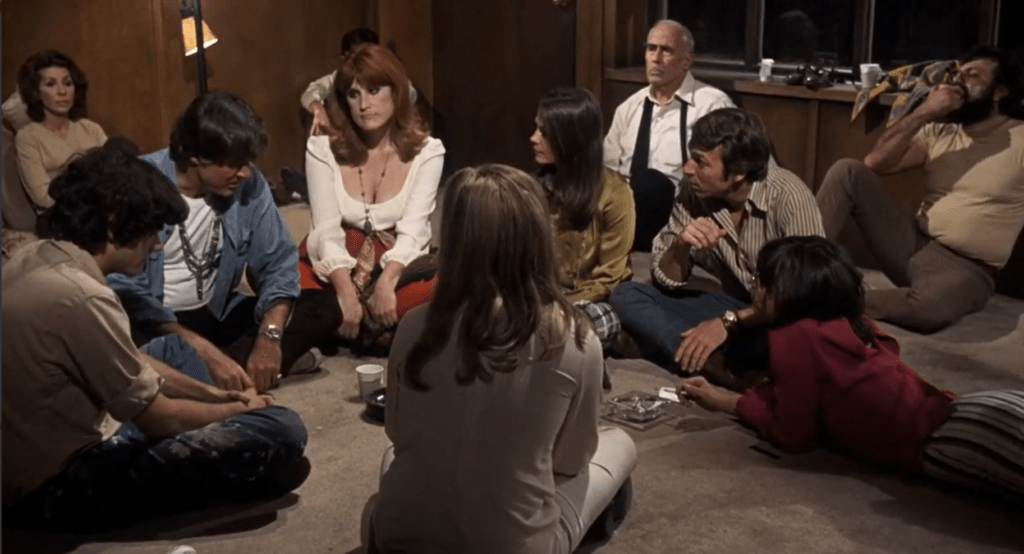
Bob and Carol, a cool, trendy couple, visit “The Institute” – part couple’s retreat, part wellness camp, part New Age cult and part nudist camp. In short, everything you could nightmare of and more. They’re there in order for Bob to do research for a documentary he is planning, but they are caught up in the teachings of the place and are converted into the cult of full emotional honesty and openness. Hijinks ensue.
Hijinks include, but are not limited to, one of the most awkward attempts at an orgy ever captured on film. And quite possibly the most accurate one.
After their weekend of group hugs, feelings, close-ups and a desperate search for better orgasms (shout out to our girl Myrna!), they return to their lives with a new outlook on relationships and life in general. Which, in the tradition of newly converted cult members everywhere, they waste no time trying to impart on their (more cynical) friends Ted and Alice.
In this scene, we are Ted. Ted is us.
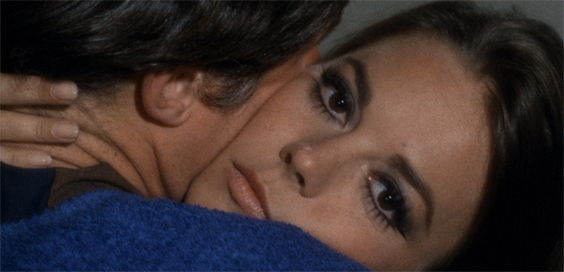
Then, Bob has an affair. In the spirit of their new openness he tells his wife, but her reaction is not what he expected. Carol is thrilled! She wants to know details, she commends him for being open and sharing, and she thinks it’s just the best thing ever! Which upsets Bob who then turns things around trying to make himself the victim here…
We’re right there with you, Carol…
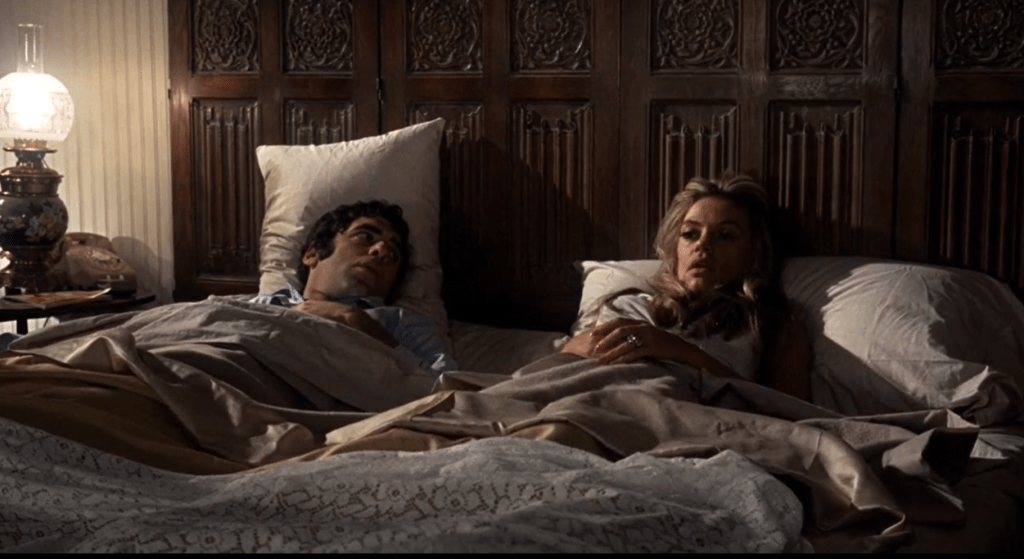
When they share the news with Ted and Alice, the latter has trouble reconciling her idea of Bob and her friends’ marriage with this information. She becomes very upset – but don’t worry. Ted is there to console her! By trying to coerce her into sex even after she’s said no about 17 times… What a gem…
We are no longer Ted. Ted is no longer us.
We continue to follow the two couples as they explore adultery, boundries, constructed moralities, orgies and friendships, and it’s an entertaining and fun watch. Silly, a little bit sexy, frustrating at times, but overall quite enjoyable. The female characters save the movie – Carol and Alice are interesting, compelling and quite sympathetic. Bob and Ted are… a bit dull. Ted is mostly just an ass, frankly. At least Bob actually evolves and becomes a better person as the story progresses, which is nice to see.
Another highlight: the fashion! Fifty shades of Earth.
We loved Myrna at the retreat (the whole retreat, really), the awkward orgy attempt, and the creepy shrink (well, hated really, not loved. But at least he sparked a feeling which is all one can ask for in this world). Overall we had a great time with this. It is interesting to see marital rape, gender inequality, societal mores and double standards all dealt with in what is basically a sex comedy. A rather sophisticated, clever and enjoyable one at that.
Our only objection is that we wanted MORE MYRNA!
What we learned: The gazpacho was astonishing!
MVP: Myrna. We love you and your lack of orgasms.
Next time: Butch Cassidy and the Sundance Kid (1969)
Starring: Lino Ventura, Paul Meurisse, Jean-Pierre Cassel, Simone Signoret, Claude Mann, Paul Crauchet, Christian Barbier, Serge Reggiani
Year: 1969
Runtime: 2h 25min
Hey! Do you want to watch a World War II movie but you’re kind of over the big action features where good always triumphs over evil and the heroes invariably make it out of the most intricate scrapes and gruelling situations practically unscathed? Well, look no further than Army of Shadows/L’armée des ombres.
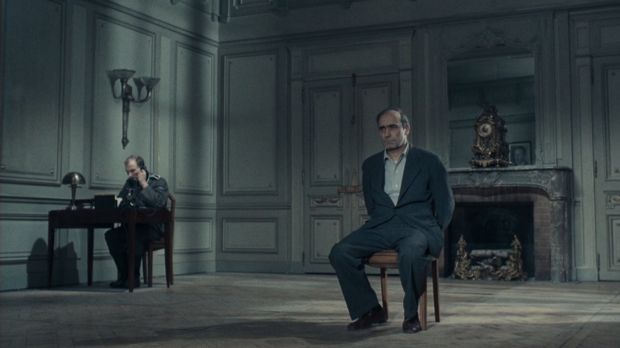
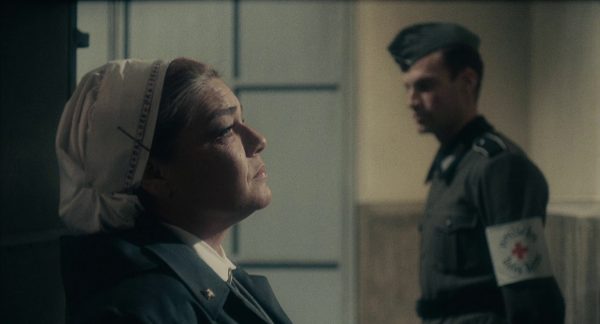
Being tied to a chair while watching is optional. The creepy stenographer in the corner is, unfortunately, not. He’ll simply appear in the room as the opening credits roll. It was quite unsettling.
In this movie, we follow various members of the French Resistance during the German occupation. Philippe Gerbier (Ventura) is arrested by the Gestapo after a betrayal. He manages to flee, and enacts his (quite practical and dispassionate) vengeance on the person who gave him up. Among his fellow Resistance buddies we find “Le Bison” (Barbier), “Le Masque” (Mann), “Ze Big Boss” (Meurisse), and… Mathilde (Signoret).
She might be Mathilde to you, but to us she will always be The Mistress of Disguise.
Other members lacking exciting code names include Jean François (Cassel) and the unfortunate Félix (Crauchet). Their missions are unglamorous and unromantic, and their actions seem motivated by a sense of what needs to be done rather than any ambition of glory or acclaim. And indeed, without giving too many spoilers, many of them will die in obscurity under false names with few or no one knowing what they did or what they sacrificed for the greater good (The Greater Gooood..).
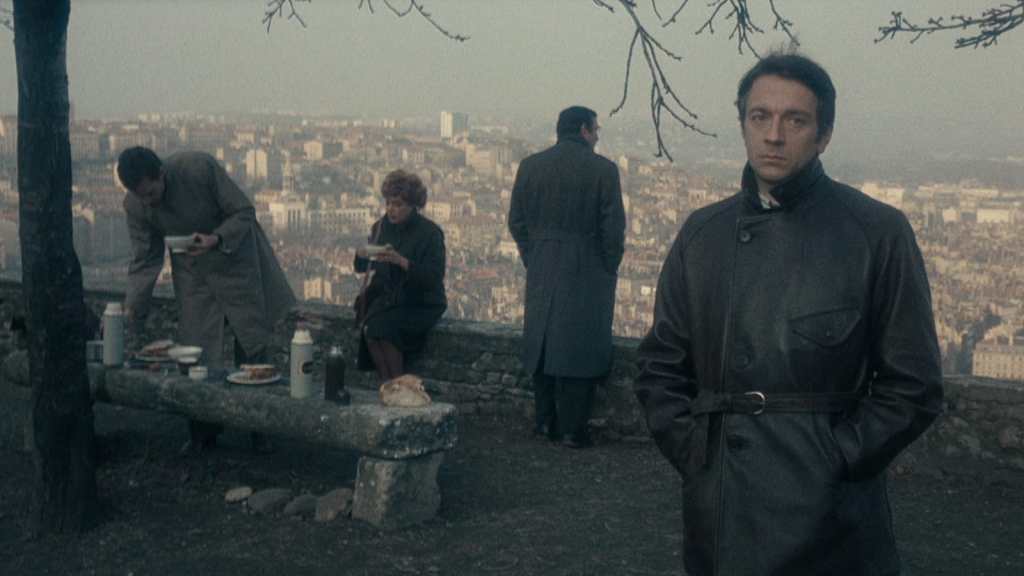
We’re just kidding. They all lived long, happy lives, and after the war frequently met for picnics. And to stare into the nothingness while trapped in the echo of the horrors that they lived through years ago and still relive in the dark of night… But mostly picnics.
Like we said, if you’re looking for a Nazi-ass-kicking action film à la Where Eagles Dare, The Dirty Dozen, or The Great Escape, this is not it. Army of Shadows has more in common with a spy drama than any of those, but not in any James Bondesque way. Despite its occasional action scene, it’s rather quiet and slow, but it packs an emotional punch.
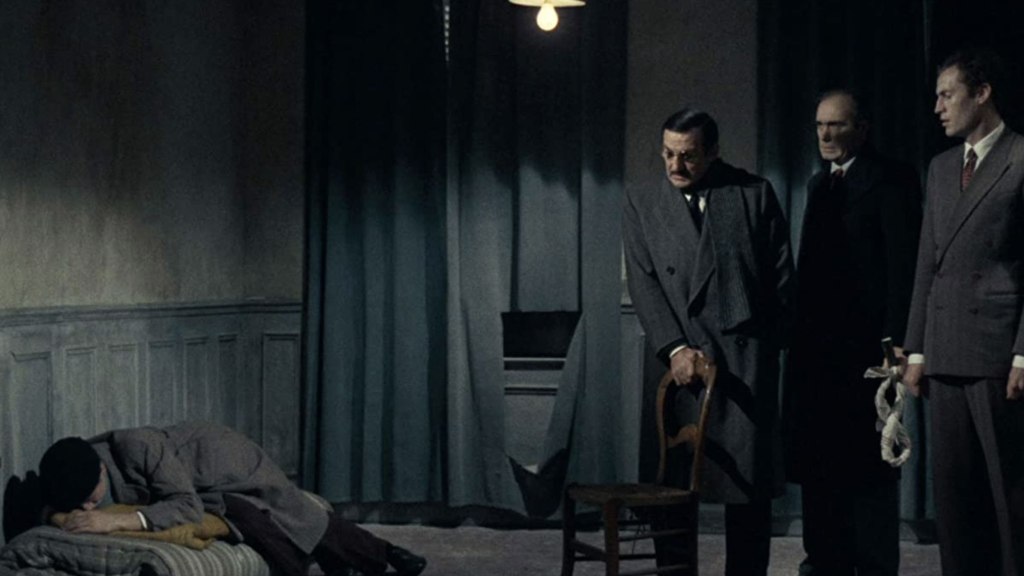
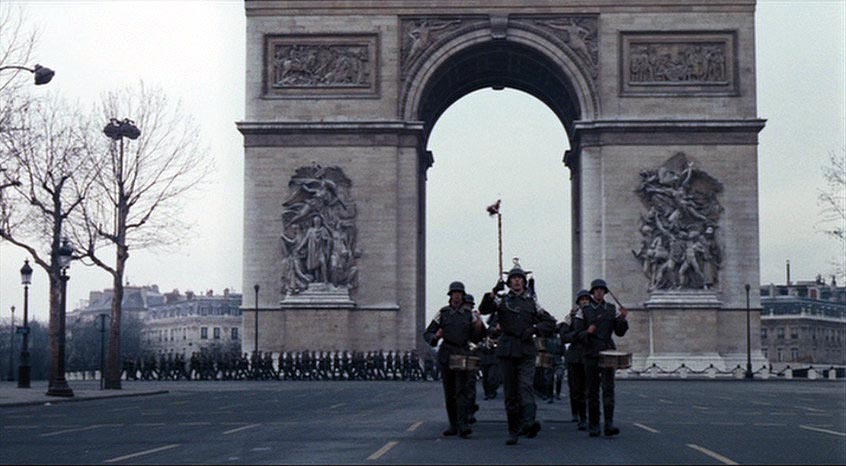
The chilling opening scene reminded us of Pretty Poison, where instead of a high school drill team marching during the opening credits (quite sinister in itself), there are Germans troops marching through the Arc de Triomphe (arguably a bit more sinister). The early execution scene sets the tone for the film – there’s no joy, nor any strong feelings of hatred or lust for vengeance here, just regret and somber, unavoidable reasoning.
Honestly, we’d never before encountered the problem of what do you do when your safe house/execution place gets new neighbours and you can no longer shoot your victim due to the noise. It poses quite the conundrum. We’re glad to now have a frame of reference for when we’ll inevitably find ourselves in a similar situation.
The pace is slow, and there’s very little music/score, which adds to the sense of realism in contrast to the focus on action and heroism we’re used to seeing in movies set during World War II. Even Gerbier’s escape from the clutches of the Gestapo in the beginning is rather mundane – and probably a lot more realistic than more elaborate depictions of similar events in other movies. Not that this movie is devoid of action or heroism – there’s quite a lot, but it is often less flashy. The acts of heroism are even occasionally close to pointless (we’re looking at you, Jean François. Heroic though your actions were, one could argue that they were ultimately unproductive).
That being said, any mode of resistance is important, and empathy is never wrong. Let’s all agree that we don’t want a repeat of this scenario.
We loved Mathilde, the Brits in the loft, and the dispatcher on Gerbier’s flight back from London. Not to mention the oh so subtle ways we were told the characters had arrived in the UK – the Big Ben, red telephone boxes, and the British flag over the Houses of Parliament were all very vague hints that only the most discerning viewer would be able to pick up on. We also loved the clearly ’60s hair and make-up sported by several of the ladies (clear influences by the style of the time of production in historical films and shows are always fascinating to see). Overall, Army of Shadows was another movie we probably wouldn’t have picked up if it hadn’t been on the list, but one we very much enjoyed and that we’ve thought about frequently since we watched it.
It’s not all bleak. For instance, the flight scene was hilarious!
What we learned: Resist! But also, sacrifices must be made when opposing a fascist regime…
MVP: Mathilde! We will hear no arguments! (And, sure, Gerbier as well, of course. Not to mention La Résistance. Everyone who fights back against oppression, really.)