#371 The Great Silence/Il grande silenzio

Watched: October 26 2025

Director: Sergio Corbucci

Starring: Jean-Louis Trintignant, Klaus Kinski, Vonetta McGee, Frank Wolff, Luigi Pistilli, Mario Brega, Marisa Merlini, Carlo D’Angelo

Year: 1968

Runtime: 1h 45min
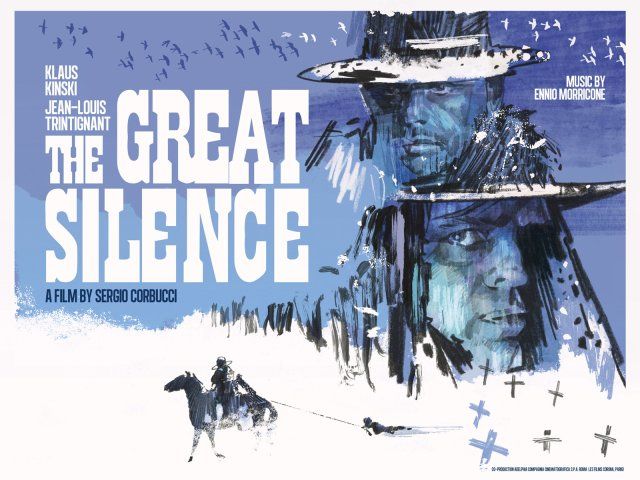
Snow. Horse, Rider. Norway? (Probably not, but looks like our landscape.) Crows. Shootout. Blood. Death. So starts The Great Silence. The eponymous Silence (Trintignant) is a mute gunman who makes bounty hunters tremble with fear. This (un)lucky Luke draws faster than his own shadow (well, at least faster than anyone else’s shadow), and his method is simple: be an annoying bitch until the other person gets fed up and draws their gun, and then kill them before they can pull the trigger. Thus, he only acts in self-defense and is completely within his rights to kill.

Way to hack the system, Silenzio!

The society in which Silence/Silenzio (we’ve heard it both ways) operates is run by corrupt politicians, greedy business owners and ruthless bounty hunters who prey on the little people. The worst one is Pollicut (Pistilli) – a banker and Justice of the Peace who uses his seemingly infinite (but very local) power to be a cunt to everyone and kill the guys who own things he covets, or who he simply doesn’t like. Of which there are many.
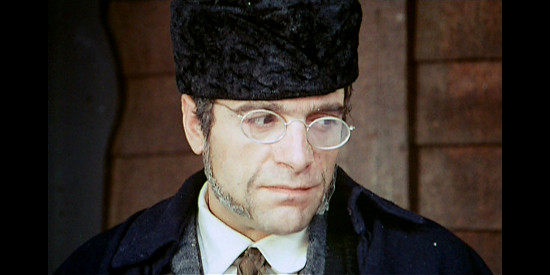
He wants their land, their houses and often their wives. And he will literally cut children’s throats in order to get what he wants. Among his many sins, that sorry excuse for a “beard” also ranks in the top three…

As a result of Pollicut’s greed and corruption, as well as problems caused by a severe blizzard, the people of Snow Hill are having a really bad time of it, and many are forced to turn to crime in order to feed their families. Pollicut uses these circumstances to make them outlaws and to place prices on their heads in order to take over their property. This attracts bounty hunters, chief among them being “Loco” (Kinski). He is, as the name suggests, utterly Loco. And racist. And a psychopath. And just an all ’round bad guy.

But his headgear game is on point

The women of this ravaged community, mainly newly widowed Pauline (McGee), hire Silence to defend them and help/avenge their sons/fathers/husbands, most of whom are either already dead or LARPing Robin Hood and his Merry Men in the woods surrounding Snow Hill.

In fact, let us talk about the name “Snow Hill.” Who came up with that name? Is it also called that in summer? Is this place perpetually snowy? In which case, why would anyone settle there? (OK, we realise that this is probably a bit rich coming from a couple of Norwegians. Nevertheless, we feel these questions are justified. The public needs to know!)

Enter player five, newly appointed sheriff Gideon Burnett (Wolff). From the start, he seems a decent enough guy, which is a rarity in this town. His mission is to restore order in Snow Hill before the governor declares amnesty on the merry men of the forest (and by “merry,” we mean “miserable” and “starving”). He is basically the only character in this entire movie who both operates within the law and does the right thing. Will his and Silenzio’s efforts be enough to save the town?

Look at this jovial face and icy ‘stache! Clearly one of the good guys.

We are enjoying the westerns a lot more than we thought we would when we started this project. We grew up watching some of them as our dad was a western fan, but it was never really “our” genre. However, each one we’ve watched so far has been incredibly engaging, and there’s so much interesting social commentary within them. For us, The Great Silence ranks as one of the best ones so far.
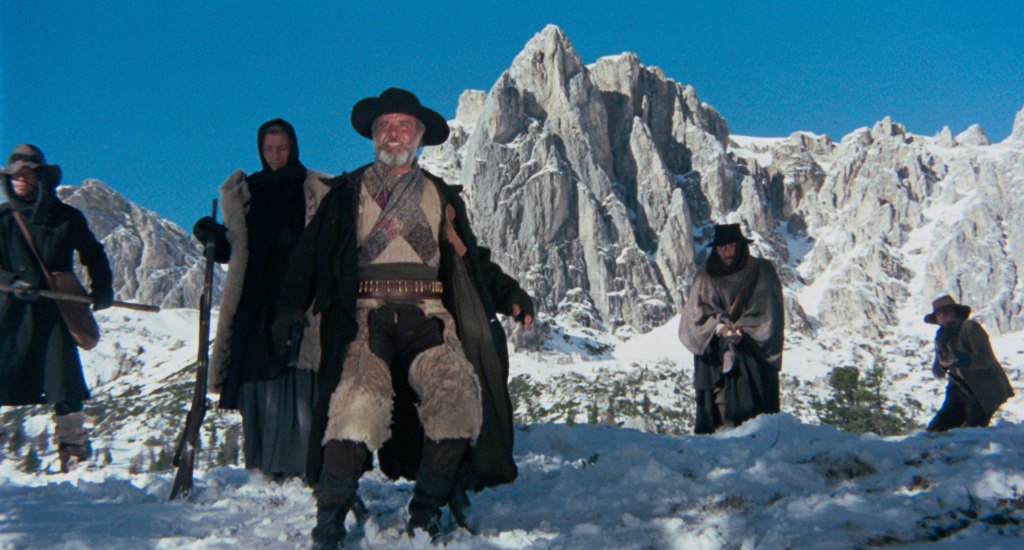
🎵 The hills are aliiiiive… With the sound of outlaaaaws 🎶

First off, we loved the women in this. From the bereaved mother who first asks for Silenzio’s help, via Pauline, to Regina (Merlini), they are bad ass, capable and vengeful – exactly how we like our female characters. We also loved sheriff Burnett, Silence’s method of being a little bitch until people try to kill you, the costumes, the snow, and the portrayal of people dealing with corruption and greed. As in a lot of westerns, on the surface it’s very easy to tell the bad guys from the good guys – there are no doubts about who we’re supposed to root for. But at the same time, the bad guys’ actions are “all according to the law,” which poses some interesting philosophical quandaries about laws and morality, and makes this a movie which is frighteningly topical and current…
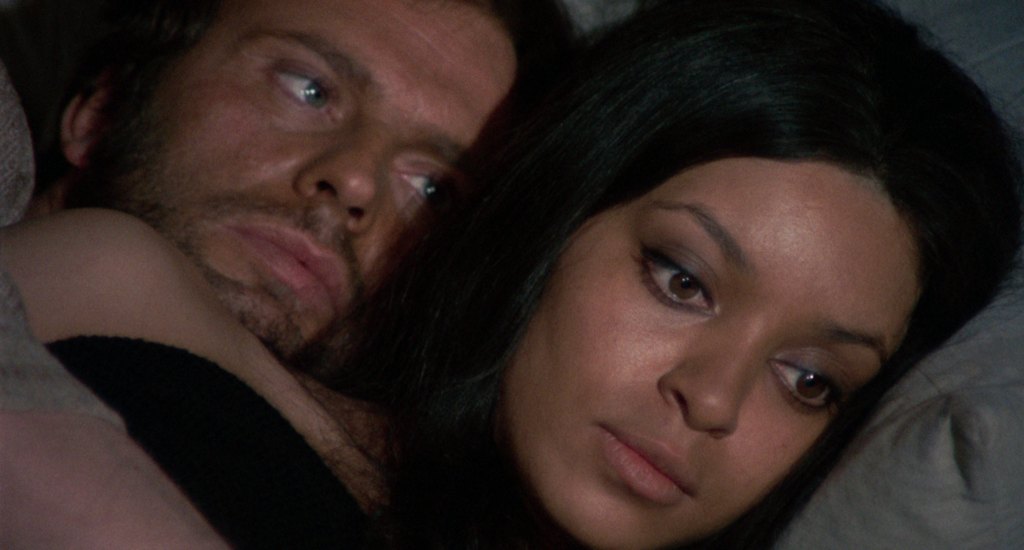
They also managed to throw in a bit of (interracial) romance, so we’re pretty sure everyone can find something they enjoy in this film. Well, good people can, at least.

By the way, without spoiling the ending too much (we hope… You can wait to read the rest of this until you’ve seen the film if you want absolutely no hint of a spoiler), if you have the DVD/Blu-Ray version of this movie, we recommend you also watch the alternate ending which you can find as a bonus. It is the most ridiculously over-the-top happy denoument we’ve ever seen, and we got the strong feeling that this was filmed as a sort of mutinous “fuck you” to people who thought the original finale was too bleak…

Side note: we felt really bad for all the horses forced to struggle through the snow throughout. That looked like really hard work.

What we learned: The law is not always right. There is no such thing as an ethical billionaire. And sometimes the bad guys win…

MVP: Whoever made all those shawls. Or Klaus Kinski. Also, shoutout to our boy Ennio Morricone!

Next time: The Swimmer (1968)
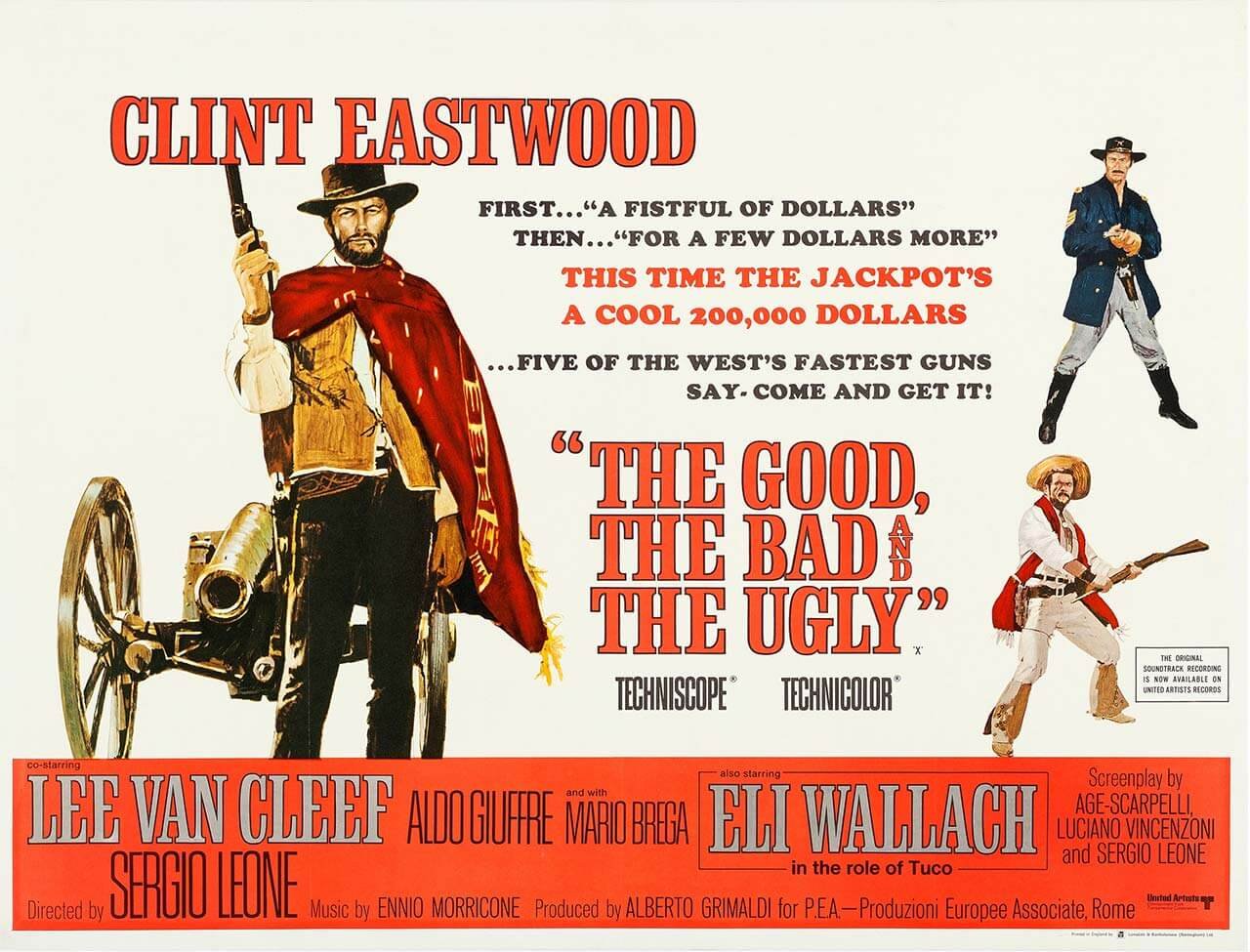
#278 The Good, the Bad and the Ugly

Watched: September 22 2020

Director: Sergio Leone

Starring: Clint Eastwood, Lee van Cleef, Eli Wallach

Year: 1966

Runtime: 2h 58min

good

Source

We must admit that there’s little we can say about this movie other than how much we enjoyed it. But we’ll give it a go!

good1
Yodle-odle-ooooo! Wah-WAH-waaah…

Source

Blondie (Eastwood) and Tuco (Wallach), a.k.a. the Good and the Ugly, respectively, have a lovely little scheme going. Blondie hands over Tuco, a wanted man, to the authorities, collects the reward, then frees his partner just as he is about to be hanged for his crimes.

good2
Yodle-odle-ooooo! Wah-wah-WAAH!

Source

While they’re doing their thing and occasionally backstabbing each other for cash, Sentenza (Cleef), a.k.a. Angel Eyes a.k.a. the Bad, is a gun for hire who by accident learns about $200 000 hidden somewhere and goes off in search of a good pay day.

good3
Yodle-ooAAH! WAH-wa-wa-wa…

Source

Eventually, during another attempt at killing each other, Blondie and Tuco also learn of the money, and since they both hold some information about its location, they must stick together in order to claim their reward. Oh, and the American Civil War is also in full swing around them.

good1
Yodle-odle-ooooo! Wah-WAH-waaah…

The Good, The Bad and The Ugly might be the most famous Western in the world, and it certainly delivers. There’s dust, tumbleweed, weatherbeaten clothes, weatherbeaten men, weatherbeaten horses and donkeys, and lots of beautiful landscapes filled with cacti.

good2
Yodle-odle-ooooo! Wah-wah-WAAH!

It’s beautiful, intriguing, exciting, funny, tense, occasionally horrific, and thoroughly entertaining, even at three hours long. Ennio Morricone’s score alone is worth the time, and we love how Sergio Leone was not scared of making three hour epics and telling complex stories. If you’re only going to watch one Western in your life, this should be it. Although why on earth would you only watch one Western? They’re amazing!

good3
Yodle-ooAAH! WAH-wa-wa-wa…

What we learned: Never have a bath without a gun. Also, you’ll never get rid of this earworm…

Next time: Tokyo Drifter (1966)

#233 A Fistful of Dollars

Watched: June 10 2019

Director: Sergio Leone

Starring: Clint Eastwood, Gian Maria Volontè, Marianne Koch, José Calvo, Wolfgang Lukschy, Sieghardt Rupp, Not Toshirô Mifune

Year: 1964

Runtime: 1h 39min

fist

Source

A lone rider in the Wild West (Eastwood) arrives in a one horse town. On his mule, so he doesn’t accidentally upgrade the town’s status, mind you. He’s very considerate like that. He learns from an innkeeper that the village is plagued by two rival families vying for control, and decides to clean up the town before he moves on.

fist3
“Where did you come from, where did you go? Where did you come from Cotton-Eye Joe”

Source

To get rid of the Baxters and the Rojos, the rider (a.k.a. Joe and/or The Man with no Name depending on who you ask. We strongly feel that the first option sort of cancels out the second and vice versa, so we’re very confused) will offer up his services to one family, then to the other, trick them and watch them undo each other. And he will look good doing it, dammit!

fist2
Good luck teaching your kids that smoking isn’t cool…

Source

There’s the innkeeper, a coffin maker, a young mother who’s been gambled away in a game of cards, a brutal beating of our hero and a long, secret convalescence before the final showdown. Sound familiar? Akira Kurosawa thought so too…

fist4
“So, you mean this is not an original story?” “Well, we’ve added guns, Mexicans, sheep skin vests and the most luscious head of hair this side of the Rio Grande. I think we’re in the clear.”

Source

The story is not just inspired by Kurosawa’s Yojimbo, but a blatant rip-off. Despite that, it is still a great movie in its own right. We love a good spaghetti western as those were the movies we grew up with, so while we still prefer the Japanese original (swords beat guns any day) we really enjoyed revisiting A Fistful of Dollars.

fist5
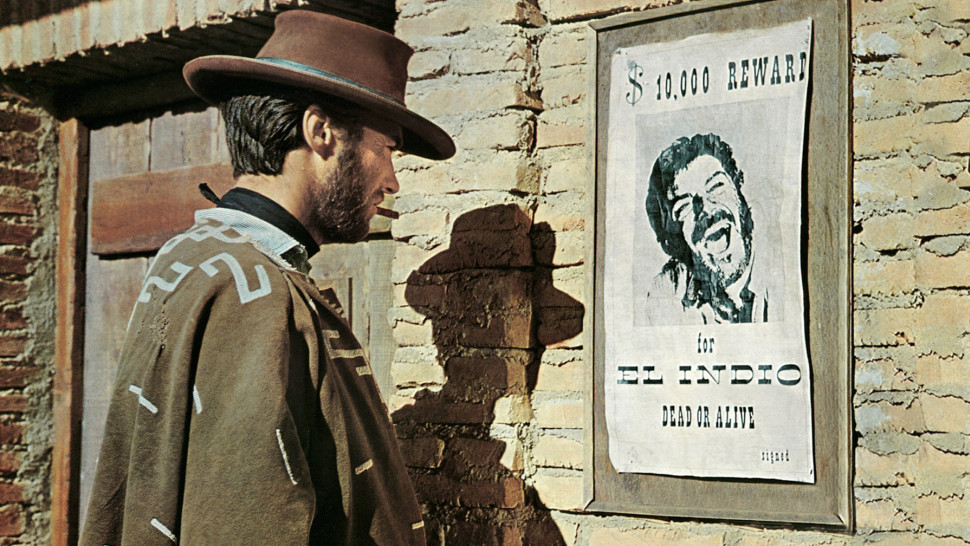
It’s always nice noticing new details, such as how ridiculously happy “El Indio” is to be on a wanted poster

Source

We adored the young Clint Eastwood (and his luscious, luscious hair), his poncho, the noose when he rides into town, the weatherbeaten faces of the townspeople (although we think Kurosawa did even that a bit better), the dubbing, the soundtrack (by Ennio Morricone of course), and the finale. Such fun!

fist6
“Oh man, the only thing that could have possibly improved this is replacing guns with swords. Can you imagine how good that movie would have been..?”


Source

What we learned: Clint Eastwood is cool. Very cool. But not even he is as cool as Toshirô Mifune.

Next time: A Hard Day’s Night (1964)