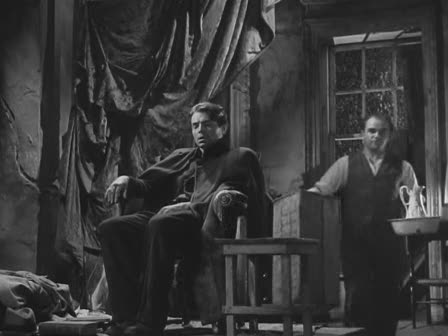
#82 Odd Man Out

Watched: February 1 2017

Director: Carol Reed

Starring: James Mason, Kathleen Ryan, Robert Newton, Robert Beatty, F.J. McCormick, W.G. Fay, William Hartnell

Year: 1947

Runtime: 1h 56min

odd-man-out

Source

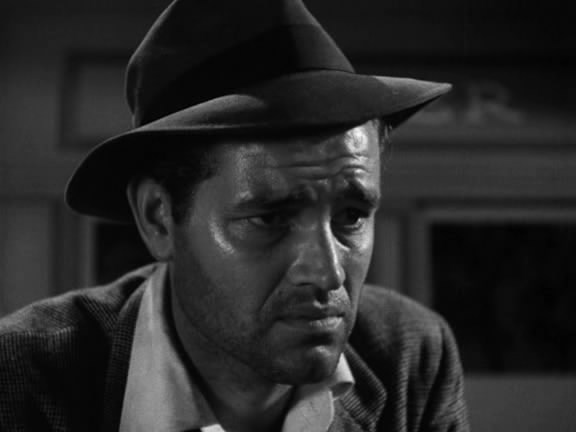
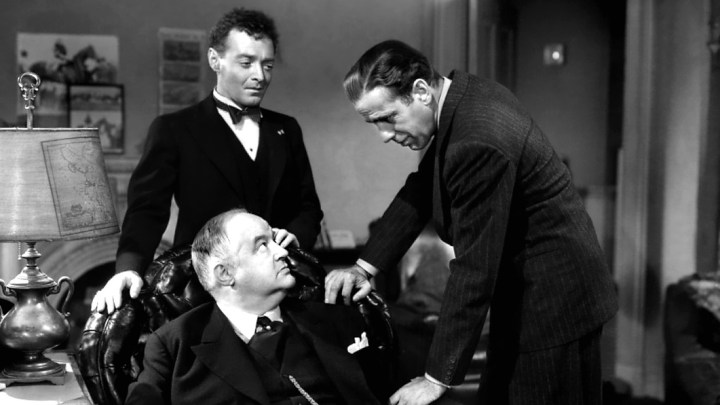
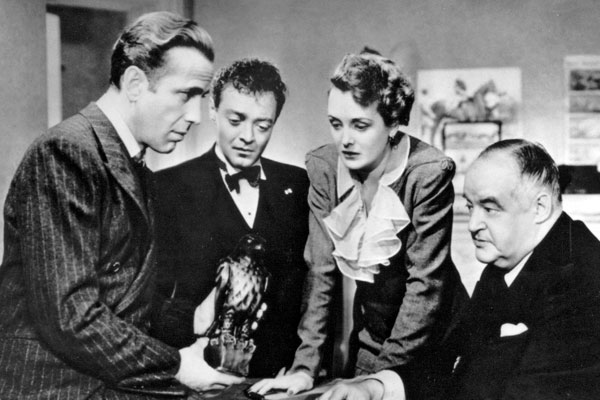
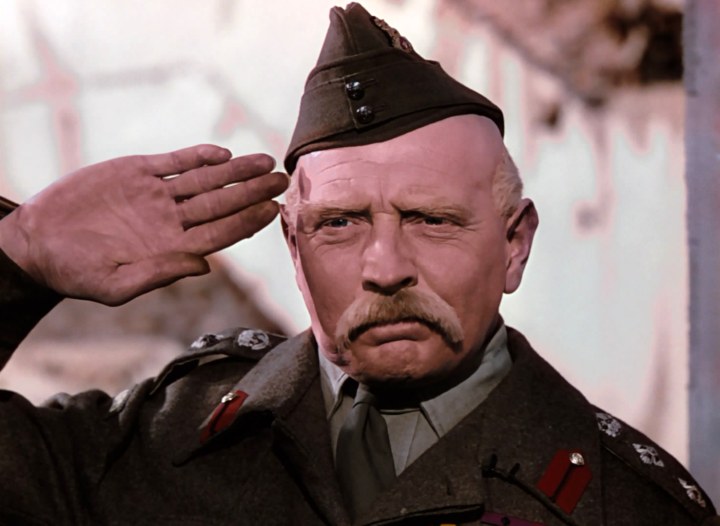
In an unnamed Northern Irish city (our money’s on Belfast), Johnny McQueen (Mason), recently escaped from prison and hidden ever since, is planning a robbery/heist with his cohorts to raise funds for their (also unnamed) organisation. Despite not having been outside for years, Johnny is set on carrying out the plan himself, even when one of his mates offers to go in his place. However, during the heist, he suffers some sort of existential crisis (or perhaps agoraphobia) and things go wrong. Johnny shoots a man and is himself injured, and has to go on the lam.
oddmanout
Is this some Omenesque foreshadowing? Stay tuned to find out!

Source

The now injured Johnny first hides in an air raid shelter and after Dennis (Beatty) helps him escape his hiding place he roams the city looking for safety and help with his injuries, meeting all sorts of interesting and colourful characters along the way.

odd-man-out2
He also inexplicably poses for portraits

Source

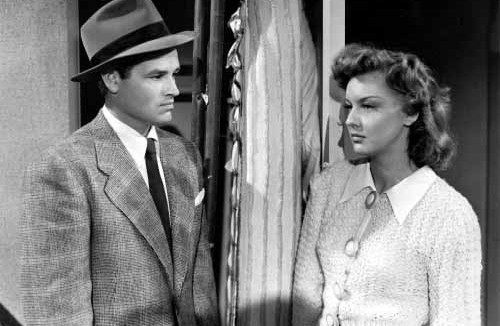
With the authorities hot on his heels, the people he meets are sympathetic but afraid to help. Most of them give him a drink and send him on his way, scared to get involved but not willing to turn him in and collect the reward. Meanwhile, his girlfriend Kathleen (Ryan) is also looking for him and enlists the help of Father Tom (Fay) to save her love.

odd-man-out3
She’s the light at the end of his tunnel. Bliss!

Source

As the backdrop of all this drama, we see the local kids hero worshipping and celebrating him, in many ways turning him into some sort of Messiah figure. Unfortunately, we all know what happened to Jesus, so this is not necessarily a good sign. Johnny spirals, deteriorating both physically and mentally, and he has to try to come to terms with what he has done and what will happen.

odd-man-out-4
The snow keeps falling heavier and heavier which, again, we find somewhat ominous

Source

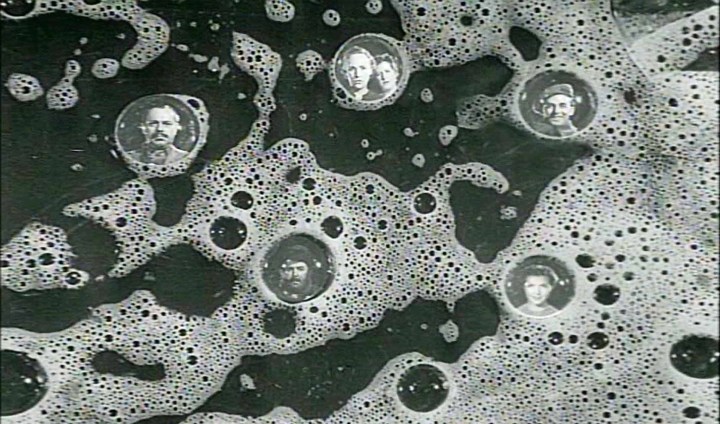
Odd Man Out is a lot more slowly paced than the other Noirs we’ve watched lately, which was a nice departure. We loved the performances, the beautiful sets (the ravages of “conflict” are evident in the decrepit buildings), the lighting, the score, and particularly the visions in the beer foam and the moving portraits. It’s a long and slow watch, so you have to be in the right mood, but it is definitely worth it.


odd-man-out-5-2
Pro tip: once you start seeing this in your spilled beer, it’s time to go home

Source

What we learned: NO jitterbugging!

Next time: Dance, Girl, Dance (1940)

#74 A Matter of Life and Death

Watched: January 15 2017

Director: Michael Powell, Emeric Pressburger

Starring: David Niven, Kim Hunter, Roger Livesey, Raymond Massey, Marius Goring

Year: 1946

Runtime: 1h 44min

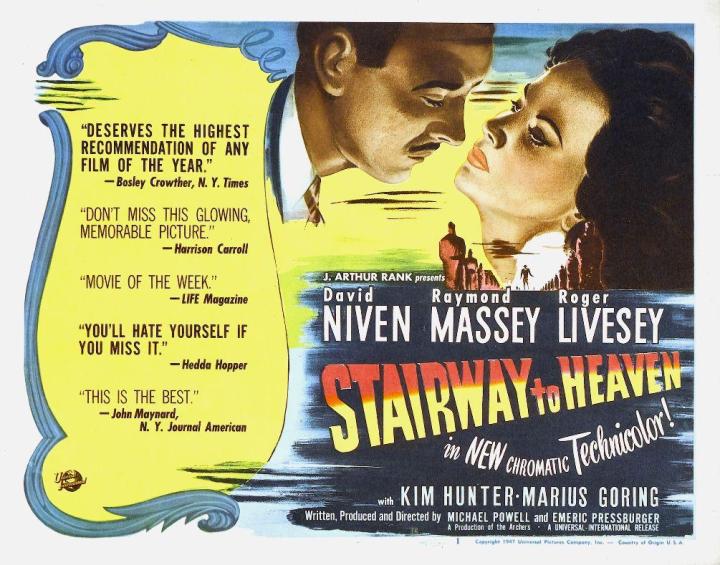
a-matter
Also known by its alternate title

Source

As Peter Carter (Niven) is plunging towards certain death in a shot up plane May 1945, his final moments are shared with radio operator June (Hunter) and the two, as people are wont to do in these intense situations, fall in love. He ejects from the burning aircraft without a parachute and is surprised to find himself alive on shore some moments later. Surely, the fall should have killed him?

a-matter3
How much imagery of nudity, flutes and goats do you need to convince yourself you’ve reached hell?

Source

Turns out, it should have. Up on the celestial plane, the clerics are confused about the lateness of his arrival until they find that his Conductor, a very camp Frenchman (Goring), lost the pilot in the fog and thus neglected to collect his soul.

a-matter-5
“Bonjour! Je suis le campest Frenchman you’ll ever meet. Bon bon, mon petit fromage!”

Source

Unfortunately for the clerics of the afterlife, in the few hours of “extra” life Peter got, he met and fell in love with June which greatly complicates things. As he is not at fault here, is it fair to take him away just as he has found the love of his life? Since it was their mix up that caused this to happen, the celestial beings grant Peter a trial with his life at stake.

a-matter-4
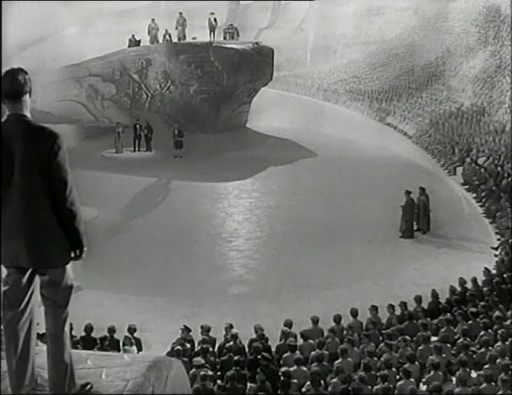
Celestial trials have the most impressive courtrooms

Source

Meanwhile, in our own world, June has enlisted the help of a doctor friend of hers, Dr Reeves (Livesey, of Colonel Blimp-fame), as her new love is suffering headaches and possible hallucinations after jumping from a plane without a parachute… Naturally, the medical professional diagnoses Peter with head trauma and recommends surgery, to coincide with the patient’s heavenly trial.

a-matter6
Which leads to some beautiful shots!

Source

This was a beautiful and engaging film which we completely loved. The relationship between Peter and June is lovely, although a bit hasty. She’s either very wonderful or very naïve to stick by him when he starts talking crazy after they’ve known each other for all of a day. The trial becomes very political, and much of the criticism against England from the USA could have been modern criticism against the US, which is very interesting to observe (especially given the newly instated president..). It’s like both countries have a history of proclaiming themselves above others and trying to impose their rules on other nations…

The sets are beautiful and impressive, especially on the other plane.

a-matter7
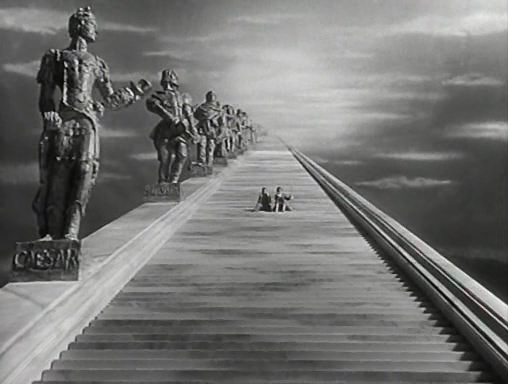
Such as the stairway, or escalator, to heaven, for instance

Source

In a way, this film is like an opposite Wizard of Oz, as our world is in glorious technicolor while the other world is in drab black and white. Then again, our world is supposed to be the desirable one so it makes sense. A Matter of Life and Death has humour, excitement, adventure, romance, political undertones, history lessons, camp Frenchmen and gorgeous shoes! What’s not to love?

a-matter8
A film so good it has its own stamp!

Source

What we learned: make sure you have a law degree before cheating death. Also, we have found the winners of the mannequin challenge of 1946!

Next time: La Belle et la Bête/Beauty and the Beast (1946)

PS: confused about the numbering on this? Check out this disclaimer!

#71 The Lost Weekend

Watched: December 19 2016

Director: Billy Wilder

Starring: Ray Milland, Jane Wyman, Phillip Terry, Howard Da Silva, Doris Dowling

Year: 1945

Runtime: 1h 37min

lost

Source

The Lost Weekend is a classic tale of an alcoholic writer who is struggling to create his masterpiece while keeping the severity of his habit from his girl and his brother.

Don Birnam (Milland) is packing for a weekend away with his brother Wick (Terry) and is desperately trying to find an opportunity to smuggle some whiskey into his luggage, as his brother is not exactly impressed by his alcohol consumption.

lost2
His bartender isn’t particularly impressed either

Source

After failing to bring with him his hidden whiskey, Birnam decides to stay in the city and get drunk rather than join his brother for a sober weekend in the country. Like a true addict, he’ll do anything to get a fix, and while he’s funny in his quest for a drink, it is also incredibly sad to watch a talented and generally good man go down this road of self destruction.

lostweekend
It’s almost as if someone is trying to say that his life is ruled by drink

Source

The four day weekend (such luxury!) includes, but is not limited to, him hurting his long suffering girlfriend Helen (Wyman), flirting with (and also hurting) fellow barfly Gloria (Dowling, who’s incredibly hip with the lingo!), trying to pawn his precious type writer, ending up in the alcoholic ward of a hospital, ditching church to rob a liquor store instead (it’s a choice), and finally succumbing to delirium and depression.

lost3
Like Mina, he is also attacked by bats, but that’s a whole other story

Source

The Lost Weekend is based on a (fairly autobiographical) novel by Charles Jackson, which we have not read, but definitely should. It is a powerful and realistic story which does not shy too far away from the horrifying truth of substance abuse. When younger, we may have seen the character of the young alcoholic writer as romantic, but we are far older and wiser than we once were (but not, you know, too old. Just charmingly so. And very wise.) and we now see the tragedy of it all. In the end, the talented but dried-up (in some sense of the phrase, at least) artist is saved by love and purpose, although how long it will last we will never know. Unless we dig into the life of Charles Jackson, we suppose.

lost4
In a way he is also, somewhat ironically, saved by his bartender.

Source

Milland won a well-deserved Oscar for his portrayal of Birnam, and the film was also awarded Best Picture, Best Director and Best Writing in 1946. If that’s not enough incentive for you to watch this classic, there’s really nothing more we can say.

What we learned: alcohol may help creativity but it will stop you actually realising your ideas.

Next time: The Thin Man (1934) – new addition to the list

#70 Detour

Watched: January 08 2017

Director: Edgar G. Ulmer

Starring: Tom Neal, Ann Savage, Claudia Drake, Edmund MacDonald

Year: 1945

Runtime: 1h 7min

detour_1945

Source

Al Roberts (Neal) is in a diner, irritable and not very sociable. What has happened? He tells his story to the viewer – and it is not a happy tale.

detour-1945-tom-neal1
“Happy? How can anyone be happy? There is no happiness, only darkness and sadness” – Roberts, probably

Source

Roberts is a pianist in a nightclub where his best gal Sue (Drake) is also employed as a singer. Walking home from work one night, through the (extreme) fog and darkness, she tells him that she’s planning on seeking her fortune in Hollywood. Roberts is not happy about it, though to be fair, he wasn’t exactly a ball of sunshine before she broke the news either.

detour-tom-neal-and-claudia-drake
This may be the only time he smiles throughout the entire 67 minutes.

Source

After she moves, he decides to hitchhike from New York to Los Angeles to see her, and it’s all downhill from there. He considers himself lucky when he gets a ride from rich (and misogynistic) Charles Haskell, Jr (MacDonald), but he could not be more wrong. After Haskell unexpectedly dies, Roberts makes a horrible decision to bury the body and pose as the dead man to stay out of trouble. Already here, we can see where this is going, but not just how bad it’s going to get.

detour
It never gets really bad until you bring a Dame into it…

Source

Enter Vera (Savage), a bona fide Dame with all the credentials, including previously fighting off the advances of the now deceased real owner of the car. His new angry and disillusioned passenger leads Roberts to make even more terrible decisions than the ones he’s already made, and they keep spiralling towards inevitable doom.

detour2
Who knew a young woman in a lace knit sweater could be so vicious!

Source

Now, Roberts is made out to be the victim in this film, and in a way he is. However, he is also the one telling the story and as such there’s a chance his narration is a bit on the unreliable side. Perhaps Haskell’s death (and any subsequent ones) weren’t as accidental as he claims, and his decision to rob the dead man may not have been as spontaneous as we are led to believe. Either way, his life is forever altered and his plans are not to be. Poor Sue.

detour3
Seems guys (with big instruments) are already lining up to take Roberts’ place, though. We’re sure she’ll be fine. After all, it’s not like young, attractive women have ever been mistreated in Hollywood.

Source

What we learned: Film Noir-narration is the best narration. Also, if someone (accidentally) dies in your presence, just go to the police and fess up at once.

Next time: The Lost Weekend (1945)

#68 Brief Encounter

Watched: January 1 2017

Director: David Lean

Starring: Celia Johnson, Trevor Howard, Cyril Raymond

Year: 1945

Runtime: 1h 26min

brief-encounter_2589284b

Source

Brief Encounter is David Lean’s film version of a Noël Coward play, and it is beautiful.

Laura Jesson (Johnson) and Dr Alec Harvey (Howard) are sitting in a station café when they are steamrolled by a whirlwind known as Dolly. She blabbers on, completely oblivious to the fact that she has clearly interrupted something very special and important.

brief
“I can’t believe you let her hijack us like this!”

Source

Dr Harvey leaves and Laura goes home to her husband (Raymond) and tries to process what has happened through internal dialogue and flashbacks, as a story told, but not told, to her husband.

brief-2
She probably could have just told him the whole story for all the attention he pays

Source

Alec and Laura met by chance in the station café some weeks prior to the opening scene. They then keep running into each other until they start to plan their meetings and eventually admit to falling in love with each other. They start a (unfulfilled) romance which changes at least her perception of her life and identity.

brief3
Shared ridicule of unfortunate musicians is always a turn-on

Source

Their relationship is doomed from the start as they both have families (who they seem to love as well) and are too proper and middle class to divorce or even “properly” cheat on their partners. The story is told from her perspective, and parts of it reminds us of Ibsen’s A Doll’s House (though that may be because we’re Norwegian and prone to finding Ibsen-parallels in everything). She is stuck in a too small life and Alec is as much the catalyst for her “awakening” as anything else. When she imagines their life together, she does not see him as a replacement for her husband – their life will be one filled with travel and adventure, not the mundane and routine based life she’s currently leading.

brief-encounter-4
There will be no sitting around while Dr Harvey reads the paper! No sirree!

Source

Of course, therein lies the appeal of “brief encounters” – the routine of day to day life never has a chance to ruin the perfect romance. Laura and Alec’s dalliance does not go on far enough for us, or the characters, to know whether their relationship would be better in the long run than the ones they are too “proper” to escape. In fact, in the end it seems Laura’s husband understands her better than she thinks, and there may be some hope there after all. However, she is still stuck in the same routine, with only the memory of romance to keep her going.

NINTCHDBPICT000000166944
Despite the inherent betrayal of their actions, it really is a rather sweet and innocent romance between two somewhat alienated people

Source

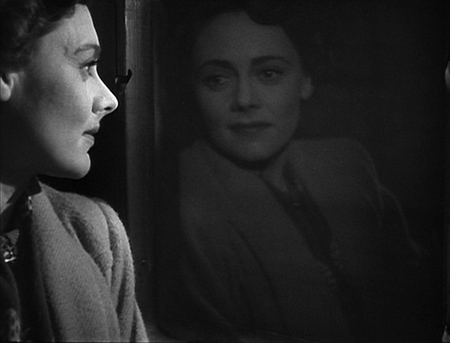
We loved this film. The story is well told from Laura’s perspective, and the need for something “real” to happen in her life is very clear. It is also beautifully shot, especially everything involving trains, from the first shot of the speeding train scored by Rachmaninoff to the gorgeous shot of Laura reflected in the train window while dreaming of an alternate life. The last moments of her “vertigo” and suicidal impulse upon Alec leaving for the last time are both disturbing and wonderful.

brief_laura

Source

What we learned: a romance doesn’t have to be epic and earth shattering to be life changing for those involved.

Next time: Dead of Night (1945)

#64 The Life and Death of Colonel Blimp

Watched: December 13 2016

Directors: Michael Powell, Emeric Pressburger

Starring: Roger Livesey, Deborah Kerr, Anton Walbrook

Year: 1943

Runtime: 2h 43min

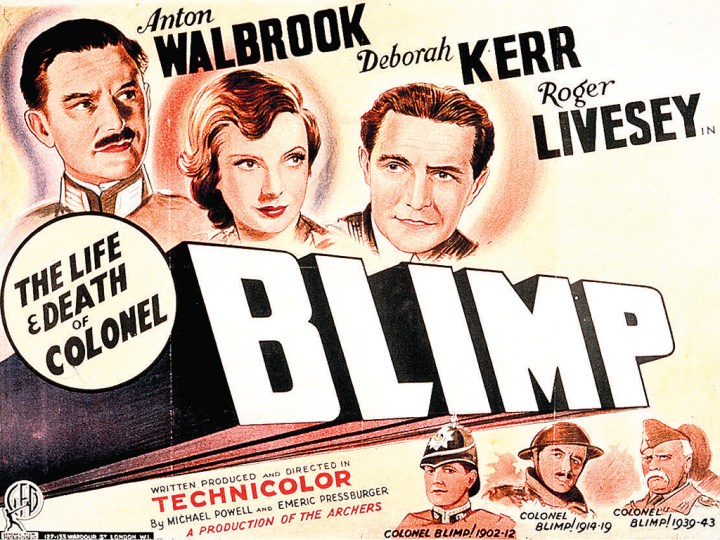
blimp

Source

An epic masterpiece in glorious technicolo(u)r, The Life and Death of Colonel Blimp follows soldier Clive Candy (Liveley) through three wars and the untimely deaths of many African animals.

blimp2
So many dead African animals…

Source

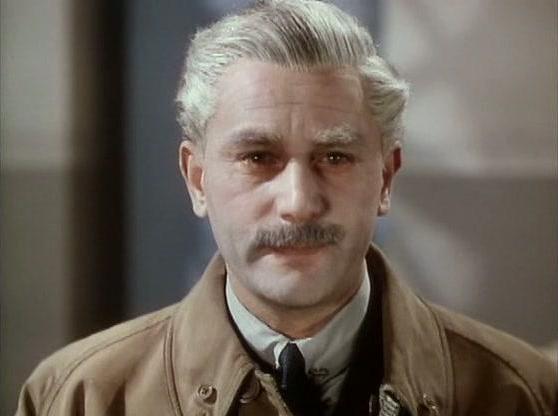
During World War 2, Major-General Clive Wynne-Candy, commander in the Home Guard, is “captured” in a Turkish bath by overzealous soldiers who cannot wait for the actual exercise to begin. A scuffle ensues, Wynne-Candy is assaulted and insulted by the young leader, and we are then treated to a two-and-a-half hour long flashback of the aging soldier’s life.

blimp5
Meanwhile, the poor man has to sit around like this

Source

It begins during the Boer War, when young Candy is on leave and hears of some anti-British propaganda being spread in Germany. After being told clearly by his superiors to leave it alone, he goes off to Berlin to see Edith Hunter (Kerr), the British governess who brought the offence to his attention. Because why listen to your superiors?

The Life and Death of Colonel Blimp
After some (hilarious) musical bullying in a restaurant, it all escalates into a proper duel. As is tradition.

Source

For offending the entire German army, Clive must fight a duel with Theo Kretschmar- Schuldorff (Walbrook) which leads to injuries for both fencers. They end up in the same hospital for convalescence, where they strike up a lifelong friendship together with Edith. As Clive recovers and prepares to return to England, he finds that his two friends have fallen in love and celebrates their engagement with them. It is only after he leaves he realises that he too is in love with the governess.

blimp6
Who wouldn’t fall in love with a woman who uses an entire bird as a fashion accessory?

Source

The two men go their separate ways, but keep in touch. World War 1 begins, and both soldiers are fighting, though obviously on different sides. On the last night of the war, Clive sees nurse Barbara Wynne (also Kerr) who is the spit of Edith (naturally) and once home, he tracks her down and marries her. Probably healthy.

blimp9
“Of course I love you for you, my dear! Your money and your striking resemblance to my sort-of almost ex-girlfriend are completely irrelevant!”

Source

After 1918, Theo is a prisoner of war in England for a year before he’s allowed to return home, defeated and defiant as many Germans at the time. However, his attitude changes during Hitler’s regime, and he eventually seeks refuge in England.

blimp7
Old, disillusioned and broken, Theo once again teams up with his old friend.

Source

The second World War is a difficult time for the now aged Clive, and his attitudes to war and how it should be fought give him a dismissal from the military where he has lived his life. The friendships of Theo and Clive’s driver (and confidant) Johnny Cannon (Kerr again) help him find new new purpose and brings us right up to the start of the film.

blimp8
It gives Clive a chance to get up from the bath and restores his dignity as well

Source

This was a wonderful film and despite its long run time it flies by. All major actors give great performances, and the glorious technicolor really does justice to the soldiers’ uniforms as well as Deborah Kerr’s amazing hair. We loved the clips showing the passage of time between wars, and the handling of Barbara’s death through newspaper clippings was oddly emotionally effective. There are some very good comments on a then ongoing war which are still good observations 70 years on.

The friendship between Clive and Theo is beautiful and the characters are wonderful as well. They’re both flawed, yes, but they are likable and human, which made us very invested in the outcome. We loved it, and it’s well worth the three hour run time.

What we learned: Oh, so many things! Old people have lived long, full lives. Never go off at half cock. Avoid politicians like the plague. Political ideas are best discussed by drinking beer and fighting duels. You so rarely see a good fencing duel nowadays. Only part of the title is true.

Next time: Arsenic and Old Lace (1944)

#63 Shadow of a Doubt

Watched: December 12 2016

Director: Alfred Hitchcock

Starring: Teresa Wright, Joseph Cotten, Macdonald Carey, Henry Travers, Hume Cronyn

Year: 1943

Runtime: 1h 48min

poster-shadow-of-a-doubt_02

Source

Young Charlie Newton (Wright) is depressed and feels sorry for her mother whose life is in a rut. She needs some action in her life – a break from the routine. However, she gets more than she bargained for when the family receives a telegram from uncle Charlie (Cotten), her mother’s brother and young Charlie’s favourite uncle, informing them that he is coming to stay for a bit.

shadow1
“Now for some non-suspicious-looking sending of telegram. Nailed it!”

Source

The big city uncle arrives in the small town of Santa Rosa and lavishes his family with presents and the glamour automatically associated with New York businessmen. However, very soon a pair of “surveyors” show up wanting to photograph and interview the family, especially the newly arrived uncle. Young Charlie starts to get suspicious, not only because of the hostility her older namesake shows the surveyors but also because he hid a newspaper clipping about “the Merry Widow Killer,” a serial killer preying on rich widows, from the family.

shadowofadoubt_3
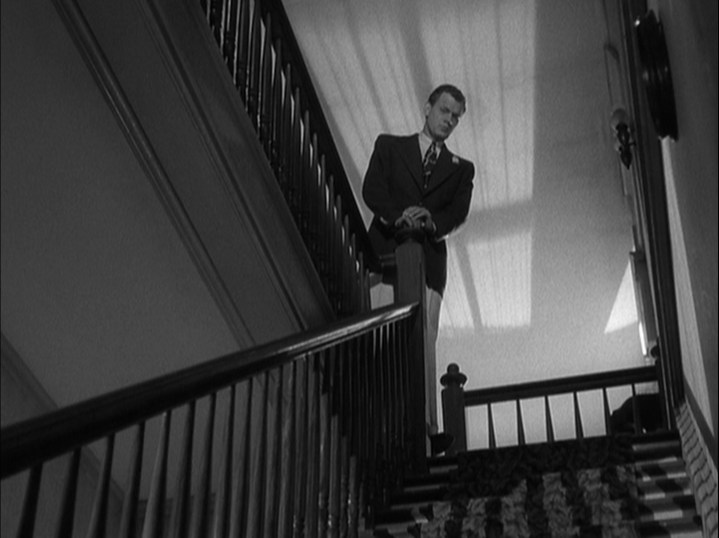
“And now some non-suspicious-looking standing on stairs. Nailed it again!”

Source

The surveyors turn out to be investigators who suspect Uncle Charlie of being the killer, although they have another suspect as well. One of the investigators, Jack (Carey), takes Charlie the Younger out and eventually talks her into helping them as long as they do not make an arrest in front of her mother, as she’s afraid the shock (and shame) would devastate her. The tension between uncle and niece builds as strange “accidents” start to befall her and she suspects dear uncle Charlie might be trying to get rid of the one family member who know of his (possible) double life.

shadowdoubt
“Finally, some non-suspicious-looking grabbing of niece. Man, I’m really nailing it all today!”

Source

As always, the tension and suspense are really intense in this Hitchcock thriller. The relationship between the two Charlies is creepy – first because of the slightly incestuous undertones and later on the way he manipulates her and takes advantage of her love for her mother. Besides their relationship though, the family is really quite lovely. Even the younger children have clear and defined personalities, and we loved the father and his friend’s never ending murder plans for each other. Charlie the Younger is at once too smart and too naïve for her own good and could probably learn a thing or two from her bookish little sister once in a while.

shadow10.jpg
“Two people can play the suspiciously-coming-down-the-stairs-game!”

Source

Eventually, Charlie learns from her uncle and starts using his own manipulative tricks against him. In fact, throughout the film she goes from naïve and sweet school girl to a grown woman in charge of herself and her own fate. Some murderous cinematic bildungsroman there! And we loved it!

What we learned: families always spoil the youngest. Also, it’s important to include Veronica Lake in your evening prayers. Childhood head trauma always leads to criminal behaviour.

Next time: The Life and Death of Colonel Blimp (1943)

#61 To Be Or Not To Be

Watched: November 27 2016

Director: Ernst Lubitsch

Starring: Carole Lombard, Jack Benny, Robert Stack, Stanley Ridges

Year: 1942

Runtime: 1h 39min

Note: same at Cat People and Road to Morocco. Starting to have abandonment issues.

to-be

Source

During World War II, Joseph (Benny) and Maria Tura (Lombard) are the lead actors in a Polish theatre troupe in Warsaw. While Joseph is onstage, however, his wife has an unfortunate tendency to flirt with young men in her dressing room. Before the German occupation of Poland, these young men included lieutenant Sobinski (Stack), who fled to join the RAF once Poland was occupied.

to-be-or-not-to-be
Maria’s affair hurts Joseph in several ways. First because of her unfaithfulness, second because her lover keeps leaving the theatre during his most important soliloquy – “To be or not to be”

Source

In England, Sobinski starts to suspect professor Siletsky (Ridges) who’s returning to Warsaw, of being a spy for Germany. Once the higher-ups learn that the professor is going to Poland with the names and addresses of all the relatives of the Polish flyboys, they send Sobinski to intercept him and the information to prevent it from falling into the wrong hands.

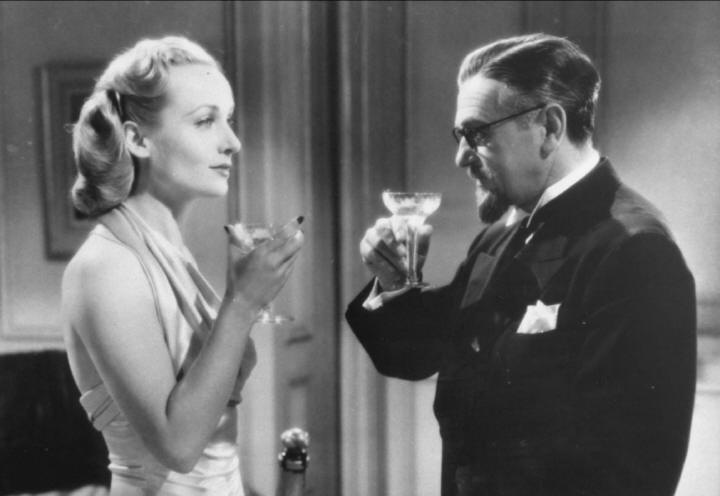
to-be-or-not-to-be-2
No man with a beard as glorious as this could ever be a spy?!?

Source

Maria, Joseph, and eventually the entire troupe are dragged into the plot to secure the information and after Siletsky is accidentally killed, Joseph has to impersonate the dead spy in meetings with the (somewhat incompetent) Nazi leaders. With hilarious consequences.

to_be_or_not_to_be1
To Maria’s acting credit, she improvises like a champ upon realising that the man she’s been flirting with for info is now played by her husband

Source

Although we’ve both heard of this classic comedy before, we had yet to watch it. Despite Sister the Oldest having at one point watched pretty much everything related to Hamlet ever made, for a University course, this one had slipped through the net. So it was about time.

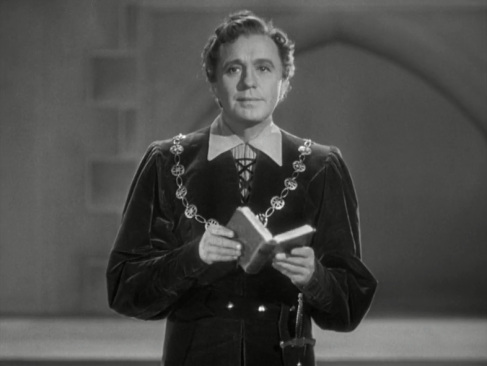
to-be-or-not-to-be-jack-benny-1942-hamlet
Seriously – I know the entire soliloquy. Yet have never once been paid to recite it.

Source

To Be or Not to Be is hilarious and impressive, made even more so considering it was made in 1942, with the war still going strong though the full extent of the atrocities of Nazi Germany were not yet public knowledge. Making fun of Hitler and the Nazis in general was a brave move at the time, but it is not hard to discern the motivation of Jewish German-born director Lubitsch. Despite being a comedy, and a great one at that, the film naturally has very serious undertones and the threat of the Nazi regime is palpable throughout. Definitely worth watching!

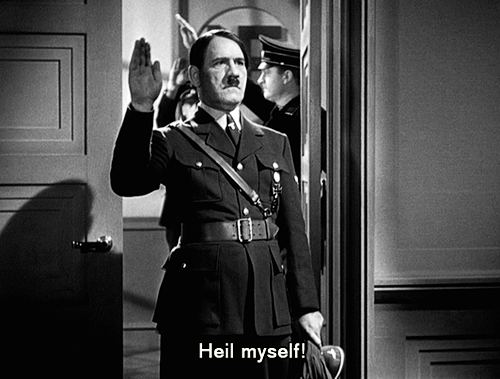
to-be-or-not
Aw, silly Hitler!

Source

What we learned: a tendency to dragging out scenes and stealing the spotlight makes professional actors unsuited for undercover work.

Next time: I Walked with a Zombie (1943)

#58 The Maltese Falcon

Watched: November 04 2016

Director: John Huston

Starring: Humphrey Bogart, Mary Astor, Peter Lorre, Gladys George, Jerome Cowan, Lee Patrick, Sydney Greenstreet

Year: 1941

Runtime: 1h 40min

maltese_falcon_ver2

Source

Samuel Spade (Bogart) is a San Francisco P.I. working with partner Miles Archer (Cowan). One day, a dame (Astor) walks into their office. And what a dame. Legs up to here and an air of desperation about her. Just the way Spade likes’em.

maltese
Desperation and a stole. Spade smells an easy payday.

Source

Now, this dame is looking for her missing sister, and she knows the lowlife who has her. She pays up for a stakeout and Archer, whose wife Spade is incidentally screwing, ends up dead on the job. Spade has a fairly laissez-faire attitude about the whole thing and proceeds to remove Archer’s name from the company window and door. He is nothing if not efficient and practical.

maltese2
The whole brooding private detective thing works better as a solo act anyway

Source

Of course, the dame isn’t telling the truth. She’s lied about her name, her intentions, and the identity of the man she wanted located. In fact, she’s caught up in an international conspiracy involving a golden falcon artefact, more than a few shady characters and several murders. It’s not long before Spade has a new visitor – Joel Cairo (Lorre) who tries to get the jump on the P.I. But one does not simply walk into Spade’s office and threaten him. Or, if one does, one leaves with one’s tail between one’s legs. Or in a body bag. Luckily for Cairo, the former is the option Spade goes with. This time.

maltese3
He’ll take you out without even dropping his smoke

Source

Once Spade is properly roped in, the dame, whose real name is possibly Brigid O’Shaughnessy, although she goes by several pseudonyms, drops her act and comes clean. More or less. Meanwhile, Spade has his own fun, pitting the various bad guys against each other and playing on their greed to manipulate them.

maltese-falcon1
“You know you need to sacrifice your little pet here, right?”

Source

The Maltese Falcon is a classic for very good reasons. It’s a wild ride from start to finish and Bogart is amazing in it, as are the others, but he really steals the show (along with his secretary Effie (Patrick), who we also loved). Spade is cynical and tough, but he also has a lot of fun and seems to enjoy his work and the challenges his opponents throw at him. Despite his methods (and his relationship with his partner’s wife) he has his own moral compass, and not even a desperate dame can make him stray from his convictions.

maltese-falcon4
All this drama for a statuette. Foreigners!

Source

Love this one – can’t wait for more noir!

What we learned: don’t get caught up in a drama revolving around a figurine. Also, never try to make a detective into a criminal.

Next time: Cat People (1942)

#57 Suspicion

Watched: October 28 2016

Director: Alfred Hitchcock

Starring: Cary Grant, Joan Fontaine, Nigel Bruce, Sir Cedric Hardwicke, Dame May Whitty, Auriol Lee

Year: 1941

Runtime: 1h 39min

suspicion

Source

Shy, bookish introvert Lina (Fontaine) keeps running into charming (but creepy) playboy Johnnie (Grant). After parrying his first advances, she overhears her parents discussing her inevitable descent into spinsterhood and starts pursuing him instead. She rapidly goes from indifferent and interesting to lovesick and stalkery, all in the name of avoiding becoming a spinster.

suspicion-1
“I’d better marry the man who assaulted me on our first date. The alternative is just too horrible!”

Source

Back from their honeymoon, she realises he’s completely broke, living well above his means, and intends to live off of her income and future inheritance. Being a sensible woman (apart from marrying this guy) she suggests he gets a job. So he sells her family heirlooms to gamble instead.

suspicion2
“Do you mean to say you love these chairs that have been in your family for generations and which your father gave us? Well, if I had known that I never would have sold them, monkey face!”

Source

Lina also starts to suspect her handsome, charming husband may have murderous intents, especially when his rich friend Beaky (Bruce) dies in a freak accident in France while Johnnie is out of town. It doesn’t help his case that he asks a lot of questions about untraceable poisons to Lina’s crime writer friend Isobel Sedbusk (Lee) and then starts feeding Lina suspicious drinks.

suspicion-milk-fontaine
“Just trying to be a good husband. God, I can’t do anything right, can I?”

Source

Suspicion is as suspenseful mystery from the king of the genre, Mr Alfred Hitchcock, and it is fun to see Cary Grant play a villainous character. Joan Fontaine is great as well and actually won an Oscar for her portrayal of the confused, helpless and scared Lina. The film has a great soundtrack and sound effects, and normal, everyday actions, such as carving a chicken at a dinner party, turn very dark and menacing due to the extreme tension throughout. Lina gradually covers up her neck (Johnnie’s favourite part of her body) as her suspicions grow, and the lighting in the film perfectly illustrates her state of mind (like some filmatic mood ring).

suspicion-1941-001-man-with-milk-00m-mru
The use of light and shadow is amazing in general – not just as Lina’s mood ring

Source

Despite the abrupt and slightly unsatisfactory ending, this is a great, tense mystery film. We loved the ’40s fashion as well – it is nigh impossible to look bad in those clothes.

suspicion3
The typical “nerd attire” in the 1940s is particularly good, especially compared to its more modern counterparts

Source

What we learned: never marry a man who calls you “monkey face.”

Next time: The Maltese Falcon (1941)