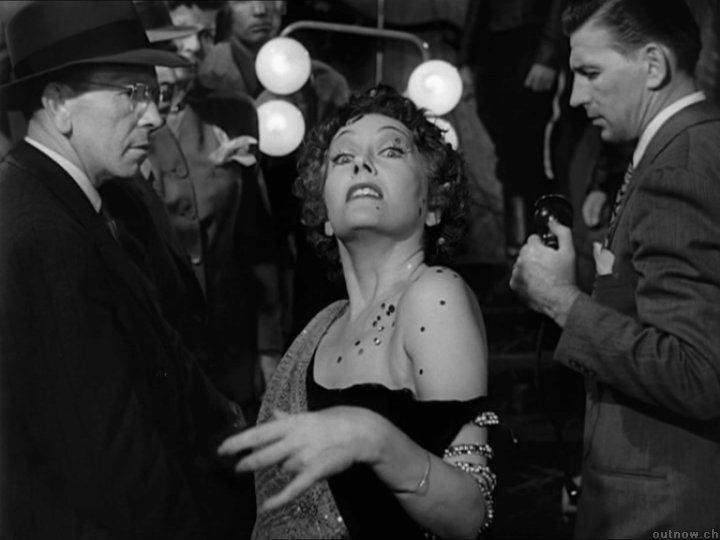
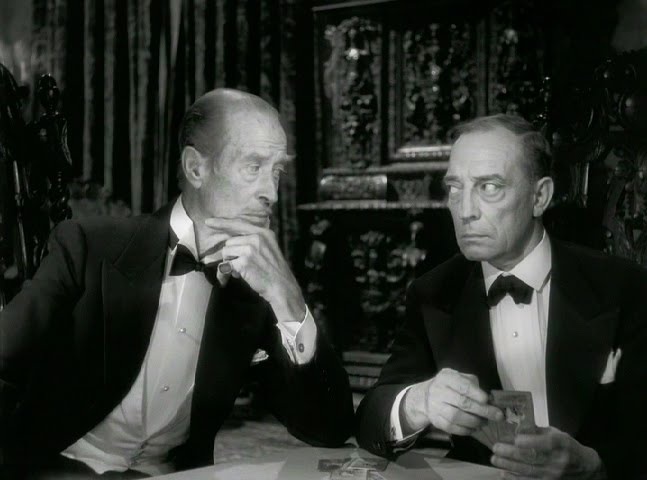
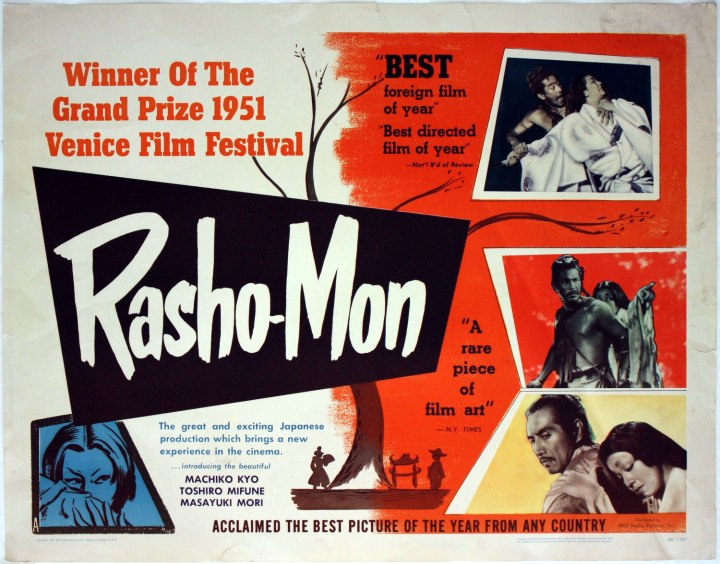
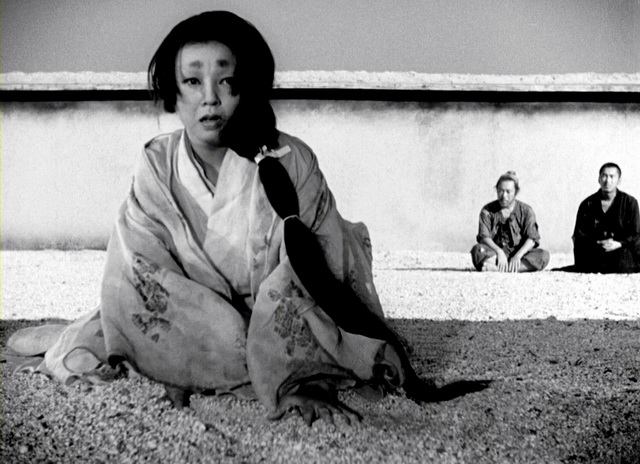
We’ve reached 100, and so it’s tradition to do a summary of old and new favourites so far (we’ve done it once before, hence the use of the word “tradition”). So pour yourself your beverage of choice, kick back, and enjoy going through our old posts.
Again, thank you all for joining us in this adventure and for reading our rambles on classic films which countless other people have written about more profoundly and eloquently than we could ever dream of doing. We’re having a blast!
We’ll leave you with an artist’s rendition of our physical and mental state 100 films in. Who’s who is up for debate…
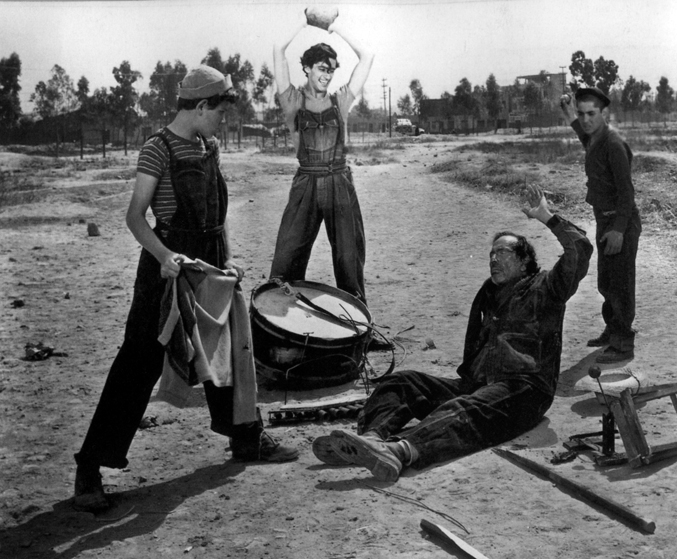
Pop the champagne! We’ve reached number 100! And what an uplifting and optimistic film with which to celebrate. Perfect for a night of champagne and revelry, Buñuel’s Los Olvidados follows the depressing lives of a group of children (of various levels of dental hygiene) in the streets of Mexico through minor and major crimes.
Look! They’re celebrating with us! Happy, happy happy times. Nothing bad will ever happen. La di da di da.
El Jaibo (Cobo), recently escaped from prison, comes back to his old neighbourhood to take up his rightful place as leader of the local children, who he rallies into helping his criminal path by attempting to rob a blind street musician. Brave. Meanwhile, Ojitos (Ramírez) has been left in the streets by his father who seemingly has no plans of returning to pick up his son. The abandoned child is taken care of by Pedro (Mejía) – a good boy who’s abused at home but wants a different life for himself.
The entire film is a laugh riot and not at all depressing as f**k…
Another one of the kids who wants something more from life is Julian, but when Jaibo finds out he has a job and is no longer interested in petty crime he goes into a rage and kills him. Pedro, who witnesses the murder, tries to turn his life around by getting a job, but Jaibo not only screws that up for him, he also literally screws Pedro’s bitch of a mum.
“How dare he aspire to the glamourous life of a blacksmith! I must ruin this for him.”
As a general rule, if one of the kids finds something worthwhile in their lives, Jaibo is there to tear it down. As many other criminals who recruit children, he has no prospects or ambition of his own and therefore wants to drag everyone down to his level to feel like less of a loser.
Los Olvidados is a sad and depressing insight into lives of poverty with a very Un Chien Andalou-dream sequence (which we loved) and frustratingly little hope in the end. If we thought Ladri di biciclette was depressing, it has nothing on this. At least in De Sica’s film there was a loving family and some semblance of hope in the depression – Buñuel’s depiction is pretty much devoid of hope.
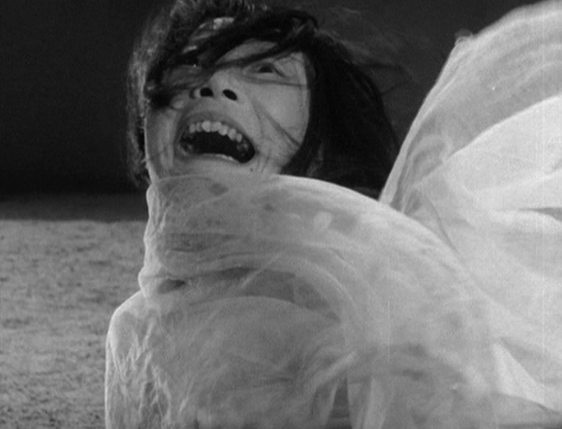
We can’t even get into all the shit this little girl goes through
Dix Steele (Bogart) is a successful screen writer whose career is in a bit of a slump. He is about to adapt a novel into a screenplay, and as he cannot be bothered reading the source material, he invites the adorable Mildred (Stewart) home to tell him the story. She cancels her date and goes home with him, and at the end of the night he gives her money for a taxi and sends her on her way.
Dix is too busy creeping on his neighbour to pay attention to the girl in his apartment
When Mildred turns up dead the next day, Dix becomes the prime suspect; he was the last one to see her alive, he has a violent temper and also a somewhat unsettling fascination with murder. In addition, he doesn’t really seem too bothered by the whole affair, which is always a red flag for law enforcement (we have learned through movies). However, his neighbour Laurel Gray (Grahame) provides an alibi as she witnessed Mildred leaving the writer’s apartment, and the police let him go.
Seems the whole creeping-on-the-neighbour-thing went both ways
The two start a relationship (which is kind of a bad idea since she’s basically the only thing standing between him and a lengthy prison sentence) and quickly start spending all of their time together with Laurel working as Dix’s secretary/assistant. While their relationship seems to be mostly good, Laurel is gradually exposed to her boyfriend’s explosive temper and, as in Suspicion, starts doubting his innocence and her own safety.
We won’t reveal too much of what transpires, but In a Lonely Place is a captivating Noir thriller and we never tire of watching Humphrey Bogart being super cool and somewhat menacing, though here also strangely vulnerable. Gloria Grahame is also excellent and holds her own with her iconic co-star.
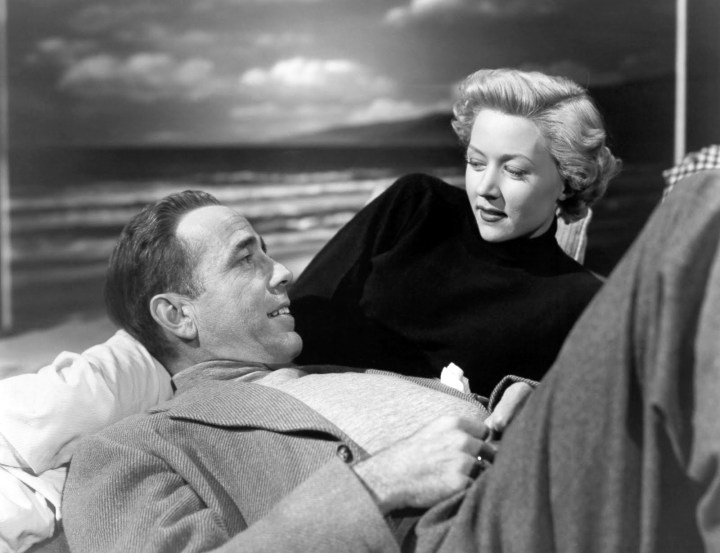
In between the tension and doubt there are also sweet and romantic moments
It’s an excellent film with a compelling (though ultimately fairly unimportant) murder mystery and a very intriguing relationship. The characters are flawed and deeply human, and while their choices may not always be good, they are understandable.
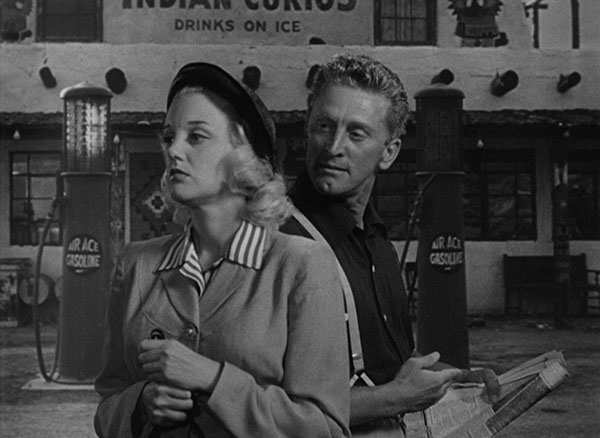
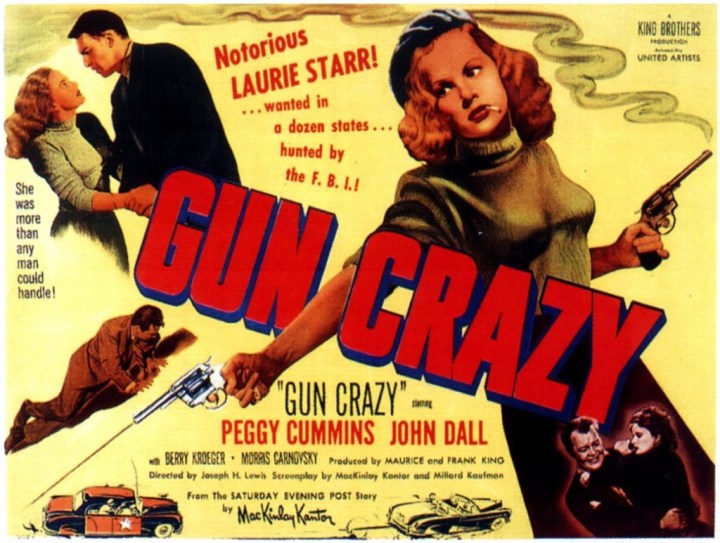
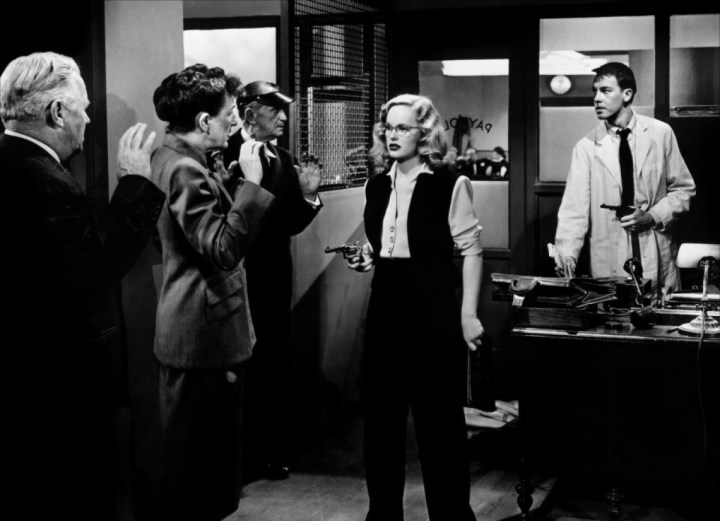
Barton Tare (Dall) has been obsessed with guns (although incapable of killing anything) ever since childhood, when he was arrested for trying to steal one and sent to reform school. As an adult, shooting is his only real skill, and after seeing the alluring Annie Laurie Starr (Cummings) show off her marksmanship in a travelling circus, he joins them as a sharp shooter and goes on the road.
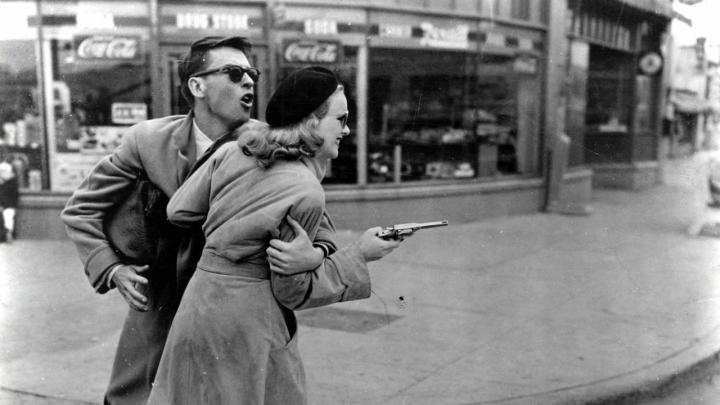
We can’t really blame him for going. Anyone capable of pulling off this look is surely worth risking it all for.
After a short stint with the circus, the two are fired for falling in love while Laurie “belongs to” the circus owner. (Yup, we know…) The lovers go on the road, get married and spend their savings quicker than they probably planned. Laurie has an idea of how they can earn a living and, very much inspired by Bonnie Parker and Clyde Barrow, they go on a crime spree, robbing banks, shops and factories.
Some are more trigger happy than others. See “Deadly is the Female” – original (spoiler) title
While Bart has a strict no-killing policy, Laurie isn’t as scrupulous. After a factory hold-up gone slightly awry, Bart discovers that Laurie killed two people in the robbery and he is less than pleased.
“Bitch had it coming though, criticizing my slacks!” – Laurie, probably
Despite their difference of opinion regarding the value of human life, Bart is unable to leave the woman he loves, and as the FBI gets involved in the manhunt for the robbers-turned-killers, they take increasingly desperate measures to escape the law.
Gun Crazy was amazing (despite the fact that it pretty much put all the blame for Bonnie and Clyde’s crimes on Bonnie). Laurie may be the Fatalest Femme we’ve encountered so far – not because she is necessarily the most devious one, but because Bart is probably the most “innocent” Noir (anti-)hero in many ways. Sure, he has an unhealthy obsession with guns and firepower, but at the same time he is almost boyishly naïve and truly seems to believe they’ll be able to conduct a series of robberies without hurting anyone. Or he’s just telling himself that, which is the more likely scenario.
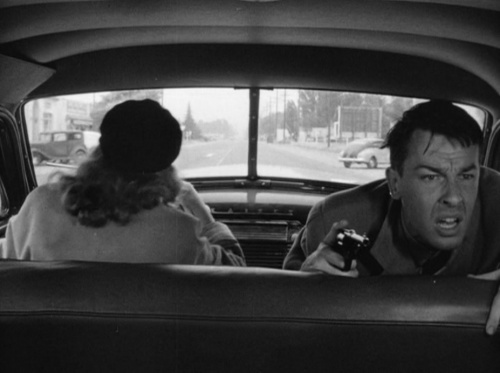
She wears the pants AND drives the car. And he won’t even shoot police officers for her…
Frank Bigelow (O’Brien) has a problem. He has been murdered. However, he is still alive, waiting for the poison in his system to do its job. As any sane man would, he takes it upon himself to investigate his own murder, which leads him into a world of conspiracies, ruthless men and, of course, Dames.
Dames, shady businessmen and psycho henchmen are a must in Noir films. As are decorative lampshades, as pictured in the background.
As he starts to uncover the events leading up to the murder, he becomes gradually more desperate as his expiration date is fast approaching. For an accountant he’s a pretty good investigator and he soon starts to find connections between his own untimely death and the apparent suicide of another man.
As in all great films, sciency looking men with beakers of strange fluid also make an appearance.
D.O.A. is another suspenseful Noir thriller told in flashbacks, complete with leggy blondes (our hero’s favourites), psychopathic henchmen and shootouts. And a nice girl, Paula (Britton), waiting at home not being told a thing about her boyfriend’s impending doom. Men…
Our favourite scene was a musical one – Bigelow goes to “The Fisherman”, a jive bar with amazing live music and “jive heads” being enlightened by the musical frenzy.
It’s interesting to watch a man when he has (almost) nothing left to lose. Bigelow, an accountant in “real life” seems to become more alive in his last 48 hour of life than he has been up until this point, and he also gets his priorities straight regarding his girl.
Very tense, very thrilling, and very atmospheric, D.O.A. is definitely worth the watch. Excellent concept and an abundance of dames only add to the experience, and we recommend it to anyone interested in Film Noir. And/or decorative lampshades.
What we learned: Not everyone has the privilege of reporting or investigating their own murder. Also, ’50s dresses are the best dresses.
While the title states this is All About Eve, this classic is in reality all about Margo Channing (Davies), an aging theatre actress, and her circle of friends. The show starts with the eponymous Eve (Baxter) winning a prestigious theatre award with Margo in attendance, looking very much less than impressed. We then flash back to their first meeting and get to see what has unfolded up until this point and what brought them there.
“I’d like to thank all the people I’ve screwed over and used on my way here”
After her show one night, Margo’s friend Karen (Holm) invites a devoted fan backstage to meet her hero. The fan introduces herself as Eve and tells her tragic life story, charming both women in the process. Margo, sympathising with her visitor, offers her a home and a job as a personal assistant of sorts.
Leave it to Bette Davies to make even post-show clean-ups look glamorous
As Eve and Margo grow closer, Margo starts to see through Eve’s quiet, unassuming demeanor and realises that she is in fact an ambitious young actress who works on manipulating everyone around her to make it to the top. Coupled with Margo’s own insecurities about aging, this leads to some irrational (but fabulous!) behaviour on her part, as she struggles to convince those around her of Eve’s true nature.
Luckily for Margo, she has the most sarcastic eyes in human history and she makes them work for her!
With the exception of critic Addison DeWitt (Sanders), the men are generally bad at seeing through Eve, while the women catch on to her a lot quicker. In a way though, Eve is just manipulating a system made by men in which she has very little actual power. The ageism, especially towards women, in the entertainment industry comes across very clearly in this film and even the strong Margo eventually more or less gives up her career and marries her longtime boyfriend despite teasing her best friend about her life as a housewife.
No woman is truly happy until she has bagged herself a man [citation needed]
Despite being almost 70 years old, All About Eve never feels old or outdated. It’s a drama with elements of thriller and a lot of comedy, and the two hour run time flies by. As good, and as beautiful, as Baxter is, Bette Davies is easily the star of the film, and we absolutely loved her. A classic for a reason, this is one of those films which everyone should watch at least once. If this isn’t enough to peak your interest (if you haven’t already heard of the film, you philistine!), there’s also an early appearance from Marilyn Monroe. Should seal the deal, we think.
As close to number 100 as we are, we are taking a short (one week) break from blogging. The reason is simply that we are Norwegians and Easter is upon us. As all good Norwegians know, Easter can be spent only one way: up in a cabin in the mountains with no electricity, running water, or internet, while we read crime novels in candle light and stuff ourselves with sweets and oranges.
Pretty much this, but with less skiing and more chocolate. And more (fictional) murders.
Naturally, this will put a damper on our ability to write stuff on the internet. Or watch new films, for that matter. We might manage one entry (one has to come down to civilization to shower once in a while after all), but the blog will be a bit more quiet than usual.
But fear not, gentle reader! We shall surely return ere long to continue our journey through the strange and wonderful list Mr Wright has provided for us, well rested and ready to reach no. 100! Until then, while the champagne chills in anticipation of our 100th entry, we wish you a happy Easter and we thank you all kindly for sticking with us and for reading our rambles.
After ten years, and 48 entries, James Cagney is back, and we’re thrilled. Cody Jarrett (Cagney) leads a gang of hoodlums with the help of his Ma (Wycherly) with whom he has a relationship worthy of a Freudian study. After several deaths during a train robbery perpetrated by him and his gang, Cody decides to take the rap for another, less violent crime committed at the same time to avoid a life and/or death sentence.
He seems sadder about leaving his Ma for two years than about leaving his hot wife. See “Freud” above.
Meanwhile, the man in charge of investigating the train robbery decides to put one of his men, Hank (O’Brien), undercover in Cody’s prison cell to get to the bottom of the case since he knows it was Cody’s doing. Hank’s task is to gain Cody’s trust and get a confession. Or, as it turns out, join him in a prison break and become his right hand man after unfortunate events and treacherous gang members throw Cody’s world off balance.
White Heat is an action-packed noir-thriller-prison break-heist-crime-gangster-film with all the elements we still see in the genre(s). The Cagney Charisma™ makes you sort of root for him a bit no matter how amoral and unscrupulous his character may be, although in this case it could be partly because the people with which he surrounds himself are pretty much as bad as he is.
Examples include, but are not limited to, his beautiful but duplicitous wife Verna (Mayo)
Cagney’s undeniable charm aside, we found ourselves rooting more and more for Hank as the story progressed, and we were really impressed with the often sophisticated investigative and forensic tools employed by the police in this film – they felt very modern to us. We also kind of loved Ma Jarrett although, like her son, she’s a bit of a manipulative sociopath.
Cody is deliciously insane though, so Ma may have been a stabilizing influence in his life
It’s a dramatic film with a dramatic score. The storyline is one which would probably have been stretched into an entire season of a TV show nowadays, so with a run time of under two hours, it never gets dull. Very good indeed, and we loved being back in the company of James Cagney.
What we learned: We might all profit from a closer study of classic literature.
Holly Martins (Cotten) arrives in post-war Vienna to start a job provided for him by Harry Lime (Welles) only to find that his friend has died. As Martins starts looking into the accidental death, things don’t add up. Conflicting witness statements and suspicious characters convince the mystery writer that there is something strange going on and he starts to investigate with the help of Harry’s (somewhat illegal) girlfriend, Anna Schmidt (Valli).
It’s a long and winding road to get at the truth. And it’s almost as if there’s symbolism in the sets and cinematography.
We cannot really say much more about the plot without spoiling the film. Suffice to say, Holly’s suspicions are not unfounded and his investigation takes him deep into the murky waters of war profiteering in post-war/early cold war era Vienna. There are twists and turns aplenty and it’s an exciting and engaging watch.
It’s a wet dream for cobblestone aficionados everywhere!
What stands out the most in The Third Man is the incredible use of shadows which reminded us a bit of the early German expressionist films we watched, just turned up to 11 (as did a lot of the angles). The beautiful architecture of Vienna with the juxtaposition of the gorgeous buildings and the rubble of the collapsed structures was beautiful, although we’re sure Austrians may disagree with that.
For horror fans, there’s also a creepy balloon guy.
Wet cobblestones, lots of arches, scary shadows, and a strangely beautiful sewer system make the film very visually appealing. There’s also a decorative lampshade – the very epitome of the Noir trope. The performances are great, with Welles being nicely menacing and slick.
As we said, cobblestone aficionados need look no further for a fix.
Louis D’Ascoyne Mazzini, Duke of Chalfont (Price – looking very much like Gene Wilder), is awaiting his execution for murder. As he calmly enjoys some wine in his cell, he writes down his memoirs, and we are invited to watch how his life unfolded and what led him to his prison cell.
Louis’ mother was a wealthy aristocrat until she ran off to marry an Italian opera singer and her family disowned her. When her husband died minutes after the birth of their son, the new mother is left destitute and forced to (gasp!) do manual labour. The horror! She feels this life is beneath her, and never misses a chance to remind her impressionable young son that he deserves better.
Ain’t no one pointing their cane at Louis Mazzini. Ain’t no one!
After his mother’s death, Louis becomes obsessed with reclaiming his place in her estranged family and becoming the next Duke of Chalfont – the family estate. Partly because of their awful treatment of his mother, but also partly because of his own ambition and his desire for Sibella (Greenwood), a silly girl he grew up with. However, unfortunately for him, there are eight other family members ahead of him in line for the Duke title. Something has to be done. So he goes on a hilarious murder spree.
With this kind of family resemblance, tracking them all down should be a piece of cake
We cannot begin to describe how much we loved this one, and we’re surprised and appalled that we have never heard of it before (a curse on whoever is supposed to be our cultural educators!). Louis is equal parts hilariously sarcastic and genuinely creepy. His systematic approach to trim the family tree is a joy to watch unfold, though his juggling of his two love interests is increasingly sociopathic. Especially as one of them, Edith (Hobson), is the widow of one of his earliest victims.
The other interest is a silly girl with a penchant for lace and overly complicated hats.
The visual and verbal humour made us laugh throughout the film, and we’re definitely watching this one again! Price’s stoic and sardonic Louis reminded us of Gene Wilder (they look alike too), and Alec Guinness is wonderful as all eight (unfortunate) members of the D’Ascoyne clan. Joan Greenwood’s Sibella is certainly a silly girl, but she too has a dark side – the two are perfect for each other. If you like sarcasm, murder and fancy dresses (and honestly, who doesn’t?) this is the film for you.
If you want to make parricide fun, make a game of it!