#166 Touch of Evil

Watched: January 7 2018

Director: Orson Welles

Starring: Orson Welles, Charlton Heston, Janet Leigh, Joseph Calleia, Akim Tamiroff, Marlene Dietrich, Zsa Zsa Gabor

Year: 1958

Runtime: 1h 35min

touch

Source

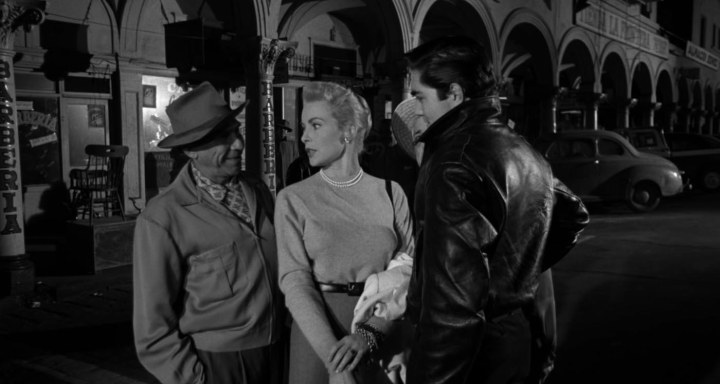
Mr & Mrs Vargas (Heston and Leigh, respectively) pass the border from Mexico to the USA only to have a car blow up in front of them. Mike Vargas, a Mexican agent, decides to look into it, while American-born Susan Vargas stupidly decides to follow a random dude back across the border.
touch1
She might make stupid decisions, but she’s got spunk and is intimidated by no man!

Source

Vargas is joined by US police officers Hank Quinlan (Welles) and his partner Pete Menzies (Calleia) and gets to tag along on their investigation. However, when Vargas witnesses Quinlan planting evidence in the apartment of their main suspect, he accuses the veteran police captain and starts to suspect that he, perhaps with his partner, has been operating this way for years.

touch2
“No, no, you silly Mexican police person! This dynamite was always on the premises. It’s just racist dynamite and will only show up if handled by an American.” “Then how did the Mexican suspect handle it?” “Uh, um, he must be half American or something…”

Source

Quinlan denies any wrongdoing and starts to work to discredit Vargas, or get rid of him altogether. Meanwhile “Uncle” Joe Grandi (Tamiroff) is also putting pressure on Quinlan since Vargas has been investigating Grandi’s brother. To keep her safe, Susan in moved to a remote motel where she finds herself the sole guest only joined by a very strange manager.

touch4
Turns out the motel is anything but safe…

Source

Touch of Evil is really very tense, especially Susan’s storyline. We were genuinely worried about her, no matter how spunky and independent she was, and she had some really horrible scenes. We loved the film though – we loved Susan, the Mexican being the good-guy protagonist (even if it was Charlton Heston in brownface), the total corruptedness of Quinlan and the naïve hero worshiping of Menzies.

Touch3
Also, there’s a brothel run by the fabulous Marlene Dietrich, which in itself is reason enough to watch this movie.

Source

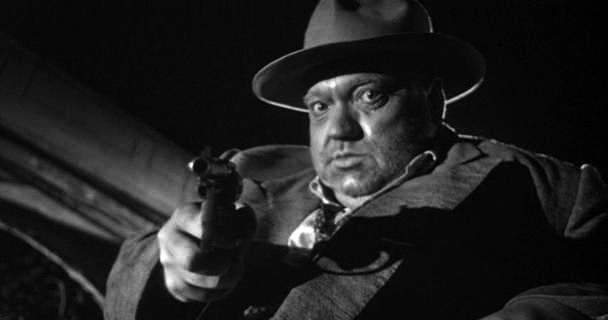
Welles’ version was reedited and released as a very different movie than the one he envisioned. Since its 1958 debut, two other cuts have been released. We’re pretty sure the one we watched was the 1998 version cut together based on Orson Welles’ notes (we base this on nothing other than runtime, as we didn’t check the DVD-case). Just so you know, in case some of you think this is very important to this informal review.
touch5
Put down the gun, Orson! We’ll watch your (probably) preferred version! We swear!

Source

No matter which cut you go for, this is a great Noir with a fantastic opening shot (really – check it out!), a great ending, and some kind of a man. Great stuff!

touch6
No caption here. We just liked this picture.

Source

What we learned: Border towns bring out the worst people.

Next time: Vertigo (1958)
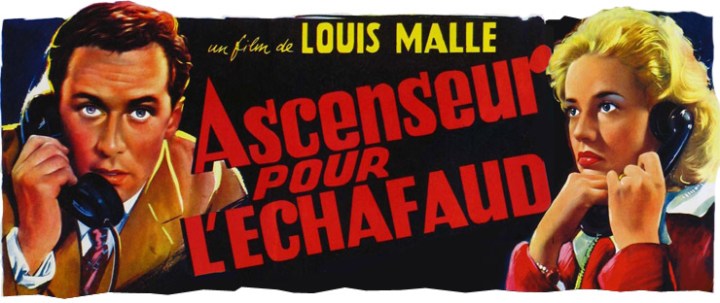
#162 Elevator to the Gallows/Ascenseur pour l’échafaud

Watched: January 20 2018

Director: Louis Malle

Starring: Jeanne Moreau, Maurice Ronet, Yori Bertin, Georges Poujouly, Jean Wall

Year: 1958

Runtime: 1h 31min

elevator

Source

Foreign Legion veteran Julien Tavernier (Ronet) and his lover Florence Carala (Moreau) have a diabolical plan: they will kill Florence’s husband, who just so happens to be Julien’s boss, and make it look like a suicide. The plan is good (you know, in an evil way) and goes smoothly until Julien forgets to get rid of a key piece of evidence.

elevator2
Strangely enough, considering his 74-a-day habit, it was not a DNA-riddled cigarette, but an innocent rope

Source

When Julien tries to retrieve the rope hanging from the murdered man’s window, his timing couldn’t be worse and he ends up stuck in the elevator for the night when the power is turned off.

elevator4
“Dammit! I shouldn’t have had that extra croissant for lunch. Now I won’t be able to squeeze out until I’ve worked it off.”

Source

Florist Véronique (Bertin), who works across the street, and her crook boyfriend Louis (Poujouly) take this opportunity to steal Julien’s car and go on their own spree, which also ends in murder. One in which Julien becomes the main suspect as Louis stole his identity as well as his sweet ride.

elevator3
“Fret not, my dear. It’s just a bad day. Who hasn’t had one of those days where they’ve stolen several cars and killed German tourists? It’ll all blow over soon.”

Source

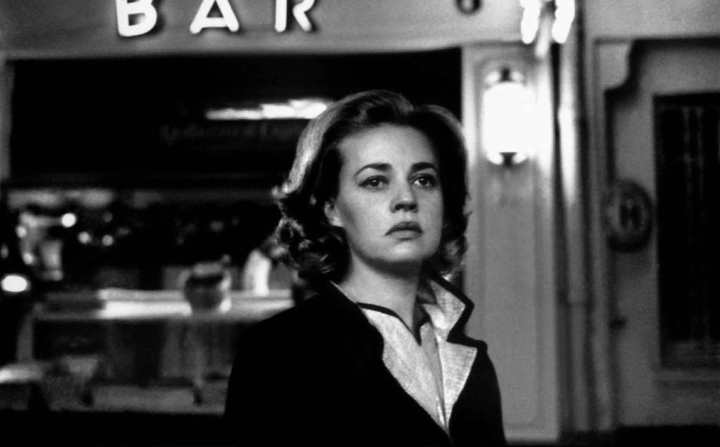
Meanwhile, Florence wanders the streets of Paris searching for her now MIA lover she thinks she saw driving off in his car with another woman. Her internal dialogue is not happy about this.

elevator1
She’s in the ultimate sexy French depression

Source

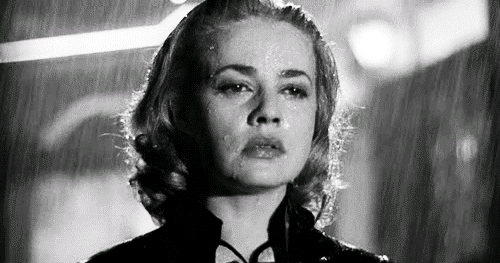
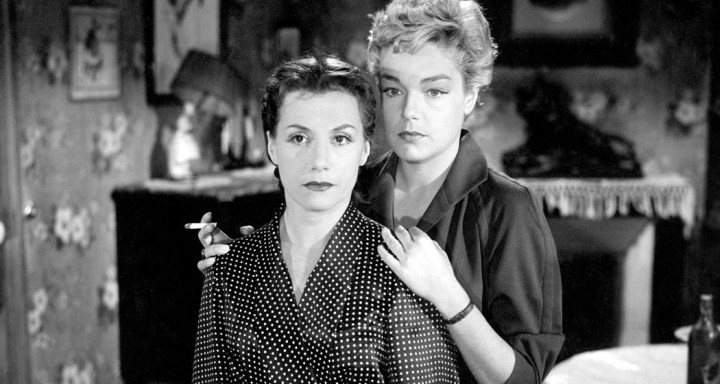
We loved everything about this movie. It is visually stunning and fantastically scored with music by Miles Davis. Despite the fact that Julien committed his very own murder, we kept hoping that pretentious douchebag Louis would be arrested to clear Julien of killing the extremely happy German tourist, and the suspense kept us on the edges of our seats.

elevator5
That, and Jeanne Moreau’s various depressed faces

Source

All the characters are horrible people, and yet we were enthralled by the story and very invested in the ending. Definitely a must-watch!

What we learned: Divorce was invented for a reason, people. Use it!

Next time: Mon Oncle (1958)
#150 Paths of Glory

Watched: December 14 2017

Director: Stanley Kubrick

Starring: Kirk Douglas, Ralph Meeker, Adolphe Menjou, George Macready, Timothy Carey, Joe Turkel

Year: 1957

Runtime: 1h 28min

pathsofglory

Source

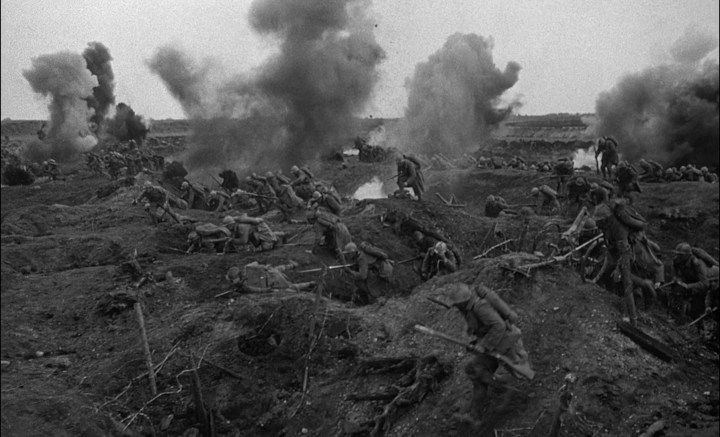
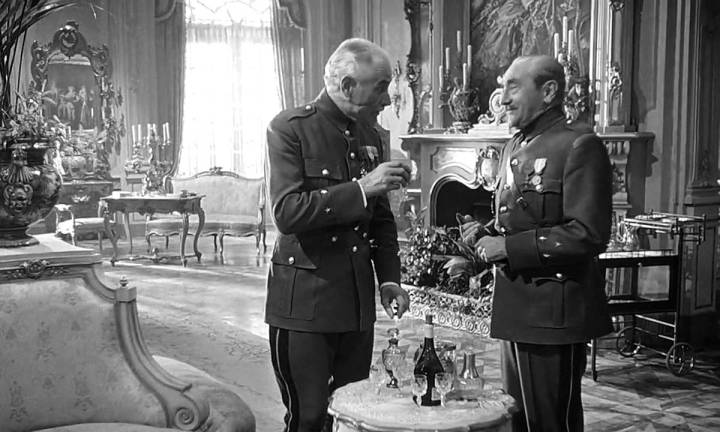
During World War I, Colonel Dax’ (Douglas) regiment is given a suicide mission to stroke the ego of General Mireau (Macready); they are tasked with taking over the German position “the Ant Hill.”
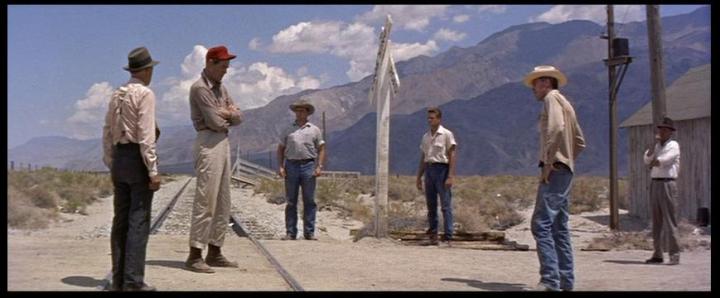
Paths of Glory - The assault on Ant Hill
“Sure, we may lose a few men, or about half the regiment, but it’ll be one hell of a feather in the cap of the General if we manage to advance the ten metres! And feathers are cool.”

Source

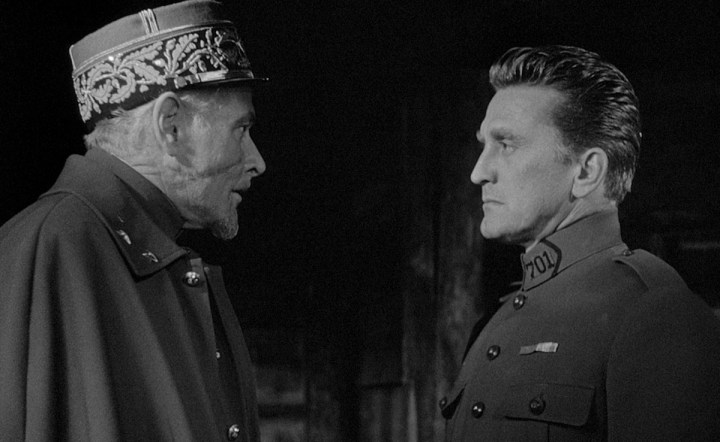
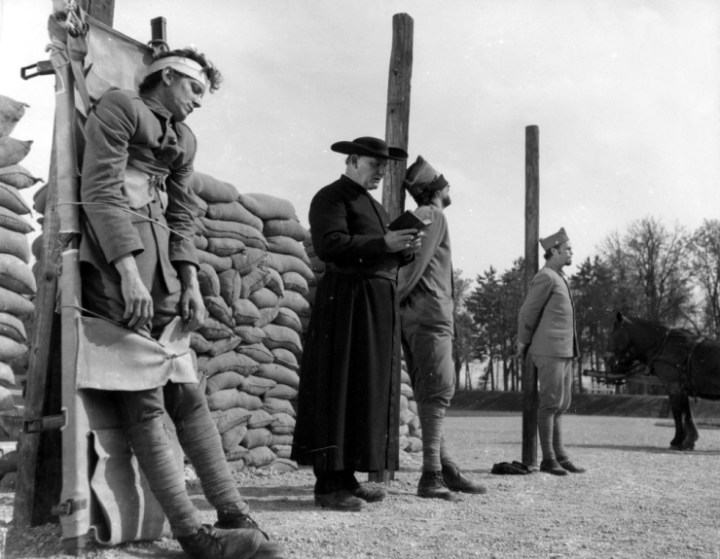
After the doomed attack naturally fails, and B company doesn’t even manage to leave the trenches due to heavy casualties, the General’s pride is a casualty in itself and he decides someone must pay. More specifically, 100 soldiers must give their lives.

paths2
“You know what this army’s problem is? Too many goddamn soldiers! With this many men the outcome of the war won’t be exciting at all, so let’s even the odds by killing our own men.”

Source

A few negotiations later, the number of soldiers to be executed for cowardice has been cut down to three. Dax requests to represent them during the court marshal, but he soon learns that the whole trial is a ridiculous sham. The defendants, Paris (Meeker), Arnaud (Turkel), and Ferol (Carey), have no chance of a fair hearing, and the commanding officers have zero sympathy or understanding for the men in the trenches.

paths3
“And then they claimed shell shock! Shell shock!! The cowards. I tell you, back in my day we were delighted to die for our megalomaniac General. Young men nowadays…”

Source

We cannot believe we haven’t seen Paths of Glory before! We have, of course, been aware of it, but never watched it despite our undying love for Kubrick’s other anti-war masterpiece Dr. Strangelove (1964). We now have a new favourite.

paths4
Not only because Kirk Douglas is super-heroic through most of it. But it doesn’t hurt.

Source

The absurdity of warfare in Paths of Glory is similar to what we see in Dr. Strangelove, but even more frustrating and sad; there’s humour here too, but not as much as in the later film. Also, this film is based on a true event, which adds frustration and sadness rather than humour and levity…

paths5
Speaking of real events, there are more than a few parallels to the witch trials during the Inquisition

Source

Corruption, pride, fear, ambition, power, and absolutely no justice – Paths of Glory is our new favourite World War I film, for sure. We loved the big scale battle scenes and the small scale human drama; the performances and the social commentary. Love, love, love.

What we learned: The military is a silly and dangerous place.

Next time: Quatermass 2: Enemy from Space (1957)

#142 The Killing

Watched: November 9 2017

Director: Stanley Kubrick

Starring: Sterling Hayden, Coleen Gray, Jay C. Flippen, Ted de Corsia, Marie Windsor, Elisha Cook Jr, Vince Edwards, Joe Sawyer, Timothy Carey, Kola Kwariani

Year: 1956

Runtime: 1h 25min

Killing

Source

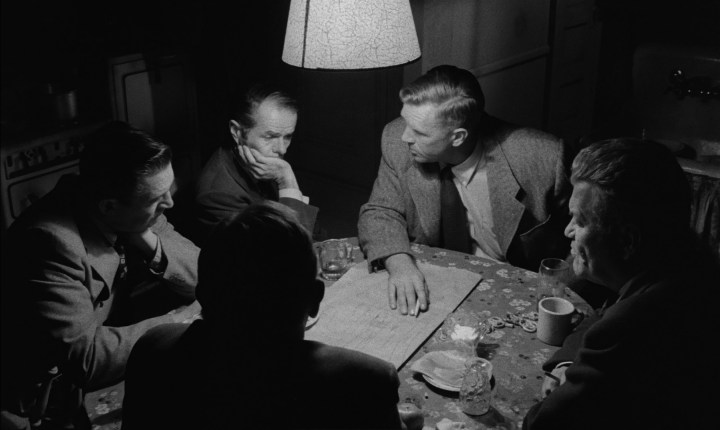
Five men, led by mastermind Johnny Clay (Hayden), are planning a heist on a race track with a potential earning of around $2 000 000. Apart from Johnny himself, there’s money man Marvin Unger (Flippen), corrupt cop Randy Kennan (de Corsia), and inside men George Peatty (Cook) and Mike O’Reilly (Sawyer).

killing2
“So, if anyone has a manipulative, two-timing wife who’s sure to sell us all out, now’s the time to come forward. No..? No one..? George..? All right then, we go on as planned!”

Source

George, a small and nervous man, is easily manipulated by wife and residential Dame Sherry (Windsor), who guilts him into sharing parts of their plan with her. Interested in the money, and less so in her husband, she confides in her lover Val (Edwards – their relationship is the exact opposite of Sherry’s marriage in terms of power and manipulation) who teams up with some buddies to steal the money once the five men do the dirty work.

killing3
“You’ll still love me if you’re rich, right Val?” “Sure thing! I’m definitely not sleeping with you because you’re married and therefore there are no obligations on me, and I won’t leave you for someone younger once I have loads of cash!”

Source

The plan is well thought out, but will the five men get away with it? Will Johnny manage to pull off one last job and retire from crime to marry his girl Fay (Gray)? Or will the deceitful Dame and her lover ruin it all?

killing4
Also, is Nikki’s puppy real or stuffed..? We’re genuinely asking here.

Source

From the intense opening score to the climax at the airport, The Killing is full of suspense and intrigue. We loved the voice over which, unlike most Noir films, is not voiced by a character in the film but a narrator; we loved Mike and his sickly wife (we were rooting for them throughout); we loved the different takes on the same scene; and we absolutely loved the mask Johnny wears for the robbery.

1956, THE KILLING
The stuff of which nightmares are made

Source

The first Kubrick film on the list was a new one for us, and it lived up to the expectations, although it is fairly different from his later works (he was quite young at this point). The female characters are not much to write home about, but otherwise this was a very entertaining thriller with some very cool details which we enjoyed.

Killing6
Also, great inspiration for a simple yet creepy Halloween costume!

Source

What we learned: Never share anything with Dames.

Next time: The Searchers (1956)

#141 The Bad Seed

Watched: November 1 2017

Director: Mervyn LeRoy

Starring: Nancy Kelly, Patty McCormack, Henry Jones, Evelyn Varden, Eileen Heckart

Year: 1956

Runtime: 2h 9min

bad seed

Source

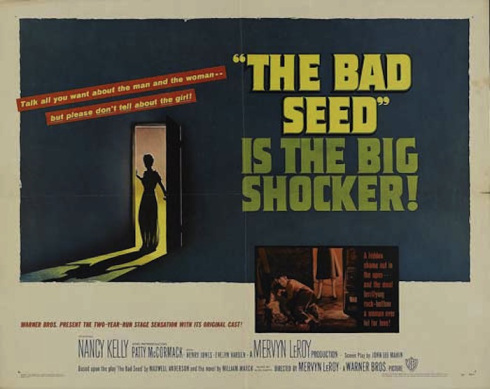
8 year old Rhoda Penmark (McCormack) is a prim and proper young lady who is a bit spoiled and very straightforward. Her father and neighbours think the world of her, especially landlady Monica Breedlove (Varden), but her mother Christine (Kelly) has noticed a more sinister side to her daughter; she has an explosive temper and is possibly the worst loser in history.

bad
“Another kid has better handwriting than me! My life is over!”

Source

When Rhoda fails to win a school prize for penmanship, she does not take it well. Later, at a school picnic, the boy who beat her accidentally drowns. Christine becomes suspicious when she then finds the boy’s missing medal among her daughter’s precious things…

bad2
By precious things, we mean serial killer trophies

Source

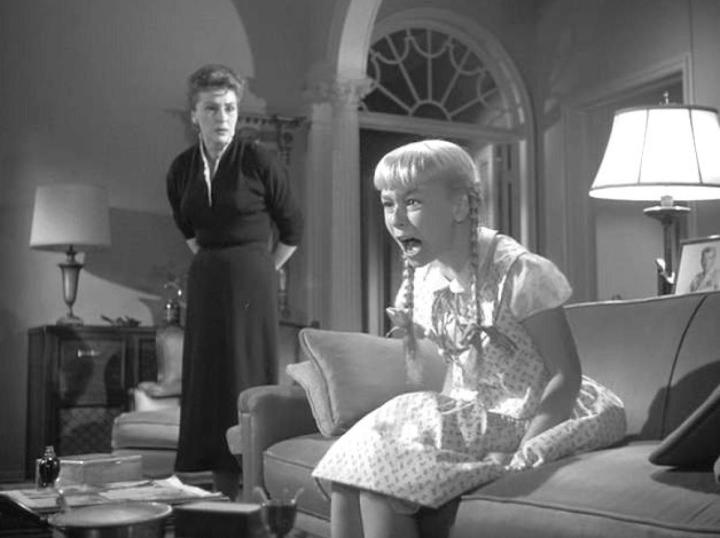
While Christine suspects her daughter may not be quite normal, handyman Leroy (Jones) recognizes exactly what she is – he sees himself in her. He’s too confident in his own supremacy though, so he confronts the child and teases her. Big mistake! She may be tiny and young, but Rhoda is also vicious and resourceful.

bad3
Lesson: never confront a suspected killer, no matter how cute their pigtails are

Source

The Bad Seed holds up very well, despite the many “evil child”-films which have come since its release. Patty McCormack is perfect as Rhoda – alternating between sweet and deadly effortlessly.

bad4
Mama should have known something was wrong looking into those eyes…

Source

We loved Monica the Landlady and her psychoanalytical friends, and the crazy and manipulative Rhoda. The film is long and melodramatic, with lots of sitting room exposition (it’s based on a play), but it is also very creepy and engaging. The Freudian influence is very evident, especially when it comes to the (many) weirdly intense parent-child relationships. Or perhaps that’s just how parents and children interacted in the ’50s.

bad5
You know, with poison…

Source

What we learned: Don’t have kids!

Next time: The Killing (1956)

#136 The Night of the Hunter

Watched: September 17 2017

Director: Charles Laughton

Starring: Robert Mitchum, Shelley Winters, Lillian Gish, James Gleason, Evelyn Varden, Peter Graves, Billy Chapin, Sally Jane Bruce

Year: 1955

Runtime: 1h 32min

night

Source

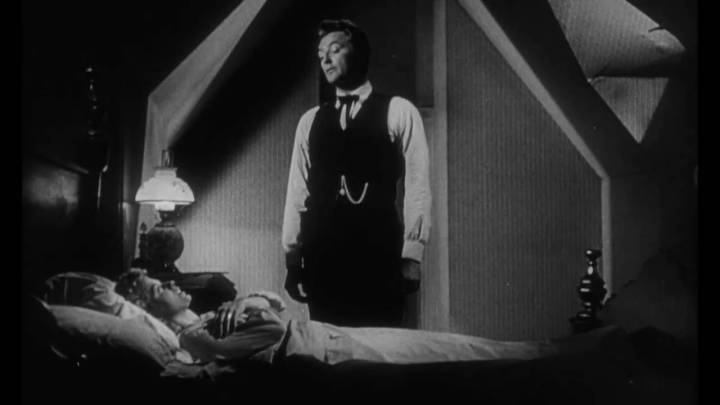
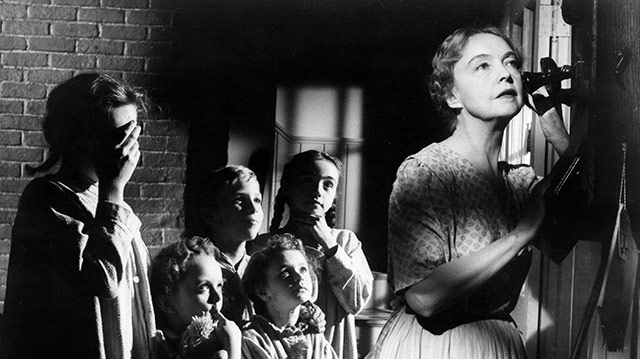
Harry Powell (Mitchum) is a preacher on a killing spree – a self-appointed Soldier of God on a mission to rid the world of attractive widows.

night2
“The Lord said not to have sex before marriage. I don’t remember reading anything about sex being mandatory once you’re married, so… You’re on your own, wifey!”

Source

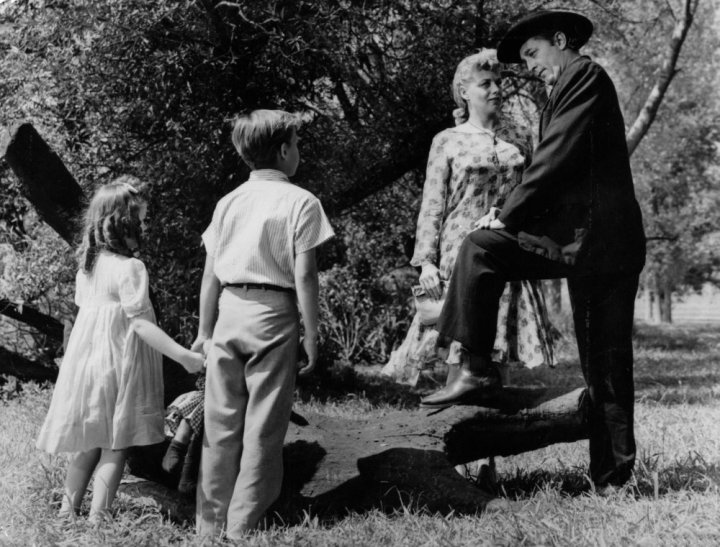
He serves a stint in prison for driving a stolen car (very Christian of him) and shares a cell with robber Ben Harper (Graves). Harper tells his cell mate about his family and Powell figures out Ben’s children know the whereabouts of the money from the robbery.

night3
The best way to earn the trust of children is to take their father’s place

Source

Powell tracks down Harper’s bereaved widow and successfully woos her (with help from the very busy Icey Spoon [Varden]), set on learning her children’s secret. However, son John (Chapin) is not a fool, and he never trusts his new step-father.

night4
“SHOW ME THE MONEY!”

Source

When Powell’s misogyny, frustration and general disposition drives him to kill his new wife, the children grab the money and go on the run, drifting down the river in their boat in search of a safe haven, which they find in the form of Rachel Cooper (Gish). But Powell is not about to give up on “his” fortune…

night5
This is what you get for wanting to have sex with your husband

Source

We have no words to express how much we loved The Night of the Hunter. A serial killer (who may have been the inspiration for characters in both Buffy the Vampire Slayer and Carnivale), resourceful children, absolutely beautiful imagery (even the above picture of dead Willa Harper (Winters) is eerily gorgeous in its grotesqueness), and the exquisite Lillian Gish are the main ingredients which made us fall, but there was nothing about it we didn’t love.

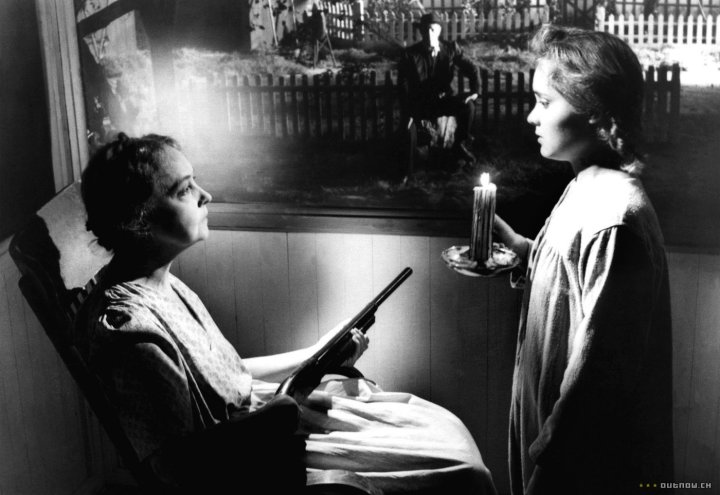
night6
A badass lady with a shotgun. Need we say more?

Source

It’s scary and stunning, creepy, sad and hopeful. We loved the shadows, the music, the knuckle tattoos and the performances. Will definitely watch again.

night7
Lillian f**king Gish. Just amazing.

What we learned: It’s a hard world for little things.

Next time: The Quatermass Xperiment (1955)

#128 Diabolique/Les diaboliques

Watched: August 7 2017

Director: Henri-Georges Clouzot

Starring: Simone Signoret, Véra Clouzot, Paul Meurisse

Year: 1955

Runtime: 1h 57min

Diabolique2

Source

Christina Delassalle (Clouzot) and Nicole Horner (Signoret) are colleagues at a boarding school for boys somewhere in France, but that’s not all they have in common. They are also involved with the same man – Christina’s tyrannical bastard of a husband Michel (Meurisse).

diabolique1
“It’s always more fun to share with everyone”

Source

Michel does not only mistreat his poorly (but wealthy) wife – he is also abusive to his mistress and the children in the school. Fed up with him, Nicole concocts a murderous plan to rid the two women of their shared lover. Christina is hesitant at first, but after her husband humiliates her and rapes her, she has finally been pushed too far.

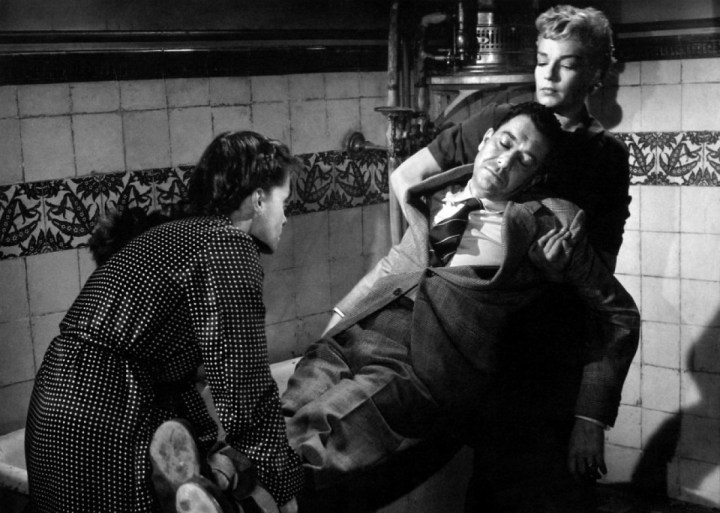
diabolique3
Not what most men have in mind when they picture being bathed by two women

Source

They go through with their plan, but the already mentally and physically fragile wife is quickly deteriorating from the stress and the guilt. Then, the body disappears, freaky stuff starts happening and things turn creepy.

diabolique4
Artist’s representation of us watching this film

Source

Diabolique is very, very creepy and suspenseful. Michel is extremely unlikable and we’ve never wanted two people to get away with murder more than in this case. This film kept us guessing to the end (although we had a theory which turned out to be spot on) and there are a lot of exciting twists and turns in the plot.

diabolique5
The look of a woman mentally preparing for murder

Source

We won’t say much more as we do not want to spoil this gem for anyone, but if you haven’t seen it, it should go to the top of your to-watch list. So good.

Diabolique6

Source

What we learned: If you’re going to murder someone, make sure you know how to play it cool.

Next time: It’s Always Fair Weather (1955)

#126 Bad Day at Black Rock

Watched: August 19 2017

Director: John Sturges

Starring: Spencer Tracy, Robert Ryan, Anne Francis, Dean Jagger, Walter Brennan, Ernest Borgnine, Lee Marvin, John Ericson

Year: 1955

Runtime: 1h 21min

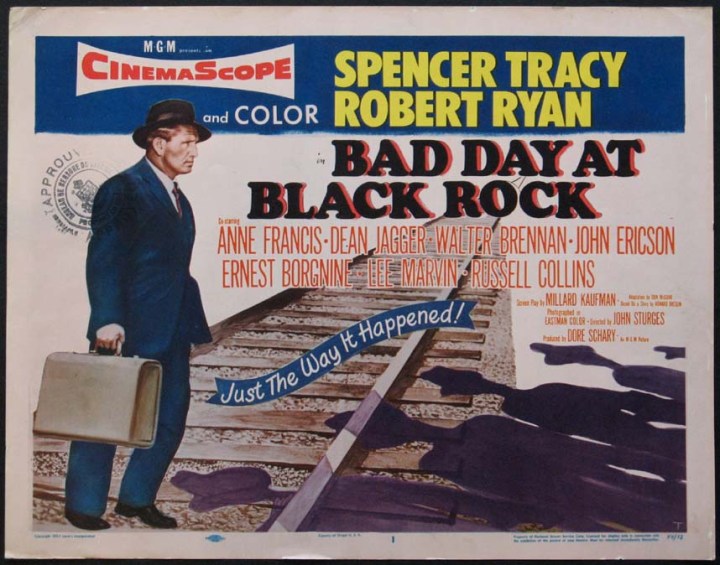
Bad day

Source

The tiny town of Black Rock is amazed to see the train actually stop for the first time in four years. Even more puzzled, and suspicious, are they to find a stranger getting off in search of a hotel room and a cab to take him to Adobe Flats.

Bad day1
“I vote we just kill him now and get it over with. There’s no way we can share our one female resident with yet another man.”

Source

The stranger, John J. Macreedy (Tracy), is met with hostility from all sides, mainly led by Reno Smith (Ryan) who everyone seems to be afraid of. The hostility increases when Macreedy reveals he is looking for a Japanese-American farmer named Komoko, and he is served a story of Komoko being relocated in the wake of  Pearl Harbor.

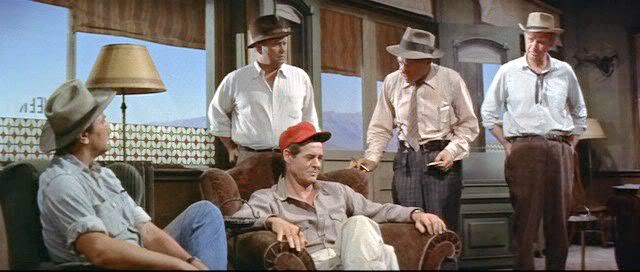
Bad day2.jpg
Pictured: tension. And not the homoerotic cowboy movie kind.

Source

As Macreedy is trapped in the town for the night and all lines of communication with the outside world are sabotaged by local followers of Smith, vet/undertaker Doc (Brennan) is the only one willing to help him. Doc reveals that Komoko is dead, although the details of his death are still unknown to our hero.

bad day4
Hint: there’s racism and bigotry at work. Thank God the world is not plagued by those kinds of outdated ideas anymore!

Source

Smith and his croonies, most notably Coley and Hector (Borgnine and Lee, respectively), no longer operate under any pretense of innocence, and the chances of Macreedy surviving the night grow smaller and smaller.

Bad day3
It doesn’t help that our hero is a one-armed man trying to fight a pissed off Ernest Borgnine

Source

Bad Day at Black Rock is an exciting and tense murder-mystery-western with a crime at the centre of the plot which is strangely (and sadly) relevant to our own times and political climate. Macreedy is a stoic badass, yet you’re never sure things will go his way or who he can trust. The men in this one-woman-town must make some tough choices and decide whether or not to make up for the mistakes that were made four years ago.

bad day5
It’s hard to see how anything at all could happen in a town this small, let alone something horrible

Source

There’s nothing not to love about this film. It’s shot in Eastman Color and Cinemascope, and beautifully so. There are car chases, shoot-outs, bar fights, Dames (well – just the one dame, actually), murder, mystery, and mayhem, and we loved everything about it. Loved it!

What we learned: This is a local town for local people. There’s nothing for you here! Alternatively, they don’t take kindly to strangers round these there parts.

Next time: Blackboard Jungle (1955)

#122 Rear Window

Watched: June 30 2017

Director: Alfred Hitchcock

Starring: James Stewart, Grace Kelly, Wendell Corey, Thelma Ritter, Raymond Burr

Year: 1954

Runtime: 1h 52min

Rear Window

Source

It’s hot in the city and L.B. “Jeff” Jeffries (Stewart) has a broken leg. The increasingly bored and impatient photographer tries to amuse himself by entertaining his voyeuristic side – he spies on his neighbours.

Rear Window2.jpg
“Contrary to what you might think, I spy on my unattractive, male neighbours just as much as sexy Miss Torso the Dancer. So this is all morally sound!”

Source

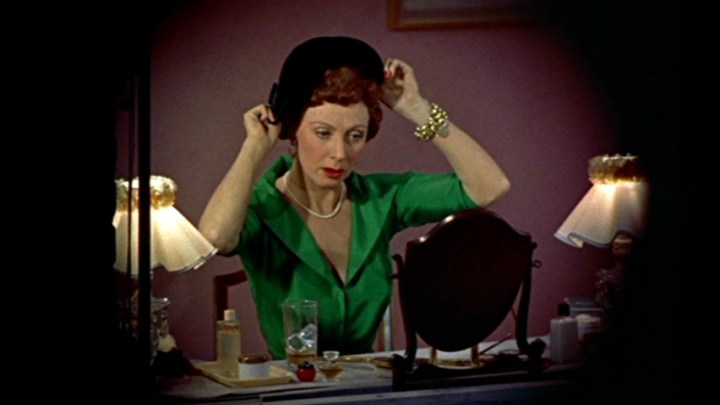
From his wheelchair by the window, Jeff watches the romantic exploits of “Miss Torso;” the heartbreaking life of widow(?) “Miss Lonelyhearts” (whose sadness matches even that of Chaplin himself); and the bickering Thorwald couple across the yard.

Rear Window3
Conveniently, the Thorwalds both tend to be within sight of Jeff’s window simultaneously

Source

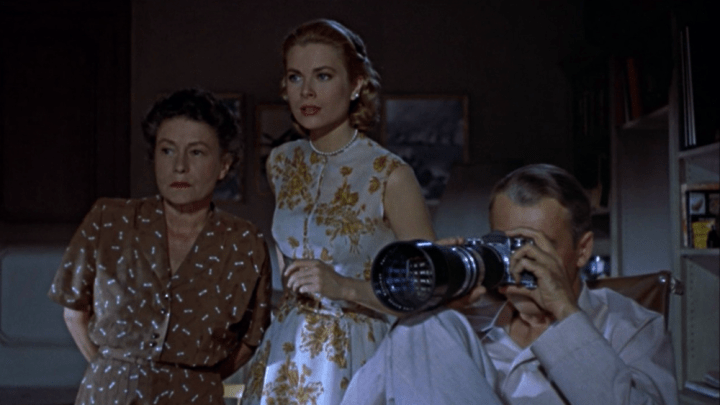
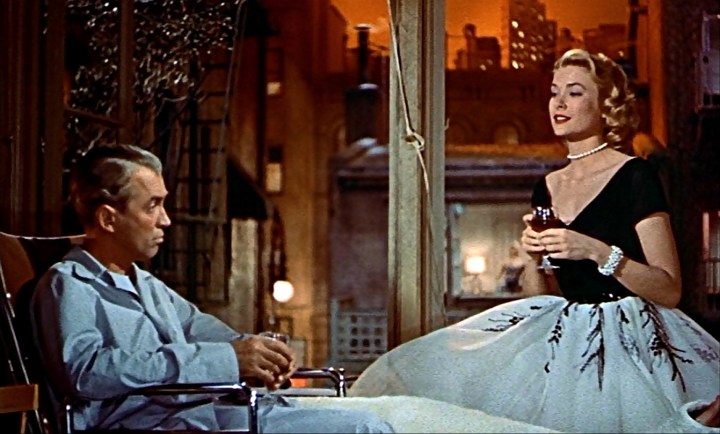
In addition to being the founding, and only, member of his local Neighbourhood Watch Alliance, Jeff is contemplating breaking up with his perfect (no, really!) girlfriend Lisa (Kelly), as he thinks she’s not cut out for his bohemian photographer lifestyle. However, when he sees suspicious activity at Thorwald’s (Burr) apartment, followed by the apparent disappearance of his wife, Lisa and housekeeper Stella (Ritter) are the only ones who believe his theory that Thorwald may have done something shady.

Rear Window4
“For this meeting of the NWA we’ll be spying on our curtain-less neighbours using this incredible powerful lens. Anyone have a moral problem with that?”

Source

Since Jeff’s police friend Doyle (Corey) can’t investigate without any sort of evidence that Thorwald is a killer, and he also doesn’t believe that a murder has happened, the three take it upon themselves to get the proof.

Rear Window7
“Murder, murder, murder! Change the fucking record!”

Source

No police involvement means that the two mobile women must risk their necks as Jeff is bound to his chair, which gives Lisa a chance to prove to her boyfriend that she is indeed wife material.

Rear Window5
Pictured: the kind of woman every man turns down. Disgusting hag.

Source

Rear Window is one of our favourite Hitchcock films, although that list is very long. Like Rope, the action takes place in one room, with just glimpses into the neighbouring apartments. It’s suspenseful with a good cast of characters (and actors), and for a long time you are not sure whether a crime really has been committed, or if Jeff is imagining everything. Miss Lonelyhearts is heartbreaking, and the scene where our protagonists ignore her clearly upcoming suicide attempt in order to focus on a potential murderer’s behaviour is probably the most uncomfortable scene in the entire picture.

Rear Window6
The most intriguing character by far. We’d be very interested in seeing her story on film.

Source

We loved the apartment complex and the mini-tableaux in the apartments, Stella the no-nonsense nurse, the couple sleeping on their balcony, and Lisa the socialite with a brain and guts. Also, the suspense was almost killing us even though we’d seen it before. We love ourselves a good murder mystery.

What we learned: Neighbours are dangerous. We’re never talking to ours again.

Next time: Seven Samurai (1954)

#119 The Wages of Fear/Le salaire de la peur

Watched: July 8 2017

Director: Henri-Georges Clouzot

Starring: Yves Montand, Charles Vanel, Folco Lulli, Peter van Eyck, Véra Clouzot

Year: 1953

Runtime: 2h 27min

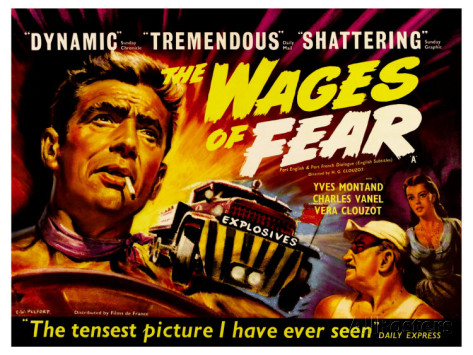
wages of fear

Source

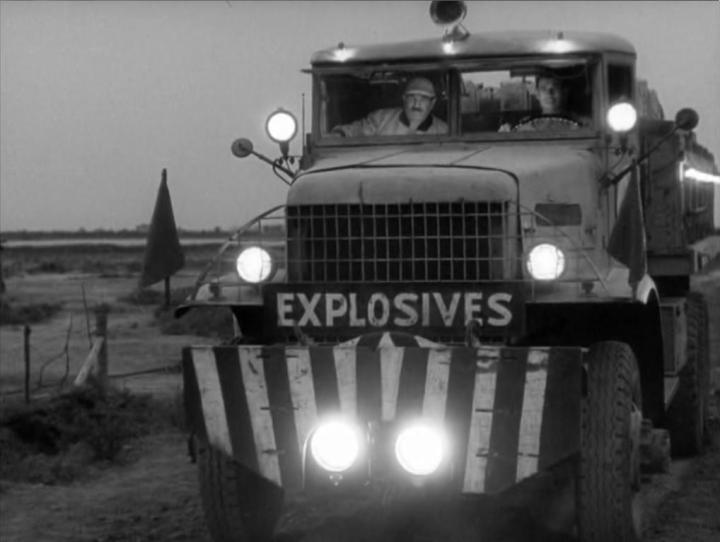
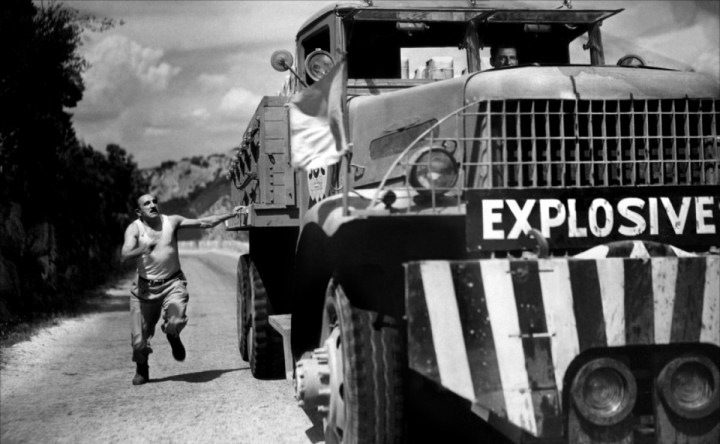
In a small village somewhere in South America, men of various nationalities are looking for work and a ticket out of extreme poverty and to more civilized places. After a horrible accident at a nearby oil field, the American owned “Southern Oil Company” needs to transport huge quantities of nitroglycerin to the field, but have no inclination to spend time and money putting security measures in place.

wages of fear2
“We made a sign. What more could we possibly do?”

Source

Not prepared to sacrifice proper American lives on this suicide mission, the company recruits drivers among the unemployed village vagabonds – desperate men ready to do anything for the $2000 offered as payment.

wages of fear3
“Just, you know, don’t shake the cargo. Or make loud noises. Or crash. Or have a nervous breakdown. Yeah, you’ll be fine.”

Source

The lucky(?) selected drivers (after some light corruption and implied violence) are Mario (Montand) and Señor Jo (Vanel) in one truck, and Luigi (Lulli) and Bimba (van Eyck) in the other. They are informed of what they are transporting as well as warned by another potential driver that even if they survive the impossible task, they will be mentally scarred for life. However, desperate people are willing to do desperate things, and the chosen men go on their way.

wages of fear4
What could possibly go wrong on these well-maintained roads?

Source

The ensuing road trip is one of the tensest we’ve ever seen. Every tiny obstacle, of which there are many, is potentially fatal, and the relationships between the characters grow very strained. It is a good film that can get us to care about characters who are intrinsically unlikable, and Clouzot manages that difficult task.

wages of fear5
Despite their (many) flaws and their treatment of each other and others in their lives (such as Mario’s girl Linda [Clouzot]), we really don’t want them to suffer a fiery death

Source

This is another film which we did not expect to enjoy as much as we did. It is excruciating to watch the four men attempt to get their deadly cargo to their destination, and the tension manages to stay high all the way to the final scene. Despite a slightly slow start, the 147 minutes fly by and leaves you a nervous wreck. We’d really love to see this on the big screen one day, so if the local film club ever does a screening, we’re first in line.

wages of fear6
Not what we had in mind when we saw there would be men covered in oil. The only slight disappointment in this film.

Source

What we learned: Oil companies are ruthless and evil. Also, money is not worth risking everything for.

Next time: Godzilla (1954)