As is tradition, once we go through 50 films, we do a recap of our favourites – new and old. So, here we go again. Make yourself a nice cup of tea or coffee, and dive into our old(ish) posts (warning: there are a lot this time!).
By the way, we admit that these 50 have taken us a bit longer than the first two sets of 50, and we can only apologize and make silly excuses such as sometimes we have to do actual life stuff. Which we do. But we’ll be better – we promise. Or at least not worse…
Stay tuned for Quatermass 2: Enemy From Space coming up sooner than you’d think!
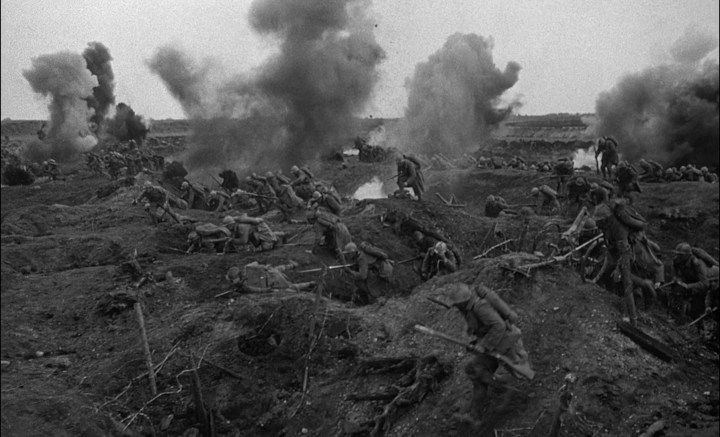
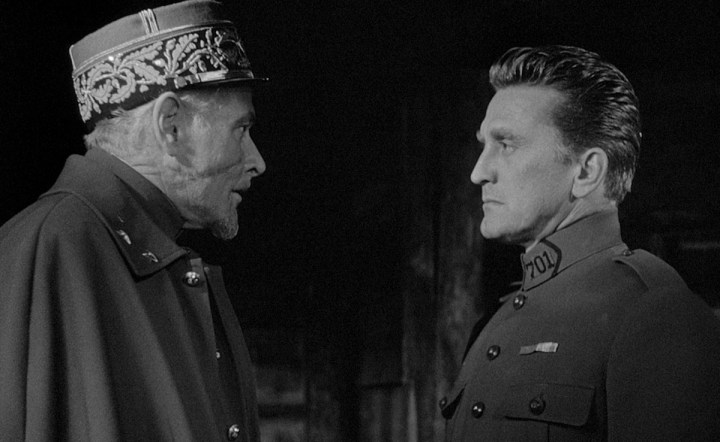
During World War I, Colonel Dax’ (Douglas) regiment is given a suicide mission to stroke the ego of General Mireau (Macready); they are tasked with taking over the German position “the Ant Hill.”
“Sure, we may lose a few men, or about half the regiment, but it’ll be one hell of a feather in the cap of the General if we manage to advance the ten metres! And feathers are cool.”
After the doomed attack naturally fails, and B company doesn’t even manage to leave the trenches due to heavy casualties, the General’s pride is a casualty in itself and he decides someone must pay. More specifically, 100 soldiers must give their lives.
“You know what this army’s problem is? Too many goddamn soldiers! With this many men the outcome of the war won’t be exciting at all, so let’s even the odds by killing our own men.”
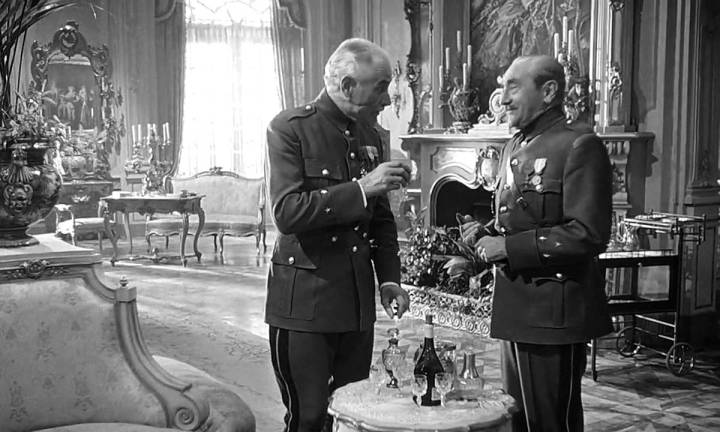
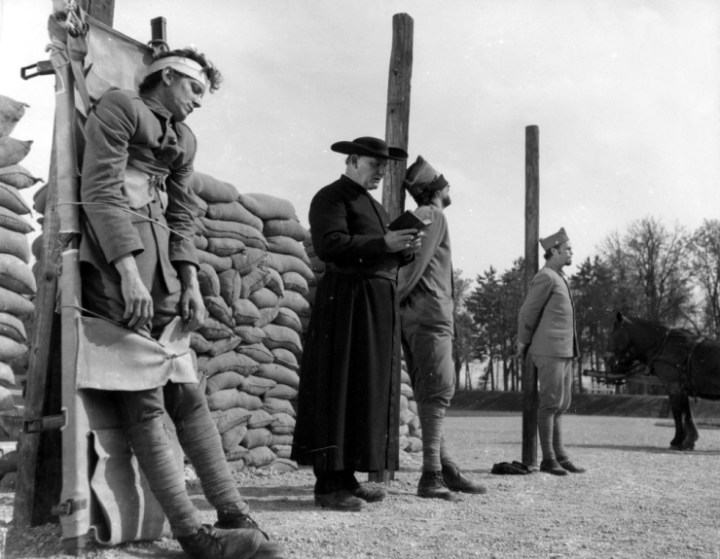
A few negotiations later, the number of soldiers to be executed for cowardice has been cut down to three. Dax requests to represent them during the court marshal, but he soon learns that the whole trial is a ridiculous sham. The defendants, Paris (Meeker), Arnaud (Turkel), and Ferol (Carey), have no chance of a fair hearing, and the commanding officers have zero sympathy or understanding for the men in the trenches.
“And then they claimed shell shock! Shell shock!! The cowards. I tell you, back in my day we were delighted to die for our megalomaniac General. Young men nowadays…”
We cannot believe we haven’t seen Paths of Glory before! We have, of course, been aware of it, but never watched it despite our undying love for Kubrick’s other anti-war masterpiece Dr. Strangelove (1964). We now have a new favourite.
Not only because Kirk Douglas is super-heroic through most of it. But it doesn’t hurt.
The absurdity of warfare in Paths of Glory is similar to what we see in Dr. Strangelove, but even more frustrating and sad; there’s humour here too, but not as much as in the later film. Also, this film is based on a true event, which adds frustration and sadness rather than humour and levity…
Speaking of real events, there are more than a few parallels to the witch trials during the Inquisition
Corruption, pride, fear, ambition, power, and absolutely no justice – Paths of Glory is our new favourite World War I film, for sure. We loved the big scale battle scenes and the small scale human drama; the performances and the social commentary. Love, love, love.
What we learned: The military is a silly and dangerous place.
September 1944. The last days of the Warsaw Uprising. A small company of men (and women) are barricaded in an isolated part of town but it’s not long before they are attacked by Germans.
Even in a war zone (or perhaps especially in one?) there’s time for flirting and light hanky panky.
Surrounded, and with injured men, Lieutenant Zadra (Glinski) has no choice but to lead his company through the sewers to freedom, a tactic he’s not too keen on.
And really, who can blame them for being less than thrilled? Pennywise might be down there!
Stokrotka, or Daisy, (Izewska) who is familiar with the sewer system, offers to take care of the injured Korab (Janczar) who she is secretly in love with. She claims that the others will find their way easily as the exits are marked, but she overestimates the night vision of the soldiers.
It may have gone very differently if they had at least opened their eyes
As the company lose each other in the underground labyrinth, they each must brave the dangers that lurk: polluted air and water, gas, madness, and German grenades.
Lesson: slippery sewer rocks and hand grenades are not a good combo
Kanal is dark, suspenseful, and claustrophobic, and we loved it. We’re not sure whether the Warsaw sewer system is purgatory or one (or several) of Dante’s circles of Hell, but we know there’s no way we’re ever exploring it. Even if bad-ass Stokrotka is our guide.
Depressing though it is, this is also one of the best World War II films we’ve ever seen. We’re (very hesitantly) looking forward to Ashes and Diamonds (1958), hoping it may be a little bit more optimistic. But not really believing that.
Dick Avery (Astaire), fashion photographer, bursts into the life of intellectual book seller Jo Stockton (Hepburn) with an impromptu photo shoot in her shop. Fashion editor (and personal hero) Maggie Prescott (Thompson) shuts her out of her shop for being a nuisance, but Dick manages to convince the brilliant lady to make Jo her new “Quality girl” and model.
Thus starts the arduous task of making a glamorous model out of this hideous beast
Dick talks the reluctant Jo into the job by promising her a trip to Paris – her biggest dream is to travel to the French capital to hear her personal hero professor Emile Flostre (Auclair) talk. He is the inventor of empathicalism, a philosophy Jo follows and Dick ridicules.
“You silly girl! Stop trying to think and put on a pretty dress!”
They go to Paris, Jo blossoms into a great model, Dick and Jo fall in love (for some reason), Jo gets to meet her hero (which the adage tells us never to do, and we learn why), and Maggie and Dick get to go undercover as Floridian singers to great success. Also, there are complications and conflicts, as there should be.
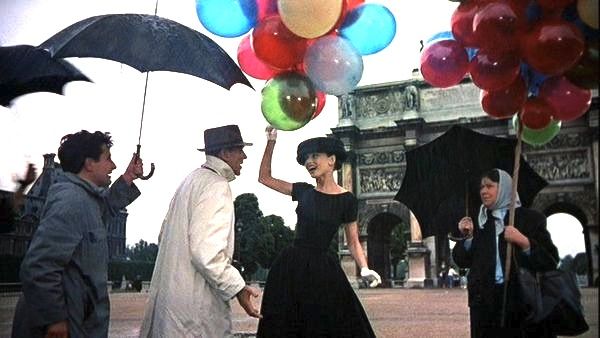
Even Parisian rain can be endured with Givenchy dresses and colourful balloons
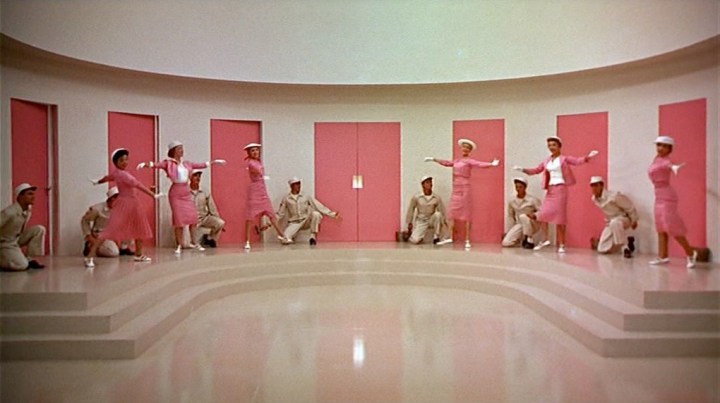
We’re slightly conflicted over Funny Face. There is so much about it we love: the colours, the musical numbers, the sets, the costumes, the choreography, Maggie Prescott, Audrey Hepburn’s slightly clumsy elegance, the fact that she got to sing her own songs, and generally the overall feel of the entire film.
What we don’t quite get is the romance at the centre. It’s not so much the age difference, although 30 years is a lot (and we’re not strangers to the concept). It’s mainly Dick’s constant treatment of Jo as if she’s just a silly little girl incapable of thought and of seeing the real intentions of her hero. He berates and controls her, and he tries to change her priorities to make her more like the fashionistas he works with.
Then again, who wouldn’t be persuaded to become a model if it meant wearing dresses like this?
It feels a bit as if he might be better off finding someone else if he wants to change her that much. And that she would be happier with someone who at least supported her intellectual pursuits. We sort of thought Maggie and Dick would have been a better couple. But perhaps that’s just us.
Overall, we like the film, but the romance feels very dated unless it’s supposed to be a bit uncomfortable. The musical numbers and the gorgeous cinematography sort of makes up for it though. Sort of.
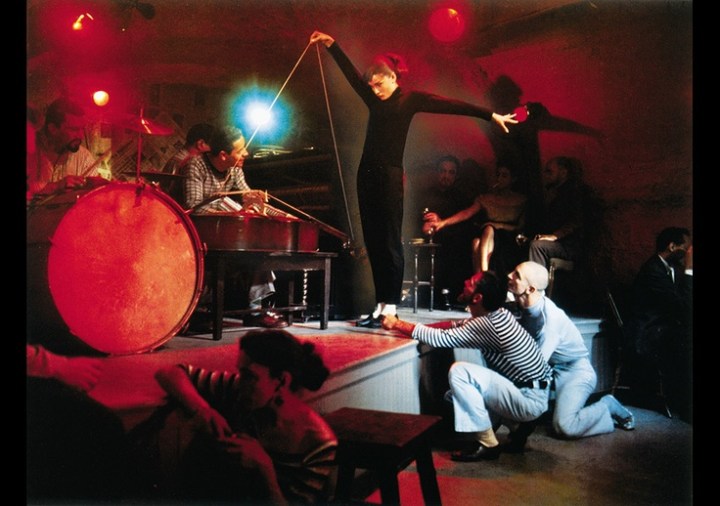
It made us want to dance in sordid, French night clubs with men in striped shirts for sure
After Professor Harrington dies under mysterious circumstances, his niece Joanna Harrington (Cummins) teams up with the late professor’s colleague John Holden (Andrews) to find the truth. Joanna thinks her uncle’s death is related to a “satanic cult” he was investigating, and specifically the leader Dr Karswell (MacGinnis).
“He’s not a satanic cult leader! He’s just a happy-go-lucky clown!”
While Holden has made it his life’s mission to discredit occultism, Ms Harrington is a bit more open to the concept of her uncle’s death being supernatural in origin. But when Holden finds a mysterious paper in his belongings (after a chance encounter with Karswell in the British Library – the no. 1 hang-out place for academics and satanists) and his symptoms start resembling those of the dead man, he gradually starts to come around to Joanna’s way of thinking.
If you’re chased through the woods by a strange smoke cloud, satanic forces is usually the first and only theory.
Night of the Demon (or Curse, if you’re American) is less subtle than Tourneur’s earlier work (Cat People and I Walked with a Zombie), where you’re never sure if something supernatural is happening or not. In this, the demon is shown on screen several times, although arguments could be made that they are only seen by the doomed men who believe a demon is out to get them.
They both see the same, slightly cross-eyed demon though…
Apparently, this was at the insistence of the producer rather than the vision of Tourneur, and it might have been a better movie without it. Despite the somewhat outdated special effects though, this is still a very enjoyable movie.
Karswell is nice and sinister throughout, when he’s not in clown make-up that is
We loved Karswell acting all serious in full-on clown mode; the seance with the singing; the scene on the train; and the general plot. It’s a fun, slightly camp, horror film which is slightly dated but still a good watch – especially if you’re a horror fanatic.
Or if you’re really into huge, cross-eyed demons floating through dark woods. It’s a fetish, we’re sure.
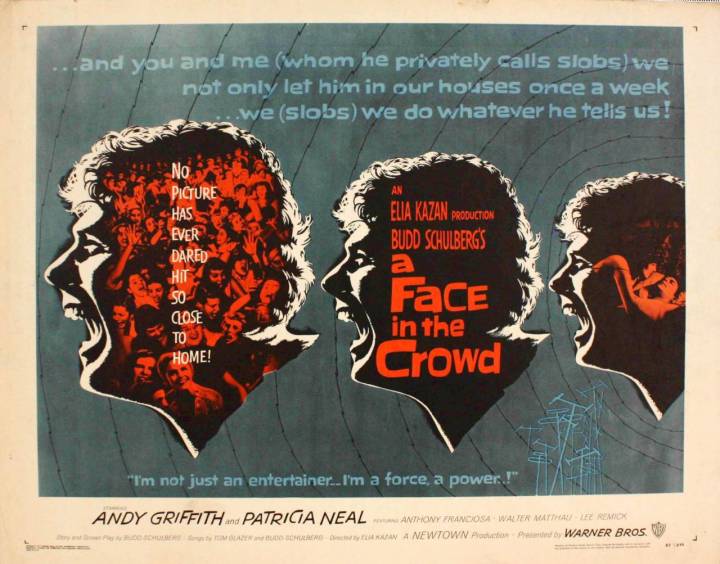
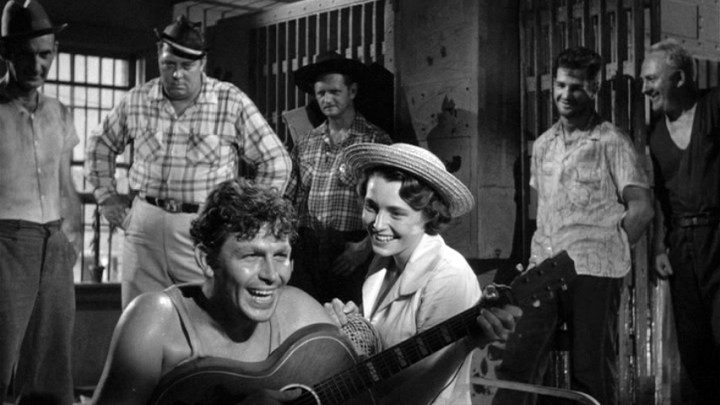
Marcia Jeffries (Neal) is a small town radio reporter who makes a show called “A Face in the Crowd.” As she has the brilliant idea of recording an episode in the local jail, she discovers charismatic drifter Larry “Lonesome” Rhodes, and his music and personality make him an overnight sensation.
You know it’s going to be a good day when the only unhappy person in jail is the sheriff
Marcia and her uncle, who owns the radio station, give Lonesome more airtime and soon his popularity spreads across the nation and, via Memphis, he ends up as a TV personality and big time influencer in New York.
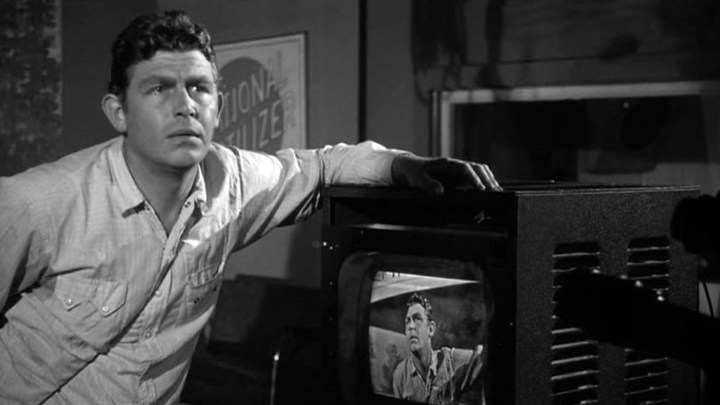
On TV, Lonesome Rhodes is a down-to-earth country boy with a heart of gold and grass root wisdom to spew. However, in real life Larry is a selfish scoundrel of a con man who grows increasingly madder with his newfound power and political influence. Marcia, who has fallen in love with her discovery despite being a very smart woman, gradually realises that she has created a monster…
The face of a completely sane and not at all crazy man, thankyouverymuch!
In many ways, A Face in the Crowd is more relevant now than it was in 1957. The popular media’s influence on politics, the TV personality’s power over people’s thoughts and opinions, and the yes-men surrounding the star enabling his delusions are all more prominent now than ever.
Just look at who became president of the USA in the latest election…
While funny at times, and dramatic at others, it still plays more like a horror movie in many ways than a drama, particularly since it really nails a lot of nasty truths about society and politics.
We like these guys, though. Especially Walter “I Hate Extroverts” Matthau.
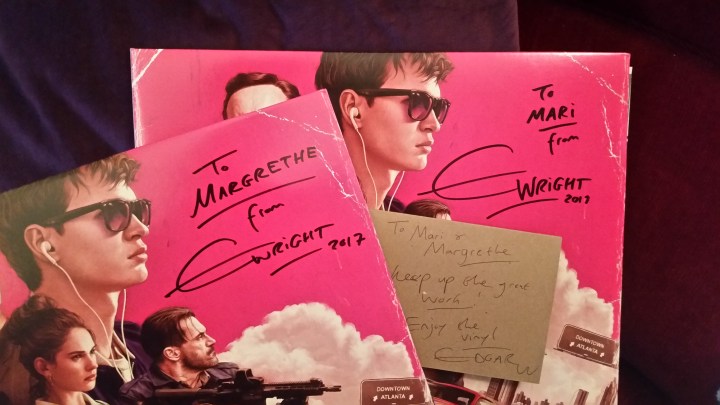
We have officially decided that we have chosen to watch the list of the best director in the world (as all directors naturally have made a 1000 favourite films list)! This morning, by courier, we got a mysterious package delivered at our door. What did it contain, you ask? Well, just the best surprise we’ve ever received!
Two signed copies of the (now Grammy-nominated) Baby Driver soundtrack! As well as a card from Edgar Wright himself. We’re delighted and very grateful that the man takes time out of his busy schedule to send us this. Thank you so much, Edgar!
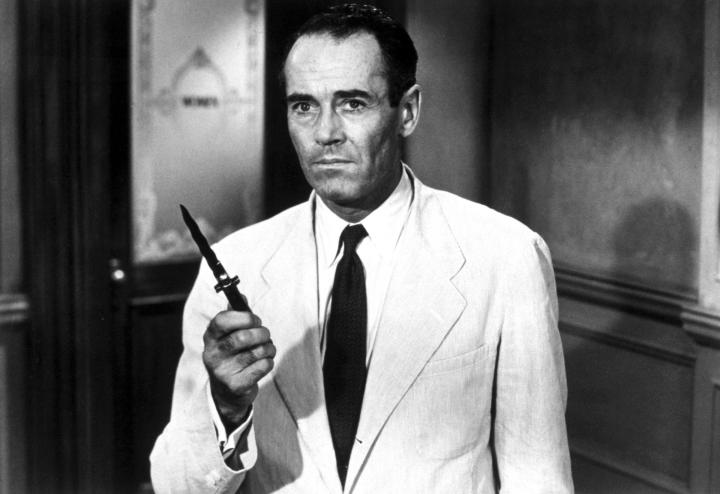
Starring: Henry Fonda, Martin Balsam, John Fielder, Lee J. Cobb, E.G. Marshall, Jack Klugman, Edward Binns, Jack Warden, Joseph Sweeney, Ed Begley, George Voskovec, Robert Webber
12 jury members are in a locked room deliberating a murder case. That’s it. That’s the plot. Sound boring? Not at all! It’s tense, dramatic and very well acted, and it will keep you engaged throughout the entire 96 minutes.
“Raise your hand if you think this film makes the most of its premise!”
Human nature, society, male pride, racism and prejudice all play a part in the “neutrality” of the justice system, and it’s important to question what people tell you is the truth. Also, Juror #8 should have been the defense lawyer. And that’s all we’ll say, apart from watch this film. It’s fantastic.
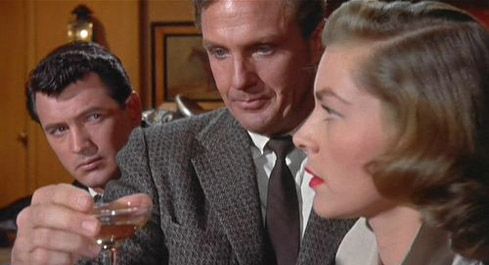
After a very brief encounter, aspiring ad-lady Lucy Moore (Bacall) marries philandering alcoholic millionaire oil-heir Kyle Hadley (Stack) when he promises to change for her… This despite her initial attraction to his best (but not as rich) friend Mitch Wayne (Hudson).
“You are so charming! I hope you have a less handsome friend I can marry!”
To both their credit, Kyle does change his game during their first year of marriage, and the two are quite happy together. However, when they fail to conceive a child and Kyle learns that the fault lies with him, he falls back into his old ways of drink and aggression.
“My sperm doesn’t work. I am not a man. I must drink and by no means talk to the people who love me about my insecurities.”
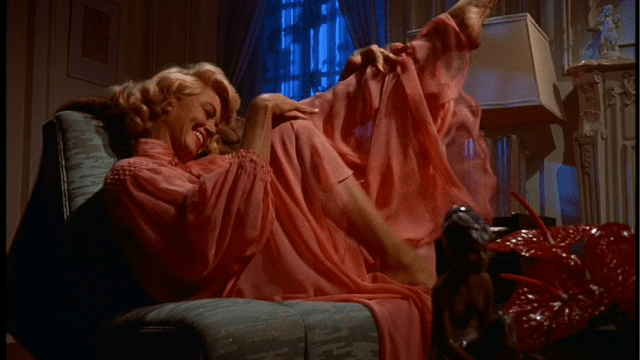
Meanwhile, Mitch is caught up in a love triangle (square..?); he loves Lucy, Lucy loves Kyle, Kyle’s psychopath sister Marylee (Malone) loves Mitch, and Kyle pretty much loves, but distrusts, all of them.
Marylee masks her love for Mitch with a string of unsuitable lovers
Like Sirk’s previous entries, Written on the Wind is a melodrama with lots of twists and turns, and you’re never sure whether or not it will have a happy ending. It’s visually beautiful and “soft,” and the costumes are gorgeous (and very symbolic). Despite Mitch and Lucy being the characters everything (and everyone) revolves around, the Hadley siblings are by far the most intriguing.
Their insecurities are understandable and explained, although they both go way overboard in their efforts to compensate for them – Kyle by spending money and drinking, and Marylee by being promiscuous and sabotaging Mitch and Lucy’s lives.
She is even sexual enough to kill her father. Quite an achievement.
We loved the costumes, the calendar at the beginning, all the twists and turns, and the crazy Marylee (who we sort of felt sorry for…at first, at least). Also, the scene in the beginning with Lucy and Kyle in the taxi is oddly poignant in these times of sexual harassment allegations. It’s clear that Lucy is on her guard, and that this is not a situation she’s unfamiliar with… Which says a lot, we think.
Must have been one hell of a conversation in the plane to go from this to marriage…
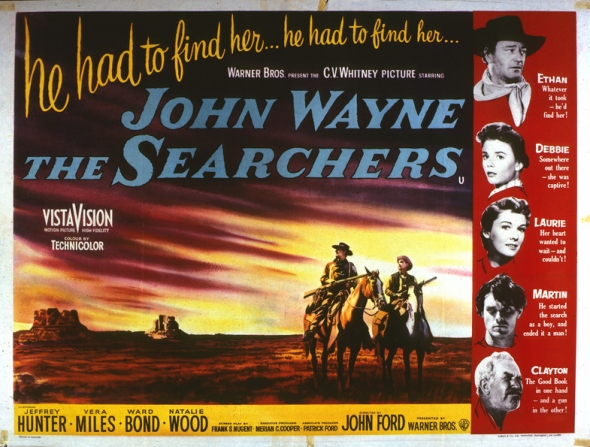
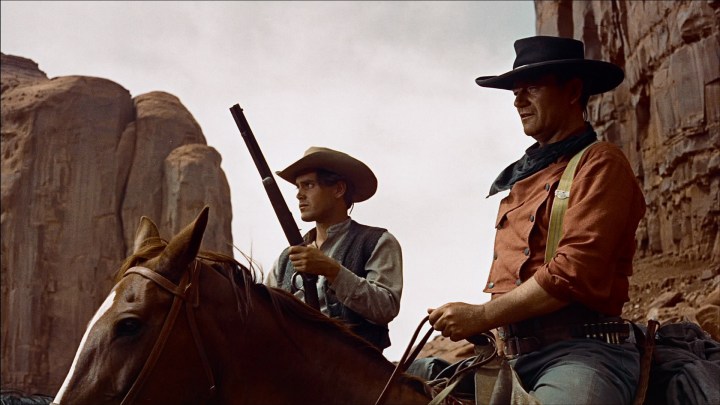
Somewhere in Texas, Ethan Edwards (Wayne) returns to the homestead from the Civil War. Which ended three years earlier. He may have been involved in some shady business in the interim. After years away, he joins his brother’s family to (possibly) settle down and stay away from conflict.
A neighbour’s stolen cattle lures most of the men, including Ethan, away from their homes in search of the thieves, but it turns out that the theft was a decoy to raid the unprotected houses. Ethan returns to find his brother, sister-in-law, and nephew killed, and his two nieces missing – the work of Comanche warriors.
Along with his 1/8 Cherokee adopted nephew Martin Pawley (Hunter) and niece Lucy’s fiancé Brad Jorgenson (Carey), Ethan starts his search for his lost relatives – a search which will take several years and claim its share of casualities.
On the surface an adventure movie, The Searchers deals with some very uncomfortable questions of racism, mainly through main character Ethan, who is willing to kill his beloved niece once he learns that she has assimilated and now lives as a Comanche.
We loved Laurie, Mose, and the fight between Charlie and Martin, and there are some amazingly beautiful shots in this film. It’s a Western epic spanning several years with lots of interesting characters – especially Ethan is intriguing if not particularly likable. Our dog was also very into it – anything with horses, dogs and shootings quickly becomes a favourite for him.
Like us, Doggo is less keen on overly tanned white people playing Native Americans, but he appreciated all the Native extras

























 1000 Films Blog