September 1944. The last days of the Warsaw Uprising. A small company of men (and women) are barricaded in an isolated part of town but it’s not long before they are attacked by Germans.
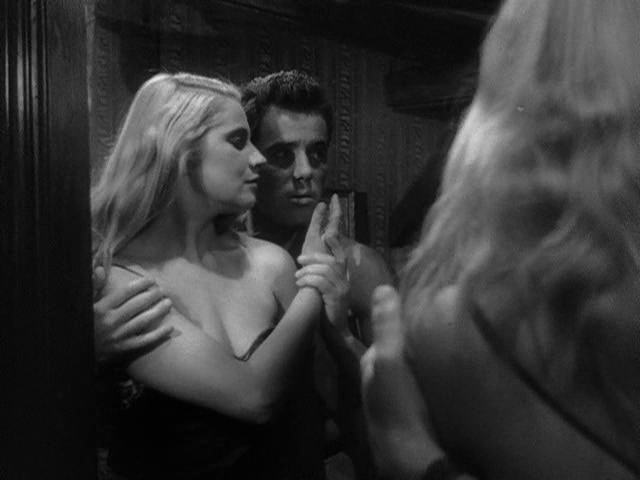
Even in a war zone (or perhaps especially in one?) there’s time for flirting and light hanky panky.
Surrounded, and with injured men, Lieutenant Zadra (Glinski) has no choice but to lead his company through the sewers to freedom, a tactic he’s not too keen on.
And really, who can blame them for being less than thrilled? Pennywise might be down there!
Stokrotka, or Daisy, (Izewska) who is familiar with the sewer system, offers to take care of the injured Korab (Janczar) who she is secretly in love with. She claims that the others will find their way easily as the exits are marked, but she overestimates the night vision of the soldiers.
It may have gone very differently if they had at least opened their eyes
As the company lose each other in the underground labyrinth, they each must brave the dangers that lurk: polluted air and water, gas, madness, and German grenades.
Lesson: slippery sewer rocks and hand grenades are not a good combo
Kanal is dark, suspenseful, and claustrophobic, and we loved it. We’re not sure whether the Warsaw sewer system is purgatory or one (or several) of Dante’s circles of Hell, but we know there’s no way we’re ever exploring it. Even if bad-ass Stokrotka is our guide.
Depressing though it is, this is also one of the best World War II films we’ve ever seen. We’re (very hesitantly) looking forward to Ashes and Diamonds (1958), hoping it may be a little bit more optimistic. But not really believing that.
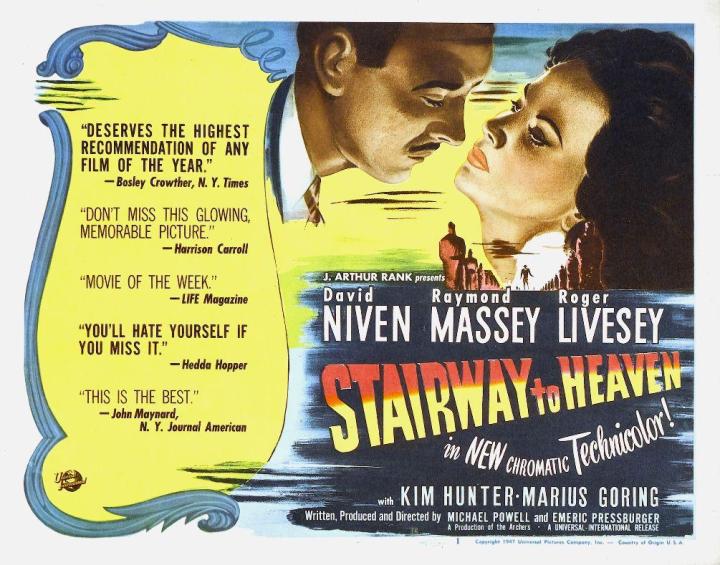
As Peter Carter (Niven) is plunging towards certain death in a shot up plane May 1945, his final moments are shared with radio operator June (Hunter) and the two, as people are wont to do in these intense situations, fall in love. He ejects from the burning aircraft without a parachute and is surprised to find himself alive on shore some moments later. Surely, the fall should have killed him?
How much imagery of nudity, flutes and goats do you need to convince yourself you’ve reached hell?
Turns out, it should have. Up on the celestial plane, the clerics are confused about the lateness of his arrival until they find that his Conductor, a very camp Frenchman (Goring), lost the pilot in the fog and thus neglected to collect his soul.
“Bonjour! Je suis le campest Frenchman you’ll ever meet. Bon bon, mon petit fromage!”
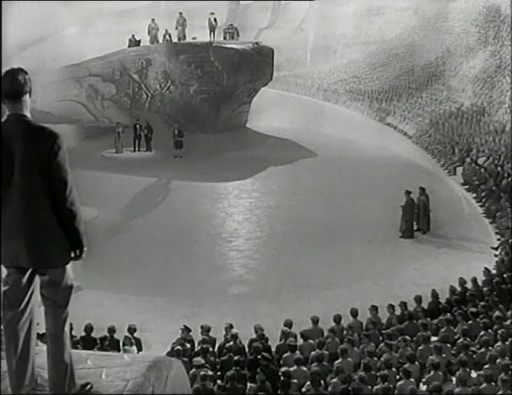
Unfortunately for the clerics of the afterlife, in the few hours of “extra” life Peter got, he met and fell in love with June which greatly complicates things. As he is not at fault here, is it fair to take him away just as he has found the love of his life? Since it was their mix up that caused this to happen, the celestial beings grant Peter a trial with his life at stake.
Celestial trials have the most impressive courtrooms
Meanwhile, in our own world, June has enlisted the help of a doctor friend of hers, Dr Reeves (Livesey, of Colonel Blimp-fame), as her new love is suffering headaches and possible hallucinations after jumping from a plane without a parachute… Naturally, the medical professional diagnoses Peter with head trauma and recommends surgery, to coincide with the patient’s heavenly trial.
This was a beautiful and engaging film which we completely loved. The relationship between Peter and June is lovely, although a bit hasty. She’s either very wonderful or very naïve to stick by him when he starts talking crazy after they’ve known each other for all of a day. The trial becomes very political, and much of the criticism against England from the USA could have been modern criticism against the US, which is very interesting to observe (especially given the newly instated president..). It’s like both countries have a history of proclaiming themselves above others and trying to impose their rules on other nations…
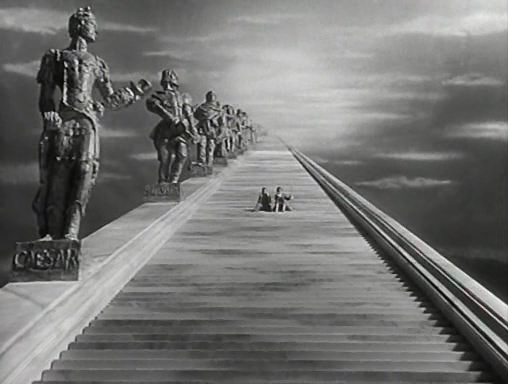
The sets are beautiful and impressive, especially on the other plane.
Such as the stairway, or escalator, to heaven, for instance
In a way, this film is like an opposite Wizard of Oz, as our world is in glorious technicolor while the other world is in drab black and white. Then again, our world is supposed to be the desirable one so it makes sense. A Matter of Life and Death has humour, excitement, adventure, romance, political undertones, history lessons, camp Frenchmen and gorgeous shoes! What’s not to love?
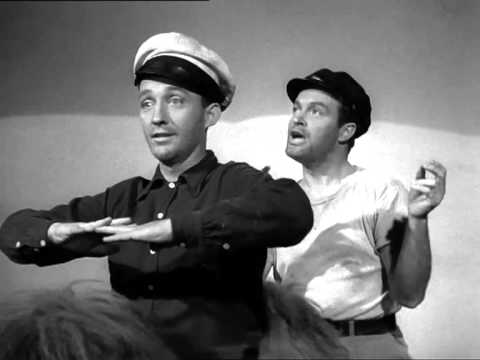
After their ship blows up, two stowaways find themselves on a raft discussing who will eat who first. Luckily, before it comes down to that, they find land and a very friendly camel to take them to Morocco. Yay camels!
You haven’t lived until you’ve sung a song on the back of a camel. Fact!
They arrive in a very Arabian Nights-inspired Morocco, complete with princess in distress and violent locals, where they get up to all sorts of zany antics including, but not limited to, selling each other into slavery. Ah – men, am I right?
At least, this particular form of slavery consisted of courting a beautiful princess. As far as human trafficking is concerned, it could be a lot worse.
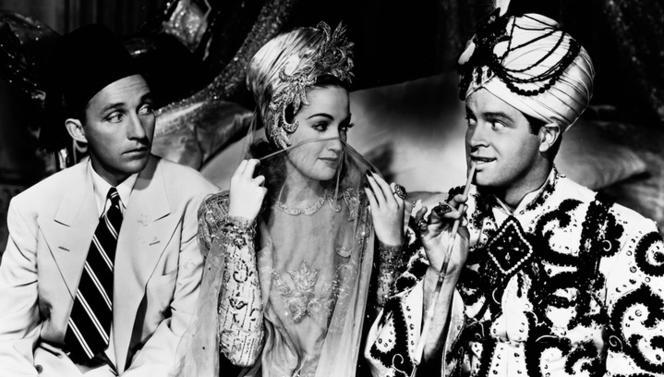
Once Jeffrey (Crosby) finds out the exact nature of the work he sold Orville’s (Hope) into, he inserts himself into the lives of the newly engaged couple to try to win princess Shalmar (Lamour) for himself. And he succeeds. Which is just as well, as Orville seems more interested in her handmaiden Mihirmah (Drake) anyway.
Now, this is when things get really complicated for the two old friends. It turns out the princess is only interested in marrying Orville because a prophecy has foretold that her first husband will die after only a week of marriage, and she is really engaged to a local sheikh, Kasim (Quinn). However, the sheikh cannot compete with the natural charm and musical talents of Bing Crosby, and the princess decides to go with the penniless American instead. The sheikh does not take kindly…
He kidnaps the princess and her entourage, and leaves Jeff and Orville to die in the desert. It’s up to them to rescue their loves and save the day!
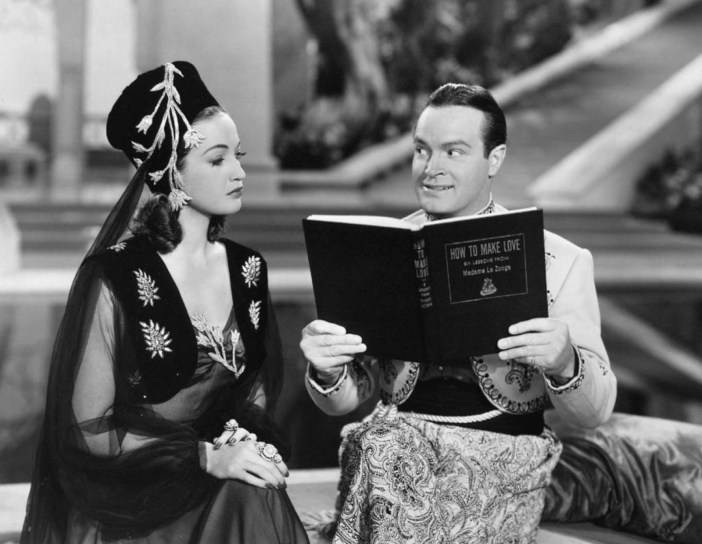
Road to Morocco is very silly, quite raunchy at times, and it breaks the fourth wall masterfully. There’s dancing, action, romance, and cool costumes as well as sometimes sweet, sometimes fun, musical numbers. A great hangover film for early Sunday afternoon. Or Tuesday morning. Whatever rubs your Buddha.
We all know what he will be rubbing. Ooo – naughty!
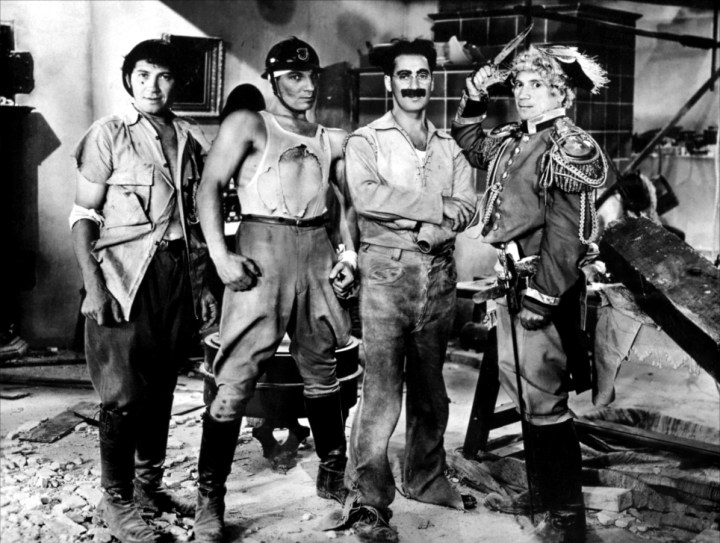
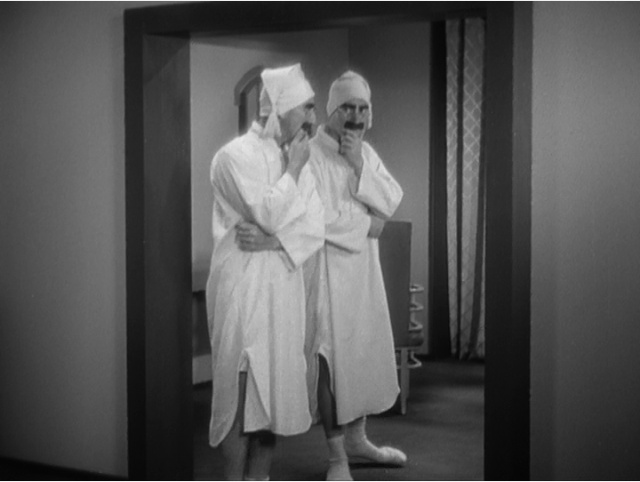
There’s very little we can say about this comedy classic that hasn’t already been said. The Marx Brothers are back with more zany antics, political intrigue and comedy gold, and we loved it.
“Zeppo, show some skin, or you won’t be in this one!”
The country of Freedonia is in dire financial trouble and its main backer, Mrs. Teasdale, will only help if the government appoints Rufus T. Firefly (Groucho) their new leader. The ambassador of neighbouring Sylvania is trying to take over Freedonia, and sends in spies Chicolini and Pinky (Chico and Harpo, respectively) to get information on Firefly.
“Sir, we couldn’t find a lot of dirt on him on account of our incompetence, but his dancing is surely criminal. Can you work with that?”
The film is hilarious throughout, but worthy of special mention are a few scenes. Most notable is the mirror bit where Harpo, dressed as Groucho, has to mirror his movements after shattering the actual mirror. It’s wonderfully funny and very impressive. Other great scenes include the rallying of the troops during the battle, where stock footage is used to show fire engines and elephants, among others, coming to their aid, and the doghouse tattoo including a live, barking dog.














 1000 Films Blog