#382 Funeral Parade of Roses/Bara no sôretsu

Watched: March 27 2026

Director: Toshio Matsumoto

Starring: Pîtâ, Osamu Ogasawara, Yoshio Tsuchiya, Yoshimi Jô, Emiko Azuma, Koichi Nakamura, Flamenco Umeji, Saako Oota, Toyosaburo Uchiyama

Year: 1969

Runtime: 1h 45min

Have you ever wanted to watch a reinterpretation of Oedipus Rex, but with drag, drugs and documentary-style digressions? Well, you won’t believe what we have for you today! (Also, if you know a word on “d” which means nonlinear, let us know at 1000filmsblog@gmail.com. We had to make a terrible choice between alliteration and accuracy in our opening line.)
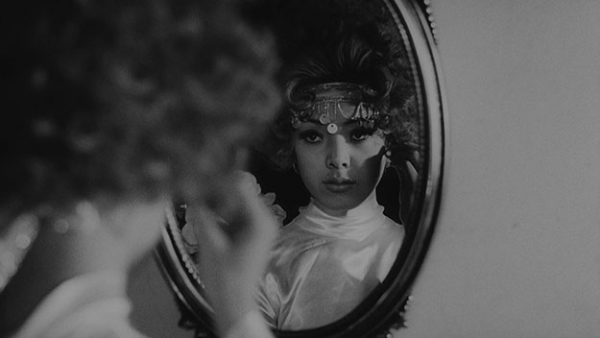
Don’t worry. We’ll take a long, hard look at ourselves in the mirror.

Funeral Parade of Roses is a movie that should be experienced, so we’ll keep our summary brief. In short, we’re in Japan in the swinging sixties, moving through the gay-, trans- and drag-scene(s) via nonlinear storytelling, interviews and intertitles. The main narrative follows Eddie, a gei boi who works at a bar in Tokyo and is sexually involved with its manager, Gonda. Gonda is also in a relationship with the madam of the club, Leda, who is basically Eddie’s boss/superior. We’re introduced to several side characters from Tokyo’s underground culture – young people from all walks of life who take drugs and make art while enjoying the sexual liberation of the 1960s.
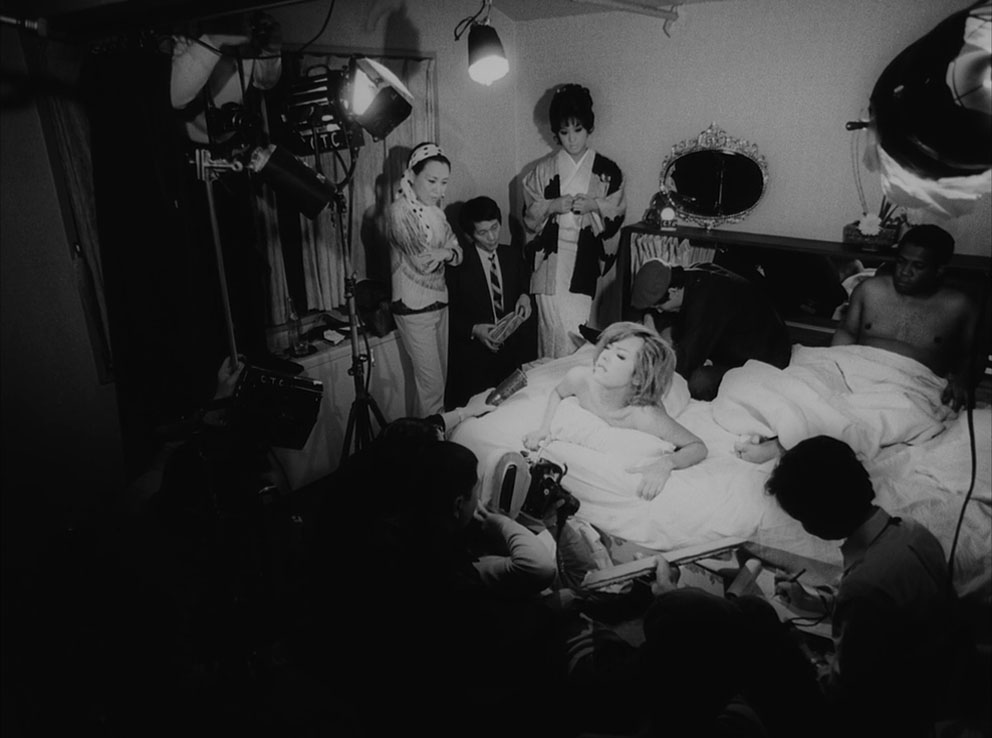
Pictured: an awkward glimpse behind the scenes of a sex scene. We particularly enjoy the jealous partner of one of the participants lurking in the corner and judging everyone’s performance.

This movie is very experimental, very ’60s and very stylish. It’s a fascinating look into queer culture in ’60s Japan, and we loved the way it blurred the line between reality and fiction. It’s beautifully shot, and Pîtâ’s Eddie in particular is compelling to watch. We also loved Guevara with his feux beard, the soundtrack, the editing and the general vibe. Not to mention the twist!
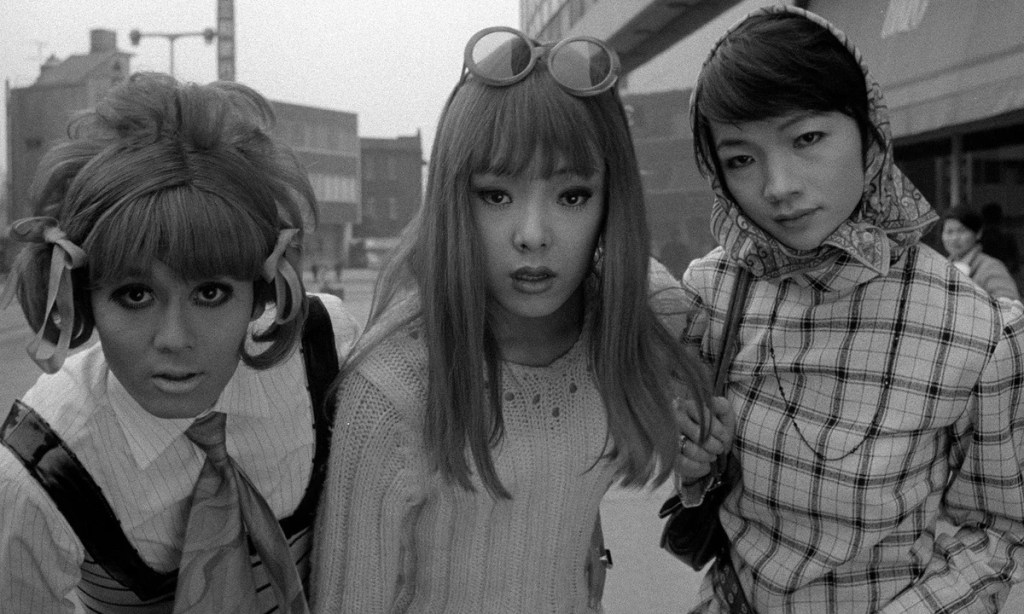
“Are you serious??? You’re going to mention the twist? Motherfu…”

Funeral Parade of Roses is cool, subversive, bold and brave for its time. Though, to be completely honest, if we met the group of artists depicted in this movie today, we’d be terribly bored by their drug enduced self indulgence. Times have changed a bit in that regard… We still found the film both moving and engaging. And experiencing new sides of drag and queer culture from a non-western point of view is always refreshing and interesting.
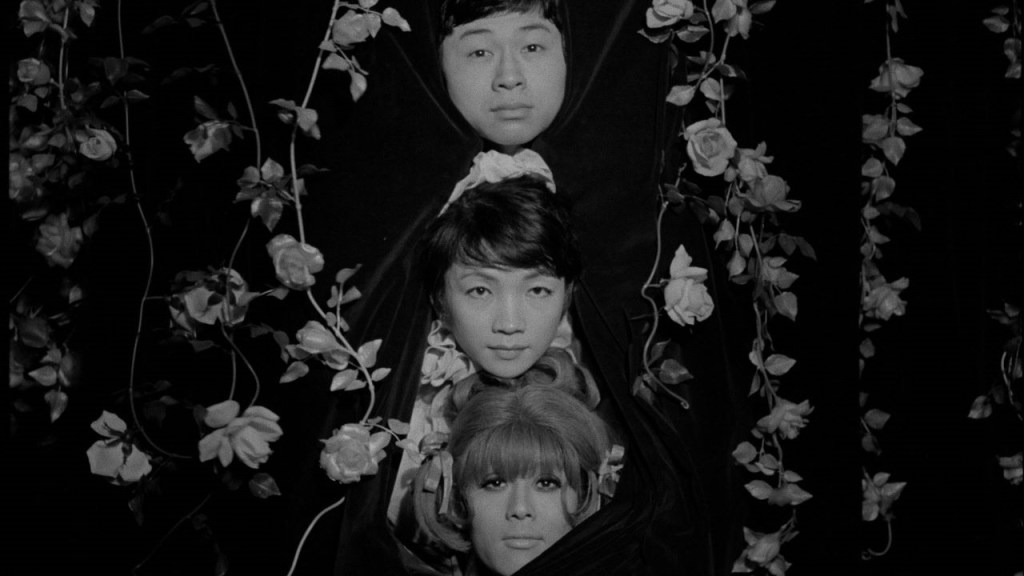
The decapitations were unexpected though. Did not see that coming at all.

What we learned: Something about absent fathers, maybe? And that drag and gender expressions come in many forms.

MVP: Eddie. And her wig game. Or possibly Sofokles.

Next time: I Start Counting (1969)

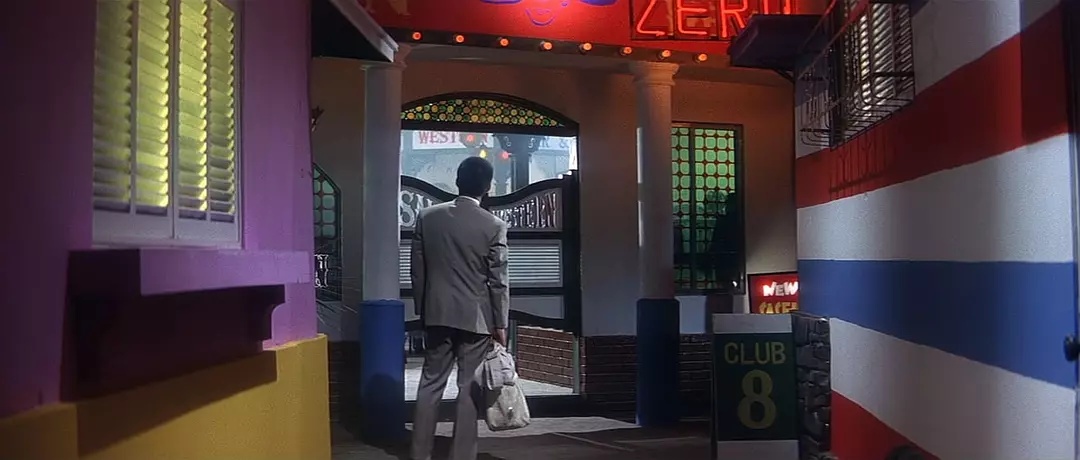
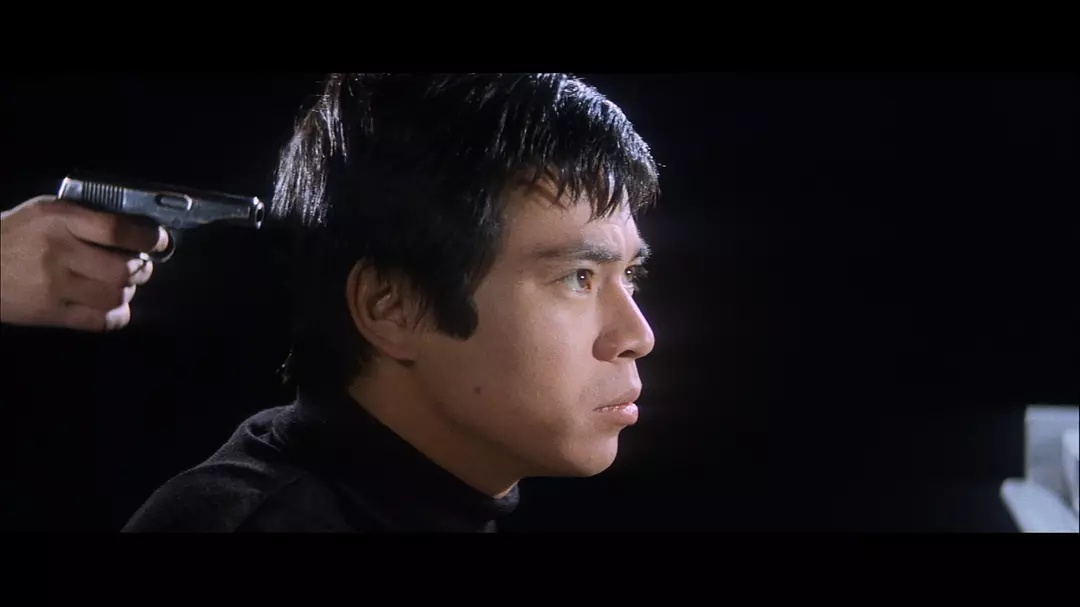
#280 Tokyo Drifter

Watched: October 11 2020

Director: Seijun Suzuki

Starring: Tetsuya Watari, Chieko Matsubara, Ryûji Kita, Eiji Gô, Hideaki Nitani, Tamio Kawaji

Year: 1966

Runtime: 1h 29min

Small disclaimer: we were unable to get our grabby hands on the recently added #279 The War Game in time for the blog, so we’re skipping that for now. We might return to it later if we can find it. But for now, we have moved on to #280: Tokyo Drifter!

tokyo

Source

Hey kids! Wanna watch something incredibly stylish and cool? But at the same time you feel the need to watch something which will up your social capital and teach you something about a different culture? Or perhaps you’re just really tired of the world and want to look at some pretty colours? Well, have we got the film for you!

tokyo2
“Which colour did you want in this shot again?” “ALL OF THEM!”

Source

Tokyo Drifter is as stylish as they come (checks the cool-box), is Japanese (checks the culture-box) and is also filled to the brim with pretty colours (checks the why-can’t-the-world-just-leave-me-alone-box)!

tokyo3
Actiony AND artsy. It’s like a cheese-covered broccoli-movie!

Source

Tetsu (Watari) and his boss are reformed yakuza who are trying to go straight. However, their former rivals have other plans, and soon they are drawn back into the world of crime. To avoid brutal death, Tetsu must go a-roaming around Japan. But sooner or later return to Tokyo becomes unavoidable…

tokyo4
“These shoes were made for walkin’, but not in this fucking snow! One of these days these shoes are gonna walk back to Tokyo.”

Source

Did we mention how cool this film is? ‘Cause it is so cool! The clothes, the colours, the sets, the music, the gangsters – you’ll be hard pressed to find something more stylish. It is as ’60s as they come in all the right ways. Also, there are both guns and swords at play here, which is never wrong.

tokyo5
“All right, so everyone is clear on the rules? We get up and dance around, and whoever is still standing when the music stops has to die.”

Source

So OK, Tetsu annoyed us a little bit in the end, walking away from his girlfriend to live as a “Tokyo Drifter,” which struck us as a bit of a self-serving “sacrifice.” Other than that, there was nothing here we didn’t love. And now we want to visit Japan in the 1960s… Wearing bullet proof vests, obviously.

tokyo6
Bullet proof vests can only get you so far though…

Source

What we learned: It is hard leaving a life of crime behind.

Next time: What’s Up, Tiger Lily? (1966)