Watched: October 11 2025
Director: Richard Fleischer
Starring: Tony Curtis, Henry Fonda, George Kennedy, Mike Kellin, Hurd Hatfield, Carolyn Conwell, William Marshall
Year: 1968
Runtime: 1h 56min

From 1962 to 1964, Boston was terrorized by a serial killer who raped and murdered women, dubbed “the Boston Strangler”. Albert DeSalvo confessed to the crimes in 1965 and only three years later The Boston Strangler was released, detailing the crimes and the investigation. While this could have been a sensationalized and exploitative movie trying ot cash in on horrific events, it luckily comes across as a respectful and very accurate portrayal of a horrible case of serial murder.

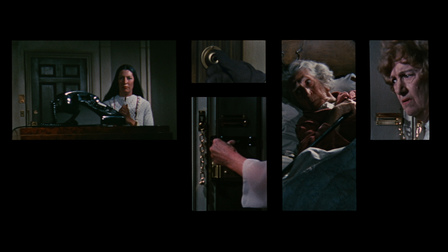
Right from the start, this drew us in. We loved the different angles/framing/multiple images (whatever we should call it – if you’ve seen the film you understand what we mean) used throughout the film. The first part of the movie depicts the investigation, and we really enjoyed having the focus on the investigators rather than the culprit – let’s highlight the heroes, not the monsters! We appreciated that the sexual violence suffered by the victims was only implied rather than explicitly shown. Fleischer manages to convey the horrific nature of the crimes without sexualizing the scenes, which is something more filmmakers should attempt at times…
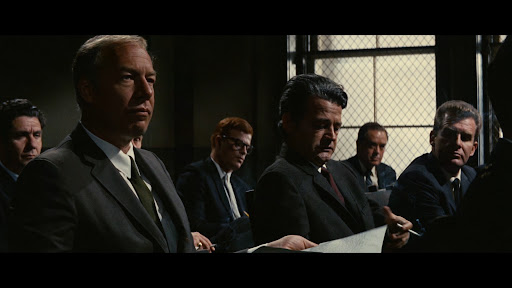
The main investigator, Phil DiNatale, is played by George Kennedy, which we have to admit took some getting used to. We found ourselves waiting for lieutenant Frank Drebin to come along and (hilariously) solve the crime… Instead, he is joined by John Bottomly (Fonda), the newly appointed head of the Strangler task force. It’s always beautiful to see when different branches of law inforcement manage to coordinate their efforts and come together to solve a case.
…we’ll see ourselves out.
And effort was definitely made! We loved seeing a bunch of creeps being arrested and/or interrogated for doing creepy stuff. Now, we don’t mean to kink shame – you do you, boo – but once you make your kinks someone else’s problem without their consent, you deserve to be made (at least) as uncomfortable as the ones you drag into your sexual fantasies.

Eventually, the POV switches from the investigation to the killer himself. We are brought along as DeSalvo (Curtis) tricks his way into women’s apartments where he sexually assaults and strangles them. But we also get to see his family life, as he was married and had young children at home. Finally, the last part of the movie is focused on his confession and his mental state.
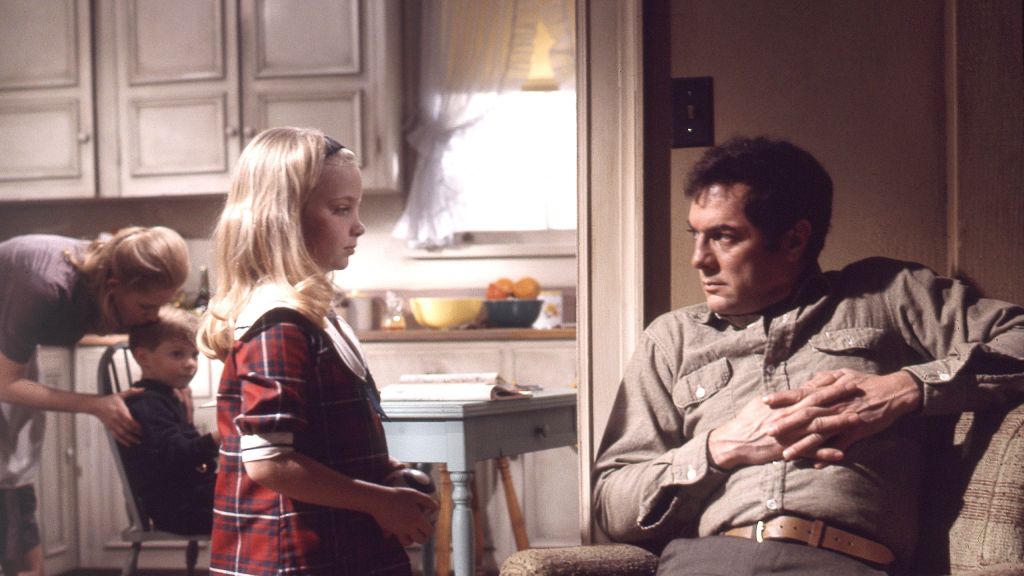
There’s so much here we loved. Visually, it’s very stylish and cool, and we feel it tells the story without exploiting the victims too much. The Boston Strangler has no score and the silence works really well. It’s also extremely quotable, and we enjoyed the critique of the inherent violence in U.S. society. The pacing is a bit uneven, and the last act felt a bit long and is less engaging than the first part. Still, the final reenactment by DeSalvo/Curtis is very chilling and an unnerving end to an excellent movie.

Ok, we know this is dodgy, but we love serial killer stories… What can we say – we’re white women, it’s our culture. So we know quite a lot about this case, and as far as we can remember The Boston Strangler is a very accurate depiction of events. There has been a lot of speculation about DeSalvo’s guilt though. Part of his confession contains details that he would be unlikely to know unless he was there, but other in other parts he gets very basic things wrong. However, a few years ago DNA evidence proved his involvement in at least one of the rapes and murders, so he was certainly not entirely innocent. The question remains though – was he the only strangler? Or were there several killers stalking the women of Boston? We may never know for certain.

What we learned: As fascinating as we admittedly find them, serial killers are pretty much pathetic in real life…
MVP: Probably Edward W. Brooke (Marshall). Assembling a task force is never wrong. Shoutout to DiNatale and Bottomly as well though!
Next time: The Devil Rides Out (1968)


 1000 Films Blog