#377 Army of Shadows/L’armée des ombres

Watched: January 15 2026

Director: Jean-Pierre Melville

Starring: Lino Ventura, Paul Meurisse, Jean-Pierre Cassel, Simone Signoret, Claude Mann, Paul Crauchet, Christian Barbier, Serge Reggiani

Year: 1969

Runtime: 2h 25min
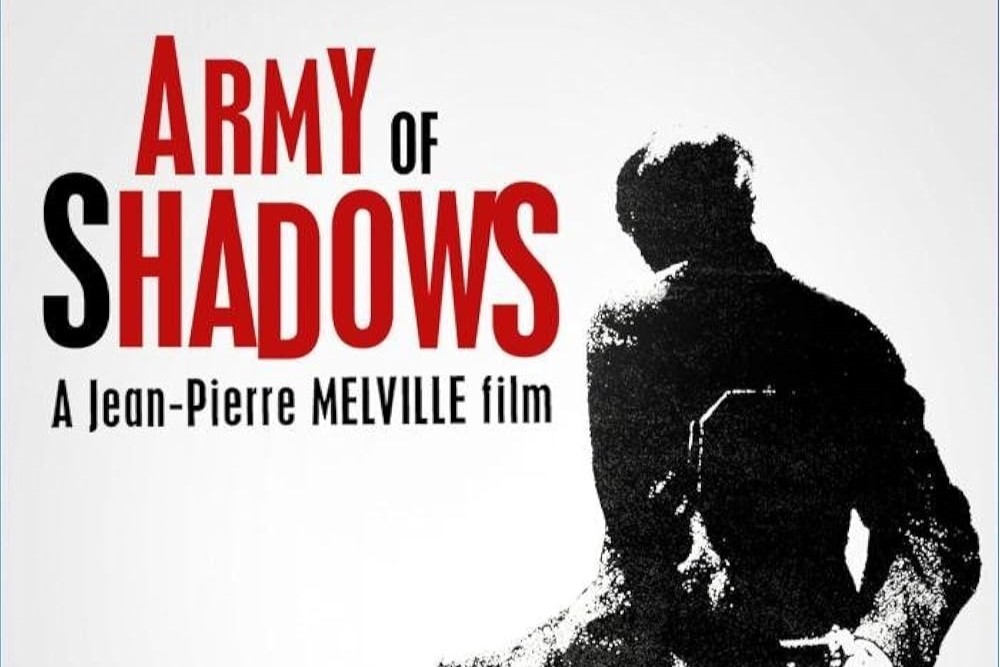
Hey! Do you want to watch a World War II movie but you’re kind of over the big action features where good always triumphs over evil and the heroes invariably make it out of the most intricate scrapes and gruelling situations practically unscathed? Well, look no further than Army of Shadows/L’armée des ombres.
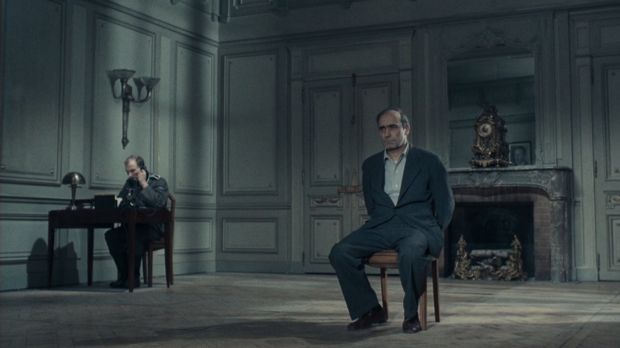
Being tied to a chair while watching is optional. The creepy stenographer in the corner is, unfortunately, not. He’ll simply appear in the room as the opening credits roll. It was quite unsettling.

In this movie, we follow various members of the French Resistance during the German occupation. Philippe Gerbier (Ventura) is arrested by the Gestapo after a betrayal. He manages to flee, and enacts his (quite practical and dispassionate) vengeance on the person who gave him up. Among his fellow Resistance buddies we find “Le Bison” (Barbier), “Le Masque” (Mann), “Ze Big Boss” (Meurisse), and… Mathilde (Signoret).
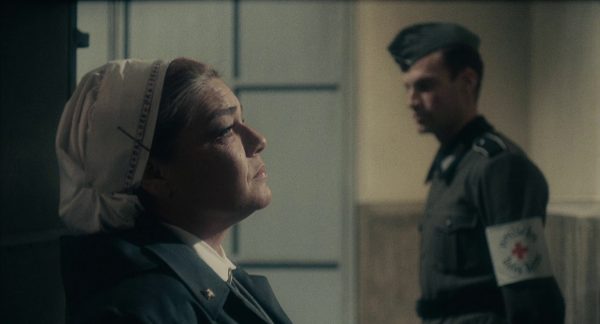
She might be Mathilde to you, but to us she will always be The Mistress of Disguise.

Other members lacking exciting code names include Jean François (Cassel) and the unfortunate Félix (Crauchet). Their missions are unglamorous and unromantic, and their actions seem motivated by a sense of what needs to be done rather than any ambition of glory or acclaim. And indeed, without giving too many spoilers, many of them will die in obscurity under false names with few or no one knowing what they did or what they sacrificed for the greater good (The Greater Gooood..).
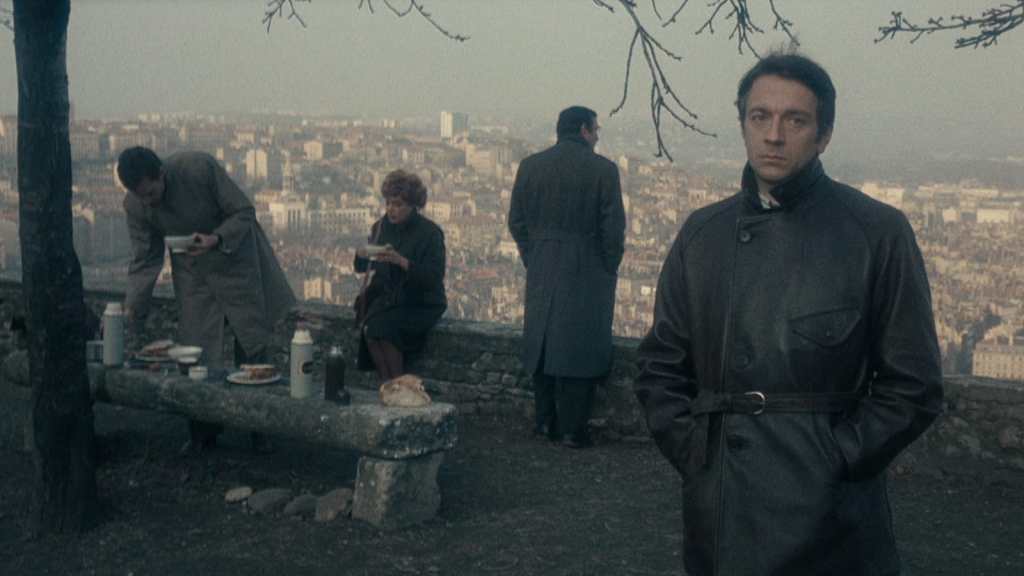
We’re just kidding. They all lived long, happy lives, and after the war frequently met for picnics. And to stare into the nothingness while trapped in the echo of the horrors that they lived through years ago and still relive in the dark of night… But mostly picnics.

Like we said, if you’re looking for a Nazi-ass-kicking action film à la Where Eagles Dare, The Dirty Dozen, or The Great Escape, this is not it. Army of Shadows has more in common with a spy drama than any of those, but not in any James Bondesque way. Despite its occasional action scene, it’s rather quiet and slow, but it packs an emotional punch.

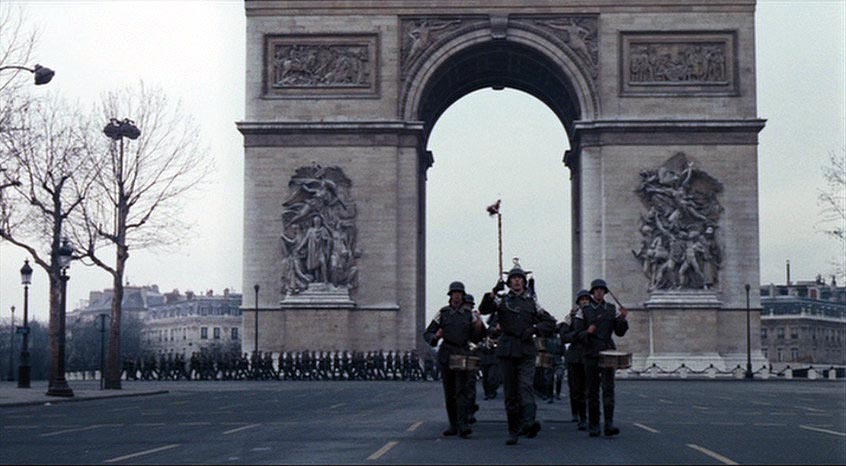
The chilling opening scene reminded us of Pretty Poison, where instead of a high school drill team marching during the opening credits (quite sinister in itself), there are Germans troops march through the Arc de Triomphe (arguably a bit more sinister). The early execution scene sets the tone for the film – there’s no joy, nor any strong feelings of hatred or lust for vengeance here, just regret and somber, unavoidable reasoning.
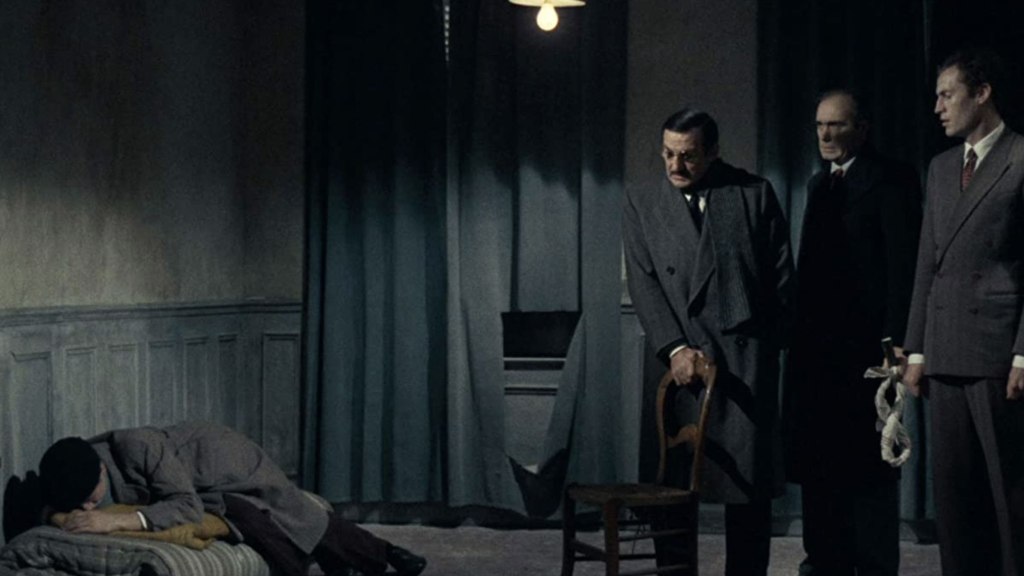
Honestly, we’d never before encountered the problem of what do you do when your safe house/execution place gets new neighbours and you can no longer shoot your victim due to the noise. It poses quite the conundrum. We’re glad to now have a frame of reference for when we’ll inevitably find ourselves in a similar situation.

The pace is slow, and there’s very little music/score, which adds to the sense of realism in contrast to the focus on action and heroism we’re used to seeing in movies set during World War II. Even Gerbier’s escape from the clutches of the Gestapo in the beginning is rather mundane – and probably a lot more realistic than more elaborate depictions of similar events in other movies. Not that this movie is devoid of action or heroism – there’s quite a lot, but it is often less flashy. The acts of heroism are even occasionally close to pointless (we’re looking at you, Jean François. Heroic though your actions were, one could argue that they were ultimately unproductive).
That being said, any mode of resistance is important, and empathy is never wrong. Let’s all agree that we don’t want a repeat of this scenario.

We loved Mathilde, the Brits in the loft, and the dispatcher on Gerbier’s flight back from London. Not to mention the oh so subtle ways we were told the characters had arrived in the UK – the Big Ben, red telephone boxes, and the British flag over the Houses of Parliament were all very vague hints that only the most discerning viewer would be able to pick up on. We also loved the clearly ’60s hair and make-up sported by several of the ladies (clear influences by the style of the time of production in historical films and shows are always fascinating to see). Overall, Army of Shadows was another movie we probably wouldn’t have picked up if it hadn’t been on the list, but one we very much enjoyed and that we’ve thought about frequently since we watched it.
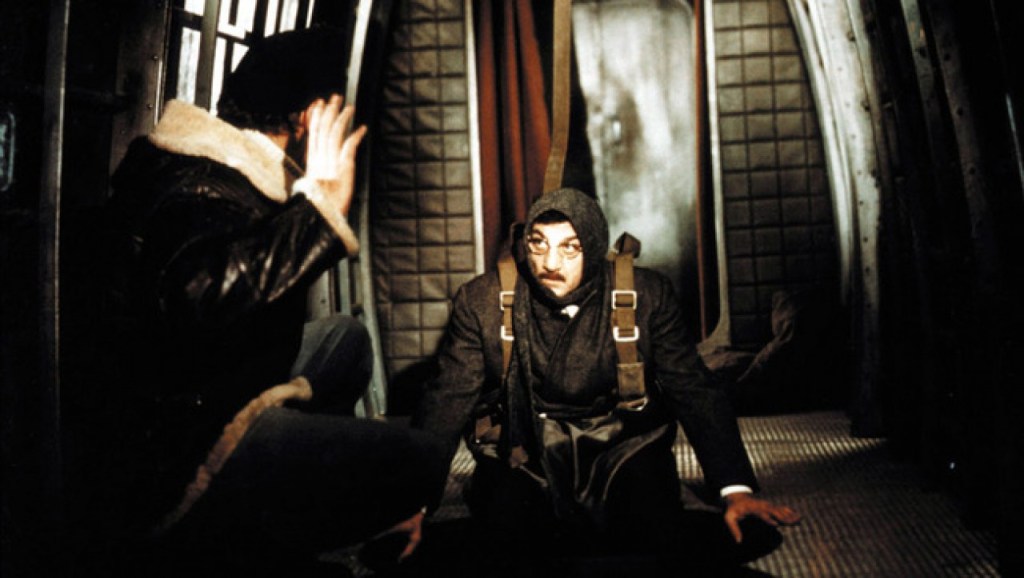
It’s not all bleak. For instance, the flight scene was hilarious!

What we learned: Resist! But also, sacrifices must be made when opposing a fascist regime…

MVP: Mathilde! We will hear no arguments! (And, sure, Gerbier as well, of course. Not to mention La Résistance. Everyone who fights back against oppression, really.)

Next time: Bob & Carol & Ted & Alice (1969)
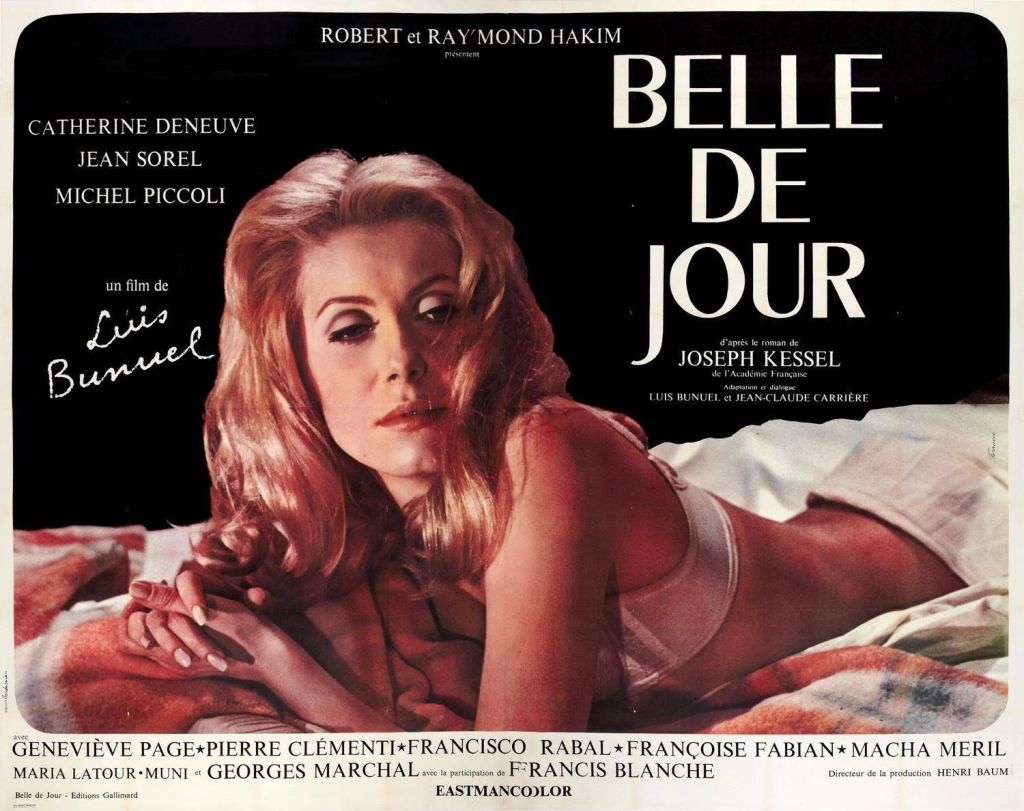
#282 Belle de Jour

Watched: November 2 2020

Director: Luis Buñuel

Starring: Catherine Deneuve, Jean Sorel, Michel Piccoli, Geneviève Page, Pierre Clémenti

Year: 1967

Runtime: 1h 40min

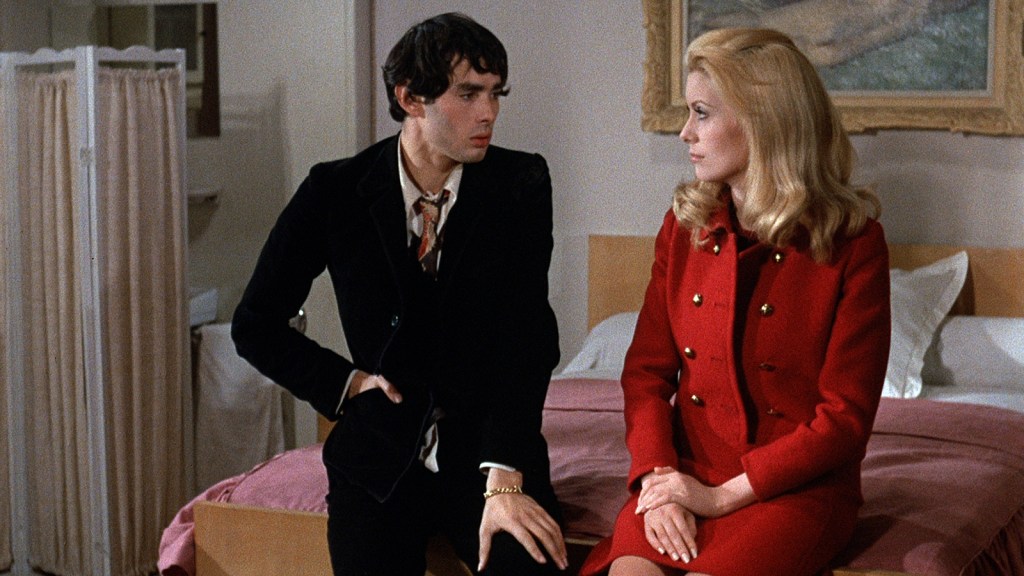
Séverine (Deneuve) is married to Pierre (Sorel) and on the surface their relationship is perfect. He is a respected and successful doctor and she is… pretty. That’s basically all you need to make a marriage work.

Well, that and the occasional light BDSM

Source

However, there is trouble in paradise. Séverine struggles with her sexuality after childhood molestation and is unable to have a normal sexlife with her husband. Her sexuality is further confused by her BDSM/rape fantasies – fantasies she cannot act on or even communicate to Pierre.

“You’re right, it has been a while since we saw your parents. Perhaps we should go next weekend? Oh, and could you pick up some milk after work tomorrow? Great. By the way, I’m going to need you to tie me up and rape me in order to get over my sexual hang-ups. And Renee says hi! We played tennis earlier today.”

Source

Since therapy was obviously not yet invented in France in the 1960s, Séverine decides to deal with her problems in her own way, by becoming a prostitute. Every day between two and five, she entertains at Madame Anais’ (Page) brothel as “Belle de jour” – Beauty of the day. Now, while this gives Séverine an opportunity to explore her sexuality in a “safe” way (i.e. with no emotional involvement or societal expectation of purity), this charade cannot last. Especially when one client becomes more than just a random John…

What woman can resist an underfed, criminal, alternative rock band front man with violent tendencies and an emo haircut?

Source

We love us some Buñuel, and Belle de jour delivers. The surrealism he’s known for may not be as pronounced as in many of his other works, but there are definite influences in the blurring of fantasy, dream and reality. It’s also an excellent example of how to make something sexy and alluring without actually showing much skin, and a very interesting exploration of “broken” female sexuality.

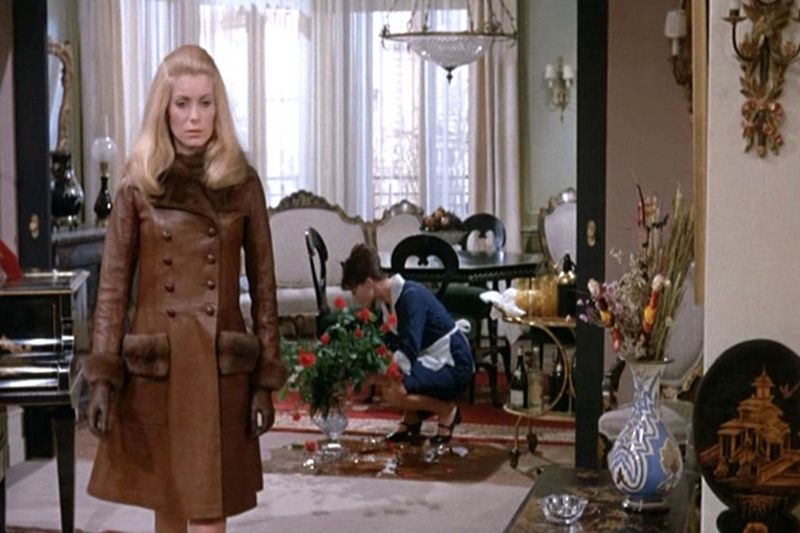
Oh, and did we mention Séverine’s outfits by Yves Saint-Laurent? That girl looks gooood in this movie (as opposed to her usual drab and dowdy look, you know).

Life Hack: You can always tell fiction from reality based on how many coats a person owns. If you’re supposed to be middle class but have a new coat for every day of the month, you’re a fictional character. If you’re unsure about your own status, check your closet and start counting.

Source

The costumes were great, we loved the Asian client (what’s with the bells?? What’s in the box???), we loved to hate Mr Husson (a truly horrible man), and we really enjoyed not always knowing which part was real life, which part was fantasy… There was also a touch of À bout de souffle towards the ending. All in all, this was a winner!

“I never imagined it could be so… small. And shiny! Has it always been detachable?”

Source

What we learned: All the things that can fuck up a girl’s sexuality. Also, men can proudly visit prostitutes, but prostitutes must be ashamed of providing the service. Go figure.

Next time: Bonnie and Clyde (1967)