#377 Army of Shadows/L’armée des ombres

Watched: January 15 2026

Director: Jean-Pierre Melville

Starring: Lino Ventura, Paul Meurisse, Jean-Pierre Cassel, Simone Signoret, Claude Mann, Paul Crauchet, Christian Barbier, Serge Reggiani

Year: 1969

Runtime: 2h 25min
Hey! Do you want to watch a World War II movie but you’re kind of over the big action features where good always triumphs over evil and the heroes invariably make it out of the most intricate scrapes and gruelling situations practically unscathed? Well, look no further than Army of Shadows/L’armée des ombres.
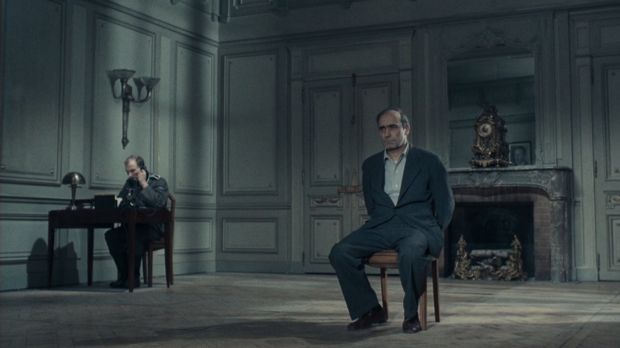
Being tied to a chair while watching is optional. The creepy stenographer in the corner is, unfortunately, not. He’ll simply appear in the room as the opening credits roll. It was quite unsettling.

In this movie, we follow various members of the French Resistance during the German occupation. Philippe Gerbier (Ventura) is arrested by the Gestapo after a betrayal. He manages to flee, and enacts his (quite practical and dispassionate) vengeance on the person who gave him up. Among his fellow Resistance buddies we find “Le Bison” (Barbier), “Le Masque” (Mann), “Ze Big Boss” (Meurisse), and… Mathilde (Signoret).
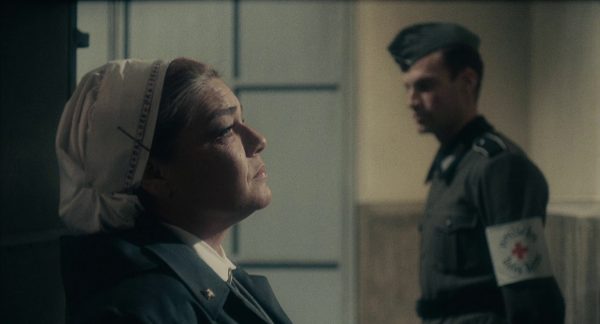
She might be Mathilde to you, but to us she will always be The Mistress of Disguise.

Other members lacking exciting code names include Jean François (Cassel) and the unfortunate Félix (Crauchet). Their missions are unglamorous and unromantic, and their actions seem motivated by a sense of what needs to be done rather than any ambition of glory or acclaim. And indeed, without giving too many spoilers, many of them will die in obscurity under false names with few or no one knowing what they did or what they sacrificed for the greater good (The Greater Gooood..).
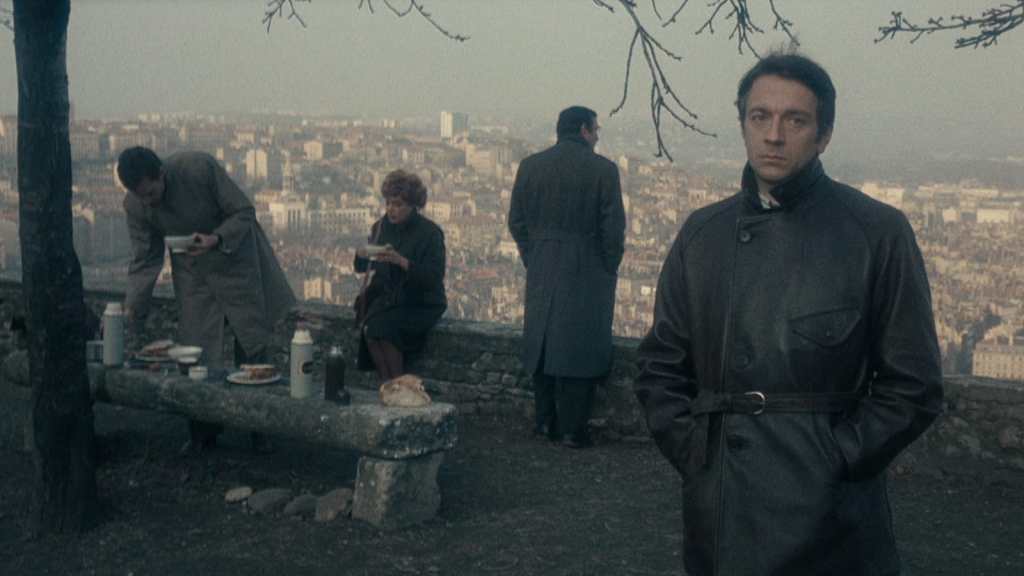
We’re just kidding. They all lived long, happy lives, and after the war frequently met for picnics. And to stare into the nothingness while trapped in the echo of the horrors that they lived through years ago and still relive in the dark of night… But mostly picnics.

Like we said, if you’re looking for a Nazi-ass-kicking action film à la Where Eagles Dare, The Dirty Dozen, or The Great Escape, this is not it. Army of Shadows has more in common with a spy drama than any of those, but not in any James Bondesque way. Despite its occasional action scene, it’s rather quiet and slow, but it packs an emotional punch.

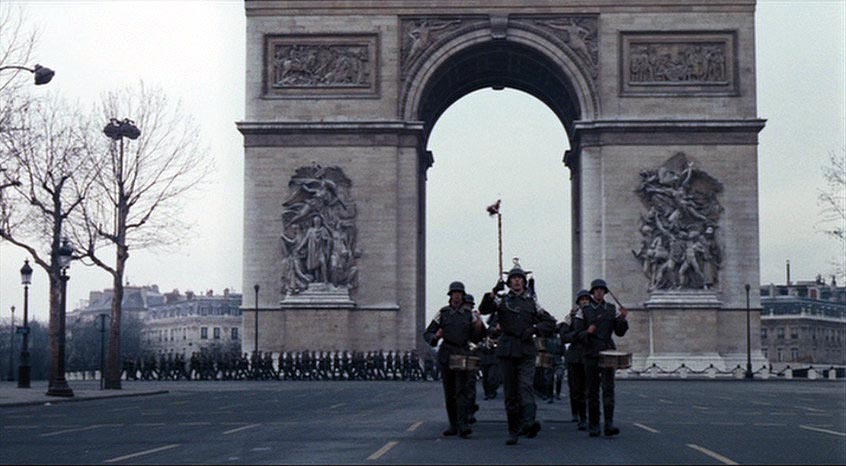
The chilling opening scene reminded us of Pretty Poison, where instead of a high school drill team marching during the opening credits (quite sinister in itself), there are Germans troops march through the Arc de Triomphe (arguably a bit more sinister). The early execution scene sets the tone for the film – there’s no joy, nor any strong feelings of hatred or lust for vengeance here, just regret and somber, unavoidable reasoning.
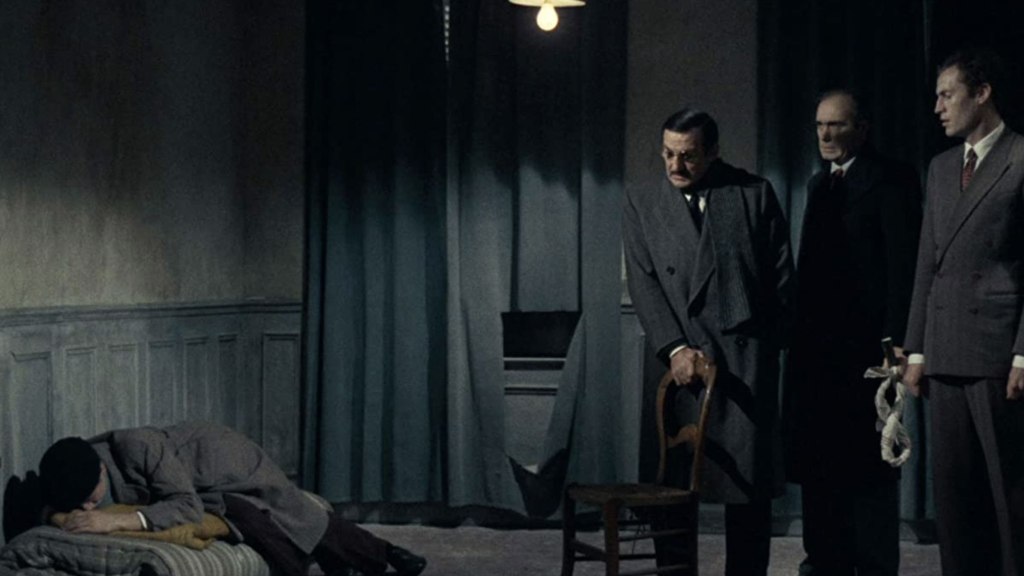
Honestly, we’d never before encountered the problem of what do you do when your safe house/execution place gets new neighbours and you can no longer shoot your victim due to the noise. It poses quite the conundrum. We’re glad to now have a frame of reference for when we’ll inevitably find ourselves in a similar situation.

The pace is slow, and there’s very little music/score, which adds to the sense of realism in contrast to the focus on action and heroism we’re used to seeing in movies set during World War II. Even Gerbier’s escape from the clutches of the Gestapo in the beginning is rather mundane – and probably a lot more realistic than more elaborate depictions of similar events in other movies. Not that this movie is devoid of action or heroism – there’s quite a lot, but it is often less flashy. The acts of heroism are even occasionally close to pointless (we’re looking at you, Jean François. Heroic though your actions were, one could argue that they were ultimately unproductive).
That being said, any mode of resistance is important, and empathy is never wrong. Let’s all agree that we don’t want a repeat of this scenario.

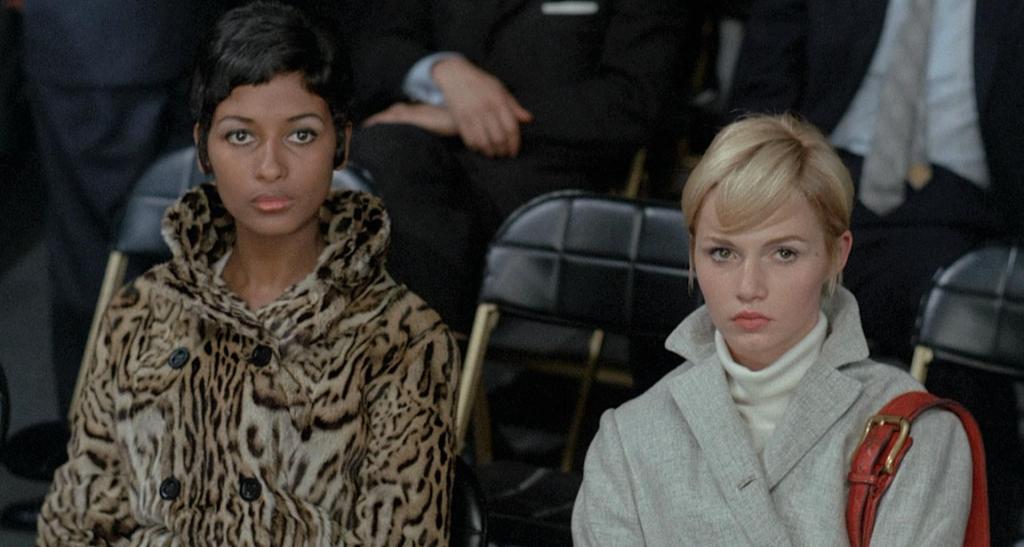
We loved Mathilde, the Brits in the loft, and the dispatcher on Gerbier’s flight back from London. Not to mention the oh so subtle ways we were told the characters had arrived in the UK – the Big Ben, red telephone boxes, and the British flag over the Houses of Parliament were all very vague hints that only the most discerning viewer would be able to pick up on. We also loved the clearly ’60s hair and make-up sported by several of the ladies (clear influences by the style of the time of production in historical films and shows are always fascinating to see). Overall, Army of Shadows was another movie we probably wouldn’t have picked up if it hadn’t been on the list, but one we very much enjoyed and that we’ve thought about frequently since we watched it.
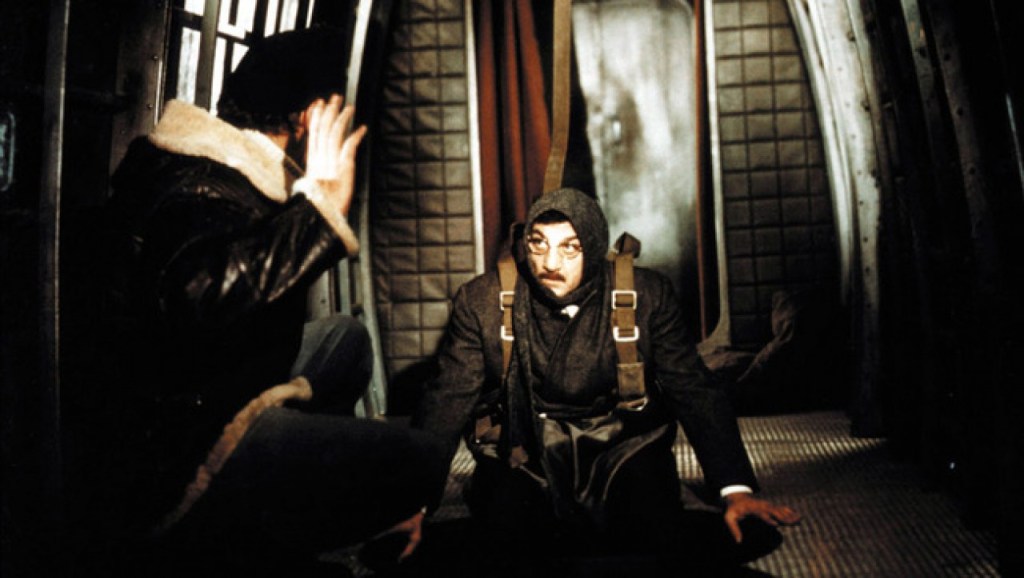
It’s not all bleak. For instance, the flight scene was hilarious!

What we learned: Resist! But also, sacrifices must be made when opposing a fascist regime…

MVP: Mathilde! We will hear no arguments! (And, sure, Gerbier as well, of course. Not to mention La Résistance. Everyone who fights back against oppression, really.)

Next time: Bob & Carol & Ted & Alice (1969)

#288 Le Samouraï

Watched: January 1st 2021

Director: Jean-Pierre Melville

Starring: Alain Delon, Nathalie Delon, Cathy Rosier, François Périer

Year: 1967

Runtime: 1h 45min

So, happy new year, everyone. What a start. We’re not sure 2021 is going to be much better than 2020 judging by the first few weeks, but who knows? In Norway, we’ve gone right into a semi-lockdown so we’ve had our hands full dealing with the repercussions of that, while of course following the insanity that is the USA closely. However, we are the perpetual optimists and have high hopes for February! Things need to calm down at some point, right? And while we wait, why not watch some movies? Such as Jean-Pierre Melville’s amazing Le Samouraï.

Source

Remember when we said Tokyo Drifter was cool? Well, prepare to meet Le Samouraï! Jef Costello (Delon) is a French hitman. After being observed at a murder scene, he needs to avoid both the police and the people who hired him who now see him as a liability.

Unfortunately for a killer for hire, he is cursed with a face so ridiculously handsome that no eye witness will ever be able to forget him.

Silently and cooly, in his trenchcoat and fedora, he goes around Paris figuring out who to trust, who to love (if such a thing is possible), and how to survive.

He’s also working really hard on varying his facial expressions, but so far no dice.

Source

This movie is amazing. The story itself is not the most original, perhaps, but Alain Delon is fantastic as Costello. The world he inhabits is quiet, efficient, spartan and grey, but with the occasional song bird to brighten the mood. Or alert one of danger. Whatever rubs your Buddha.

Real question: how on earth did he end up owning a bird? Did he buy one? Did someone give it to him? Did it just come with the apartment? The public needs to know!

Source

We loved the little glimpses into the Parisian underworld, such as the mechanic Costello visits, the long, quiet scenes without dialogue, Costello’s M.O. in establishing his alibi and planning his evening of chilling and killing, the police’s strange practice of just rounding up a random 600 people to parade in front of eye witnesses in hopes of finding a match (we hope they put a bit more thought into it than it seemed..?), the two women in Costello’s life, and the quiet, suspenseful action of Le Samouraï.

“Witnesses descibed the shooter as a ridiculously handsome young man, so I got this middle aged lady in for the line-up, boss!” “Good work, officer! With work like this a promotion is just around the corner.”

Source

It’s stylish and suspenseful, visually a sort of mix between some of the other French films and the older American noirs, and a welcome distraction in a world gone topsy-turvy. And with that, we hope you are all safe and healthy, and we urge you to get your Samouraï on!

If hitmen in fedoras don’t get you hot, then you can at least appreciate the woman who actually manages to pull off this coat. You have our deepest admiration, Miss Rosier.

Source

What we learned: In Paris in 1967 there were only 100 different keys. Together, they opened every single door and started every engine. Also, everyone owned a set.

Next time: Mad Monster Party? (1967)