#377 Army of Shadows/L’armée des ombres

Watched: January 15 2026

Director: Jean-Pierre Melville

Starring: Lino Ventura, Paul Meurisse, Jean-Pierre Cassel, Simone Signoret, Claude Mann, Paul Crauchet, Christian Barbier, Serge Reggiani

Year: 1969

Runtime: 2h 25min

Hey! Do you want to watch a World War II movie but you’re kind of over the big action features where good always triumphs over evil and the heroes invariably make it out of the most intricate scrapes and gruelling situations practically unscathed? Well, look no further than Army of Shadows/L’armée des ombres.

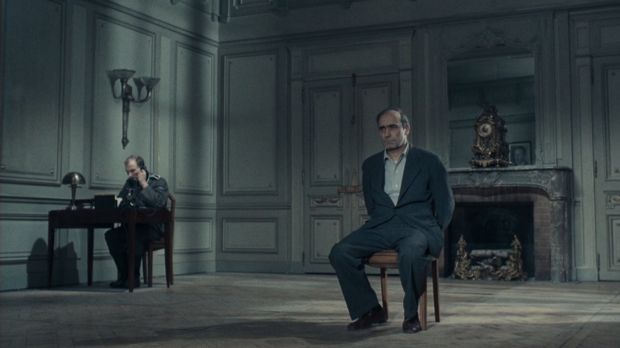
Being tied to a chair while watching is optional. The creepy stenographer in the corner is, unfortunately, not. He’ll simply appear in the room as the opening credits roll. It was quite unsettling.

In this movie, we follow various members of the French Resistance during the German occupation. Philippe Gerbier (Ventura) is arrested by the Gestapo after a betrayal. He manages to flee, and enacts his (quite practical and dispassionate) vengeance on the person who gave him up. Among his fellow Resistance buddies we find “Le Bison” (Barbier), “Le Masque” (Mann), “Ze Big Boss” (Meurisse), and… Mathilde (Signoret).

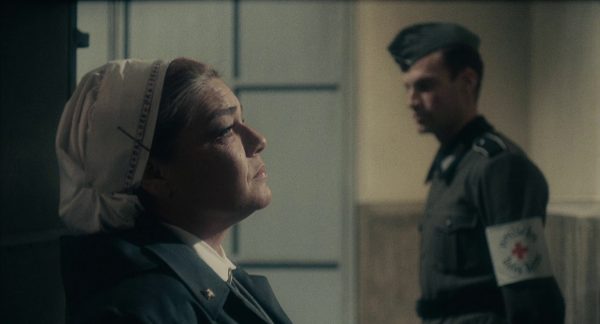
She might be Mathilde to you, but to us she will always be The Mistress of Disguise.

Other members lacking exciting code names include Jean François (Cassel) and the unfortunate Félix (Crauchet). Their missions are unglamorous and unromantic, and their actions seem motivated by a sense of what needs to be done rather than any ambition of glory or acclaim. And indeed, without giving too many spoilers, many of them will die in obscurity under false names with few or no one knowing what they did or what they sacrificed for the greater good (The Greater Gooood..).

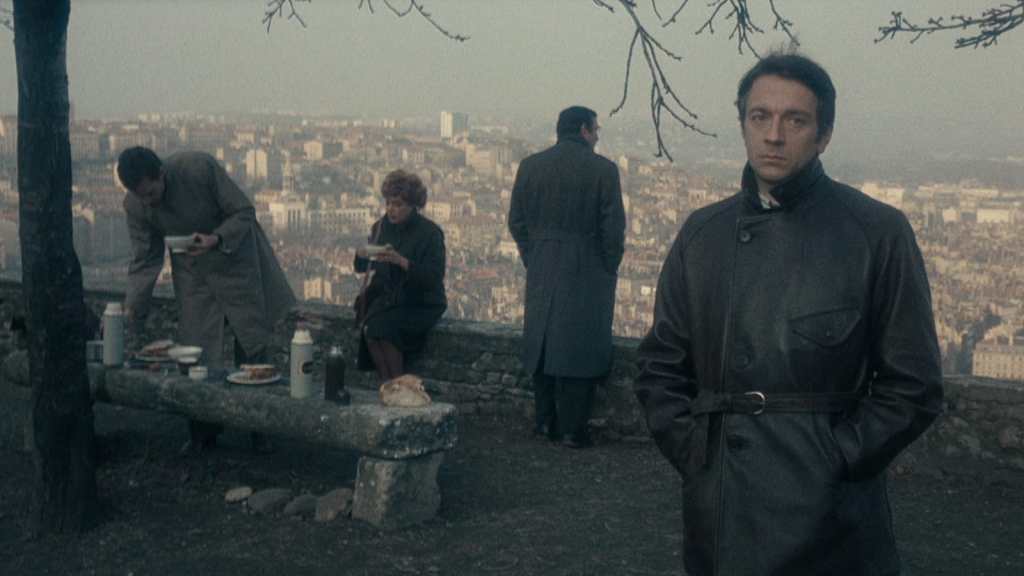
We’re just kidding. They all lived long, happy lives, and after the war frequently met for picnics. And to stare into the nothingness while trapped in the echo of the horrors that they lived through years ago and still relive in the dark of night… But mostly picnics.

Like we said, if you’re looking for a Nazi-ass-kicking action film à la Where Eagles Dare, The Dirty Dozen, or The Great Escape, this is not it. Army of Shadows has more in common with a spy drama than any of those, but not in any James Bondesque way. Despite its occasional action scene, it’s rather quiet and slow, but it packs an emotional punch.

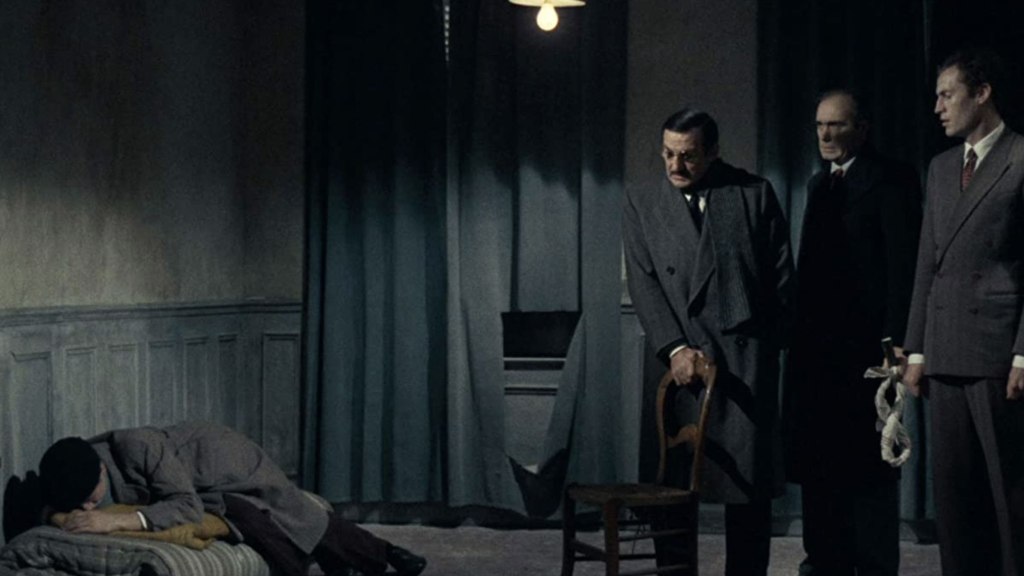
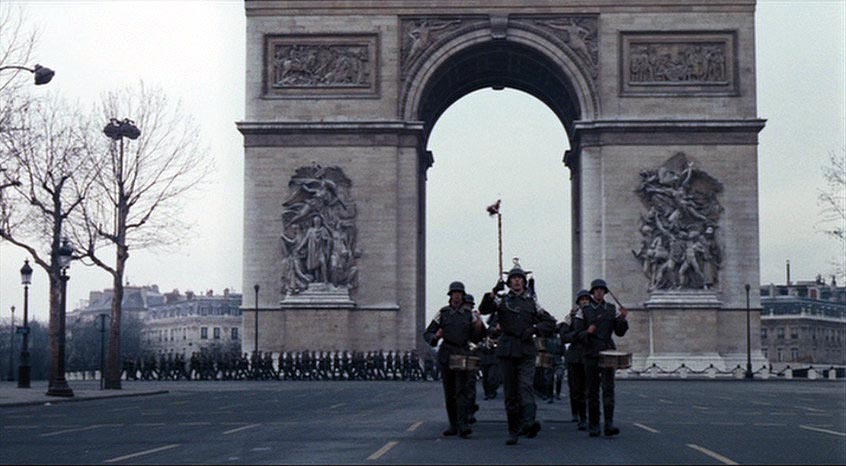
The chilling opening scene reminded us of Pretty Poison, where instead of a high school drill team marching during the opening credits (quite sinister in itself), there are Germans troops marching through the Arc de Triomphe (arguably a bit more sinister). The early execution scene sets the tone for the film – there’s no joy, nor any strong feelings of hatred or lust for vengeance here, just regret and somber, unavoidable reasoning.

Honestly, we’d never before encountered the problem of what do you do when your safe house/execution place gets new neighbours and you can no longer shoot your victim due to the noise. It poses quite the conundrum. We’re glad to now have a frame of reference for when we’ll inevitably find ourselves in a similar situation.

The pace is slow, and there’s very little music/score, which adds to the sense of realism in contrast to the focus on action and heroism we’re used to seeing in movies set during World War II. Even Gerbier’s escape from the clutches of the Gestapo in the beginning is rather mundane – and probably a lot more realistic than more elaborate depictions of similar events in other movies. Not that this movie is devoid of action or heroism – there’s quite a lot, but it is often less flashy. The acts of heroism are even occasionally close to pointless (we’re looking at you, Jean François. Heroic though your actions were, one could argue that they were ultimately unproductive).

That being said, any mode of resistance is important, and empathy is never wrong. Let’s all agree that we don’t want a repeat of this scenario.

We loved Mathilde, the Brits in the loft, and the dispatcher on Gerbier’s flight back from London. Not to mention the oh so subtle ways we were told the characters had arrived in the UK – the Big Ben, red telephone boxes, and the British flag over the Houses of Parliament were all very vague hints that only the most discerning viewer would be able to pick up on. We also loved the clearly ’60s hair and make-up sported by several of the ladies (clear influences by the style of the time of production in historical films and shows are always fascinating to see). Overall, Army of Shadows was another movie we probably wouldn’t have picked up if it hadn’t been on the list, but one we very much enjoyed and that we’ve thought about frequently since we watched it.

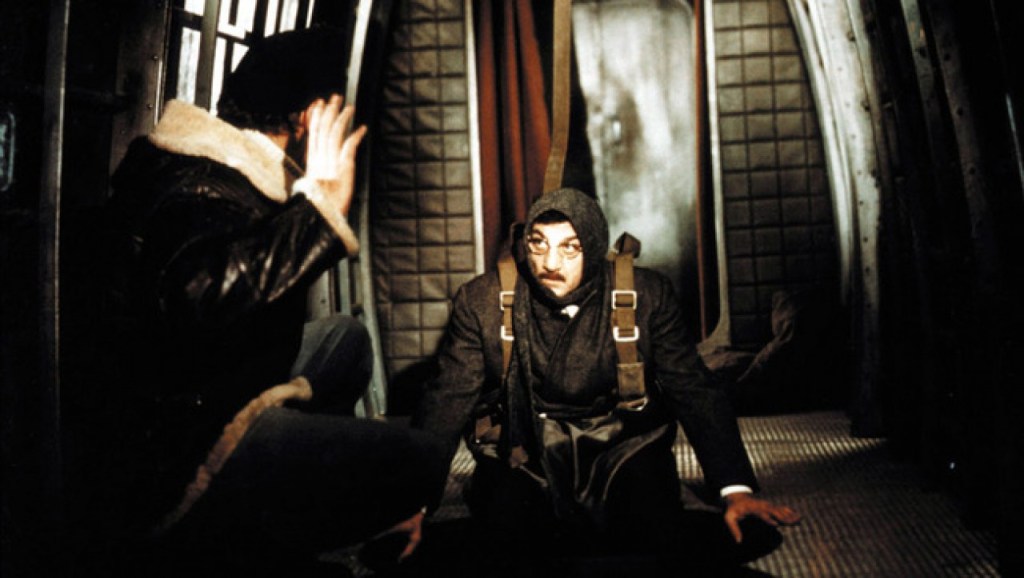
It’s not all bleak. For instance, the flight scene was hilarious!

What we learned: Resist! But also, sacrifices must be made when opposing a fascist regime…

MVP: Mathilde! We will hear no arguments! (And, sure, Gerbier as well, of course. Not to mention La Résistance. Everyone who fights back against oppression, really.)

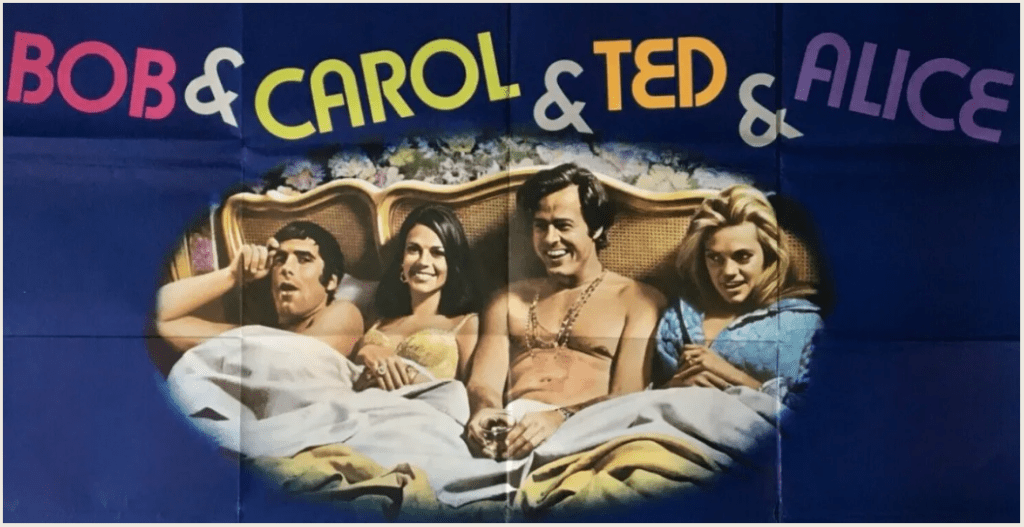
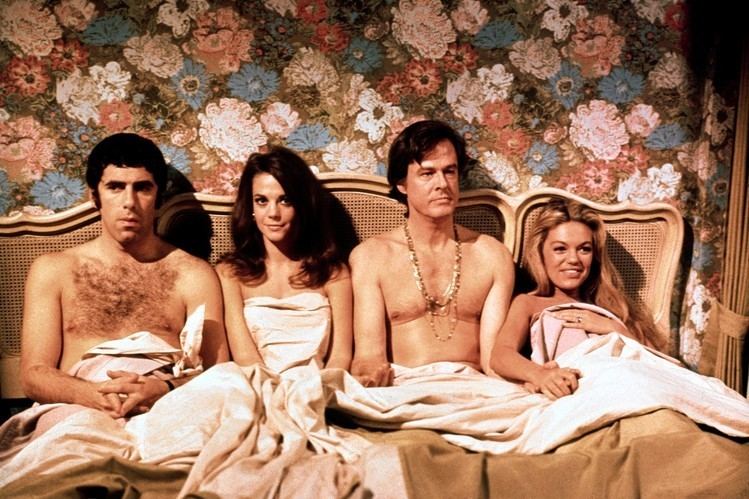
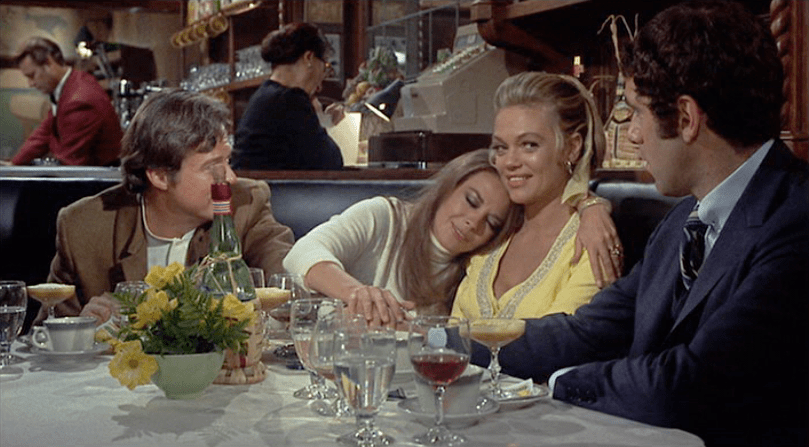
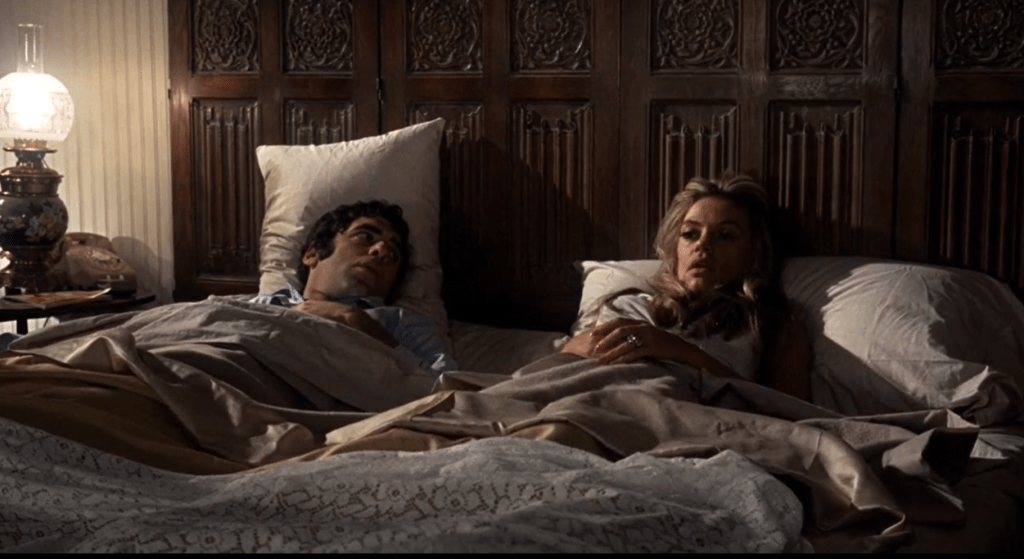
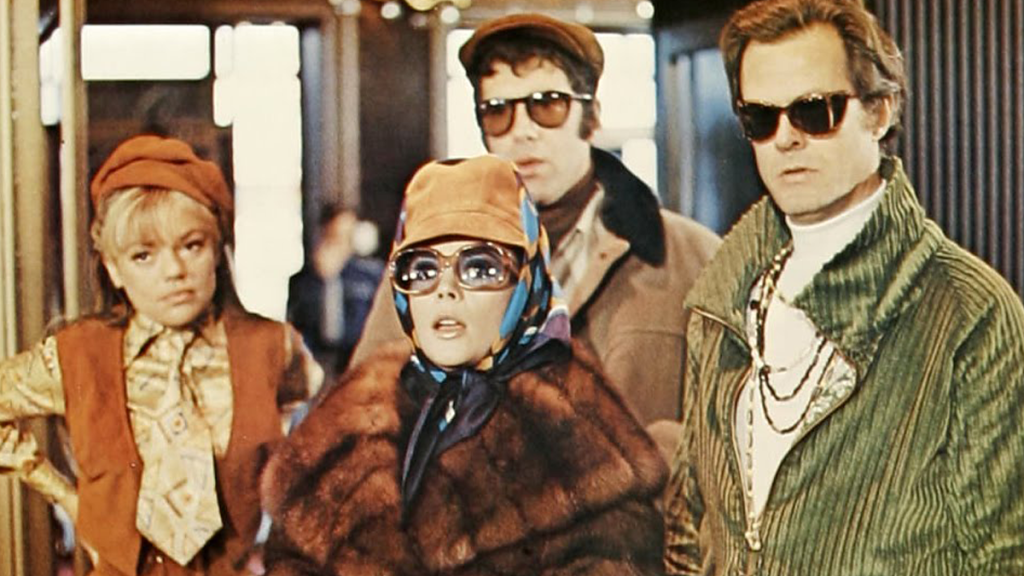
Next time: Bob & Carol & Ted & Alice (1969)

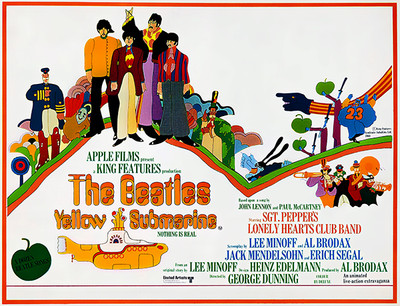
#376 Yellow Submarine

Watched: November 6 2025

Director: George Dunning, Dennis Abey

Starring: John, Paul, George and Ringo. But also played by John Clive, Geoffrey Hughes, Peter Batten and Paul Angelis. Featuring Dick Emery and Lance Percival.

Year: 1968

Runtime: 1h 30min

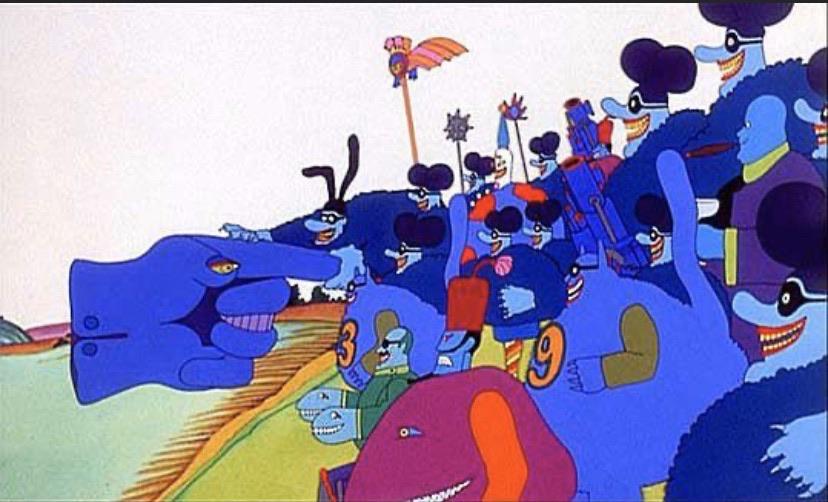
It’s a tale as old as time: Blue Meanies in high heels attack a peaceful Peppernation with the aid of their sentient (evil) glove. Only Admiral Fred makes it out to get Help! (see what we did there?), in a (you guessed it) Yellow Submarine™.

Where do you even start solving a problem like murderous gloves and men with fish hands? (Those are fish hands, right? With human teeth? Or are we way off here?)

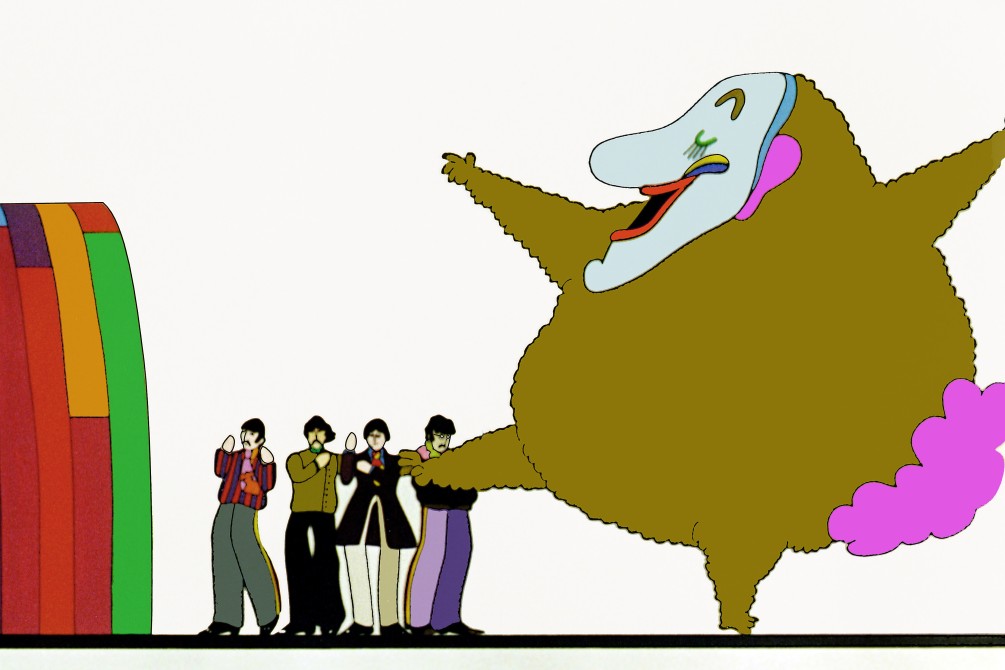
Fred ends up in Liverpool where he picks up Ringo, John, George and Paul. Together, they must travel back to Pepperland to save the land through music. Along the way, they encounter several creatures and experience many adventures. They also pick up The Nowhere Man, aka. Jeremy Hillary Boob, Ph. D. – a creature of many talents and infinite rhymes.

He is strangely adorable. In a very unsettling kind of way.

Yellow Submarine is silly, surreal and weird. In many ways a mix of genius and stupidity, it is very enjoyable, and the pun game is excellent. We’re clearly not the target audience though – while we both enjoy The Beatles, we’re more casual fans and were born too late to experience full on Beatlemania. Also, psychedelic drugs were no longer en vogue by the time we were old enough to start experimenting, so we feel like we might never fully grasp the significance of this feature the way its contemporary audience would have experienced it.

You know, the fish hands are starting to make sense now. Notoriously hard to get right, hands.

Still, we loved the creatures, the Nowhere Man, the animation style, and the general vibe. We might mostly recommend it to fans of the band though. Or fans of mind-altering drugs. Perhaps preferably fans of both.

Additionally, fans of Whack-A-Mole might also find much to enjoy in this movie.

What we learned: When in doubt, try a few buttons.

MVP: Drugs… And the soundtrack.

Next time: Army of Shadows (1969)
#375 Wild in the Streets

Watched: January 24 2026

Director: Barry Shear

Starring: Christopher Jones, Shelley Winters, Diane Varsi, Hal Holbrook, Richard Pryor, Millie Perkins, Ed Begley

Year: 1968

Runtime: 1h 37min

Happy New Year, everyone! Sorry for the lack of activity, but we’ve been very busy and important people, travelling the world everywhere from Cambodia to Kirkenes on the Norwegian/Russian border (alright – only those two places, but still. Very important!) with little time to watch movies or write about them. Now we’re back and we bring you 2026’s first review, Wild in the Streets (1968).

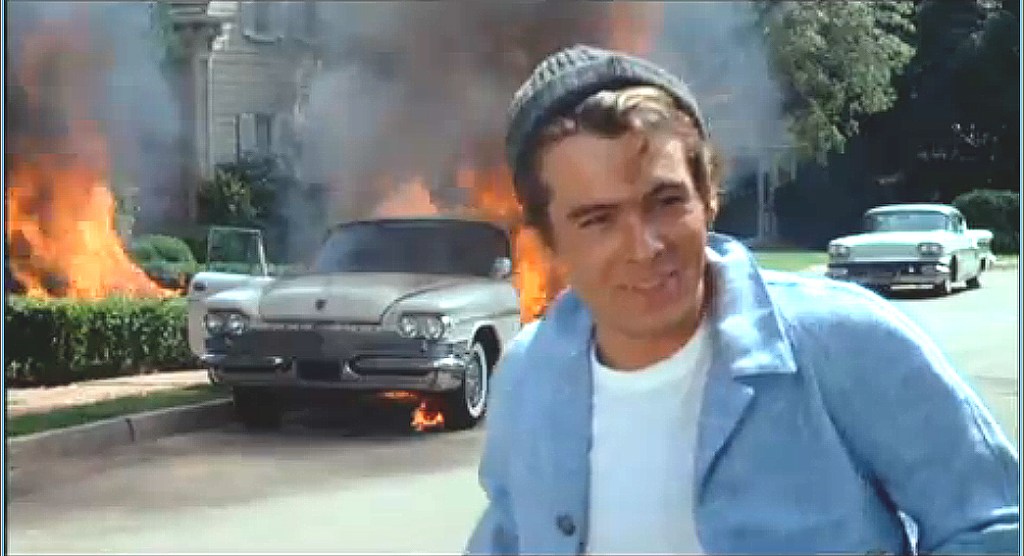
Like our protagonist Max, we walked away from a past on fire (in our case, 2025) with high hopes for the future. Unlike Max, our future (2026) immediately became a much larger dumpster fire than the past had ever even aspired to be.

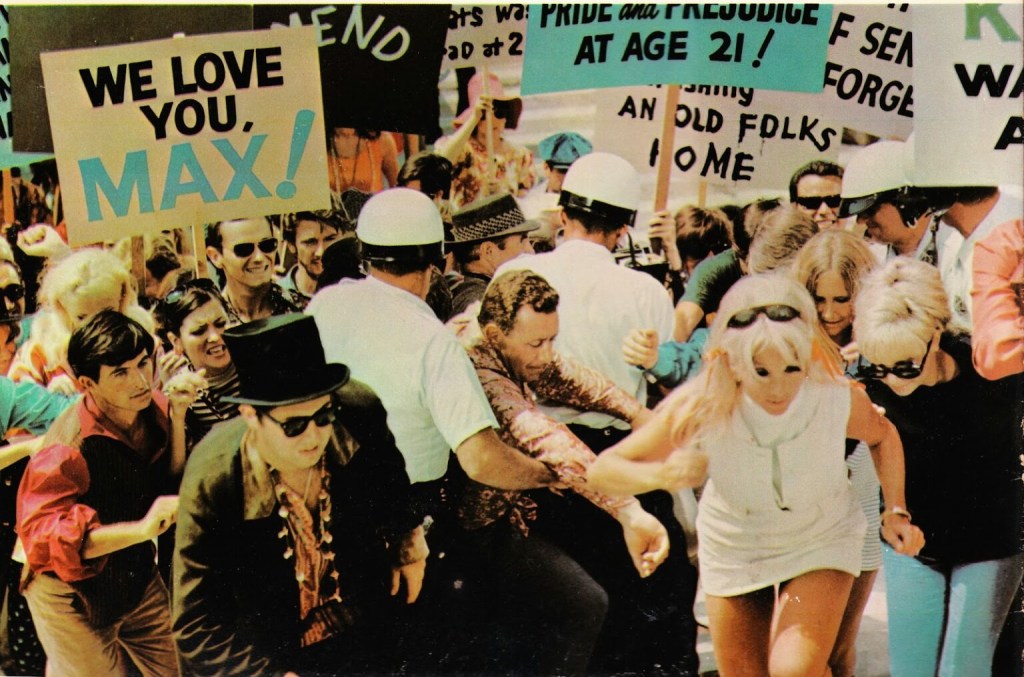
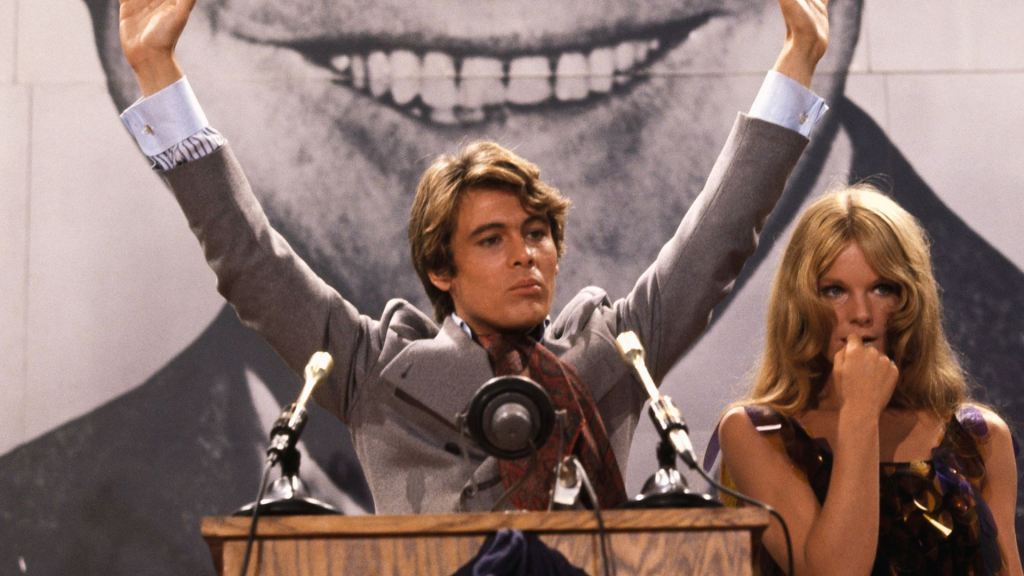
Remember Privilege? Well, Wild in the Streets is its slightly sillier American cousin. Max Flatow (Jones) grows up with an overbearing mother, a volatile family life, and some psychopathic tendencies. He runs away and reinvents himself as Max Frost – an incredibly accomplished pop star surrounded by other precocious young people ranging in age from 14 to 25.

He also amasses a huge amount of crazed fans

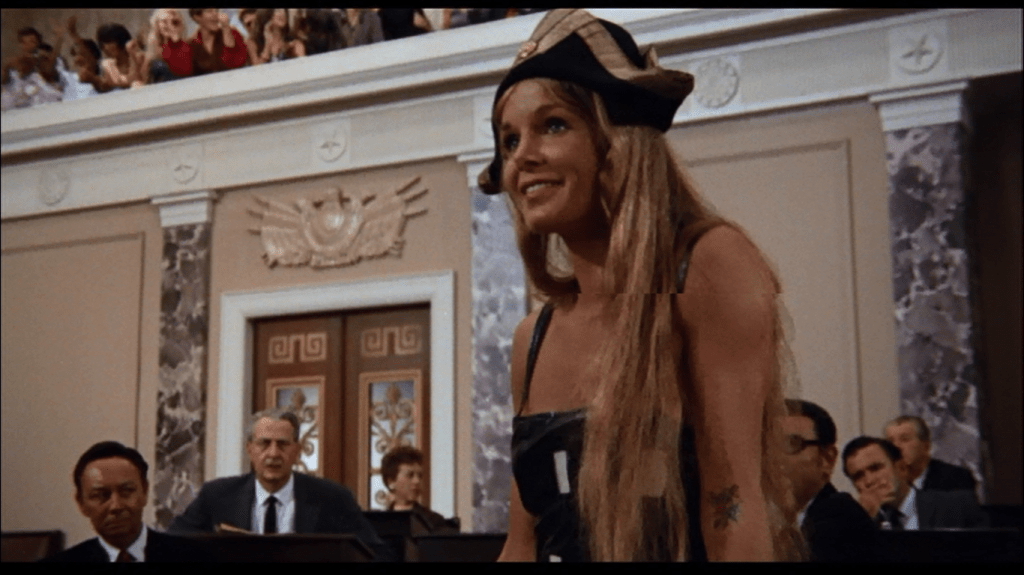
Max is approached by Congressman Johnny Fergus (Halbrook) who is running for Senate and who wants to lower the voting age to 18. His sons are huge fans of Max, and Fergus sees him as a way of getting support from the younger generation. However, the politician gets more than he bargained for when Max and his vast following become more and more involved in the politics of it all. First, they insist on further lowering the voting age – not to 18 but 15. They then manage to get Max’s girlfriend Sally LeRoy (Varsi), a former child star with a strong penchant for acid and an equally strong aversion to clothes, voted into the Senate to really change things up. And change things they do…

She is mostly naked, but whenever Sally does deign to put on clothes, her fashion sense is impeccable!

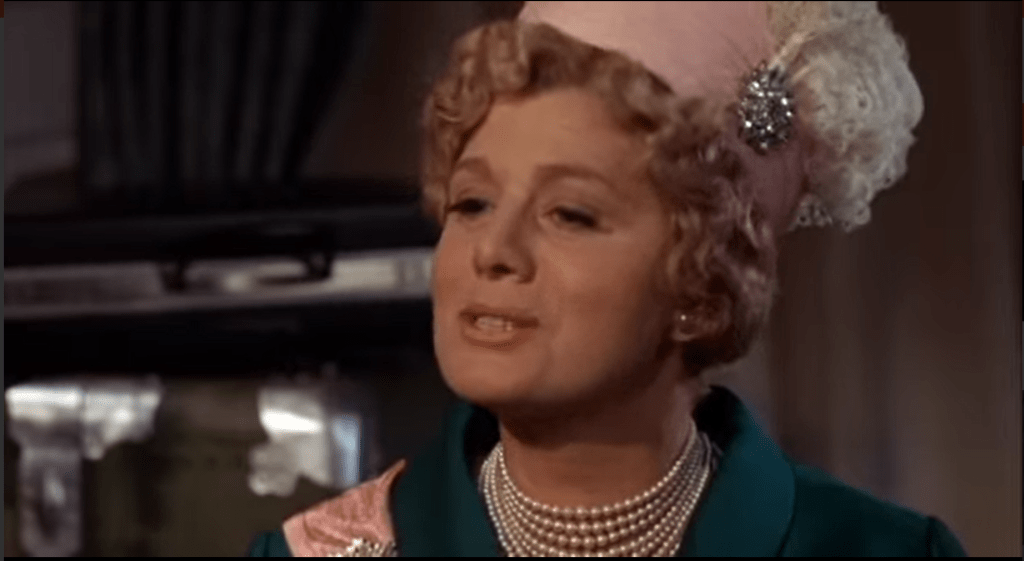
Parallel to all this, Max’s estranged mother Daphne (Winters) does her best to capitalize on her son’s success while desperately clinging to her own fading youth. She also completely steals the show! And possibly commits vehicular manslaughter (which somehow never comes back to bite anyone in the ass. We were expecting Chekhov’s Dead Child™, but we never hear of the incident again).

Her journey of reinvention to fit whatever narrative she perceives at any given time is a joy to behold

We quite enjoyed this, although when it comes to the idea of abusing pop cultural icons for political power, we personally think Privilege was a better executed version. However, we loved the swinging ’60s vibe, Max’s truly horrible hairstyle (you need to see it from the back!), Sally LeRoy’s fashion sense (less is truly more), the crazy mama Daphne, and the fact that no one really came off well in this. It was a wild ride indeed! Still, as over the top as the story arch and the portrayal of the political process were, the plot was still not as silly as electing a failed business man and reality TV star as president. But somehow less dangerous.

Sure, perhaps ageism can be a bad as racism and fascism, but this fictional USA is definitely not as sinister as its real, current counterpart.

Now, as ancient over-forties (Sister the Youngest had her 40th birthday in December! Happy birthday!), we were naturally sceptical to the idea of anyone over 35 being considered obsolete and put out to pasture. On the other hand, if someone allowed us to retire at 30 and then put us in a commune with free drugs from the age of 35, we might not be entirely opposed to the idea… Although we suspect we’d be over it pretty quickly. Expecially as the compound was full of other people. Which Hell truly is made up of.

What we learned: The power of rock compels you. Dealing in absolutes is rarely productive. And again – stop blindly worshipping people!

MVP: Max’s mom! Shelley Winters, you absolute legend.

Next time: Yellow Submarine (1968)

#373 The Thomas Crown Affair

Watched: November 7 2025

Director: Norman Jewison

Starring: Steve McQueen, Faye Dunaway, Paul Burke, Jack Weston, Nora Marlowe

Year: 1968

Runtime: 1h 42min

A heist is going down. And what a heist! There are several people in play, lots of phone booth coordination, heaps of money at stake, and a criminal mastermind at the reins. This mastermind is Thomas Crown (McQueen) – a rich business man stealing money basically for the hell of it, or out of boredom. Or to prove to himself that he is as smart as he thinks he is. But is he..?

Steve McQueen? More like Smuggy McSmugface, amirite? HAH!
We’ll see ourselves out…

The heist goes off fairly smoothly, with only one shot fired and no casualties. It leaves behind many frustrated men in suits, but sadly very few leads. Then, someone makes the excellent decision of bringing in insurance detective/glamourous super sleuth Vicki Anderson (Dunaway) to assist in the investigation. She gets to work and quickly narrows their suspects down to a certain Thomas Crown based on… well, we’re not quite sure. A hunch? A vibe? Wanting to bone him? The logic is not entirely sound, but at least it turns out to be 100% correct.

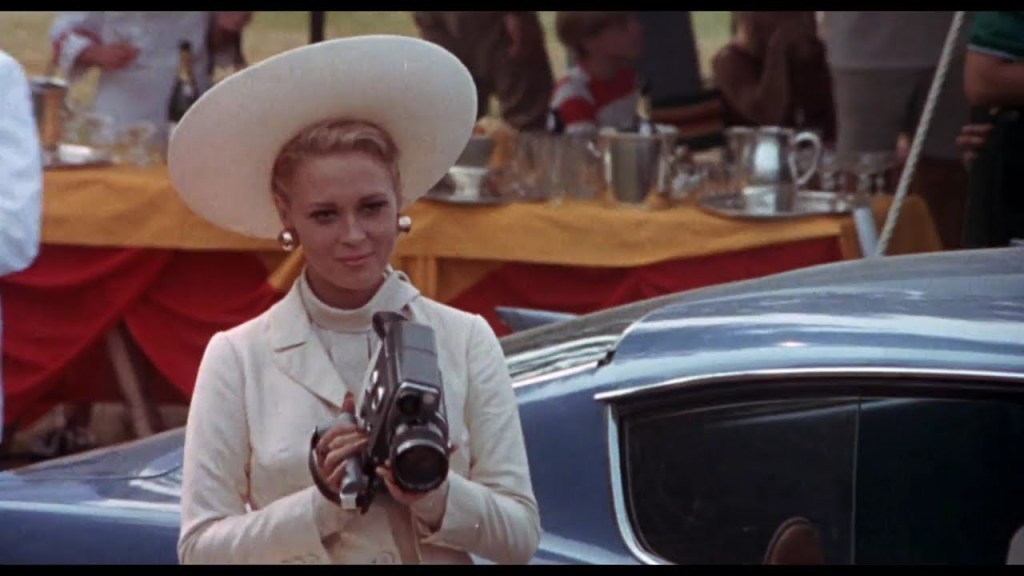
She then goes to work to catch her man. Her surveillance method of “bring a beast of a camera and then make eye contact with the target the entire time” is about as subtle as a freight train to the face

The only problem now is that they do not have any evidence to tie him to the crime. Luckily Vicki, passionately dedicated to her job, is willing to start a whole relationship with this man to prove her suspicion true. So their cat and mouse-/spy vs. spy-game begins.

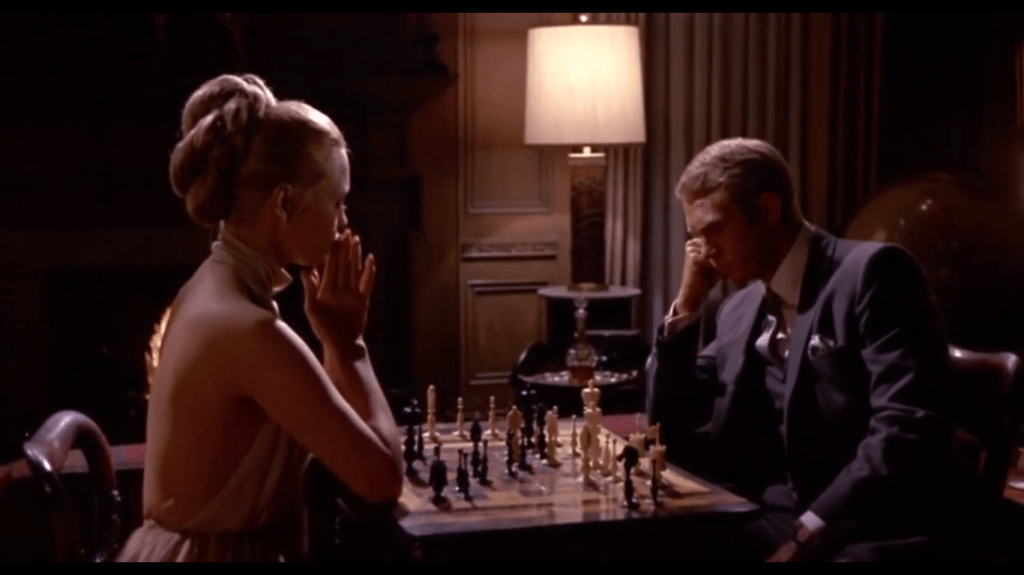
They literally play chess about things

This was a bit uneven for us – there were things we absolutely loved about The Thomas Crown Affair, and things we’re more unsure of. We loved Faye Dunaway, and Steve McQueen is always charismatic af. However, once their relationship began, the film sort of lost some of its nerve and tension. Don’t get us wrong – there were some great scenes between them, and we loved Vicki throughout the entire film. Especially her sense of self: “I know who I am. Don’t put your labels on me.”

And what she is is an icon. An icon with an impressive and extensive hat collection.

I suppose we just didn’t quite buy into her falling for a bored little rich man who robbed a bank just for the hell of it. Now, if he was a suave art thief or something, we’d be all for it! Stealing art or artefacts in the style of Pierre Despereaux is cool (in fiction we mean, nice police people. We would never promote criminal activity in real life). Stealing money when you’re already rich is just… tacky. The film also felt as though they skipped some very important steps in the narrative, particularly how the investigators figured out how the heist was orchestrated and how they ended up with Thomas Crown as a suspect.

Was it the short shorts? It was probably the short shorts. We suspect everything could be traced back to the short shorts…

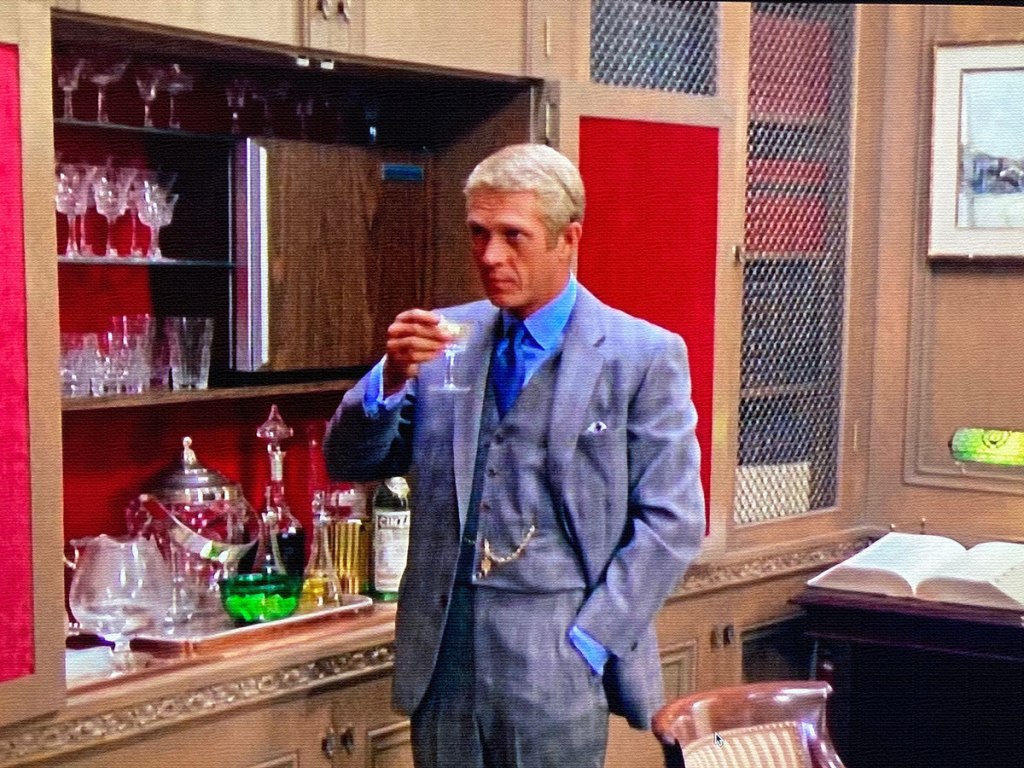
Still, we loved the stylish and cool heist in the beginning, the split screen which we also saw in The Boston Strangler (so hot in the ’60s), the built in wall bar with the fridge (we want one! Each!), Vicki Anderson – insurance sleuth extraordinaire, and the ending. There was something very satisfying about how they both stayed true to who they were in the end. Overall, we thought the first half was better than the last, but we had a very good time with this.

This! This is what we want in life! It even has a built in fridge!
Swanky man optional.

What we learned: It must be so hard to be rich and bored…

MVP: Marcie! For the vibes. And also the aran sweaters.

Next time: Where Eagles Dare (1968)

#372 The Swimmer

Watched: November 4 2025

Director: Frank Perry, Sydney Pollack

Starring: Burt Lancaster, Janet Landgard, Janice Rule, Marge Champion, Joan Rivers, Nancy Cushman, House Jameson, Tony Bickley

Year: 1968

Runtime: 1h 35min

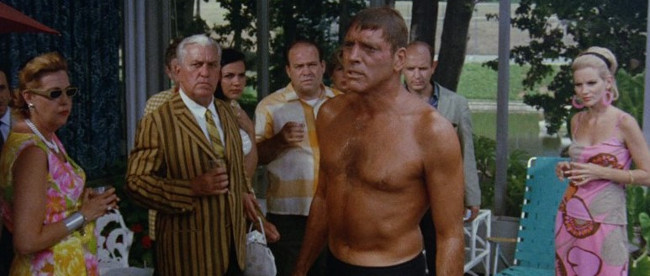
Welcome to the surreal world of The Swimmer. You’re in for quite a ride… Ned Merrill (Lancaster) is running around in his bathing suit in a gorgeous woodland, as people do. He drops by some old friends’ backyard and goes for a swim in their pool. The friends are hungover from the night before, and have not seen Ned for aaaaages. But they love him, and he’s such a great guy. While reminiscing with them, Ned has the brilliant idea to swim all the way home, by way of his neighbours’ pools which form a “river” the entire way. Off he goes!

But not without a drink in his hand. He’s not an animal.

As he makes his wet way towards his house he meets several old friends and acquaintances, but the vibe changes discernibly as he gets closer and closer to home. In the beginning, all the people he meets are old friends who clearly see him as a good guy, although they all get a bit weird whenever his wife or daughters are brought up. But as he gets closer to home, the people he encounters are increasingly hostile and keep hinting more and more to something that clearly has gone wrong in Ned’s life. Our “hero” also goes super sleazy with Julie (Landgard), a young girl who used to babysit for his kids. Things get gradually darker and weirder until he finally reaches “home.”

It starts off so innocently. Even bringing along his very young former babysitter seems wholesome at first. Until it’s not…

We had no idea what we were getting ourselves into, but we were hooked from the start. We loved how our view of Ned changed throughout the movie – from seeming to be a nice enough man (and just a little bit inappropriate with all the women he knew) in the beginning, to a creepy, cheating, horrible narcissist at the end.

This scene with his former mistress is the best depiction we’ve seen of a man completely unravelling when he finds out a woman has faked her orgasms. Actual quote: “You loved it. You loved it. We both loved it. YOU LOVED IT!” And she’s just there like “Sure, Jan.”

The Swimmer kept us questioning throughout, and we came up with about 271 theories on what was actually going on. What happened to his daughters? His wife? Is this a sort of “life flashing before his eyes” scenario? Are we in purgatory? Is he senile? Is this a portrayal of his gradual corruption and entitlement throughout his life told through a swimming pool voyage? ‘Twas a mystery wrapped in an enigma. In the end, things start coming together and some questions are answered, but we’re still not 100% sure what exactly we just watched. That being said, we loved it (actually loved it. It wasn’t just a man telling us we did).

Another bit of unravelling: at the first pools people find him quirky and charming for going around in his swim trunks at a clothed event. As he progresses, not so much…

Among our favourite things were the ’60s parties he kept crashing (such a vibe!), the Hallorans, the way we liked Ned less and less as we went along, his increasingly fragile ego and psyche, and the many mysteries hidden in the plot. Also, the beautiful scenery added to the film’s dreamlike quality which, granted, gradually descended into a nightmare. Watch it!

Preferably through a closed, rusted fence with an anguished look on your face as you gradually realise the reality of your existence and slowly descend into madness and despair. It’s what we did.

What we learned: Dude! No means NO!!!

MVP: The pools. Or, possibly, the narrative technique. Or Ned’s fragile male ego.

Next time: The Thomas Crown Affair (1968)