#382 Funeral Parade of Roses/Bara no sôretsu

Watched: March 27 2026

Director: Toshio Matsumoto

Starring: Pîtâ, Osamu Ogasawara, Yoshio Tsuchiya, Yoshimi Jô, Emiko Azuma, Koichi Nakamura, Flamenco Umeji, Saako Oota, Toyosaburo Uchiyama

Year: 1969

Runtime: 1h 45min

Have you ever wanted to watch a reinterpretation of Oedipus Rex, but with drag, drugs and documentary-style digressions? Well, you won’t believe what we have for you today! (Also, if you know a word on “d” which means nonlinear, let us know at 1000filmsblog@gmail.com. We had to make a terrible choice between alliteration and accuracy in our opening line.)
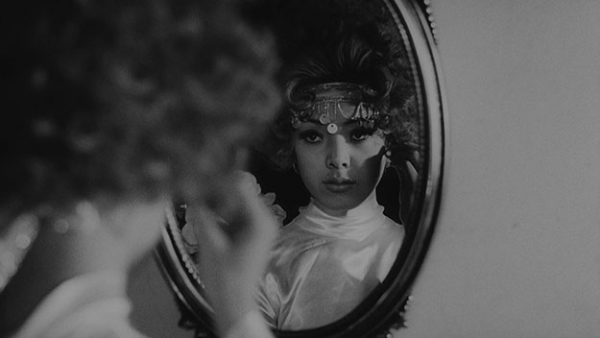
Don’t worry. We’ll take a long, hard look at ourselves in the mirror.

Funeral Parade of Roses is a movie that should be experienced, so we’ll keep our summary brief. In short, we’re in Japan in the swinging sixties, moving through the gay-, trans- and drag-scene(s) via nonlinear storytelling, interviews and intertitles. The main narrative follows Eddie, a gei boi who works at a bar in Tokyo and is sexually involved with its manager, Gonda. Gonda is also in a relationship with the madam of the club, Leda, who is basically Eddie’s boss/superior. We’re introduced to several side characters from Tokyo’s underground culture – young people from all walks of life who take drugs and make art while enjoying the sexual liberation of the 1960s.
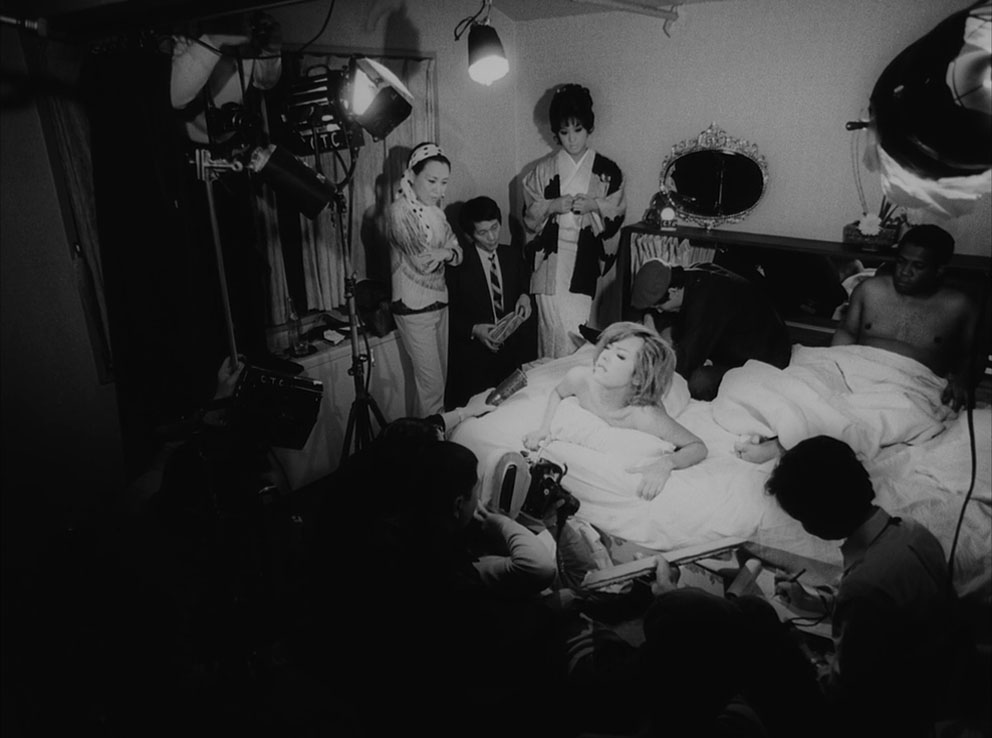
Pictured: an awkward glimpse behind the scenes of a sex scene. We particularly enjoy the jealous partner of one of the participants lurking in the corner and judging everyone’s performance.

This movie is very experimental, very ’60s and very stylish. It’s a fascinating look into queer culture in ’60s Japan, and we loved the way it blurred the line between reality and fiction. It’s beautifully shot, and Pîtâ’s Eddie in particular is compelling to watch. We also loved Guevara with his feux beard, the soundtrack, the editing and the general vibe. Not to mention the twist!
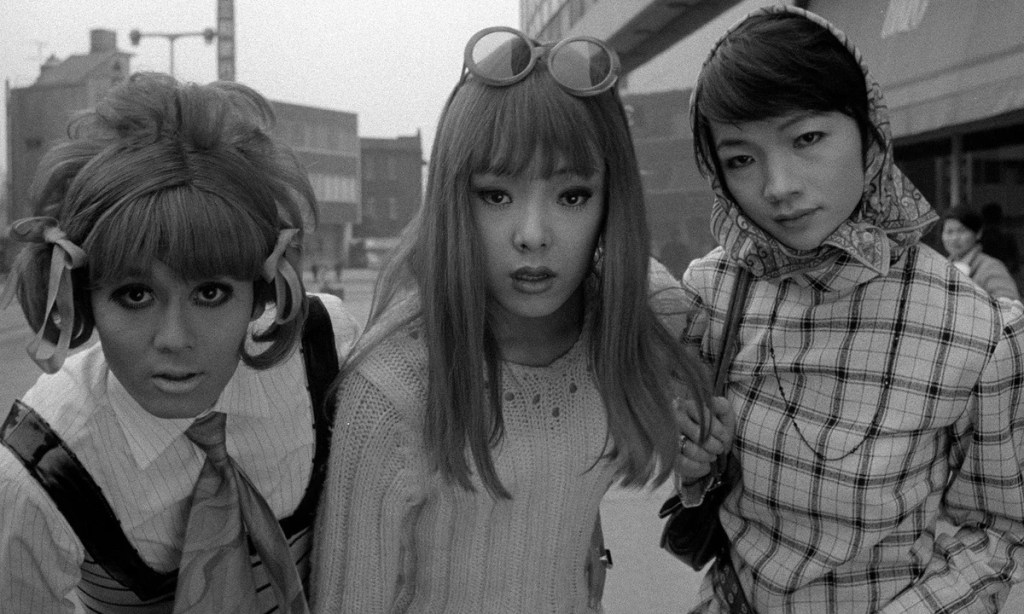
“Are you serious??? You’re going to mention the twist? Motherfu…”

Funeral Parade of Roses is cool, subversive, bold and brave for its time. Though, to be completely honest, if we met the group of artists depicted in this movie today, we’d be terribly bored by their drug enduced self indulgence. Times have changed a bit in that regard… We still found the film both moving and engaging. And experiencing new sides of drag and queer culture from a non-western point of view is always refreshing and interesting.
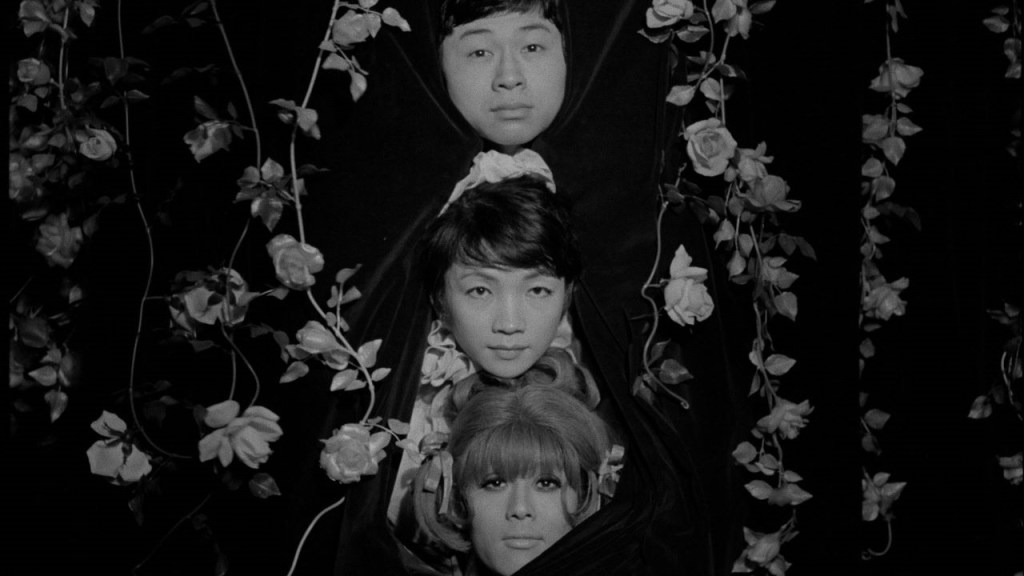
The decapitations were unexpected though. Did not see that coming at all.

What we learned: Something about absent fathers, maybe? And that drag and gender expressions come in many forms.

MVP: Eddie. And her wig game. Or possibly Sofokles.

Next time: I Start Counting (1969)
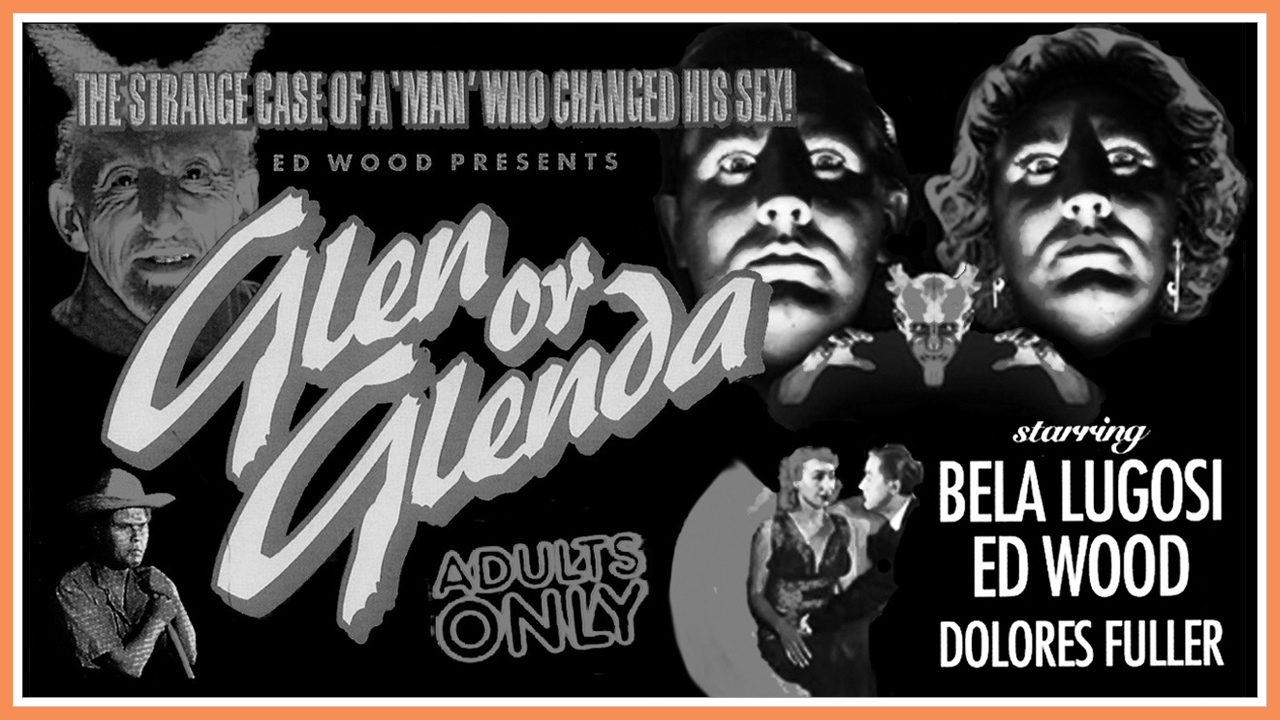
#113 Glen or Glenda

Watched: June 11 2017

Director: Edward D. Wood Jr (aka Ed Wood)

Starring: Bela Lugosi, Ed Wood, Dolores Fuller, Timothy Farrell, Lyle Talbot

Year: 1953

Runtime: 1h 11min

Glen

Source

Ed Wood is commonly known as the worst director of all time, which may or may not be true (there must be someone worse out there, although it’s possible they’ve never released anything major), due in large part to the cult classic Plan 9 From Outer Space (1959). Slightly less well known, though still fairly (in)famous, and (hopefully) slightly more autobiographical is Glen or Glenda from 1953.

Glen2
Despite his infamy, Ed Wood threw the best and most surreal parties!

Source

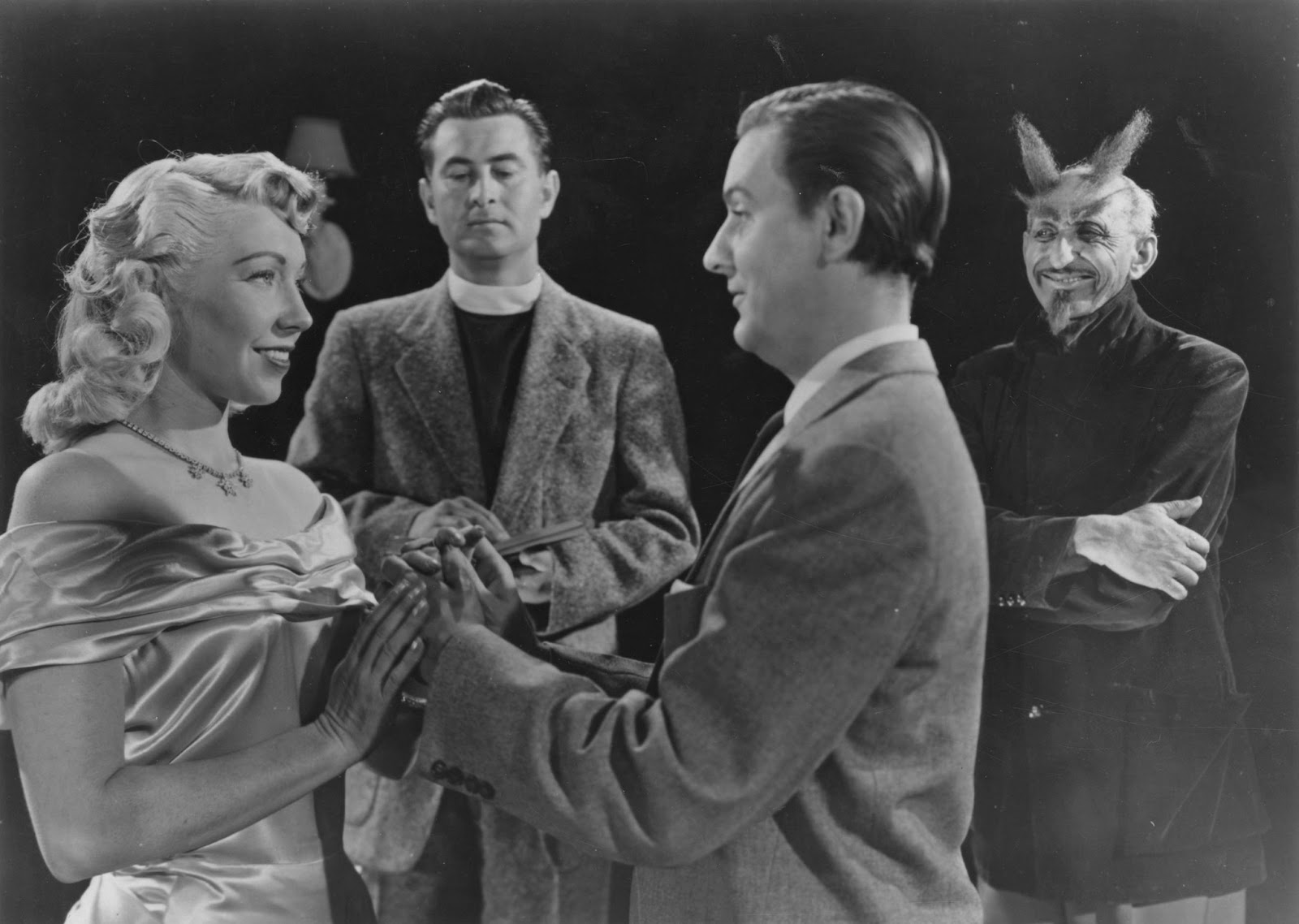
Transvestite Patrick/Patricia has committed suicide, and the investigator, Inspector Warren (Talbot) wants to learn more about their motive. He talks to Dr Alton (Farrell) who tells him two stories about different forms of gender identity, starting with the story of Glen/Glenda (Wood).

Glen3
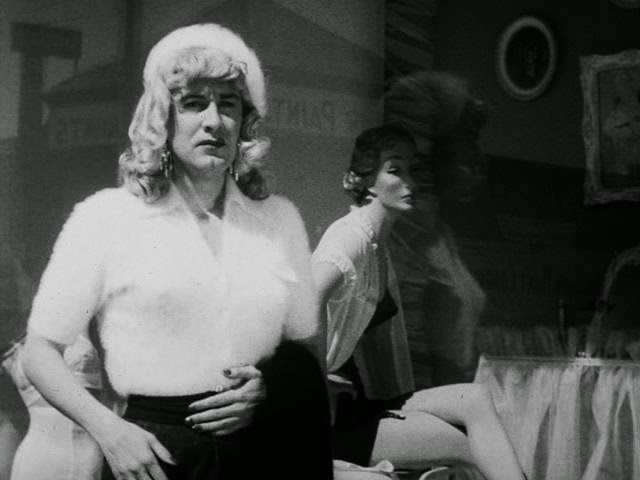
Some men have different reasons for admiring lingerie in shop windows…

Source

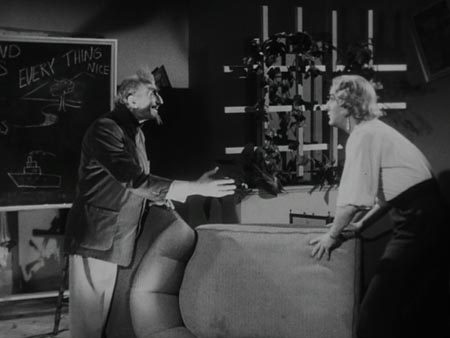
Glen is a fairly normal heterosexual man who is engaged to marry Barbara (Fuller), and who likes to dress in women’s clothing and to feel like a woman. He describes it as a sort of split personality and he cannot quite make up his mind whether he wants to continue doing this or whether he wants to stop. He also has a hard time deciding how to tell his fiancée about his alter ego. This is the most clearly autobiographical narrative in the film, since the director himself went through a similar process (as we’ll see in Tim Burton’s Ed Wood when we reach 1994).

Glen4
He feels like it’s sinful and wrong too, poor guy/girl

Source

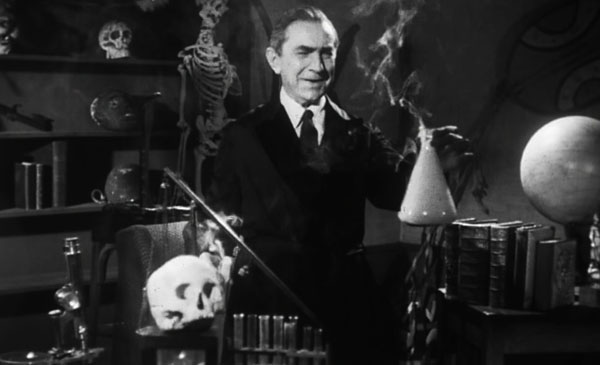
Dr Alton also tells Warren the story of pseudohermaphrodite Alan, who after a long period of confusion, goes through a sex change to transition to female. In between these two narratives, Bela Lugosi pops up in a lab straight out of a Frankenstein film and talks about human nature while doing experiments that have nothing whatsoever to do with the rest of the film. There’s also a (drug-fueled?) dream sequence heavy with symbolism (we think).

glen5
An old Universal horror? A Hammer film, perhaps? Nope, it’s a docudrama about gender identity

Source

A film as indecisive about its nature as its eponymous character, Glen or Glenda cannot seem to make its mind up about in which genre it wants to belong. The scenes with Bela Lugosi fall firmly into the horror realm, while other parts of the film fluctuate between documentary, drama, romance, pantomime, silent movie, and symbolism heavy art feature. It is a very interesting film to watch though, and its cult status is understandable. The artistic merits of the film do not, however, quite match the level of the progressive and important subject matter, and it’s a strange experience watching it. Well worth it though!

glen6
Yup. Still docudrama about gender identity.

Source

What we learned: Beware of the big green dragon that sits on your doorstep. Also, 7 out of 10 men are bald due to tight hats.

Next time: House of Wax (1953)