Starring: Paul Newman, Robert Redford, Katharine Ross, Strother Martin, Cloris Leachman, George Furth
Year: 1969
Runtime: 1h 50min
Remember our ongoing series of discovering we enjoy westerns a lot more than we thought we did? Here’s another entry! To be fair, this one we knew we liked – we’ve seen it several times before, and we’re pretty sure our dad had it recorded from TV when we were growing up. It’s been about 20 years since our last rewatch though, so we were pleasantly surprised by how good it actually is!
In fact, we were blown away! Hah! We’ll see ourselves out…
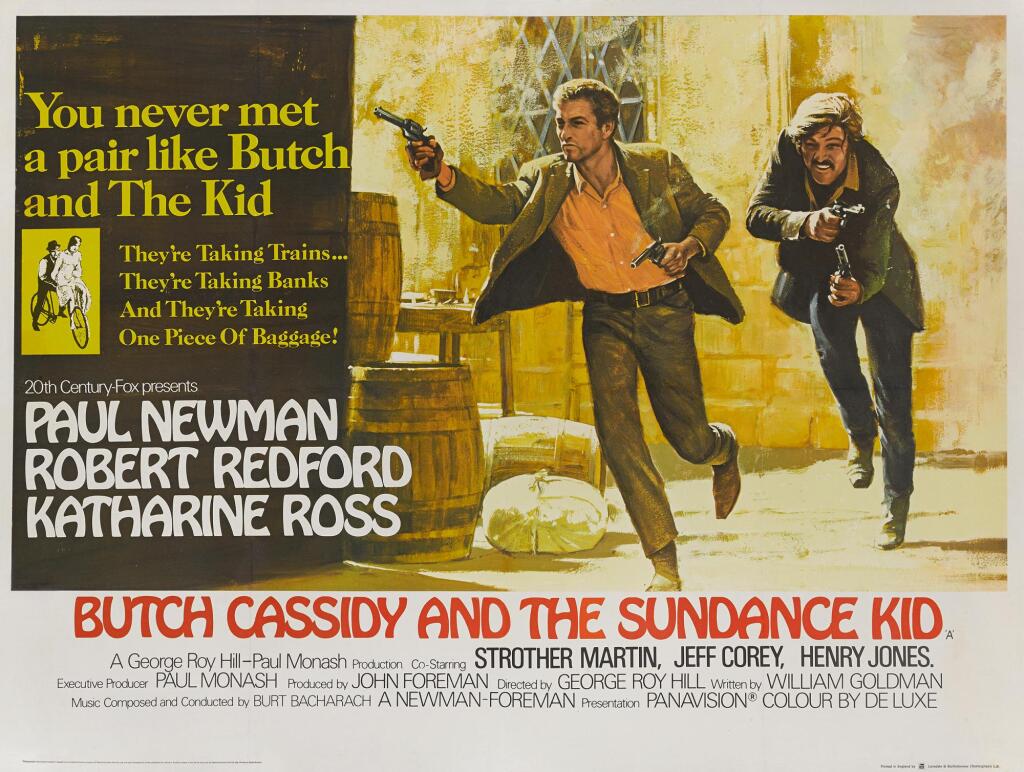
Butch Cassidy (Newman) is the leader of the infamous Hole in the Wall-gang, a group of outlaws who rob things. Trains, banks, you name it! His position as leader is supported by his bff, sharpshooter Sundance Kid (Redford), made evident when another gang member tries to usurp control.
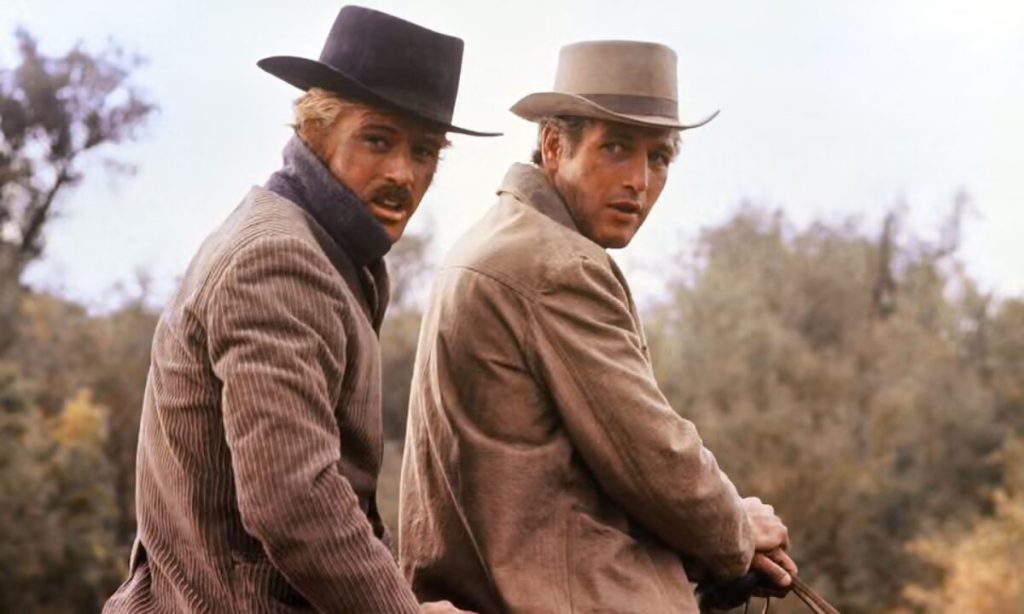
Cowboys who ride together, chide together! Or something…
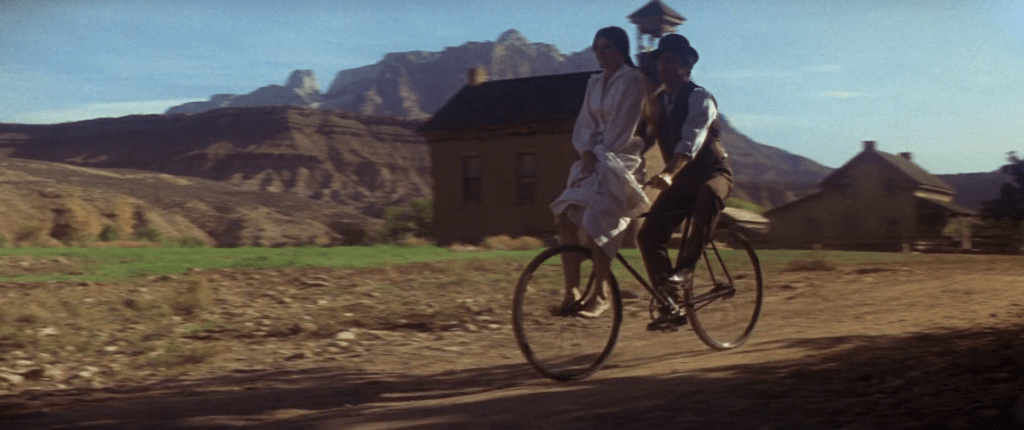
After a successful (and very polite) train robbery (shoutout to our man Woodcock!), the pair get reckless and decide to go for a second one. With way too much dynamite (another shoutout to our man Woodcock!). However, by this point the authorities and E. H. Harriman of the Pacific Railroad have had enough and hired an elite group of trackers and hunters to ambush and kill the gang. So Butch and Kid must go on the run – they pick up Kid’s girlfriend Etta Place (Ross), and decide to go to Bolivia. Pretty much on a whim.
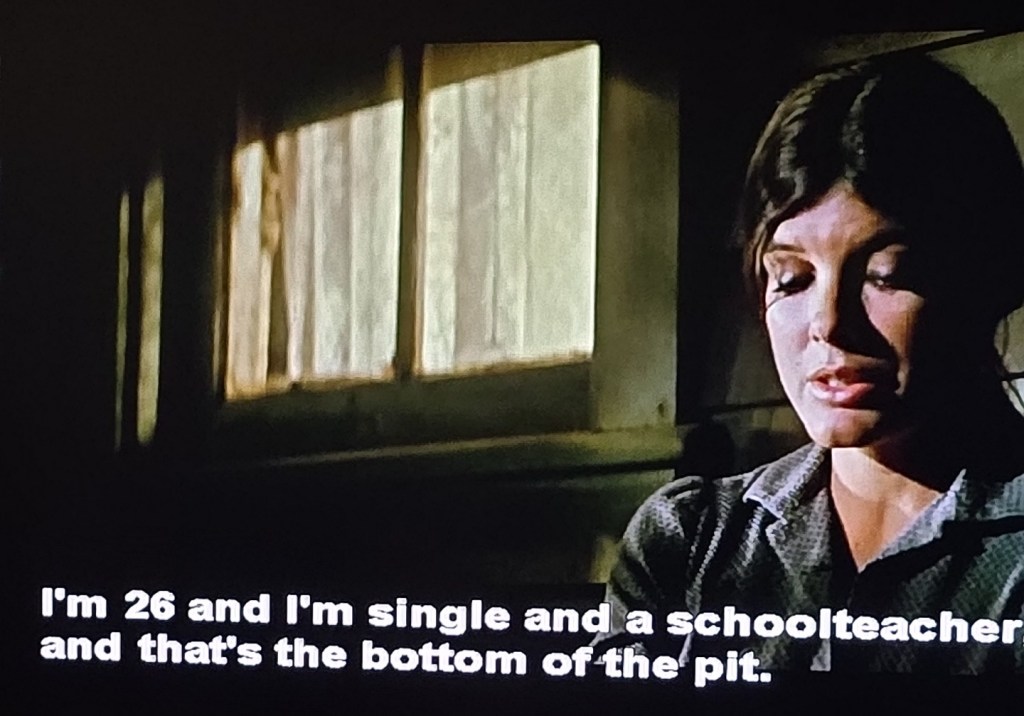
Etta’s reasoning for joining them. I have never felt more personally attacked by a movie character in my entire life…
Butch Cassidy and the Sundance Kid is fantastic! We love the relationship and banter between the two leads, the myriad of entertaining side characters, the projection opening, the use of sepia, the montages, the soundtrack, the bicycle salesman, how Etta’s hats kept growing, Butch’s committment to giving sex workers orgasms, and Woodcock. The movie is very funny, very charming, and filled with excitement and adventure. It is easy to root for the outlaws despite them being criminals – in addition to their charm they are mostly nice, polite and non-violent in their interactions with their victims.
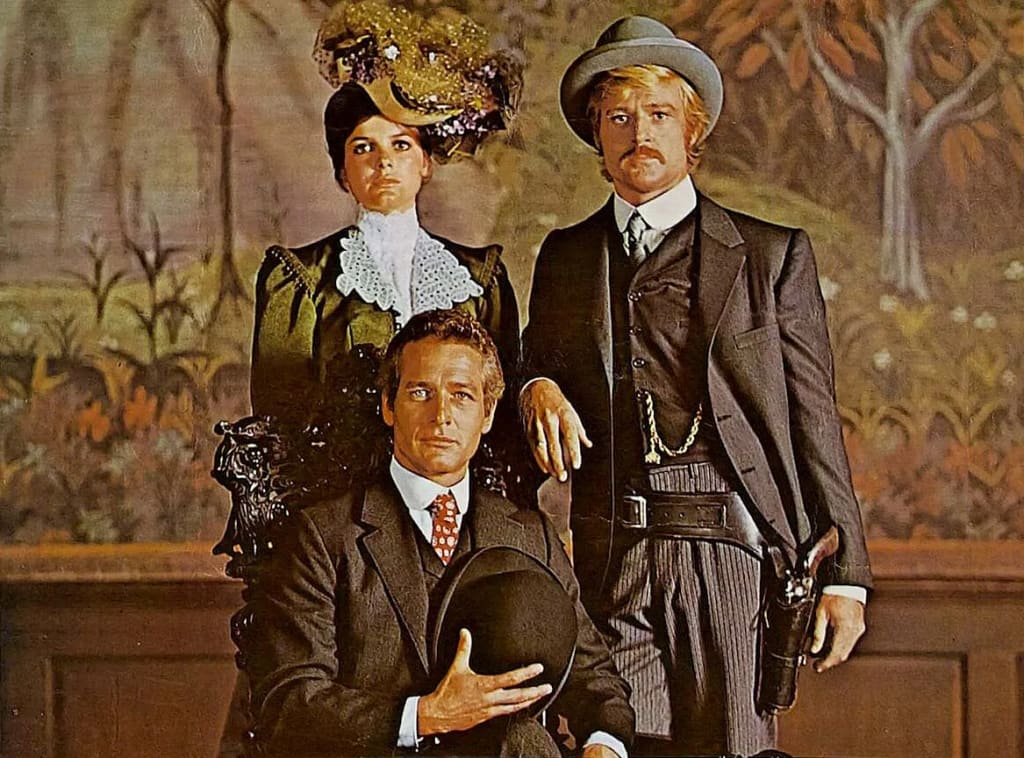
Her hat has not yet even reached its final form
We are left with some questions though: 1: How do you ride DOWN to La Paz? 2: Where is the line between a couple plus one of their best friends, and a throuple? And how (un)healthy is it to be kind of indifferent to which person in a friend group you actually date? (This miiiight go for all three of them) 3: Who are those guys?
And why leave the bicycle behind?
What we learned: Swimming lessons save lives! As do Spanish lessons. So always bring a teacher along when you go on adventures.
Starring: Steve McQueen, Faye Dunaway, Paul Burke, Jack Weston, Nora Marlowe
Year: 1968
Runtime: 1h 42min
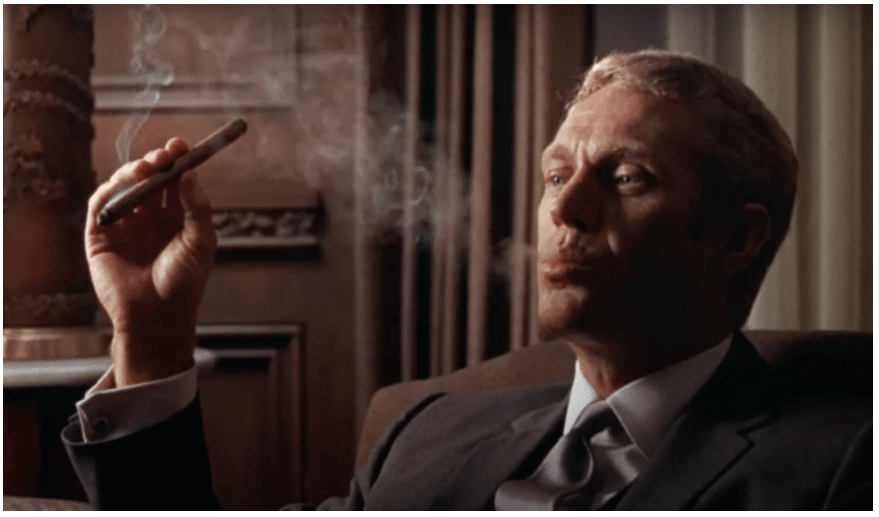
A heist is going down. And what a heist! There are several people in play, lots of phone booth coordination, heaps of money at stake, and a criminal mastermind at the reins. This mastermind is Thomas Crown (McQueen) – a rich business man stealing money basically for the hell of it, or out of boredom. Or to prove to himself that he is as smart as he thinks he is. But is he..?
Steve McQueen? More like Smuggy McSmugface, amirite? HAH! We’ll see ourselves out…
The heist goes off fairly smoothly, with only one shot fired and no casualties. It leaves behind many frustrated men in suits, but sadly very few leads. Then, someone makes the excellent decision of bringing in insurance detective/glamourous super sleuth Vicki Anderson (Dunaway) to assist in the investigation. She gets to work and quickly narrows their suspects down to a certain Thomas Crown based on… well, we’re not quite sure. A hunch? A vibe? Wanting to bone him? The logic is not entirely sound, but at least it turns out to be 100% correct.
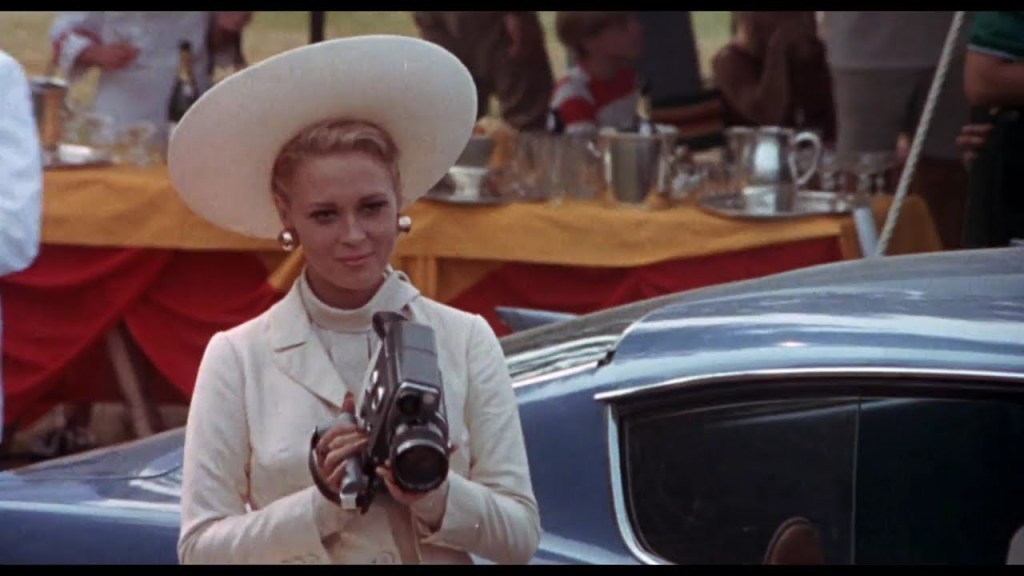
She then goes to work to catch her man. Her surveillance method of “bring a beast of a camera and then make eye contact with the target the entire time” is about as subtle as a freight train to the face
The only problem now is that they do not have any evidence to tie him to the crime. Luckily Vicki, passionately dedicated to her job, is willing to start a whole relationship with this man to prove her suspicion true. So their cat and mouse-/spy vs. spy-game begins.
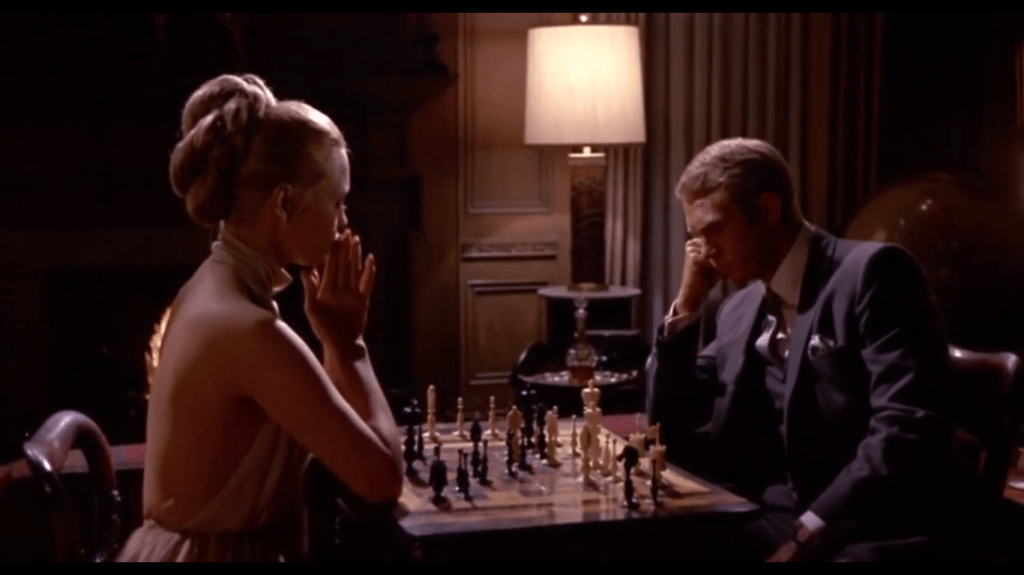
They literally play chess about things
This was a bit uneven for us – there were things we absolutely loved about The Thomas Crown Affair, and things we’re more unsure of. We loved Faye Dunaway, and Steve McQueen is always charismatic af. However, once their relationship began, the film sort of lost some of its nerve and tension. Don’t get us wrong – there were some great scenes between them, and we loved Vicki throughout the entire film. Especially her sense of self: “I know who I am. Don’t put your labels on me.”
And what she is is an icon. An icon with an impressive and extensive hat collection.
I suppose we just didn’t quite buy into her falling for a bored little rich man who robbed a bank just for the hell of it. Now, if he was a suave art thief or something, we’d be all for it! Stealing art or artefacts in the style of Pierre Despereaux is cool (in fiction we mean, nice police people. We would never promote criminal activity in real life). Stealing money when you’re already rich is just… tacky. The film also felt as though they skipped some very important steps in the narrative, particularly how the investigators figured out how the heist was orchestrated and how they ended up with Thomas Crown as a suspect.
Was it the short shorts? It was probably the short shorts. We suspect everything could be traced back to the short shorts…
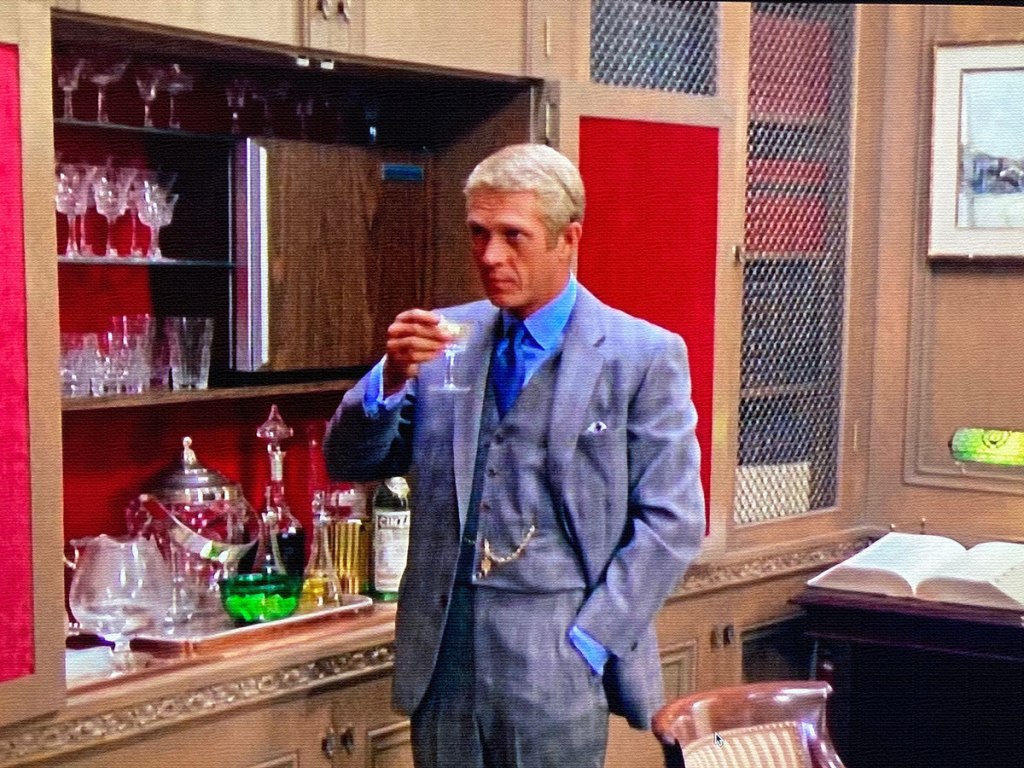
Still, we loved the stylish and cool heist in the beginning, the split screen which we also saw in The Boston Strangler (so hot in the ’60s), the built in wall bar with the fridge (we want one! Each!), Vicki Anderson – insurance sleuth extraordinaire, and the ending. There was something very satisfying about how they both stayed true to who they were in the end. Overall, we thought the first half was better than the last, but we had a very good time with this.
This! This is what we want in life! It even has a built in fridge! Swanky man optional.
What we learned: It must be so hard to be rich and bored…
MVP: Marcie! For the vibes. And also the aran sweaters.
Starring: Jean-Louis Trintignant, Klaus Kinski, Vonetta McGee, Frank Wolff, Luigi Pistilli, Mario Brega, Marisa Merlini, Carlo D’Angelo
Year: 1968
Runtime: 1h 45min
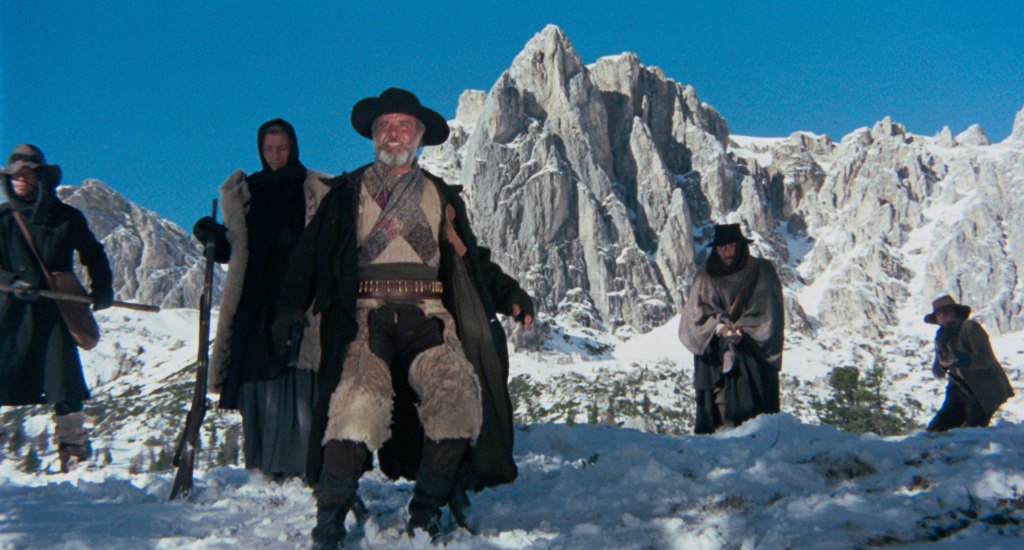
Snow. Horse, Rider. Norway? (Probably not, but looks like our landscape.) Crows. Shootout. Blood. Death. So starts The Great Silence. The eponymous Silence (Trintignant) is a mute gunman who makes bounty hunters tremble with fear. This (un)lucky Luke draws faster than his own shadow (well, at least faster than anyone else’s shadow), and his method is simple: be an annoying bitch until the other person gets fed up and draws their gun, and then kill them before they can pull the trigger. Thus, he only acts in self-defense and is completely within his rights to kill.
Way to hack the system, Silenzio!
The society in which Silence/Silenzio (we’ve heard it both ways) operates is run by corrupt politicians, greedy business owners and ruthless bounty hunters who prey on the little people. The worst one is Pollicut (Pistilli) – a banker and Justice of the Peace who uses his seemingly infinite (but very local) power to be a cunt to everyone and kill the guys who own things he covets, or who he simply doesn’t like. Of which there are many.
He wants their land, their houses and often their wives. And he will literally cut children’s throats in order to get what he wants. Among his many sins, that sorry excuse for a “beard” also ranks in the top three…
As a result of Pollicut’s greed and corruption, as well as problems caused by a severe blizzard, the people of Snow Hill are having a really bad time of it, and many are forced to turn to crime in order to feed their families. Pollicut uses these circumstances to make them outlaws and to place prices on their heads in order to take over their property. This attracts bounty hunters, chief among them being “Loco” (Kinski). He is, as the name suggests, utterly Loco. And racist. And a psychopath. And just an all ’round bad guy.
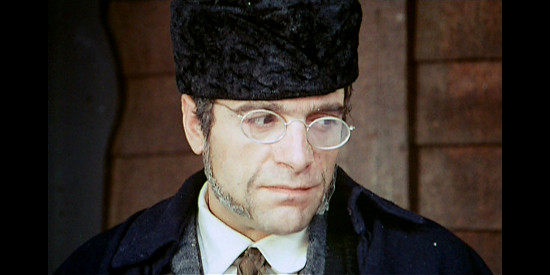
But his headgear game is on point
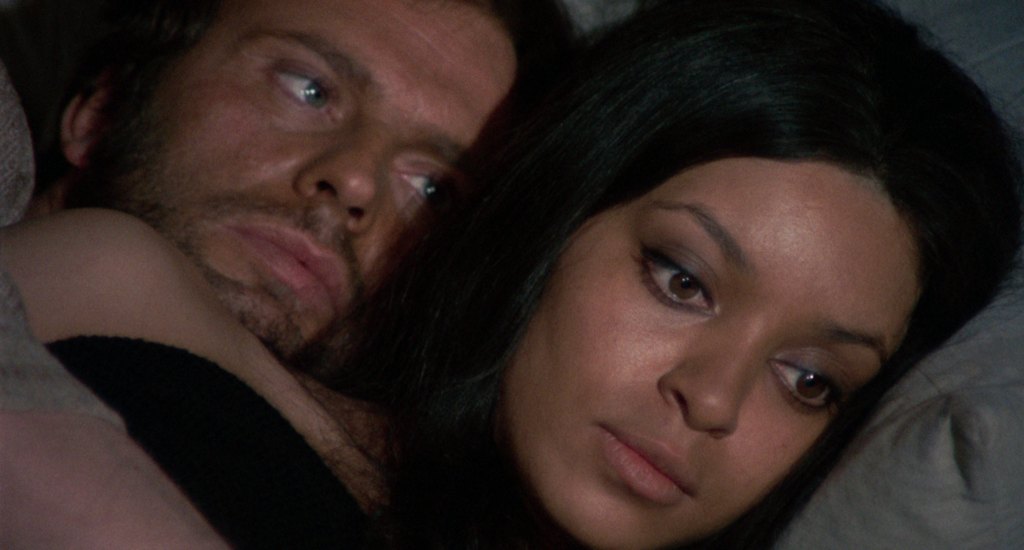
The women of this ravaged community, mainly newly widowed Pauline (McGee), hire Silence to defend them and help/avenge their sons/fathers/husbands, most of whom are either already dead or LARPing Robin Hood and his Merry Men in the woods surrounding Snow Hill.
In fact, let us talk about the name “Snow Hill.” Who came up with that name? Is it also called that in summer? Is this place perpetually snowy? In which case, why would anyone settle there? (OK, we realise that this is probably a bit rich coming from a couple of Norwegians. Nevertheless, we feel these questions are justified. The public needs to know!)
Enter player five, newly appointed sheriff Gideon Burnett (Wolff). From the start, he seems a decent enough guy, which is a rarity in this town. His mission is to restore order in Snow Hill before the governor declares amnesty on the merry men of the forest (and by “merry,” we mean “miserable” and “starving”). He is basically the only character in this entire movie who both operates within the law and does the right thing. Will his and Silenzio’s efforts be enough to save the town?
Look at this jovial face and icy ‘stache! Clearly one of the good guys.
We are enjoying the westerns a lot more than we thought we would when we started this project. We grew up watching some of them as our dad was a western fan, but it was never really “our” genre. However, each one we’ve watched so far has been incredibly engaging, and there’s so much interesting social commentary within them. For us, The Great Silence ranks as one of the best ones so far.
🎵 The hills are aliiiiive… With the sound of outlaaaaws 🎶
First off, we loved the women in this. From the bereaved mother who first asks for Silenzio’s help, via Pauline, to Regina (Merlini), they are bad ass, capable and vengeful – exactly how we like our female characters. We also loved sheriff Burnett, Silence’s method of being a little bitch until people try to kill you, the costumes, the snow, and the portrayal of people dealing with corruption and greed. As in a lot of westerns, on the surface it’s very easy to tell the bad guys from the good guys – there are no doubts about who we’re supposed to root for. But at the same time, the bad guys’ actions are “all according to the law,” which poses some interesting philosophical quandaries about laws and morality, and makes this a movie which is frighteningly topical and current…
They also managed to throw in a bit of (interracial) romance, so we’re pretty sure everyone can find something they enjoy in this film. Well, good people can, at least.
By the way, without spoiling the ending too much (we hope… You can wait to read the rest of this until you’ve seen the film if you want absolutely no hint of a spoiler), if you have the DVD/Blu-Ray version of this movie, we recommend you also watch the alternate ending which you can find as a bonus. It is the most ridiculously over-the-top happy denoument we’ve ever seen, and we got the strong feeling that this was filmed as a sort of mutinous “fuck you” to people who thought the original finale was too bleak…
Side note: we felt really bad for all the horses forced to struggle through the snow throughout. That looked like really hard work.
What we learned: The law is not always right. There is no such thing as an ethical billionaire. And sometimes the bad guys win…
MVP: Whoever made all those shawls. Or Klaus Kinski. Also, shoutout to our boy Ennio Morricone!
Starring: Malcolm McDowell, David Wood, Richard Warwick, Christine Noonan, Anthony Nicholls, Peter Jeffrey
Year: 1968
Runtime: 1h 51min
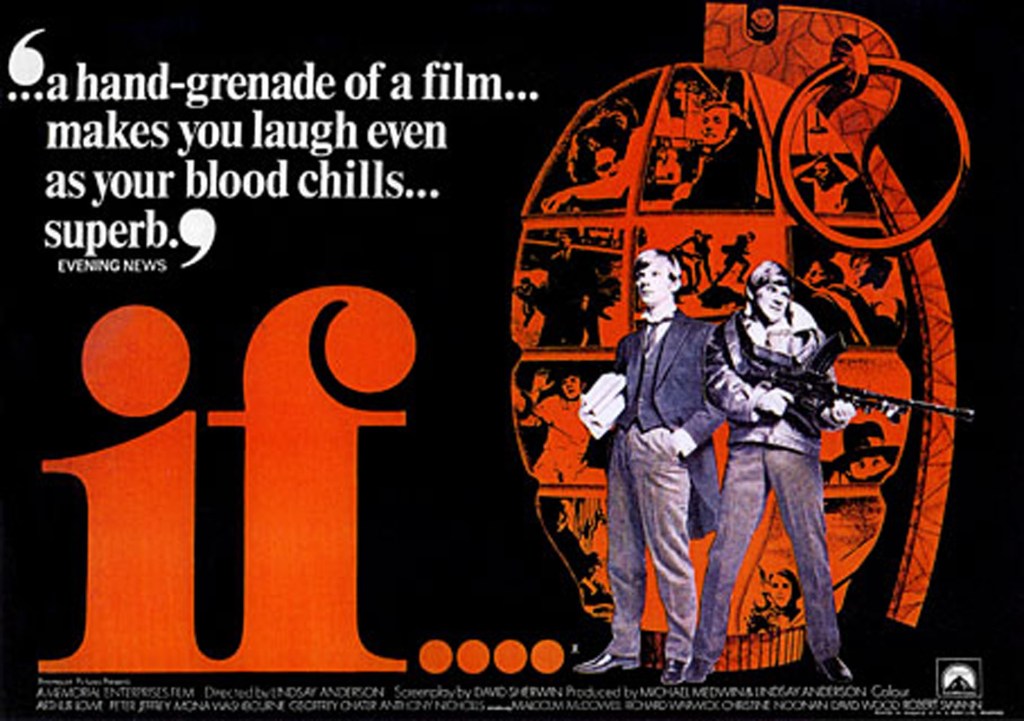
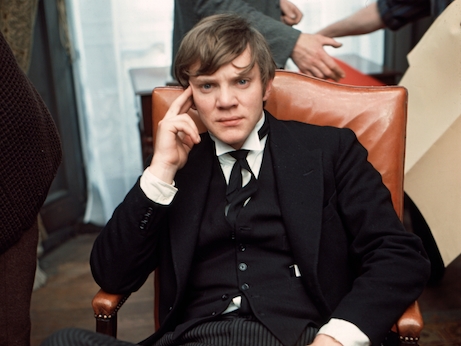
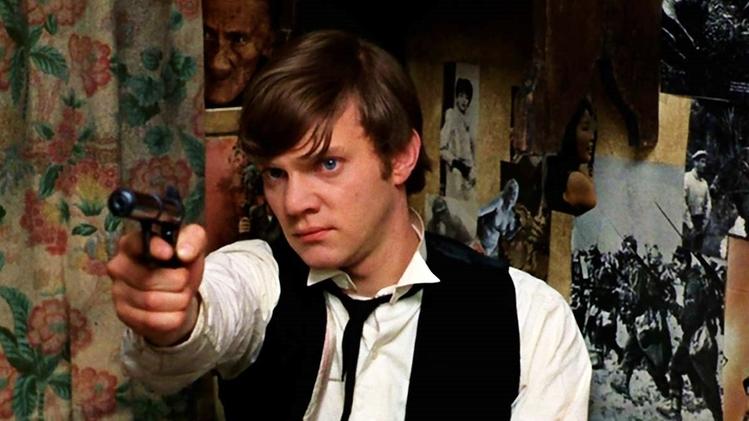
College House – a fucked up, disciplinarian boarding school (is there any other kind?). Among its students: Mick Travis. You know the type – the sort of guy whose brand of insolence and defiance is so ingrained in him you just cannot beat it out. Yes, we love him too. But that sort of attitude and his refusal to conform aren’t acceptable in polite society, so he must be cut down. And believe us, they try.
If you strike me down, I shall become more powerful than you can possibly imagine
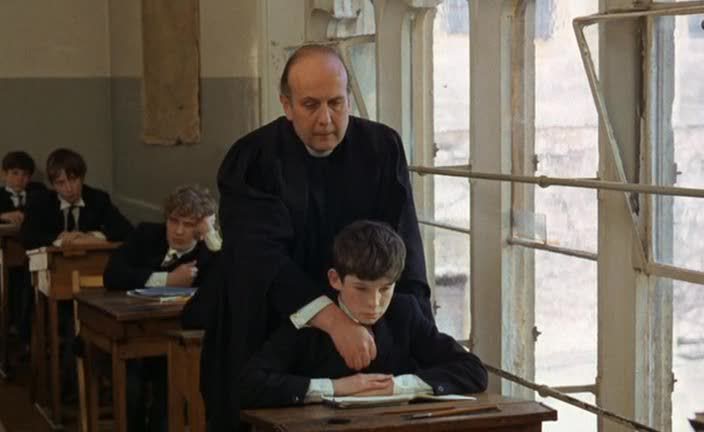
In If…, we are treated to a slice of normal British boarding school life: bullying, beatings, rape, truancy, less than engaged teachers and a strict hierarchy which is often abused. Being Norwegian, female, and ridiculously middle class, we have no idea how realistic this (insane) depiction is, but from what we’ve read and seen in other places, we fear it might be pretty accurate. As for plot, we don’t want to give too much away as we think everyone should see this for themselves. Suffice to say, Mick reaches his breaking point and shit goes off.
Chekhov would be very proud to be taken so literally!
As you may have inferred from the previous paragraph, we loved this! Malcolm McDowell is hypnotic as Mick – his impertinence spews from his very pores, and we loved him in this role. This is not your normal teenage rebellion, he embodies it as a deep-rooted character trait that can’t be eradicated through corporal punishment – the second the prefects confront him and try to make him conform, they’ve lost the battle.
“♫♬ Tell me why! Ain’t nothing but a beat down. Ain’t nothing but a spanking. (Tell me why) I never wanna hear you say “I want some basic respect and human dignity and to be treated as a person in this place” because that’s not how the Empire was built!”
Also, can we talk about all male (or all-any-gender) boarding schools? What the actual fuck? Obviously, these schools have played a crucial role in fostering a culture where men don’t see women as human beings (when you never interact with them as equals, how would you?), where bullying and violence mean “building character,” where authority is absolute, and where non-conformity = death. And personally, we rather object to such a culture.
It’s the sort of culture which fosters this. And the fact that we all have the same interpretation of this image is very sad…
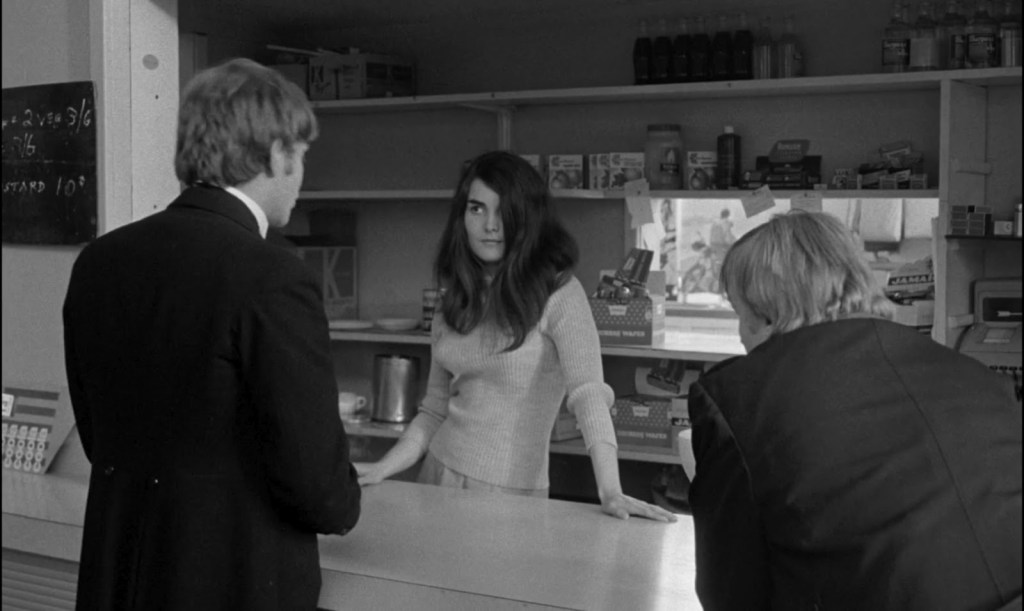
We loved the psycho romance with the waitress (how much of that actually happened? We’re guessing very little), the incredibly unengaged history teacher (if teaching was like this we would never think about leaving the profession), the slow build-up, the violent conclusion, and of course the magnetic Malcolm McDowell – He of the Intense EyesTM. Also the random guy who showed up at the end in full medieval armour. Honestly, we wouldn’t be surprised if this was normal ceremonial attire in the formal public school setting, but we like to imagine he just woke up that day feeling a bit medieval and decided to go for it. Overall, this is definitely a movie we will recommend to others, and one we won’t easily forget.
“He’ll have the coffee, black, and I’ll take the animalistic sexgames. With milk.”
Side note: we spent a great deal of time trying to analyse why parts of the movie were in colour and parts in monochrome. We had many theories (conformity vs. non-conformity, reality vs. fantasy, etc.) although we struggled to see the connection between them. Then, once we finally gave up and googled it, we found out that it was just because the natural light they had to use in some scenes would mess with the colour quality and thus monochrome was used… Conclusion: not everything is symbolism.
What we learned: Education in Britain is like a nubile Cinderella: sparsely clad and much interfered with.
Starring: John Phillip Law, Marisa Mell, Michel Piccoli, Adolfo Celi, Claudio Gora, Terry-Thomas, Mario Donen
Year: 1968
Runtime: 1h 45min
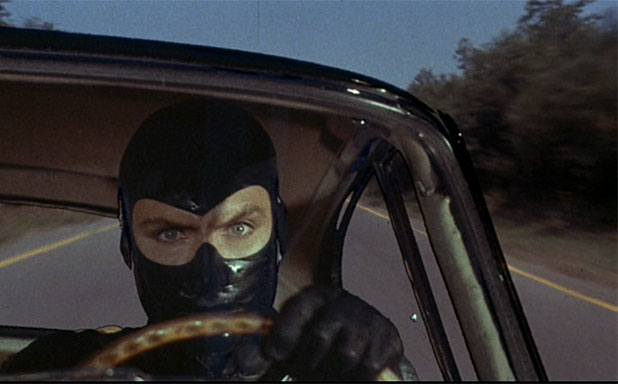
Diabolik: a criminal mastermind! Think 1960s Batman villain/dark James Bond. He has a suave underground lair, fast cars and even faster dames, revealing showers, infinite tricks up his (immaculately tailored) sleeves, and a lust for adventure and danger surpassing even Rick O’Connell. He also has A Dame of His Own; Eva – a trusted sidekick and confidant as well as Secret-Lover-in-the-Night-Time (or really any time, it seems). Like her man, the Dame has expensive taste and her only wish for her birthday is an emerald necklace owned by a powerful politician’s wife. Cue heist!
“I think, for this heist, I shall wear my BLACK leather daddy mask.”
“No! Wait! This calls for my sad beige mask for sad beige röbberies!”
Now, being a Criminal Mastermind™, Diabolik has managed to piss off both law inforcement, represented by inspector Ginko, and a mafia-like crime syndicate, led by the ruthless Valmont. They’re both after his hide, and throughout the movie our anti-hero and Eva must thwart their plots and avoid capture, traps and certain death.
Not to mention avoid papercuts in unmentionable places
Danger: Diabolik is the epitome of the 1960s in our minds (of course, as we are very young and nubile, we didn’t experience the decade ourselves); it’s colourful, cool, sexy and sleek. At first, Diabolik himself was presented like a clear hero – his first heist was immaculately planned with no loss of life. However, as the film progressed, he started killing people left, right and centre. Still, he is much more humane with more of a moral compass than say crime boss Valmont, and we loved how we ende up rooting for both Diabolik and Inspector Ginko. Diabolik and Eva seem very much in love and in a surprisingly healthy relationship. You know, apart from the crime of it all.
And the aforementioned papercuts.
We loved the art/graphics of this, the fact that we learn nothing about the backstory of this gentleman criminal (we guess there might be more meat on that bone in the original comic, but we enjoyed the mystery of it all), the Morricone score and the drama queen that is Diabolik himself. It’s a funny, cool, stylish and thoroughly entertaining watch, and we recommend it to basically everyone. Enjoy!
“I told you this would happen, Diabolik! Look at this! Pick me up some ointment on the way home..?”
What we learned: Clearly, there’s a universe out there where cars and guns come cheap, but fabric for women’s clothing is out of everyone’s price range. Also, it is impossible NOT to pronounce Diabolik as “diabolique.”
Starring: Clint Eastwood, Lee J. Cobb, Susan Clark, Tisha Sterling, Don Stroud, Betty Field, Tom Tully
Year: 1968
Runtime: 1h 33min
Coogan, a sheriff’s deputy in Arizona, is sent to New York City to pick up a prisoner and bring him back for trial. Easy enough you might think. But you’d be wrong. The prisoner, James Ringerman, is not so much in jail as he is in Bellevue after a bad LSD trip. In order to get him back, Coogan has to follow loads of rules, regulations and procedures. Coogan is not a fan of rules and regulations. Or procedures. So he bluffs to get Ringerman out of Bellevue. Hence the title purloined from an actual location in NYC. See what they did there?
Sure, I’m a stoic and sassy bad ass alpha male, but that doesn’t mean I don’t enjoy a good wordplay. What, a man can’t have layers?
Unfortunately, Ringerman escapes and neither NYPD Lt. McElroy nor Sheriff McCrea is very impressed by Coogan’s shenanigans so they both command him off the case. However, Coogan is not a fan of commands either, so he promptly ignores them and decides to hunt down his escaped prisoner.
You can’t touch this – dun dun-dun-dun dun dun
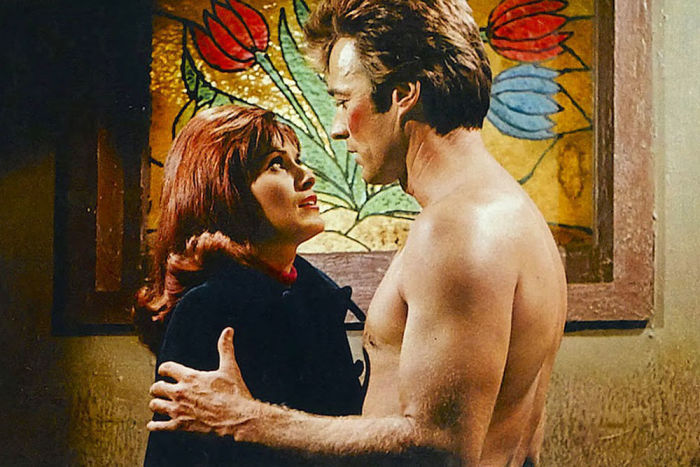
Along the way, he runs into the weirdest female character – Julie Roth. She’s some sort of psychoanalyst/social worker/parole officer working with young women on probation, and her fetish is being taken advantage of and objectified by men. Perfect for Coogan who is all about the objectification of women. Sometimes fate just intervenes and brings people together.
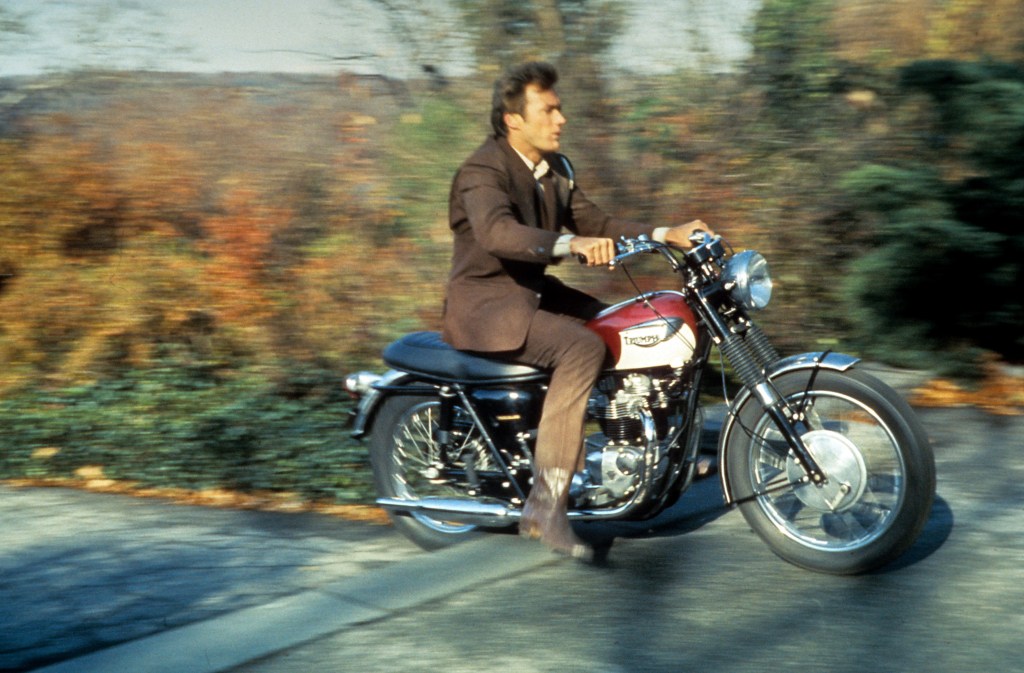
For the rest of the movie Coogan runs around NYC getting into brawls and beds in his hunt for Ringerman. He quips and sasses, and participates in quite a cool motorcycle chase. But will he catch his prey?
…or will he just catch STDs?
Ok, the action is cool and we loved the swinging 60s party, but the protagonist and the “love story” seem incredibly dated. Coogan, though kind of hilarious at times and undeniably intelligent and charming, is a cocky and chauvinistic asshole with absolutely no regard for anyone else. Which we guess is sort of the point; the conservative (in some ways) country boy vs. the liberal city values. And while it probably works as intended, it’s kind of Toxic Masculinity: The Movie. Also, Julie needs some serious therapy for falling for his crap. Actually, they both need therapy, but she seems more likely to seek it out. He has no reason to, as society keeps rewarding him for his assholey behaviour and talking about your feelings is probably for city sissies anyway.
“I can fix you!”
Coogan’s Bluff is interesting as a double feature with Bullitt; the contrast between the two protagonists (who in many ways are very similar) only underlines what a bitch Coogan is. Still a fun watch though – the bar brawl is legendary. And sure, we get how a young Clint Eastwood might blind a young psychologist to anything but the D, but come on Julie! He is never going to meet your emotional needs. Just bang him and get it out of your system. If you need a strong, silent type with a clear sense of right and wrong who still doesn’t mind breaking a few rules to bring criminals to justice, and who is comfortable being in a relationship with an educated, professional woman, look no further than Lt. Bullitt.
What we learned: Sometimes the hot bastard is just a hot bastard – don’t waste your time searching for that hidden heart of gold and ascribing characteristics to them that they just don’t possess.
Starring: John Travolta, Samuel L. Jackson, Bruce Willis, Uma Thurman, Tim Roth, Amanda Plummer, Ving Rhames, Rosanna Arquette, Harvey Keitel, Eric Stoltz, Phil LaMarr, Christopher Walken, Maria de Medeiros, Quentin Tarantino
On Wednesday, we went out (yay vaccines! Thank you scientist people!) for an amazing evening of “kulinarisk kino” (culinary cinema), courtesy of Kosmorama film festival. First, there was a screening of Pulp Fiction at Prinsen cinema, then we went to Bula Neobistro for a fabulous three course meal inspired by the movie. More on that to follow, but first our review of the film.
“Bitches be taking too long…”
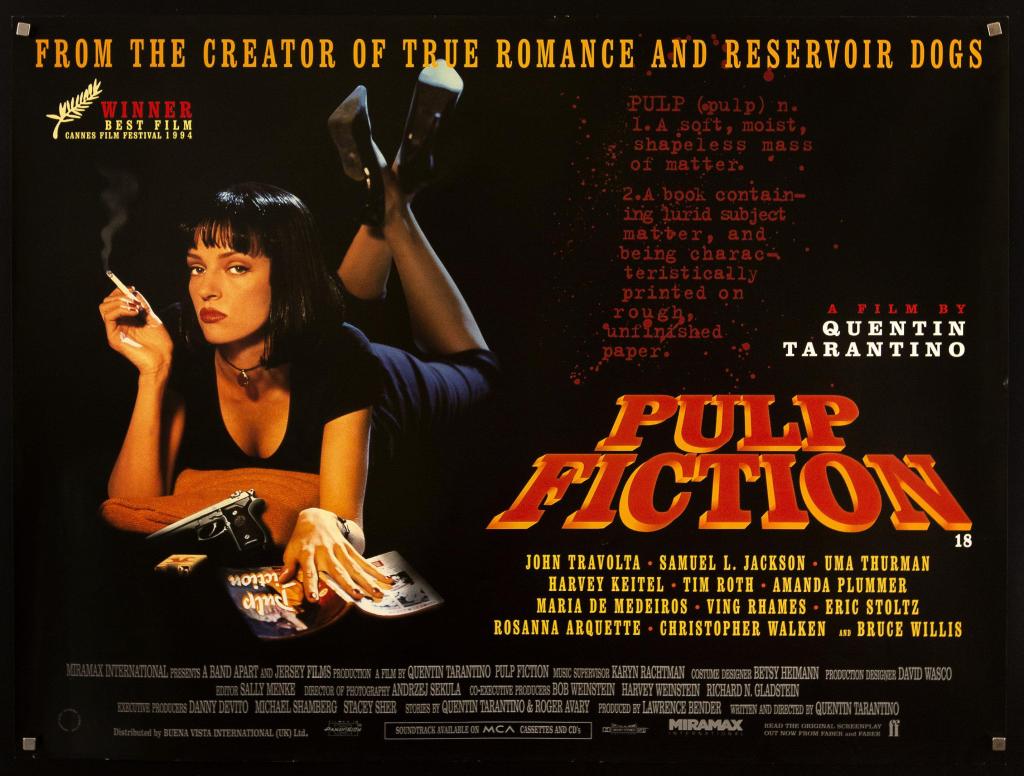
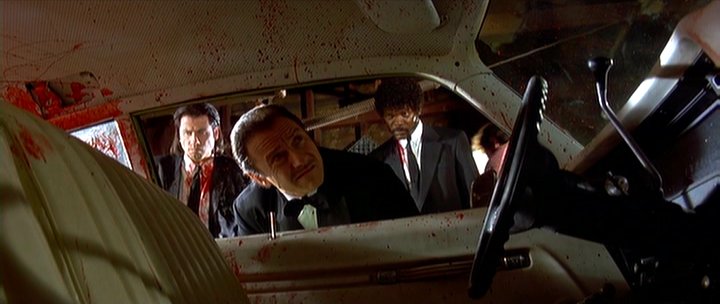
Ok, Pulp Fiction probably doesn’t need an introduction. From its release in 1994, it has been one of the most watched, discussed and acclaimed movies of our time, and for good reason. The non-linear structure, various intertwined storylines and fantastic cast all come together to create one hell of a ride!
“You see, if you show seemingly unrelated events in a more or less random order, the audience will feel rewarded when everything comes together at the end. And when you feel rewarded, it is because dopamine is released into the brain, which will make you love the movie more than you might have done if everything was neatly served in a logical order.” “So, we’re tricked into liking it..?” “Well, yes and no. The first time you see it: yes, maybe. But it would not hold up on subsequent viewings if the movie wasn’t actually good. Now, let’s rob some people.”
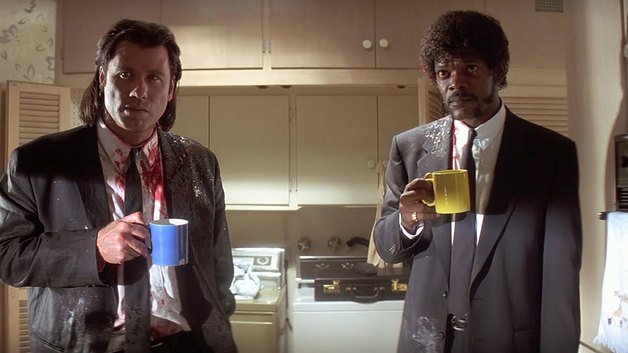
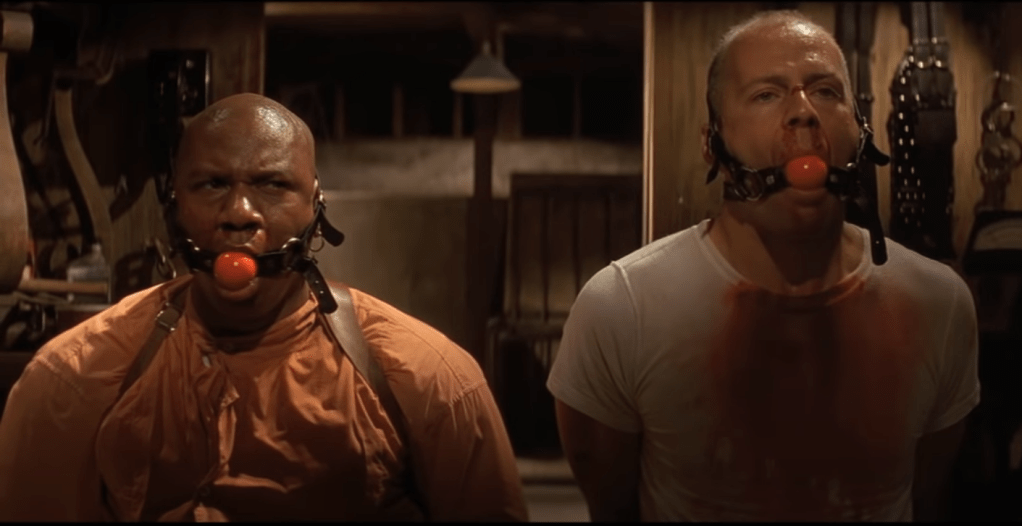
Among the stories we have Pumpkin and Honey-Bunny (Roth and Plummer) – a couple of bank robbers planning on switching to robbing restaurants; Vincent Vega and Jules Winnfield (Travolta and Jackson) – two gangsters running errands for Marcellus Wallace (Rhames); Wallace’s wife Mia (Thurman) looking for a good time and a dance trophy; boxer Butch (Willis), who’s ready to get out of the business with his girlfriend Fabienne (de Medeiros) – a girl with the mind of a child, and oh… Oh no, that’s not good…
“How many times I gotta tell ya: No Italian food in the car!”
Throw in some racist hillbilly rapists with a gimp, a drug dealer and his wife, an unfortunate shooting victim, a dapper cleaner, and a killer soundtrack, and you’ve got yourself an instant classic. The two and a half hours fly by, every minute entertaining.
“And NO MATTER WHAT, you have to remember to put the motherfucking safety back on after you kill a man. Aight?” “Yeah, yeah, stop yammering on about it. I won’t forget, ok?”
The cast are pretty much perfect, and while there are some questionable moments (are we all ok with a grown man dating a woman whose mental age is about 6..? And is the character of Jimmie just there as an excuse for QT to say the n-word 45 times in 3 minutes?), Pulp Fiction is, 27 years on, still a stylish, exciting and entertaining piece of cinema.
We’re gagging
Now for the meal we had. There were fried squash rings with a Hawaiian inspired habanero-pineapple dip, a Big Kahuna burger with fries (served with both mayo and ketchup, of course), and finally a $5 milkshake (with a shot of bourbon). Yum! If you ever find yourself in Trondheim looking for a delicious meal and wonderful service, look no further than Bula (and no, we’re not paid to say this)! Together, the movie and the meal made this night a phenomenal success and we can’t wait for our next culinary cinema. Which is coming up this Wednesday with #767 Big Night shown with a three course Italian meal. Buon appetito!
“You put your right foot in, you put your right foot out, you put your right foot in, and you shake it all about…”
What we learned: How to handle an O.D. Which, we’re sure we can all agree, is useful knowledge. Also, the safety is there for a reason, Vincent!
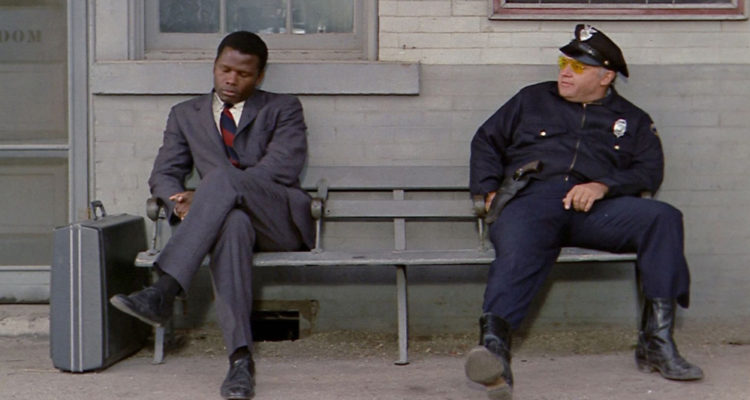
Officer Sam Woods (Oates) is doing his rounds in a small Mississippi town when he comes across a dead body. The dead man turns out to Mr Colbert – an investor come to build industry and save the town. There also happens to be a black man waiting for a train at the station, so obviously Woods arrests him for the murder.
“Well sir, he was behaving in a very suspect sort of a way. He was reading while being black.”
Virgil Tibbs (Poitier), the man arrested, is brought to the Chief of Police Gillespie (Steiger) and questioned. It turns out he is far from a suspect – he is in fact a homicide investigator from Philadelphia. Better than that, he is the homicide investigator in Philadelphia. So his boss suggests he stays behind in Sparta to help solve the murder.
“This is a local murder for local people! There’s nothing for you here!”
Source
Tibbs is great at his job, something Gillespie recognises despite his racist views. In this small Southern town a black investigator meets with a lot of resistance though, and especially the local Angry Young Men™ mob up to kill him. After some potentially lethal encounters, Gillespie advices Tibbs to leave, but he is unable to walk away from a case. Can the unlikely duo solve it and survive the investigation?
“Actually Chief, we’re presidentially sanctioned Proud Angry Young Boys™. We think you’ll find our tiny dicks are proof of this. We suggest you step out of our way and let us deal with our insecurity by letting a rich white man use us for his own benefit.”
Even on a freezing December evening in Norway, we could feel the oppressive heat of Sparta, Mississippi. In the Heat of the Night is exciting and unnerving, and edge-of-your-seat tense. Unfortunately, it says a lot about the world that it did not even occur to us for the first hour that Tibbs could survive the movie… It’s a sad statement indeed.
Despite being over 50 years old, it’s still a relevant movie. Its themes of racism, prejudice and social distancing seem surprisingly modern and contemporary!
Sidney Poitier is mesmerising, the chemistry between him and Rod Steiger is great, the mystery is as intriguing as the exploration of racism and prejudice, and the soundtrack is excellent. This is what you get when you combine a fantastic cast, director and script. It’s a sort of buddy-cop movie, a social commentary drama, a character study, and a great murder mystery all wrapped up in one. We loved it!
Trust us, it’s worth watching for this scene alone. Fight the power!
Perry (Blake) is a slightly simple ex-con who dreams of fame and fortune. He breaks his parole so he can return to Kansas in order to meet up with old cell mate Dick (Wilson), who can offer him a sure thing. Monetary wise, that is. Not a date or anything.
If you can think of a single date idea which would require a trip to the hardware store in preparation, we’d like to know. Then, leave your contact information and the number for your local police.
Another old prison buddy has told Dick about a hidden safe in the basement of a farmer, and the pair plan to get their hands on it. However, what could have been a simple burglary soon turns into a bloodbath…
“Bubble bath. I said I wanted a BUBBLE bath. You need to get your hearing aid fixed.”
We don’t want to reveal too much here even though it’s a 50 year old film based on an even older book based on a yet older real crime… Suffice to say investigators are soon on the criminals’ trails. But what really happened? And who pulled the trigger?
Also, who wore the easily identifiable shoes to a crime scene???
This movie is amazing and you should watch it. We loved the build up to the crime and the fact that we then skipped neatly to the aftermath without seeing it play out. It is excellently structured, well acted and overall really well done. The 2+ hours fly by!
Like the lit-up club, casino and hotel signs in old-timey montages! Imagine “Mas Que Nada” playing in the background.
Now, Dick is a dick from the beginning. Perry is perhaps a bit more sympathetic, but they both share the same anger issues. They are disenfranchised young men with a murderous streak and little left to lose.
They are also traumatized by abusive childhoods and war. Sorry, it’s hard to make hilarious captions about this story…
As the movie plays out, you keep forgetting that Perry and Dick have killed an entire family – probably because you don’t actually see them do it. Which is somewhat unsettling and uncomfortable when you find yourself giggling at their shenanigans and sort of hoping they’ll get away.
On the other hand, we’re also introduced to this ridiculously wholesome family, who certainly did not deserve their fate. Our loyalties are torn, is all we’re saying. And we guess that’s sort of the point…
Real question though, are trials in the USA that revenge-driven, or are they just that way in movies? Because for us rational (some would say cold and unfeeling, we prefer logical and Spock-like) Norwegians, emotions and ideas of revenge are not what should decide the outcome of a trial… Just a thought there, America.
What we learned: American trials are insane… Also, sometimes things just don’t make sense.
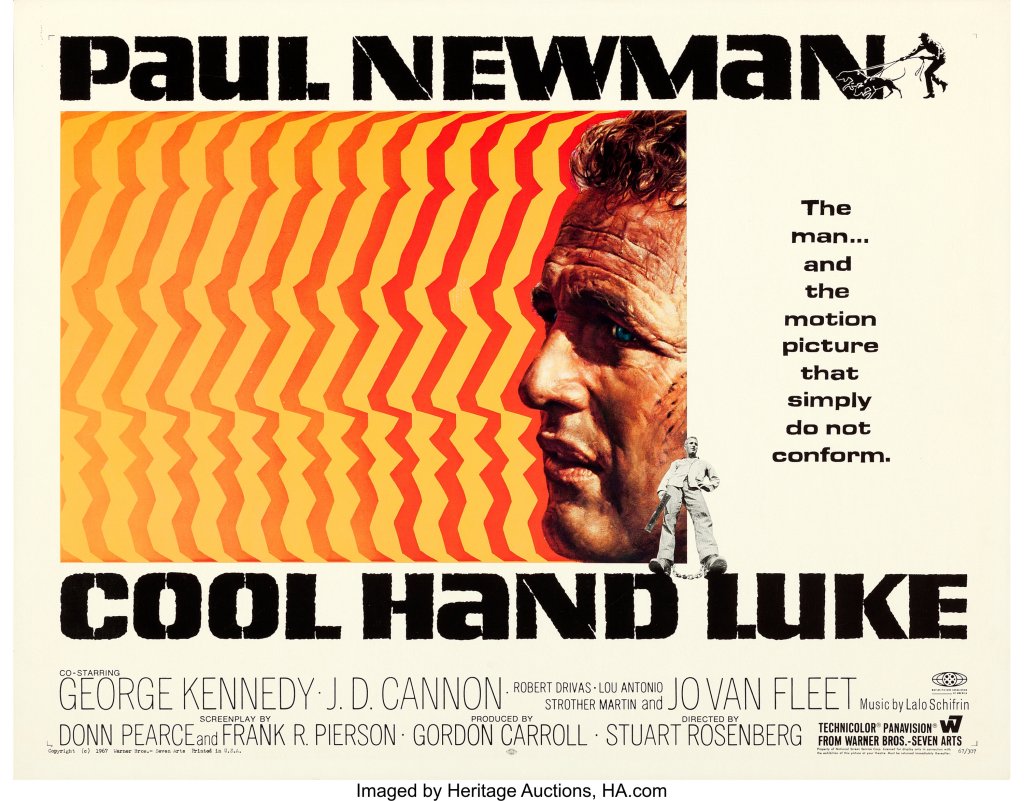
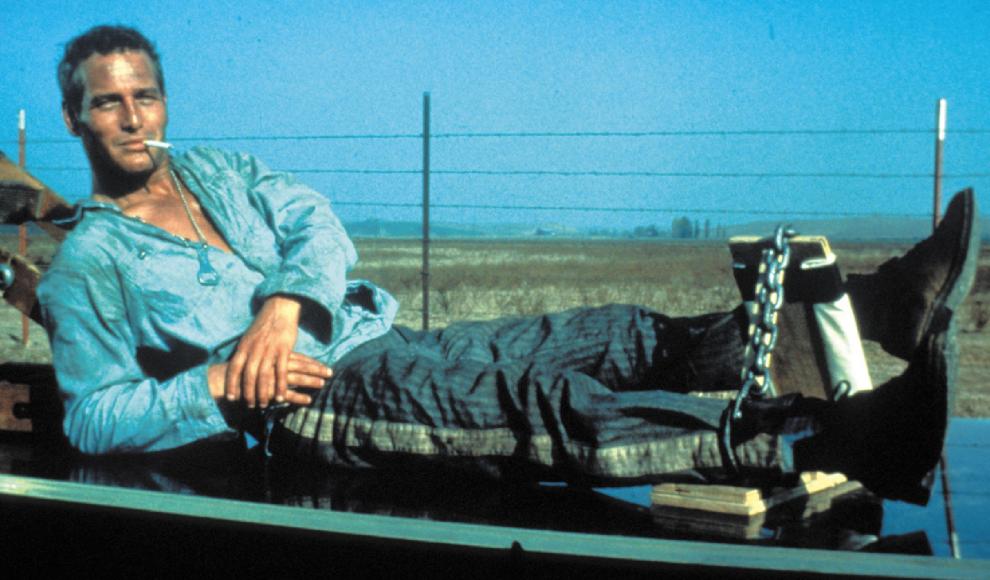
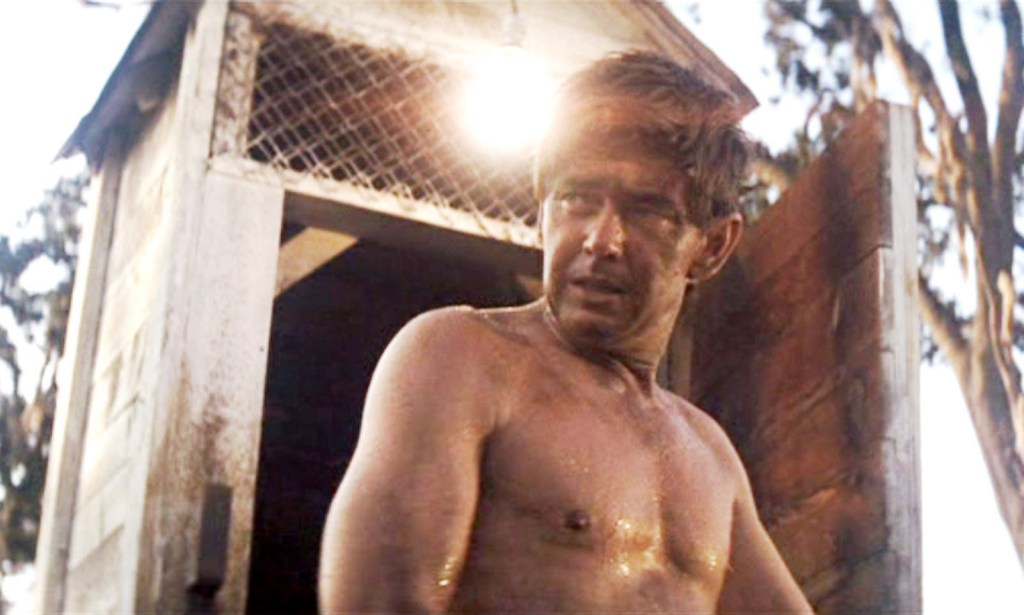
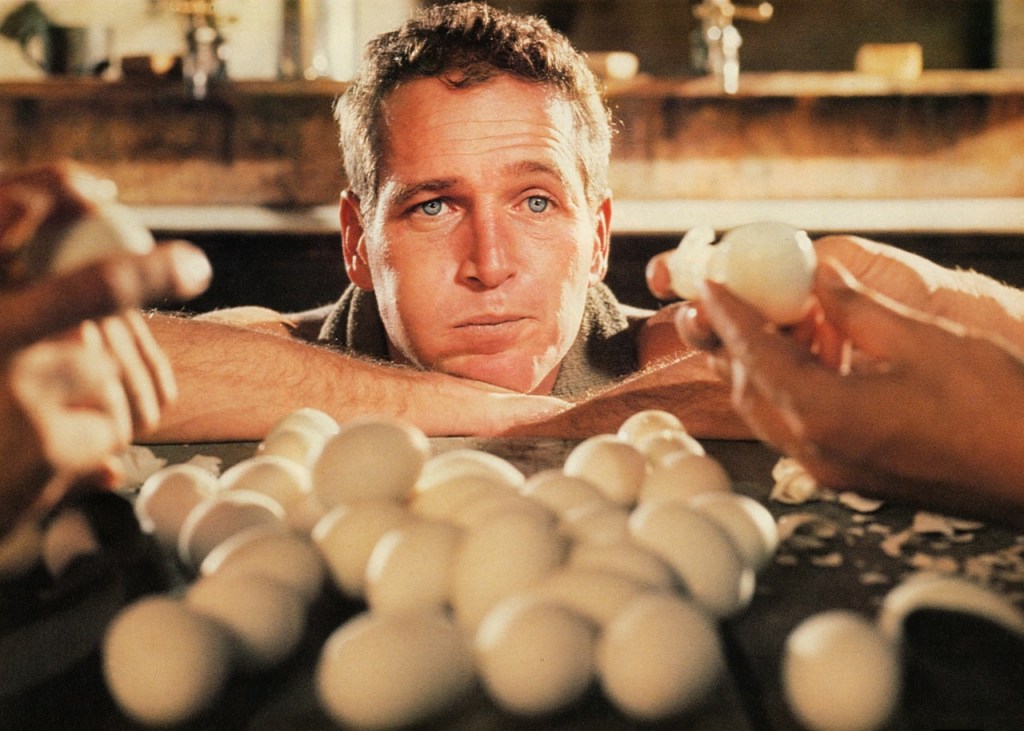
Lucas Jackson (Newman) is given 2 years for destruction of property after a drunken sabotage of parking meters. He’s sent to a chain gang where he first gets off on the wrong foot with his fellow prisoners, particularly Drag (Kennedy), before ultimately earning their respect for his cool manner, egg eating ability, and utter lack of fucks to give.
Behold the field in which I grow my fucks. Lay thine eyes upon it and thou shalt see that it is barren.
Luke’s prison stay seems to go all right considering the circumstances. That is, until his mother (Fleet) dies. The guards are sympathetic and make arrangements for him to get a day’s leave to attend the funeral. Just kidding! They lock him up in their torture device “the box,” which is exactly what it says on the tin – a tiny wooden box where he is forced to spend his days/nights until the burial is over. The reason: he might be tempted to escape to go see his dead mother.
We could probably make a bunch of jokes comparing the size of the box to an average NYC apartment. But we’re better than that.
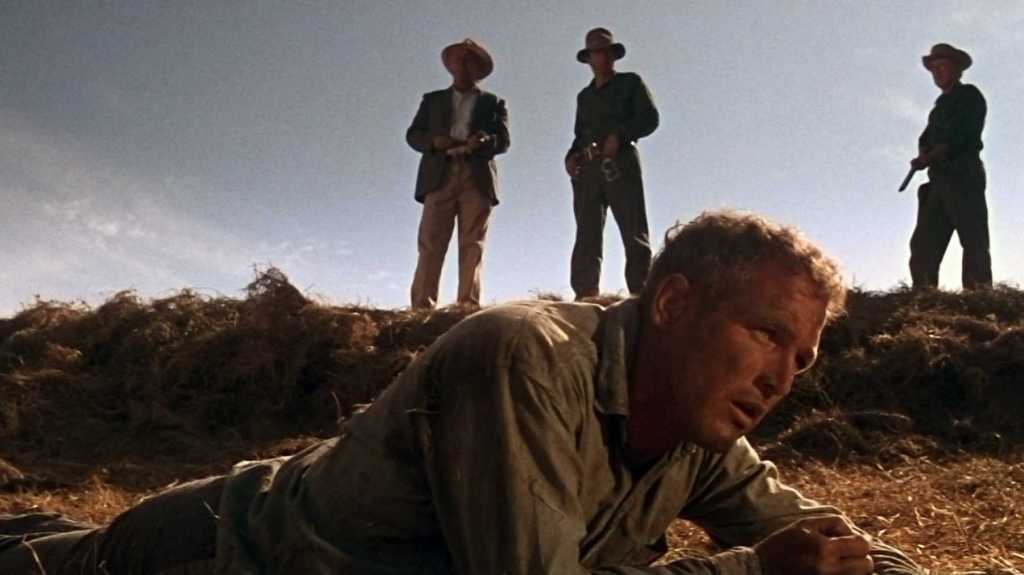
After his stint in the torture-box, Luke, who seemed content enough to do his time when he sort of flew under the radar, has had enough. His new goal is to get out, and to cause as much disruption for the guards as possible. So he escapes. And is caught. And put in chains. And escapes. And is caught. And given even more chains. And then tortured physically and mentally to his breaking point.
“Please. No more. I can’t. It’s not right. It’s inhuman. No more burpees!!!”
We loved, loved, loved this, and are cursing ourselves for having to get a ridiculously time consuming project like this in order to actually watch it. What took us so long? Do not make our mistake!
Like most prison movies (we’re thinking The Hill, The Bridge on the River Kwai, The Great Escape, etc.) Cool Hand Luke is infused with a distinct sense of dread, even through the scenes which are pleasant enough like the poker playing and the tarring of the road. You just know that this cannot possibly end well.
“Hey guys! Let’s humiliate the power hungry sadists pointing guns at us! It’ll be hilarious and not at all dangerous.”
It’s also a fantastic cannot-hold-me-down-movie with a hero who is quietly rebellious and awesome throughout. And though his lack of self-preservation is a bit frustrating for sensible Norwegians, we recognize the defiance and opposition of Luke. We share those traits – we’d just break a lot sooner…
Also, none of us has ever eaten more than three eggs in a single sitting. Other than that, our similarities to Luke are uncanny. Uncanny.
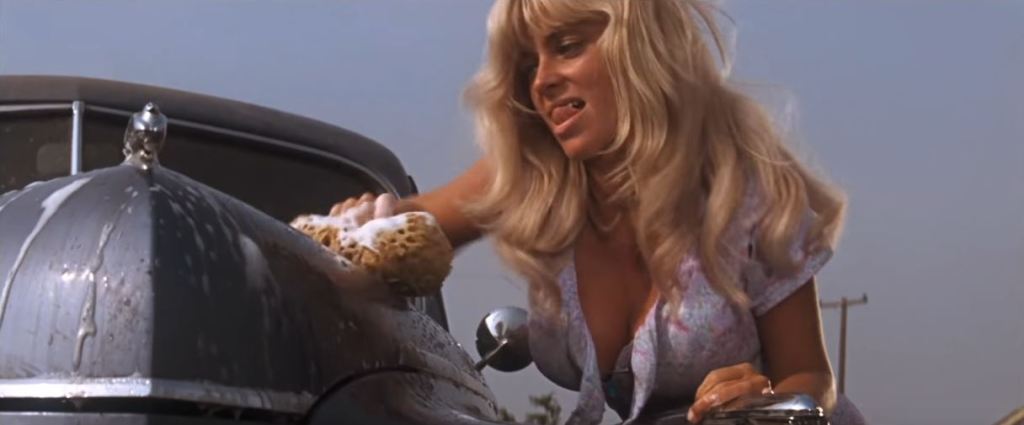
Also, we absolutely loved the gratuitous scantily-clad-woman-washing-car scene. Whether it’s the result of the sex starved imaginations of the prisoners, or a woman desperate for “safe” attention (they can’t really do anything), it’s hilarious.
Our similarities to “Lucille” are also uncanny. Uncanny.
























 1000 Films Blog