It’s the day of the annual party in a small French village and everyone is getting ready, as explained to the viewer by an adorable old lady’s running commentary on their efforts. In the middle of the preparations is François (Tati himself), the local postman and part time village idiot.
For reference, this is his most intelligent expression throughout the film
The poor man is trying to complete his round, but is sidetracked by the other villagers who recruit him to set up a pole (not a euphemism), get drunk with them and watch a propaganda film about the high-tech American postal service. The latter inspires him to step up his own game, with hilarious consequences.
He is constantly being taken for rides, both literally and figuratively
Jour de Fête is a silly, silly film with loads of throwbacks to old silent movies in the physical humour and slapstick found throughout. There’s also verbal humour though, so it does not stay too much in the silent movie era. Among our favourite scenes were the meeting of the potential lovers with the Western soundtrack playing, the old lady narrator in the beginning, and of course François’ amazing chicken catch. If you have no idea what we’re talking about – watch the film.
For those of you wanting something deeper than a silly, French comedy, there are also political undertones as the protagonist confuses the U.S. M.P.
We recommend this one to everyone who likes a bit of silly in their lives, although we did feel sorry for François when the other villagers made fun of him all the time. Still, that’s the price you pay for being the village idiot (which is an important position, make no mistakes). We’re looking forward to more Tati in the future.
Hopefully, the upcoming films will also include the old lady and her goat. Fingers crossed!
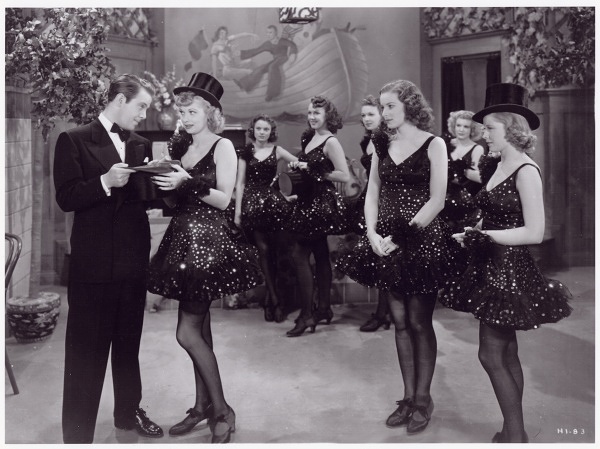
We’re going back in time to catch up on a recent addition to the list, and what a great addition! Judy O’Brian (O’Hara) is an ambitious young club dancer with ballet dreams. However, when she goes to a meeting with Steve Adams (Bellamy) to audition for the American Ballet Company, she sees the professional dancers and is intimidated by their (very impressive) skills. Thus, she runs out before seeing Adams.

Adams leaves his office at the same time and tries out his smooth umbrella game on Judy, but is brutally rebuffed. She goes back to the apartment she shares with a fellow dancer and they are visited by Bubbles, aka Tiger Lily White, (Ball) – a former dancer in their troupe who has made a name for herself in Burlesque. She is looking for more girls and hires Judy as a stooge – she is to dance ballet during breaks in Bubbles’ set to rile up the men who have not paid to see art.
These people paid good money for a striptease and she doesn’t even have the decency to wear a short tutu!
As if Judy’s life isn’t complicated enough, she also starts dating Jimmy Harris (Hayward) – a rich drunkard who is still in love with his ex-wife. When Bubbles finds out she goes after Jimmy herself, and the humiliation of her job, Bubbles’ insensitivity and her crushed ballet dreams culminate to enrage the so far kind and sensitive Judy.
The audience finally gets their money’s worth when a cat fight ensues
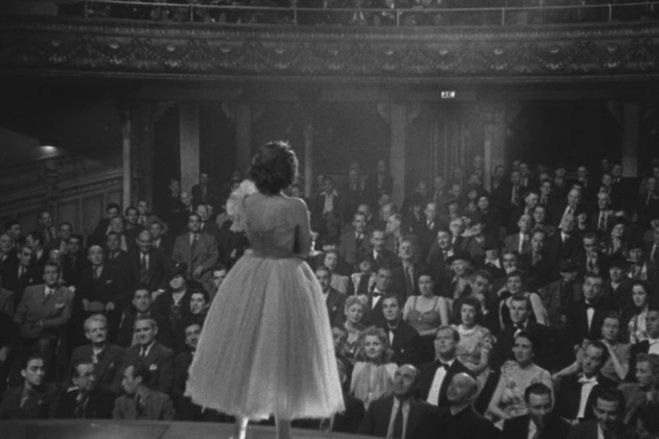
After an amazing speech to the leering audience, Judy gets into it with Bubbles who, after initially playing the outraged victim, reconciles with her fellow dancer and with herself. As for Judy, she has another encounter with Adams and things are definitely looking up.
Dance, Girl, Dance was a great addition to the list. It has strong female characters and great dance scenes – two things we absolutely love. The fact that this is the first film with a female director comes across as well (although there are of course male directors who can write and direct women – we’re not trying to be sexist here). The issues addressed in the film are interesting coming from a female perspective, and Dorothy Arzner handles the lives of dancing girls in the ’40s with a slightly different take than Busby Berkeley. Great dance movie – great movie!
What we learned: is it worth sacrificing one’s dignity for fame and money? Also, a double feature night of Dance, Girl, Dance and Split (2016) leads to strange dreams of James McAvoy as a ballet dancer…
P.S. Confused about numbering? Check out this handy disclaimer!
Disclaimer: This film was added at 37th place (chronologically) after we had already reached (the old) no. 71 (now no. 73) and as such we throw it in here. The next post will be #74 but that does not mean we’ve skipped #72 and #73. Confused? Read this disclaimer. We’re sure it’ll explain everything.
We’re so glad this one made the list! Sister the Oldest has seen this one before and loved it then as she loves it now. It’s a boozy adventure of the best kind, with wonderful characters and banter.
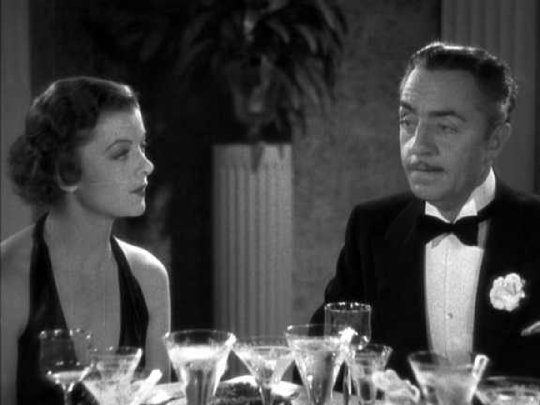
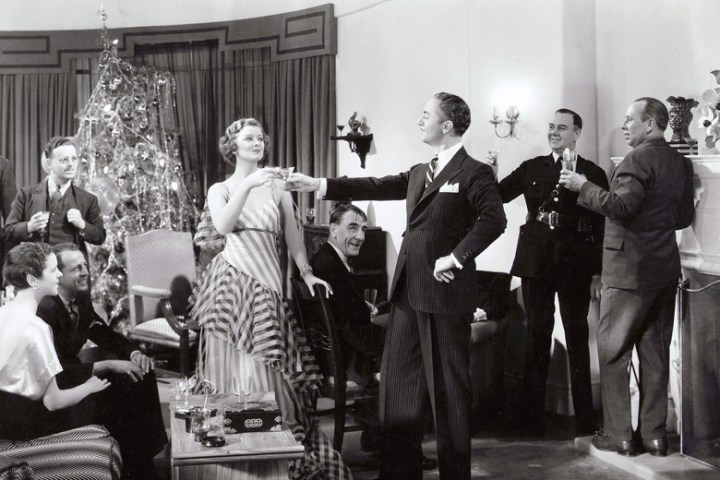
Nick Charles (Powell) is a retired private detective, enjoying a life of leisure, and copious amounts of cocktails, with his charming and charmingly rich wife, Nora (Loy), and their terrier, Asta.
An old acquaintance, Dorothy Wynant, approaches the former detective as she suspects her father is in trouble, but Nick refuses to take the case, on account of the retirement and all. However, soon after, Mr Wynant’s secretary is killed and the plot thickens considerably when Dorothy’s father, who’s missing, becomes the chief suspect. Nick, egged on by Nora who thinks all this detective business terribly exciting, takes time between cocktails to look into the matter.
The Thin Man is one of the funnest, booziest mystery comedies you’ll ever see. There are eccentric characters, dysfunctional families and lots and lots of drinks. The quick banter between Nick and Nora is magical, and their relationship is something to aspire to (in its own way). In addition, Nora has the best fashion sense, and the the dog is adorable. This film should be everyone’s traditional Christmas viewing, along with Gremlins and Die Hard, of course. Enjoy!
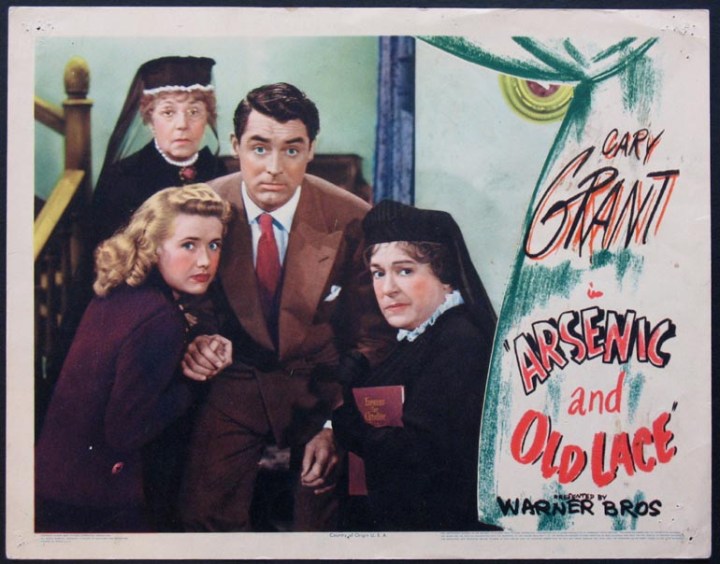
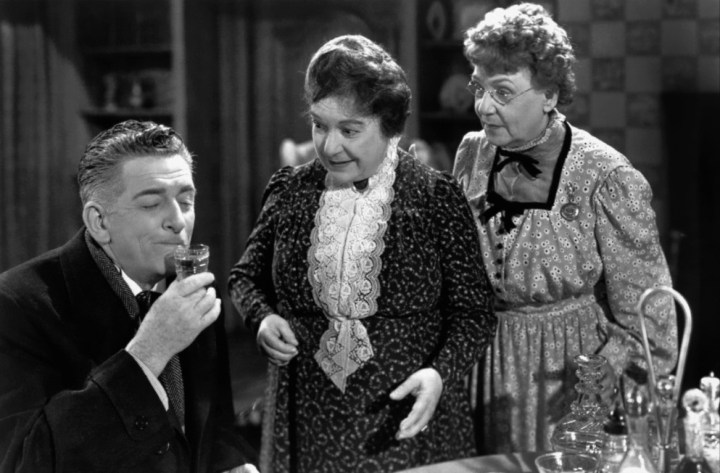
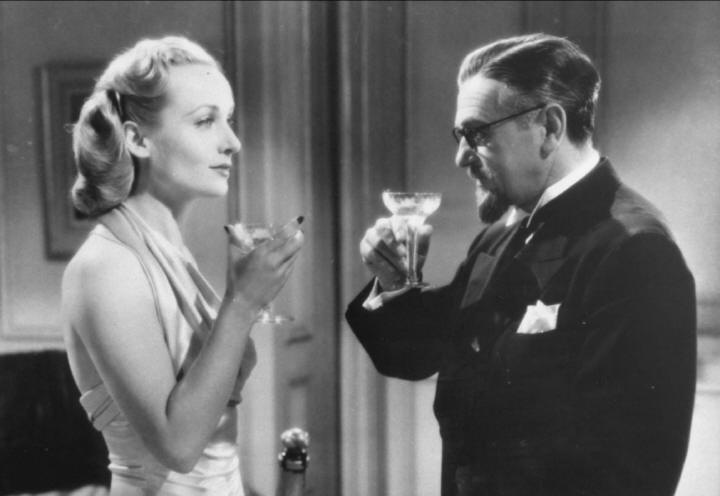
Theatre critic Mortimer Brewster (Grant), against his convictions, is getting married to Elaine (Lane). While they get hitched, his sweet old murderous aunts (Hull & Adair) entertain his new father-in-law along with Teddy “Roosevelt” (Alexander), Mortimer’s insane brother. And the body of their latest victim.
On their way to their honeymoon, Mortimer and Elaine stop by Dark and Godless Brooklyn to greet their relatives, and Mortimer stumbles across the dead body in the window seat and panics. Naturally. He is then completely shocked to find that his lovable aunts committed the deed and not only this one! They have so far killed 12 men and had Teddy bury them in the cellar.
“But… They looked so peaceful after we poisoned them. So relaxed. We can’t see that we’ve done anything wrong!”
While Mortimer tries to sort out the mess and have Teddy institutionalized to take the blame (without serving prison time), another brother shows up to further complicate things. Jonathan (Massey) is also insane, but more in the I’ll-kill-you-and-everything-you’ve-ever-loved kind of way and not the bugle blowing, stair charging way of innocent Teddy. He also brings his own plastic surgeon, Dr Einstein (Lorre – who does not age!). Oh, and their very own body to be disposed of.
Guess who was the inspiration for Einstein’s latest surgical miracle?
Mortimer, as the only sane member of the family, desperately tries to make everything right while also protecting his more loveable relatives. And the results are very silly, very funny and also strangely suspenseful. Grant’s face is EVERYTHING in this film, and aunt Abby (Hull) is one of the most adorable murderers in history. Poor Lane doesn’t really get much to work with though, despite her being billed second on the poster (though, we realise, not the one we chose to go with for this blog..). She’s mainly there to serve as another complication for Grant and perhaps to represent sanity in this insane world.
As if Cary Grant isn’t perfectly capable of representing sanity on his own!
Arsenic and Old Lace is a silly and hilarious farce which we absolutely loved. The spinster sisters living together weren’t in any way a glimpse into our own futures at all! No sir. There’s no way we’ll ever be able to afford a house like that…
What we learned: Brooklyn is not part of U.S. proper. Also, inbreeding is never a good idea…
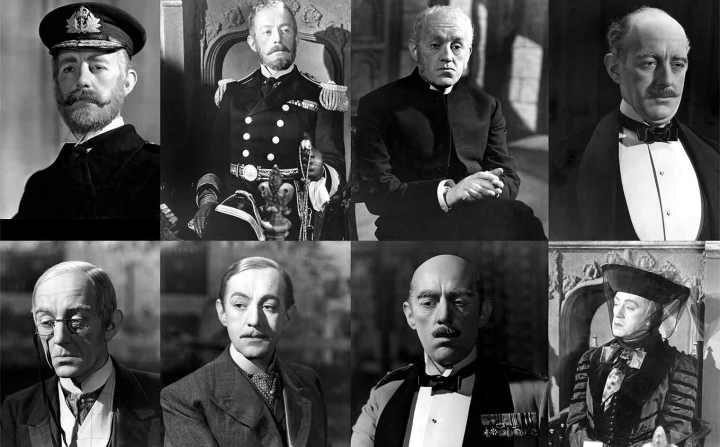
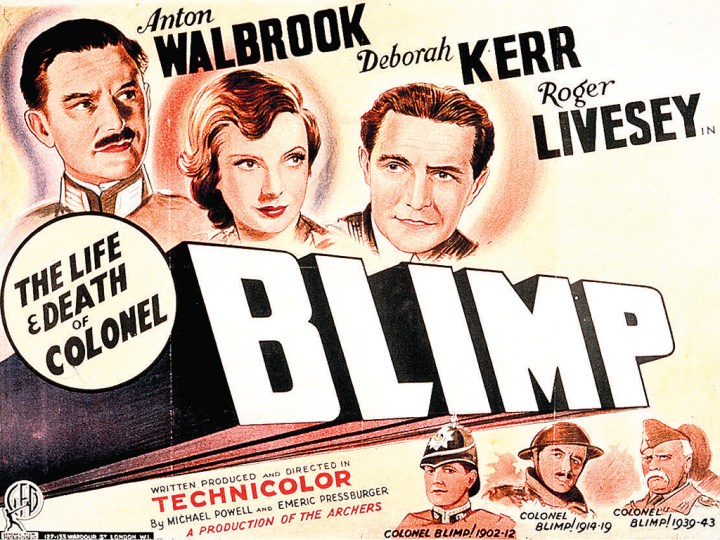
An epic masterpiece in glorious technicolo(u)r, The Life and Death of Colonel Blimp follows soldier Clive Candy (Liveley) through three wars and the untimely deaths of many African animals.
During World War 2, Major-General Clive Wynne-Candy, commander in the Home Guard, is “captured” in a Turkish bath by overzealous soldiers who cannot wait for the actual exercise to begin. A scuffle ensues, Wynne-Candy is assaulted and insulted by the young leader, and we are then treated to a two-and-a-half hour long flashback of the aging soldier’s life.
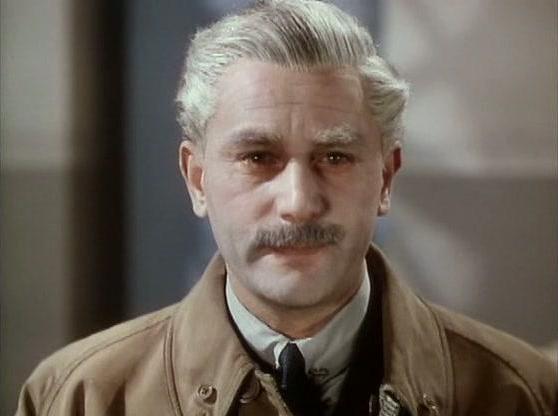
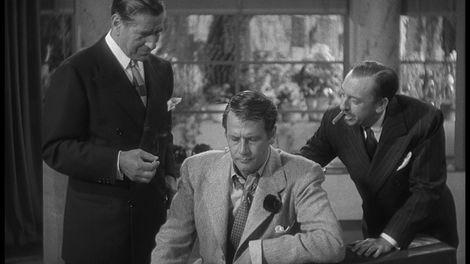
Meanwhile, the poor man has to sit around like this
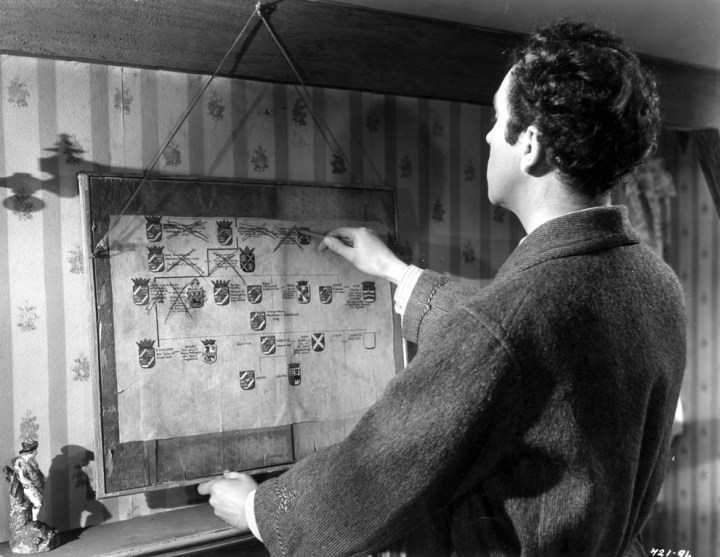
It begins during the Boer War, when young Candy is on leave and hears of some anti-British propaganda being spread in Germany. After being told clearly by his superiors to leave it alone, he goes off to Berlin to see Edith Hunter (Kerr), the British governess who brought the offence to his attention. Because why listen to your superiors?
After some (hilarious) musical bullying in a restaurant, it all escalates into a proper duel. As is tradition.
For offending the entire German army, Clive must fight a duel with Theo Kretschmar- Schuldorff (Walbrook) which leads to injuries for both fencers. They end up in the same hospital for convalescence, where they strike up a lifelong friendship together with Edith. As Clive recovers and prepares to return to England, he finds that his two friends have fallen in love and celebrates their engagement with them. It is only after he leaves he realises that he too is in love with the governess.
Who wouldn’t fall in love with a woman who uses an entire bird as a fashion accessory?
The two men go their separate ways, but keep in touch. World War 1 begins, and both soldiers are fighting, though obviously on different sides. On the last night of the war, Clive sees nurse Barbara Wynne (also Kerr) who is the spit of Edith (naturally) and once home, he tracks her down and marries her. Probably healthy.
“Of course I love you for you, my dear! Your money and your striking resemblance to my sort-of almost ex-girlfriend are completely irrelevant!”
After 1918, Theo is a prisoner of war in England for a year before he’s allowed to return home, defeated and defiant as many Germans at the time. However, his attitude changes during Hitler’s regime, and he eventually seeks refuge in England.
Old, disillusioned and broken, Theo once again teams up with his old friend.
The second World War is a difficult time for the now aged Clive, and his attitudes to war and how it should be fought give him a dismissal from the military where he has lived his life. The friendships of Theo and Clive’s driver (and confidant) Johnny Cannon (Kerr again) help him find new new purpose and brings us right up to the start of the film.
It gives Clive a chance to get up from the bath and restores his dignity as well
This was a wonderful film and despite its long run time it flies by. All major actors give great performances, and the glorious technicolor really does justice to the soldiers’ uniforms as well as Deborah Kerr’s amazing hair. We loved the clips showing the passage of time between wars, and the handling of Barbara’s death through newspaper clippings was oddly emotionally effective. There are some very good comments on a then ongoing war which are still good observations 70 years on.
The friendship between Clive and Theo is beautiful and the characters are wonderful as well. They’re both flawed, yes, but they are likable and human, which made us very invested in the outcome. We loved it, and it’s well worth the three hour run time.
What we learned: Oh, so many things! Old people have lived long, full lives. Never go off at half cock. Avoid politicians like the plague. Political ideas are best discussed by drinking beer and fighting duels. You so rarely see a good fencing duel nowadays. Only part of the title is true.
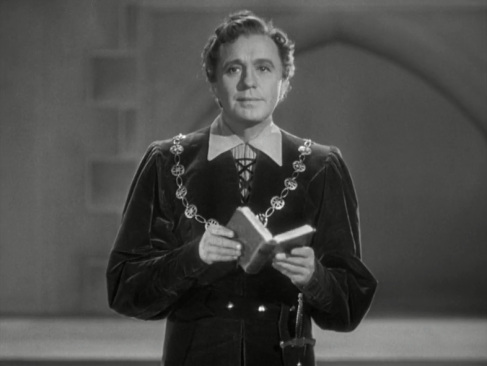
During World War II, Joseph (Benny) and Maria Tura (Lombard) are the lead actors in a Polish theatre troupe in Warsaw. While Joseph is onstage, however, his wife has an unfortunate tendency to flirt with young men in her dressing room. Before the German occupation of Poland, these young men included lieutenant Sobinski (Stack), who fled to join the RAF once Poland was occupied.
Maria’s affair hurts Joseph in several ways. First because of her unfaithfulness, second because her lover keeps leaving the theatre during his most important soliloquy – “To be or not to be”
In England, Sobinski starts to suspect professor Siletsky (Ridges) who’s returning to Warsaw, of being a spy for Germany. Once the higher-ups learn that the professor is going to Poland with the names and addresses of all the relatives of the Polish flyboys, they send Sobinski to intercept him and the information to prevent it from falling into the wrong hands.
No man with a beard as glorious as this could ever be a spy?!?
Maria, Joseph, and eventually the entire troupe are dragged into the plot to secure the information and after Siletsky is accidentally killed, Joseph has to impersonate the dead spy in meetings with the (somewhat incompetent) Nazi leaders. With hilarious consequences.
To Maria’s acting credit, she improvises like a champ upon realising that the man she’s been flirting with for info is now played by her husband
Although we’ve both heard of this classic comedy before, we had yet to watch it. Despite Sister the Oldest having at one point watched pretty much everything related to Hamlet ever made, for a University course, this one had slipped through the net. So it was about time.
Seriously – I know the entire soliloquy. Yet have never once been paid to recite it.
To Be or Not to Be is hilarious and impressive, made even more so considering it was made in 1942, with the war still going strong though the full extent of the atrocities of Nazi Germany were not yet public knowledge. Making fun of Hitler and the Nazis in general was a brave move at the time, but it is not hard to discern the motivation of Jewish German-born director Lubitsch. Despite being a comedy, and a great one at that, the film naturally has very serious undertones and the threat of the Nazi regime is palpable throughout. Definitely worth watching!
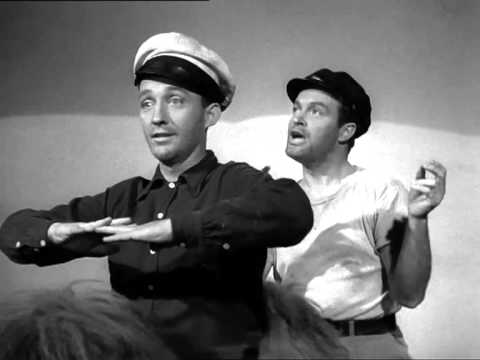
After their ship blows up, two stowaways find themselves on a raft discussing who will eat who first. Luckily, before it comes down to that, they find land and a very friendly camel to take them to Morocco. Yay camels!
You haven’t lived until you’ve sung a song on the back of a camel. Fact!
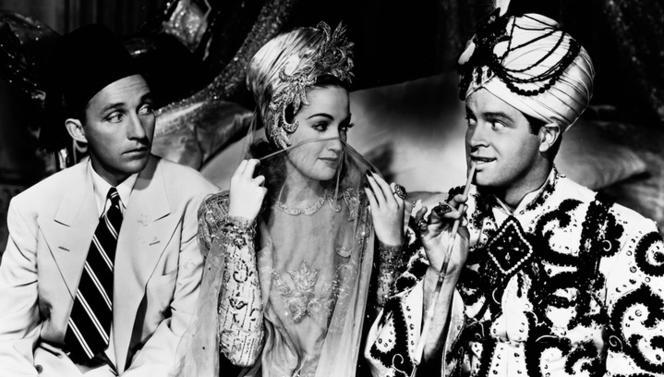
They arrive in a very Arabian Nights-inspired Morocco, complete with princess in distress and violent locals, where they get up to all sorts of zany antics including, but not limited to, selling each other into slavery. Ah – men, am I right?
At least, this particular form of slavery consisted of courting a beautiful princess. As far as human trafficking is concerned, it could be a lot worse.
Once Jeffrey (Crosby) finds out the exact nature of the work he sold Orville’s (Hope) into, he inserts himself into the lives of the newly engaged couple to try to win princess Shalmar (Lamour) for himself. And he succeeds. Which is just as well, as Orville seems more interested in her handmaiden Mihirmah (Drake) anyway.
Now, this is when things get really complicated for the two old friends. It turns out the princess is only interested in marrying Orville because a prophecy has foretold that her first husband will die after only a week of marriage, and she is really engaged to a local sheikh, Kasim (Quinn). However, the sheikh cannot compete with the natural charm and musical talents of Bing Crosby, and the princess decides to go with the penniless American instead. The sheikh does not take kindly…
He kidnaps the princess and her entourage, and leaves Jeff and Orville to die in the desert. It’s up to them to rescue their loves and save the day!
Road to Morocco is very silly, quite raunchy at times, and it breaks the fourth wall masterfully. There’s dancing, action, romance, and cool costumes as well as sometimes sweet, sometimes fun, musical numbers. A great hangover film for early Sunday afternoon. Or Tuesday morning. Whatever rubs your Buddha.
We all know what he will be rubbing. Ooo – naughty!
John L. Sullivan (McCrea) wants to make a serious film with real social issues and deep meaning (with a little sex in it) which will educate his audience and make them think about the social and economic structures in place in 1940s USA. The only problem is, he’s a pampered Hollywood director who’s never really experienced any of these problems himself. Also, his producers would rather have him make silly comedies and fun action flicks (with a little sex in them).
“Let’s face it, you can make whatever you want as long as there’s a little sex in it”
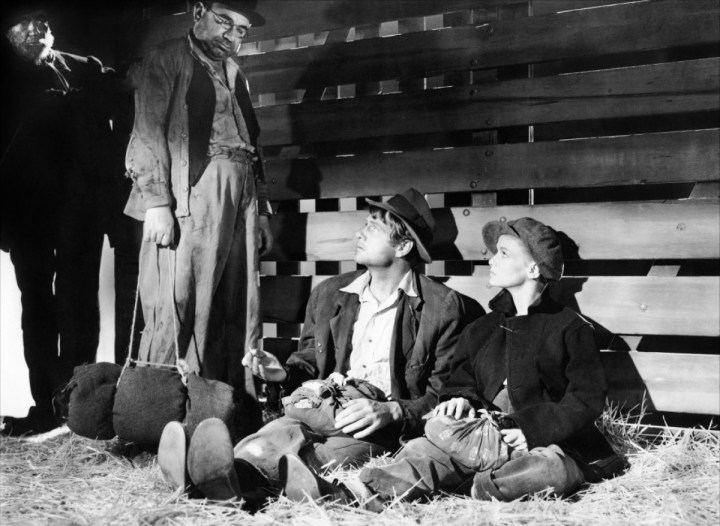
Naturally, he decides to go undercover as a hobo to experience firsthand the suffering of the penniless, with nothing but ten cents (or something like that), the clothes on his back and a crew of five or six reporters, producers and chefs following him in a bus.
“What do you mean, some people go on the road without the expert advice of costume designers? Then how do they achieve that ‘poor, penniless hobo’-look?”
His first venture is somewhat fruitless. Although he hilariously manages to shake his entourage with the help of a little boy in a “whippet tank” and then convinces them to take a vacation in Las Vegas, he doesn’t do too well on his own and is eventually kidnapped by a sexually frustrated woman. After escaping through the window he finds a diner where a failed actress (Lake) buys him breakfast and he then “borrows” his own car to give her a ride home.
There’s just no way any cop would ever pull over a tramp driving an expensive car
The Girl (who needs a name anyway?) finds out his true identity and decides to join his experiment, dressed (rather unconvincingly) as a boy. Together they go on fun hobo adventures!
Turns out dressing like a hobo isn’t really enough to fool actual hobos.
More problems ensue and after a stint in prison Sullivan realises that comedies aren’t really that bad after all and that serious films with real social issues are actually more interesting to the people not experiencing these issues themselves than the ones living them.
Just like living the hobo life seems more romantic to people not forced into that position
It’s pretty much impossible to explain how funny this film is. We loved the fast, snappy dialogue, the long, silent Chaplinesque scenes, the wonderful bass voice of the minister who invites the prisoners to movie night in his church, and the satirical view of 1940s Hollywood (and U.S. society in general). This was also our first Veronica Lake (we know – for shame!) and we have now developed major girl crushes on her. Not only is she gorgeous, but she has a very particular presence which is completely fascinating.
Give Sullivan’s Travels a chance. You’ll laugh, you’ll cry, it’ll change your life!
Poor Mrs Jumbo. She’s the only animal in the circus who’s not visited by the stork, and she’s very sad about it. But wait! The stork was only delayed due to its heavy burden. Hooray! But wait again! What’s going on? Is the elephant baby a freak? The other elephants certainly seem to think so on account of his massive ears. But Mrs Jumbo (where’s Mr Jumbo..?) disagrees – she thinks her child is beautiful and perfect. Thus goes the emotional roller coaster ride which is the opening of Dumbo.
This may seem blissful now, but just you wait for the trauma that is about to come…
Mrs Jumbo, fiercely protective of her son, is labelled insane (or, being female, probably hysterical) by the circus owners after attacking some kids who made fun of Dumbo, and she’s sent to solitary confinement, leaving the young infant to fend for himself as the other (very elitist) elephants will have nothing to do with the freak.
Bitchy, gossipy elephants: many an innocent child’s first exposure to bullying
Luckily for Dumbo, Timothy Q. Mouse, a mouse(!), takes pity on him and becomes his mentor/manager, trying to get him a good position in the circus show. Which doesn’t go so well. However, after a drunken night complete with pink, dancing elephants, the two (along with some very culturally insensitive, but historically interesting, crows) discover Dumbo’s secret power – his enormous ears are perfect for flying, and they become the salvation of both Dumbo and Mrs Jumbo. Yay!
Though technically, those ears should have been the death of them all, so science tells us…
Despite the traumatizing event of Mrs Jumbo being sent to solitary, this is a sweet film about learning to accept your faults, and finding that what makes you weird may also be your biggest asset. We love the “Pink Elephants on Parade” scene (which made us wonder just how many drugs were involved in making this film, and in which quantities) as well as the way Dumbo holds on to the mouse’s tail and follows him around when his mother is no longer around. Perfect Sunday viewing, especially if you have children (or if you can borrow one as an alibi..).
Starring: W.C. Fields, Cora Witherspoon, Una Merkel, Grady Sutton, Franklin Pangborn
Year: 1940
Runtime: 1h 12min
Note: since one sister (Sister the Youngest) fucked off to Oslo for a week, Sister the Oldest watched this one alone. Well, not alone, as she does have friends apart from her immediate family. So she watched it with a friend. Who’s real.
Bumbling buffoon Egbert Sousé (Fields) drinks too much, has no career to speak of and his family does not respect him. So he goes out in search of a drink. On the way, he stumbles across a film team whose drunken director is unable to work and naturally they hire Sousé.
Anyone capable of sitting on a chair shouting into a tube is automatically qualified to work as a director in 1940. Sadly, Sousé isn’t really able to do the former.
After his short stint as director, Sousé finds himself in the vicinity of bank robbers trying to escape. He is credited with stopping them and so gets a job as a bank guard. His daughter’s fiancé Og Oggilby (Sutton) works in the same bank and after Sousé is offered the chance to invest in stock in a mining company, he persuades his future son-in-law to “borrow” $500 from the bank.
“Of course it’s okay to borrow money from the bank! I’m head of security, aren’t I? Check out my trustworthy face!”
Unfortunately, a bank examiner, J. Pinkerton Snoopington (Pangborn) shows up the very next day and Sousé and Oggilby must join wits (of which Og especially has very little) to keep the examiner to discover the missing $500. Let the farce commence!
Rule number one when being investigated: take the investigator out for drinks and slip them a mickey.
This is a very silly movie full of fucked up characters, over-the-top performances and slapstick humour. The main character is gullable, stupid and self-aggrandizing, yet he is also occasionally likeable, possibly because the way his family treats him makes you feel a bit sorry for him. But usually not for long, as he parries their attacks on him with attempted murder such as when he tries to throw a concrete vase at his youngest daughter.
The real gem here though is the car chase towards the end of the film. It is fast, funny and impressive in so many ways – such as the very real danger in which it must have put stunt performers. Even if farcical slapstick films aren’t your thing, it is well worth watching The Bank Dick for this scene alone. Or if you enjoy violence against 8-year-olds. And let’s face it – who doesn’t? Have fun!
Naturally, no still can do a great chase scene justice, so you’ll just have to watch the film.