Another excellent short film by Chuck Jones, What’s Opera, Doc? is a Bugs Bunny/Elmer Fudd version of several of Richard Wagner’s great operas, especially Der Ring des Nibelungen (check out our classical music knowledge, people!).
It has the added benefit of featuring the most fabulous horse in cinematic history
As it’s a seven minutes animated short, it’s hard to say anything deep and profound about it (you know, because we’re usually known for our incredibly analytical and intellectual approach to film reviews). However, lucky for you, you can watch the whole thing here and make up your own mind. Enjoy!
Dick Avery (Astaire), fashion photographer, bursts into the life of intellectual book seller Jo Stockton (Hepburn) with an impromptu photo shoot in her shop. Fashion editor (and personal hero) Maggie Prescott (Thompson) shuts her out of her shop for being a nuisance, but Dick manages to convince the brilliant lady to make Jo her new “Quality girl” and model.
Thus starts the arduous task of making a glamorous model out of this hideous beast
Dick talks the reluctant Jo into the job by promising her a trip to Paris – her biggest dream is to travel to the French capital to hear her personal hero professor Emile Flostre (Auclair) talk. He is the inventor of empathicalism, a philosophy Jo follows and Dick ridicules.
“You silly girl! Stop trying to think and put on a pretty dress!”
They go to Paris, Jo blossoms into a great model, Dick and Jo fall in love (for some reason), Jo gets to meet her hero (which the adage tells us never to do, and we learn why), and Maggie and Dick get to go undercover as Floridian singers to great success. Also, there are complications and conflicts, as there should be.
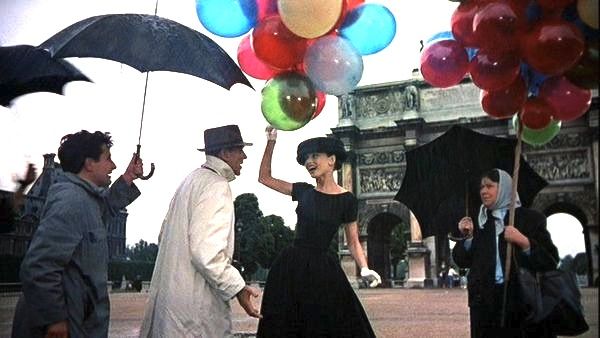
Even Parisian rain can be endured with Givenchy dresses and colourful balloons
We’re slightly conflicted over Funny Face. There is so much about it we love: the colours, the musical numbers, the sets, the costumes, the choreography, Maggie Prescott, Audrey Hepburn’s slightly clumsy elegance, the fact that she got to sing her own songs, and generally the overall feel of the entire film.
What we don’t quite get is the romance at the centre. It’s not so much the age difference, although 30 years is a lot (and we’re not strangers to the concept). It’s mainly Dick’s constant treatment of Jo as if she’s just a silly little girl incapable of thought and of seeing the real intentions of her hero. He berates and controls her, and he tries to change her priorities to make her more like the fashionistas he works with.
Then again, who wouldn’t be persuaded to become a model if it meant wearing dresses like this?
It feels a bit as if he might be better off finding someone else if he wants to change her that much. And that she would be happier with someone who at least supported her intellectual pursuits. We sort of thought Maggie and Dick would have been a better couple. But perhaps that’s just us.
Overall, we like the film, but the romance feels very dated unless it’s supposed to be a bit uncomfortable. The musical numbers and the gorgeous cinematography sort of makes up for it though. Sort of.
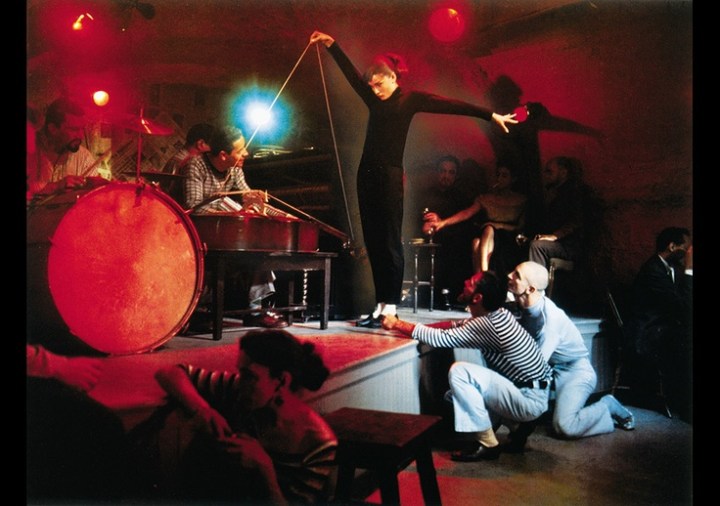
It made us want to dance in sordid, French night clubs with men in striped shirts for sure
Mrs Wilberforce (Johnson) is a sweet little old lady and frequent visitor at the police station reporting on various observations, who is looking for a tenant for her vacant room. When Professor Marcus (Guinness) shows up looking for a room where he can live and rehearse with his string quintet, she may have gotten more than she bargained for.
Naturally, Professor Marcus and his cohorts (the rest of the men credited) are not what they appear – they are a band of criminals planning to rob a security van at King’s Cross and they want to use Wilberforce’s house, and the old lady herself, as part of their plan.
As if classical musicians could make this much money
However, the gang had not counted on Mrs Wilberforce, her observational skills, her morals, or her ability to make them all feel like naughty little boys being scolded by Mother.
The Ladykillers is a fantastic comedy, perfectly cast and entertaining throughout. Katie Johnson, who gets ridiculously low billing, is amazing as the old widow, and her adversaries are all brilliant as well – screen legends as many of them are.
Some of the characters are better than others are fake-playing their instrument
An old favourite of ours, it is always a treat to rewatch it, and we recommend it to everyone with no stipulations. If you can’t get some sort of enjoyment from this, you’re dead inside.
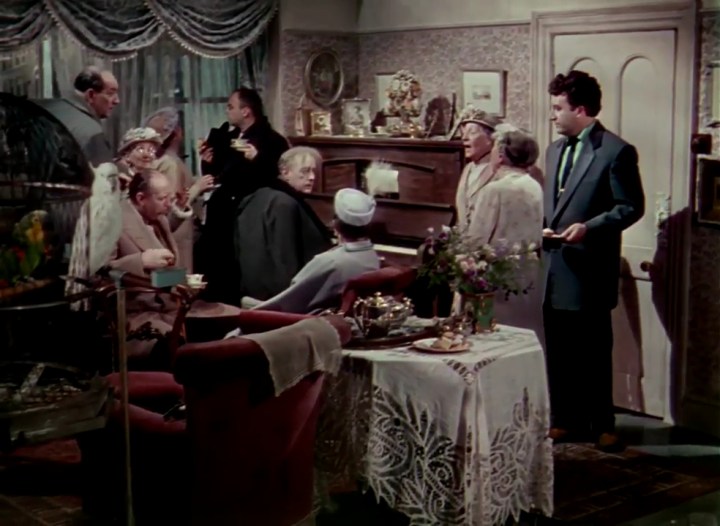
Happiness overload when Mrs Wilberforce had all her little old friends over for tea. They’re so sweeeeet!
A Royal child has survived the massacre of his family, and is being kept safe in the forest by Not-Robin-Hood “The Black Fox” and his singing, dancing and fairly merry men. The usurping king is not very happy about this and sends out his men to track down and kill the child who bears the tell-tale birthmark “The Purple Pimpernel”
We chose this image to avoid being banned for lewd pictures, but it gives you a certain idea of where the birthmark is placed
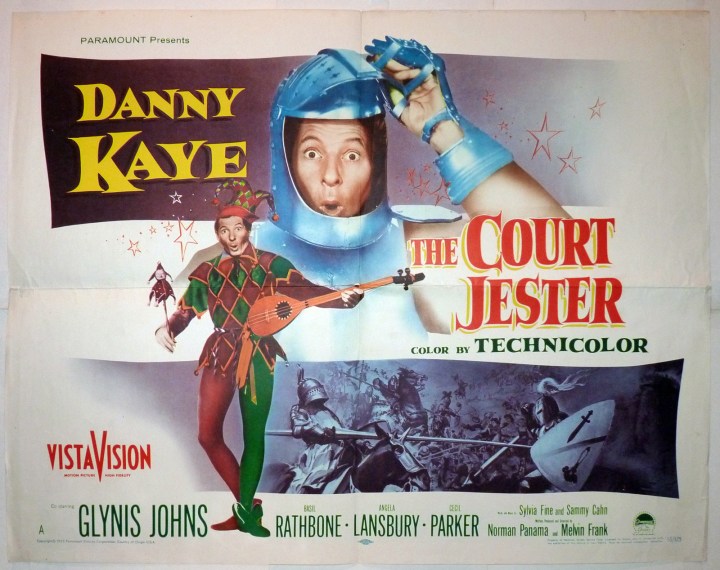
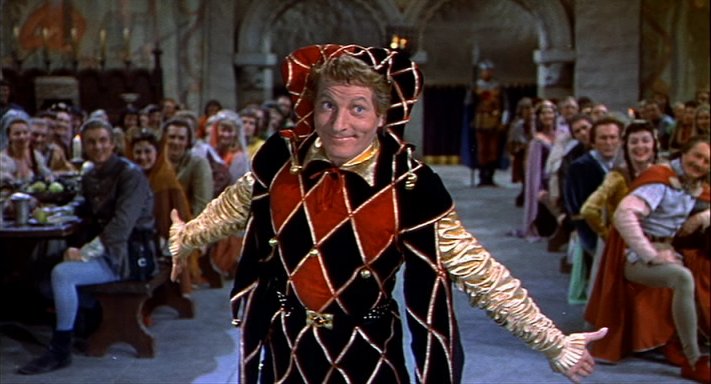
Among The Black Fox’s merry men is carnival performer Hubert Hawkins (Kaye) – a minstrel who really wants to fight for the rightful heir but who is tasked with entertaining the troops instead. Along with Captain Jean (Johns), he is sent to smuggle the child to safety, but as the pair run into the new unrightful king’s new jester, they make their own plans.
Once at the court, complications arise as Sir Ravenhurst (Rathbone) thinks he’s an assassin, Princess Gwendolyn (Lansbury) thinks he’s her one true love, and her Nanny Griselda (Natwick) hypnotizes our hero to be all those things. Additionally, Jean is kidnapped into prostitution at the castle, and the infant King must be kept hidden under the nose of his would-be killer. Let the farce commence!
The prostitution-thing is not explicitly stated, but very heavily hinted at
The Court Jester is very silly and very funny, with great musical numbers (we especially loved the opening song) and gags galore! It’s a swashbuckling adventure which reminded us in style ofThe Adventures of Robin Hood (we’re guessing not accidentally) and in humour of Mel Brooks – particularly Men in Tights, of course.
Also, the inspiration for a certain famous scene with dancing, singing “knighets”!
In honour of Baby Driver‘s Norwegian première, we decided to skip the list for a day and bring you Edgar Wright’s latest masterpiece instead. As you’ve probably gathered, we are avid fans of Mr Wright’s work and so threw a bit of a temper tantrum when the Norwegian release date was not pushed forward along with the rest of the world. Luckily for Sister the Oldest, she was already going to London in July so managed to catch it there a few weeks ago, but now the Norwegian realease is finally upon us and we have gathered a crew to go see it (again) tonight. Yay!
We got our iPods loaded and ready to go! True fact: we’ve never stopped using them.
As this is a new film, we won’t spoil the plot (the less you know going in, the better), but in short, Baby (Elgort) is a getaway driver who uses music to get in the right frame of mind to drive, and to drown out his chronic tinnitus. It’s an incredible action film which uses music as well as any musical we’ve ever seen. As Guillermo del Toro tweeted: “This is An American In Paris on wheels and crack smoke” – a very apt description indeed.
This is more of a pure action film which has (somewhat) less comedy than the Cornetto Trilogy, but the film references which Wright does so well are definitely there along with his signature style, and it’s thrilling, exciting, original and fun. Definitely the must-see film of the summer. And we’re not at all biased. At all.
Go! See it! It’s an amazing cinematic experience, and we can’t wait for tonight!
While you wait, you can see the trailers here and here, and the first six minutes here. Now, if that doesn’t make you want to drive (somewhat recklessly) to your nearest cinema, we really can’t help you.
What we learned: All you need is one killer track.
Washed up musical star Tony Hunter (Astaire) hasn’t made anything in 3 years but seems OK with it. He arrives in New York City, and although the journalists that greet him are actually there for Ava Gardner, his old friends Lily and Lester Marton (Fabray and Levant, respectively) show up to meet him with an idea for a new stage musical.
The Martons do everything with bells and whistles, including picking up an old friend from the train
The playwright couple have a plan to get the incredibly pretentious Jeffrey Cordova (Buchanan) to direct their play, and they are also hoping for ballerina Gabrielle Gerard (Charisse) to take on the female lead opposite Tony.
While the Mortons succeed in getting the people they want, Jeffrey decides to turn their fun musical comedy into a modern retelling of Faust, with himself playing the devil. In addition, the two stars don’t get along, both misinterpreting the other’s reverence for arrogance and acting accordingly.
Nothing like a shared smoke to fix a strained relationship
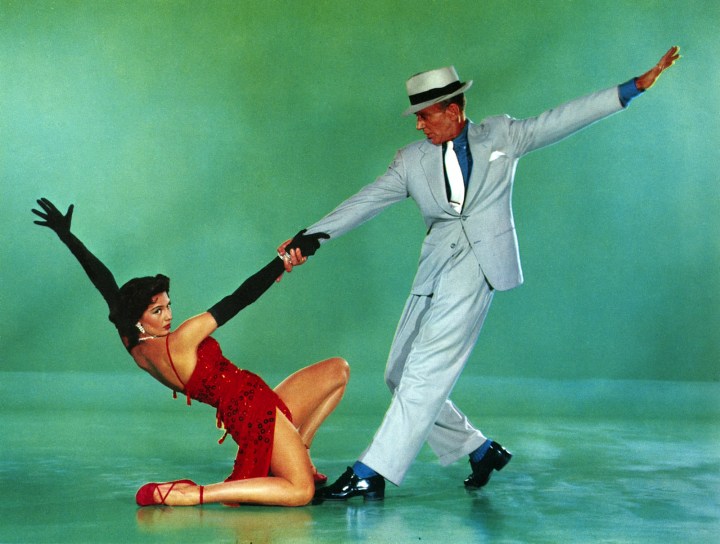
We’re suckers for good musicals and The Band Wagon delivers. Fred Astaire is impressive even in his fifties (which, for dancers, is like seventies) and the humour is on point. We loved Jeffrey’s version of Oedipus Rex, everything to do with Lily and Les, the gradual changes in the show, the murderous triplets and especially Dem Bones Café and the Noir in dance.
It’s hard to tell here, but these sweet, innocent darlings are actually plotting parricide
Funny and great musical numbers, glorious and colourful costumes, and fantastic performers – The Band Wagon is a wonderful musical adventure and we absolutely loved it.
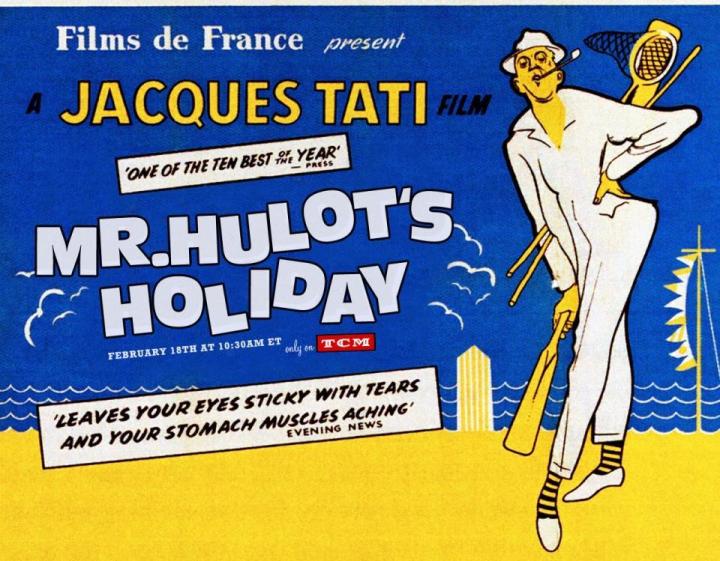
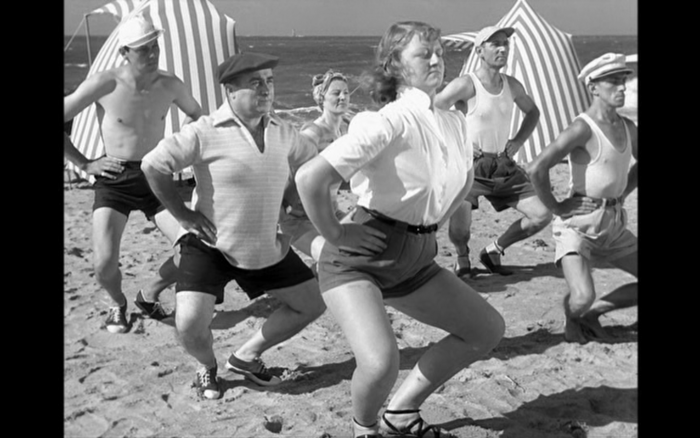
It’s vacation time in France, and everyone (in the upper middle classes) is getting on a train to sunny beaches. Headed the same way is a run down disaster of a car, threatening the peace of the holiday makers. An ill wind blows into the hotel – Monsieur Hulot (Tati), an OCD weirdo who’s very kind to animals, approaches.
Hulot, despite being a polite and well meaning character, has a tendency to exacerbate any problematic situation he gets himself into, of which there are many. Mainly because he causes them in the first place, such as unwittingly crashing a funeral, although often technology also plays a part.
M. Hulot’s Holiday is basically a silent slapstick comedy, 30 years after they were in vogue. It has lots of silly gags and characters and is just a jolly good time. Hulot himself could have been really annoying, but he’s oddly endearing (something we personally feel Rowan Atkinson failed to achieve with his similar character Mr Bean decades later, although we understand that may be a controversial statement).
This film is so, so silly and fun, with lots of nods to earlier silent comedy geniuses and the tradition of mime and physical theatre. In addition, there’s a series of eccentric supporting character, such as the British tennis referee and poor Arthur. All together, they make a hilarious experience for any comedy fan. Check it out!
We’ll just leave you with this image, completely out of context
A short film, so a short post. Duck Amuck brought back many childhood memories as we watched it non stop as children. However, watching it as adults, we realised that we had never understood the dialogue completely. We knew the “melody” of the words by heart, but obviously we watched it before we could speak English. Any child who’s watched animated movies in foreign languages will understand what we’re talking about – you know (and remember) exactly how everything sounds but you have no idea what anything means. So watching it again was a bit of a revelation.
Basically, it’s a hilarious fight between Daffy Duck and his animator, and you can watch the entire thing here. We suggest you do, as nothing we say will convey the glory that is this film. Enjoy!
What we learned: We finally learned what the dialogue was all about.
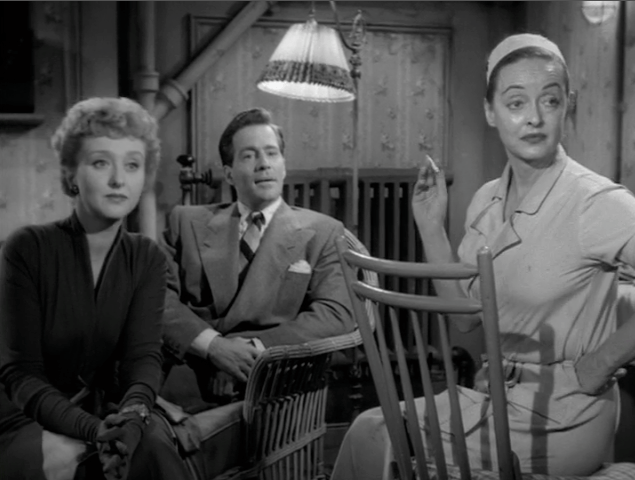
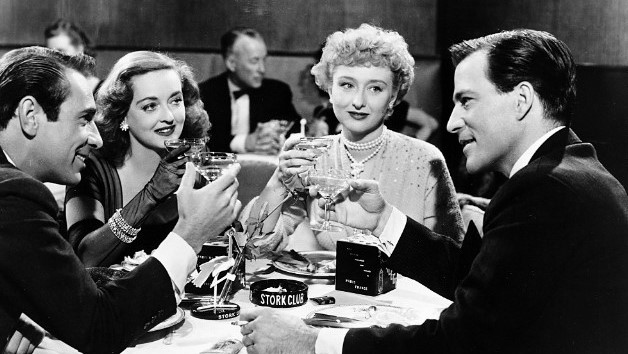
While the title states this is All About Eve, this classic is in reality all about Margo Channing (Davies), an aging theatre actress, and her circle of friends. The show starts with the eponymous Eve (Baxter) winning a prestigious theatre award with Margo in attendance, looking very much less than impressed. We then flash back to their first meeting and get to see what has unfolded up until this point and what brought them there.
“I’d like to thank all the people I’ve screwed over and used on my way here”
After her show one night, Margo’s friend Karen (Holm) invites a devoted fan backstage to meet her hero. The fan introduces herself as Eve and tells her tragic life story, charming both women in the process. Margo, sympathising with her visitor, offers her a home and a job as a personal assistant of sorts.
Leave it to Bette Davies to make even post-show clean-ups look glamorous
As Eve and Margo grow closer, Margo starts to see through Eve’s quiet, unassuming demeanor and realises that she is in fact an ambitious young actress who works on manipulating everyone around her to make it to the top. Coupled with Margo’s own insecurities about aging, this leads to some irrational (but fabulous!) behaviour on her part, as she struggles to convince those around her of Eve’s true nature.
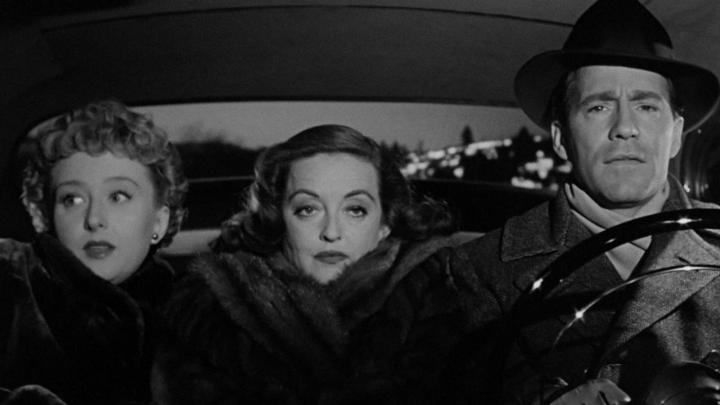
Luckily for Margo, she has the most sarcastic eyes in human history and she makes them work for her!
With the exception of critic Addison DeWitt (Sanders), the men are generally bad at seeing through Eve, while the women catch on to her a lot quicker. In a way though, Eve is just manipulating a system made by men in which she has very little actual power. The ageism, especially towards women, in the entertainment industry comes across very clearly in this film and even the strong Margo eventually more or less gives up her career and marries her longtime boyfriend despite teasing her best friend about her life as a housewife.
No woman is truly happy until she has bagged herself a man [citation needed]
Despite being almost 70 years old, All About Eve never feels old or outdated. It’s a drama with elements of thriller and a lot of comedy, and the two hour run time flies by. As good, and as beautiful, as Baxter is, Bette Davies is easily the star of the film, and we absolutely loved her. A classic for a reason, this is one of those films which everyone should watch at least once. If this isn’t enough to peak your interest (if you haven’t already heard of the film, you philistine!), there’s also an early appearance from Marilyn Monroe. Should seal the deal, we think.
Louis D’Ascoyne Mazzini, Duke of Chalfont (Price – looking very much like Gene Wilder), is awaiting his execution for murder. As he calmly enjoys some wine in his cell, he writes down his memoirs, and we are invited to watch how his life unfolded and what led him to his prison cell.
Louis’ mother was a wealthy aristocrat until she ran off to marry an Italian opera singer and her family disowned her. When her husband died minutes after the birth of their son, the new mother is left destitute and forced to (gasp!) do manual labour. The horror! She feels this life is beneath her, and never misses a chance to remind her impressionable young son that he deserves better.
Ain’t no one pointing their cane at Louis Mazzini. Ain’t no one!
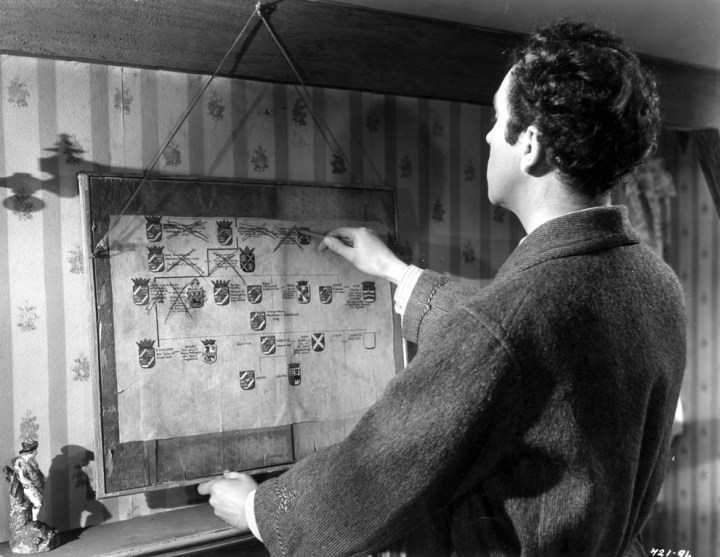
After his mother’s death, Louis becomes obsessed with reclaiming his place in her estranged family and becoming the next Duke of Chalfont – the family estate. Partly because of their awful treatment of his mother, but also partly because of his own ambition and his desire for Sibella (Greenwood), a silly girl he grew up with. However, unfortunately for him, there are eight other family members ahead of him in line for the Duke title. Something has to be done. So he goes on a hilarious murder spree.
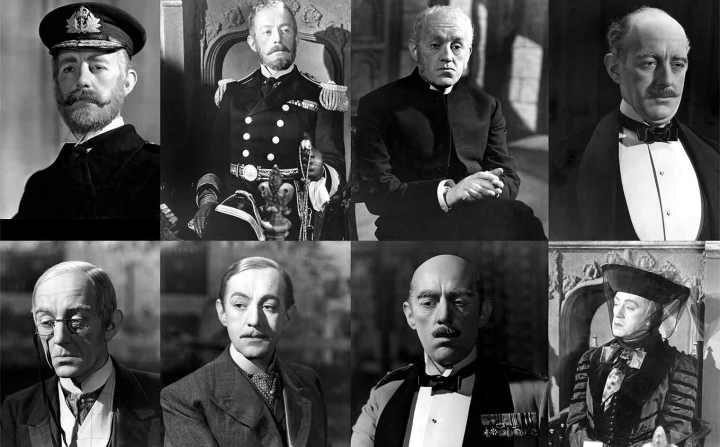
With this kind of family resemblance, tracking them all down should be a piece of cake
We cannot begin to describe how much we loved this one, and we’re surprised and appalled that we have never heard of it before (a curse on whoever is supposed to be our cultural educators!). Louis is equal parts hilariously sarcastic and genuinely creepy. His systematic approach to trim the family tree is a joy to watch unfold, though his juggling of his two love interests is increasingly sociopathic. Especially as one of them, Edith (Hobson), is the widow of one of his earliest victims.
The other interest is a silly girl with a penchant for lace and overly complicated hats.
The visual and verbal humour made us laugh throughout the film, and we’re definitely watching this one again! Price’s stoic and sardonic Louis reminded us of Gene Wilder (they look alike too), and Alec Guinness is wonderful as all eight (unfortunate) members of the D’Ascoyne clan. Joan Greenwood’s Sibella is certainly a silly girl, but she too has a dark side – the two are perfect for each other. If you like sarcasm, murder and fancy dresses (and honestly, who doesn’t?) this is the film for you.
If you want to make parricide fun, make a game of it!


















 1000 Films Blog