#377 Army of Shadows/L’armée des ombres

Watched: January 15 2026

Director: Jean-Pierre Melville

Starring: Lino Ventura, Paul Meurisse, Jean-Pierre Cassel, Simone Signoret, Claude Mann, Paul Crauchet, Christian Barbier, Serge Reggiani

Year: 1969

Runtime: 2h 25min
Hey! Do you want to watch a World War II movie but you’re kind of over the big action features where good always triumphs over evil and the heroes invariably make it out of the most intricate scrapes and gruelling situations practically unscathed? Well, look no further than Army of Shadows/L’armée des ombres.
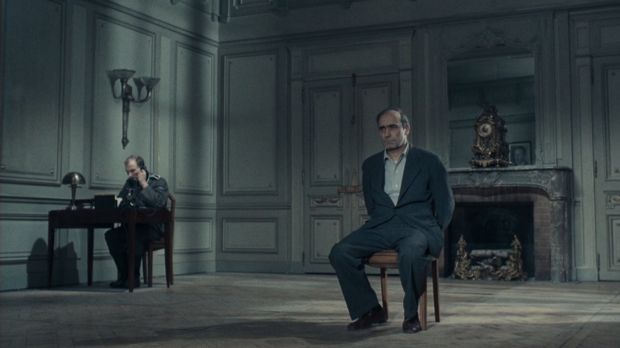
Being tied to a chair while watching is optional. The creepy stenographer in the corner is, unfortunately, not. He’ll simply appear in the room as the opening credits roll. It was quite unsettling.

In this movie, we follow various members of the French Resistance during the German occupation. Philippe Gerbier (Ventura) is arrested by the Gestapo after a betrayal. He manages to flee, and enacts his (quite practical and dispassionate) vengeance on the person who gave him up. Among his fellow Resistance buddies we find “Le Bison” (Barbier), “Le Masque” (Mann), “Ze Big Boss” (Meurisse), and… Mathilde (Signoret).
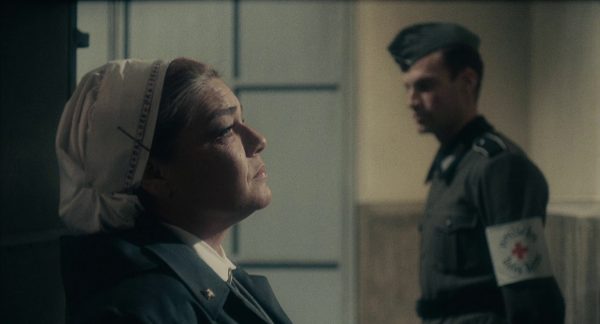
She might be Mathilde to you, but to us she will always be The Mistress of Disguise.

Other members lacking exciting code names include Jean François (Cassel) and the unfortunate Félix (Crauchet). Their missions are unglamorous and unromantic, and their actions seem motivated by a sense of what needs to be done rather than any ambition of glory or acclaim. And indeed, without giving too many spoilers, many of them will die in obscurity under false names with few or no one knowing what they did or what they sacrificed for the greater good (The Greater Gooood..).
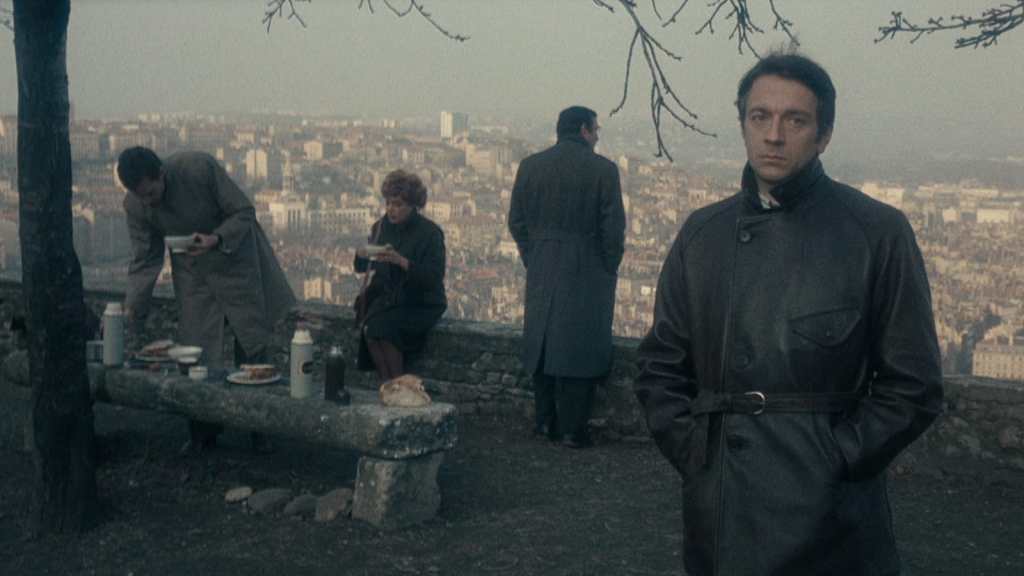
We’re just kidding. They all lived long, happy lives, and after the war frequently met for picnics. And to stare into the nothingness while trapped in the echo of the horrors that they lived through years ago and still relive in the dark of night… But mostly picnics.

Like we said, if you’re looking for a Nazi-ass-kicking action film à la Where Eagles Dare, The Dirty Dozen, or The Great Escape, this is not it. Army of Shadows has more in common with a spy drama than any of those, but not in any James Bondesque way. Despite its occasional action scene, it’s rather quiet and slow, but it packs an emotional punch.

The chilling opening scene reminded us of Pretty Poison, where instead of a high school drill team marching during the opening credits (quite sinister in itself), there are Germans troops marching through the Arc de Triomphe (arguably a bit more sinister). The early execution scene sets the tone for the film – there’s no joy, nor any strong feelings of hatred or lust for vengeance here, just regret and somber, unavoidable reasoning.
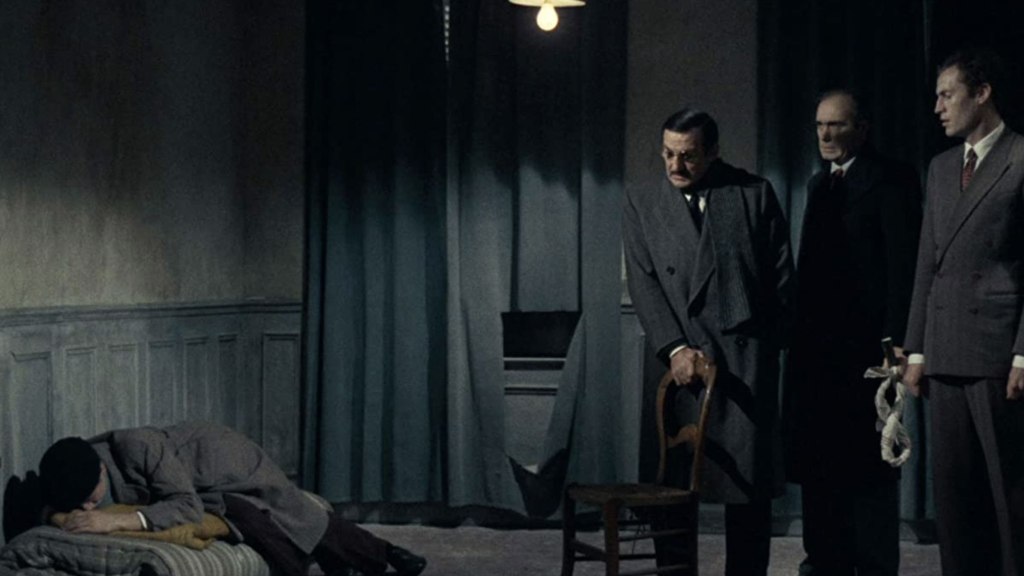
Honestly, we’d never before encountered the problem of what do you do when your safe house/execution place gets new neighbours and you can no longer shoot your victim due to the noise. It poses quite the conundrum. We’re glad to now have a frame of reference for when we’ll inevitably find ourselves in a similar situation.

The pace is slow, and there’s very little music/score, which adds to the sense of realism in contrast to the focus on action and heroism we’re used to seeing in movies set during World War II. Even Gerbier’s escape from the clutches of the Gestapo in the beginning is rather mundane – and probably a lot more realistic than more elaborate depictions of similar events in other movies. Not that this movie is devoid of action or heroism – there’s quite a lot, but it is often less flashy. The acts of heroism are even occasionally close to pointless (we’re looking at you, Jean François. Heroic though your actions were, one could argue that they were ultimately unproductive).
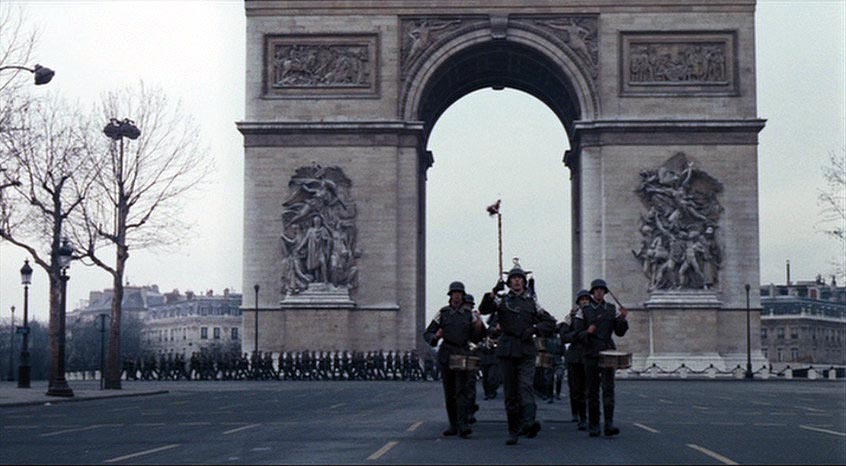
That being said, any mode of resistance is important, and empathy is never wrong. Let’s all agree that we don’t want a repeat of this scenario.

We loved Mathilde, the Brits in the loft, and the dispatcher on Gerbier’s flight back from London. Not to mention the oh so subtle ways we were told the characters had arrived in the UK – the Big Ben, red telephone boxes, and the British flag over the Houses of Parliament were all very vague hints that only the most discerning viewer would be able to pick up on. We also loved the clearly ’60s hair and make-up sported by several of the ladies (clear influences by the style of the time of production in historical films and shows are always fascinating to see). Overall, Army of Shadows was another movie we probably wouldn’t have picked up if it hadn’t been on the list, but one we very much enjoyed and that we’ve thought about frequently since we watched it.
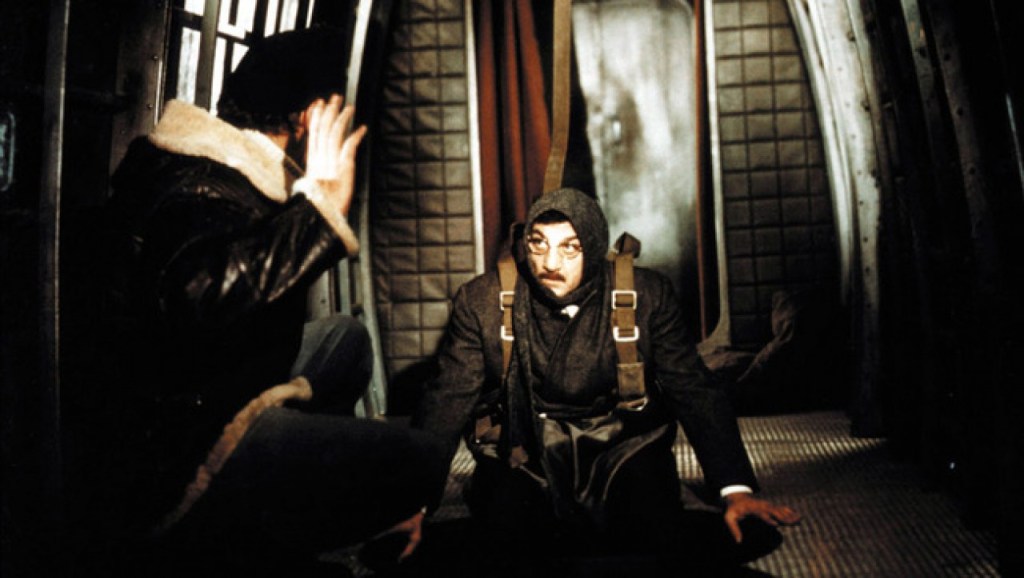
It’s not all bleak. For instance, the flight scene was hilarious!

What we learned: Resist! But also, sacrifices must be made when opposing a fascist regime…

MVP: Mathilde! We will hear no arguments! (And, sure, Gerbier as well, of course. Not to mention La Résistance. Everyone who fights back against oppression, really.)

Next time: Bob & Carol & Ted & Alice (1969)

#372 The Swimmer

Watched: November 4 2025

Director: Frank Perry, Sydney Pollack

Starring: Burt Lancaster, Janet Landgard, Janice Rule, Marge Champion, Joan Rivers, Nancy Cushman, House Jameson, Tony Bickley

Year: 1968

Runtime: 1h 35min

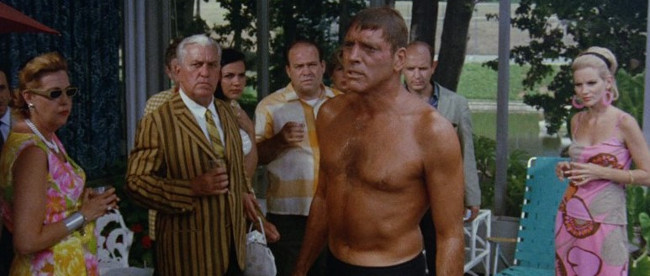
Welcome to the surreal world of The Swimmer. You’re in for quite a ride… Ned Merrill (Lancaster) is running around in his bathing suit in a gorgeous woodland, as people do. He drops by some old friends’ backyard and goes for a swim in their pool. The friends are hungover from the night before, and have not seen Ned for aaaaages. But they love him, and he’s such a great guy. While reminiscing with them, Ned has the brilliant idea to swim all the way home, by way of his neighbours’ pools which form a “river” the entire way. Off he goes!

But not without a drink in his hand. He’s not an animal.

As he makes his wet way towards his house he meets several old friends and acquaintances, but the vibe changes discernibly as he gets closer and closer to home. In the beginning, all the people he meets are old friends who clearly see him as a good guy, although they all get a bit weird whenever his wife or daughters are brought up. But as he gets closer to home, the people he encounters are increasingly hostile and keep hinting more and more to something that clearly has gone wrong in Ned’s life. Our “hero” also goes super sleazy with Julie (Landgard), a young girl who used to babysit for his kids. Things get gradually darker and weirder until he finally reaches “home.”

It starts off so innocently. Even bringing along his very young former babysitter seems wholesome at first. Until it’s not…

We had no idea what we were getting ourselves into, but we were hooked from the start. We loved how our view of Ned changed throughout the movie – from seeming to be a nice enough man (and just a little bit inappropriate with all the women he knew) in the beginning, to a creepy, cheating, horrible narcissist at the end.

This scene with his former mistress is the best depiction we’ve seen of a man completely unravelling when he finds out a woman has faked her orgasms. Actual quote: “You loved it. You loved it. We both loved it. YOU LOVED IT!” And she’s just there like “Sure, Jan.”

The Swimmer kept us questioning throughout, and we came up with about 271 theories on what was actually going on. What happened to his daughters? His wife? Is this a sort of “life flashing before his eyes” scenario? Are we in purgatory? Is he senile? Is this a portrayal of his gradual corruption and entitlement throughout his life told through a swimming pool voyage? ‘Twas a mystery wrapped in an enigma. In the end, things start coming together and some questions are answered, but we’re still not 100% sure what exactly we just watched. That being said, we loved it (actually loved it. It wasn’t just a man telling us we did).

Another bit of unravelling: at the first pools people find him quirky and charming for going around in his swim trunks at a clothed event. As he progresses, not so much…

Among our favourite things were the ’60s parties he kept crashing (such a vibe!), the Hallorans, the way we liked Ned less and less as we went along, his increasingly fragile ego and psyche, and the many mysteries hidden in the plot. Also, the beautiful scenery added to the film’s dreamlike quality which, granted, gradually descended into a nightmare. Watch it!

Preferably through a closed, rusted fence with an anguished look on your face as you gradually realise the reality of your existence and slowly descend into madness and despair. It’s what we did.

What we learned: Dude! No means NO!!!

MVP: The pools. Or, possibly, the narrative technique. Or Ned’s fragile male ego.

Next time: The Thomas Crown Affair (1968)

#287 In the Heat of the Night

Watched: December 27 2020

Director: Norman Jewison

Starring: Sidney Poitier, Rod Steiger, Warren Oates, Lee Grant, Larry Gates, James Patterson

Year: 1967

Runtime: 1h 50min

Source

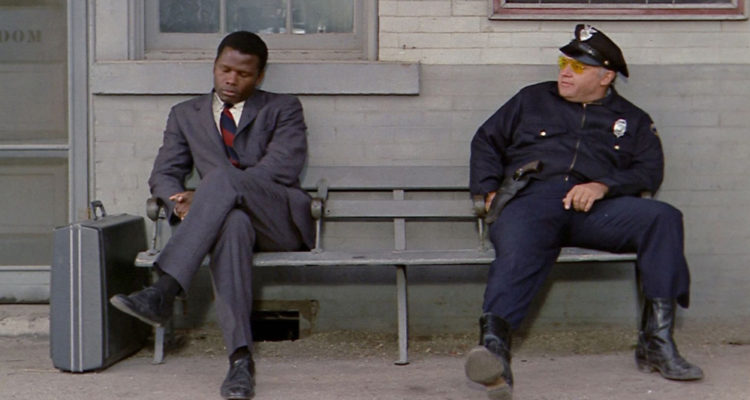
Officer Sam Woods (Oates) is doing his rounds in a small Mississippi town when he comes across a dead body. The dead man turns out to Mr Colbert – an investor come to build industry and save the town. There also happens to be a black man waiting for a train at the station, so obviously Woods arrests him for the murder.

“Well sir, he was behaving in a very suspect sort of a way. He was reading while being black.”

Source

Virgil Tibbs (Poitier), the man arrested, is brought to the Chief of Police Gillespie (Steiger) and questioned. It turns out he is far from a suspect – he is in fact a homicide investigator from Philadelphia. Better than that, he is the homicide investigator in Philadelphia. So his boss suggests he stays behind in Sparta to help solve the murder.

“This is a local murder for local people! There’s nothing for you here!”

Source

Tibbs is great at his job, something Gillespie recognises despite his racist views. In this small Southern town a black investigator meets with a lot of resistance though, and especially the local Angry Young Men™ mob up to kill him. After some potentially lethal encounters, Gillespie advices Tibbs to leave, but he is unable to walk away from a case. Can the unlikely duo solve it and survive the investigation?

“Actually Chief, we’re presidentially sanctioned Proud Angry Young Boys™. We think you’ll find our tiny dicks are proof of this. We suggest you step out of our way and let us deal with our insecurity by letting a rich white man use us for his own benefit.”

Source

Even on a freezing December evening in Norway, we could feel the oppressive heat of Sparta, Mississippi. In the Heat of the Night is exciting and unnerving, and edge-of-your-seat tense. Unfortunately, it says a lot about the world that it did not even occur to us for the first hour that Tibbs could survive the movie… It’s a sad statement indeed.

Despite being over 50 years old, it’s still a relevant movie. Its themes of racism, prejudice and social distancing seem surprisingly modern and contemporary!

Source

Sidney Poitier is mesmerising, the chemistry between him and Rod Steiger is great, the mystery is as intriguing as the exploration of racism and prejudice, and the soundtrack is excellent. This is what you get when you combine a fantastic cast, director and script. It’s a sort of buddy-cop movie, a social commentary drama, a character study, and a great murder mystery all wrapped up in one. We loved it!

Trust us, it’s worth watching for this scene alone. Fight the power!

Source

What we learned: Don’t let your prejudices cloud your judgment.

Next time: Le Samouraï (1967)

#286 In Cold Blood

Watched: December 6 2020

Director: Richard Brooks

Starring: Robert Blake, Scott Wilson, John Forsythe, Paul Stewart

Year: 1967

Runtime: 2h 14min

Source

Perry (Blake) is a slightly simple ex-con who dreams of fame and fortune. He breaks his parole so he can return to Kansas in order to meet up with old cell mate Dick (Wilson), who can offer him a sure thing. Monetary wise, that is. Not a date or anything.

If you can think of a single date idea which would require a trip to the hardware store in preparation, we’d like to know. Then, leave your contact information and the number for your local police.

Source

Another old prison buddy has told Dick about a hidden safe in the basement of a farmer, and the pair plan to get their hands on it. However, what could have been a simple burglary soon turns into a bloodbath…

“Bubble bath. I said I wanted a BUBBLE bath. You need to get your hearing aid fixed.”

Source

We don’t want to reveal too much here even though it’s a 50 year old film based on an even older book based on a yet older real crime… Suffice to say investigators are soon on the criminals’ trails. But what really happened? And who pulled the trigger?

Also, who wore the easily identifiable shoes to a crime scene???

Source

This movie is amazing and you should watch it. We loved the build up to the crime and the fact that we then skipped neatly to the aftermath without seeing it play out. It is excellently structured, well acted and overall really well done. The 2+ hours fly by!

Like the lit-up club, casino and hotel signs in old-timey montages! Imagine “Mas Que Nada” playing in the background.

Source

Now, Dick is a dick from the beginning. Perry is perhaps a bit more sympathetic, but they both share the same anger issues. They are disenfranchised young men with a murderous streak and little left to lose.

They are also traumatized by abusive childhoods and war. Sorry, it’s hard to make hilarious captions about this story…

Source

As the movie plays out, you keep forgetting that Perry and Dick have killed an entire family – probably because you don’t actually see them do it. Which is somewhat unsettling and uncomfortable when you find yourself giggling at their shenanigans and sort of hoping they’ll get away.

On the other hand, we’re also introduced to this ridiculously wholesome family, who certainly did not deserve their fate. Our loyalties are torn, is all we’re saying. And we guess that’s sort of the point…

Source

Real question though, are trials in the USA that revenge-driven, or are they just that way in movies? Because for us rational (some would say cold and unfeeling, we prefer logical and Spock-like) Norwegians, emotions and ideas of revenge are not what should decide the outcome of a trial… Just a thought there, America.

What we learned: American trials are insane… Also, sometimes things just don’t make sense.

Next time: In the Heat of the Night (1967)

#238 Dr. Strangelove or: How I Learned to Stop Worrying and Love the Bomb

Watched: August 25 2019

Director: Stanley Kubrick

Starring: Peter Sellers, George C. Scott, Sterling Hayden, Keenan Wynn, Slim Pickens, Peter Bull, James Earl Jones, Tracy Reed

Year: 1964

Runtime: 1h 35min

dr

Source

General Jack D. Ripper (Hayden) has gone cray-cray trying to protect his precious bodily fluid from the commies, and orders an attack on the USSR.

strange2
“No amount of phallic symbolism can protect me from their desecration of my precious bodily fluids!”

Source

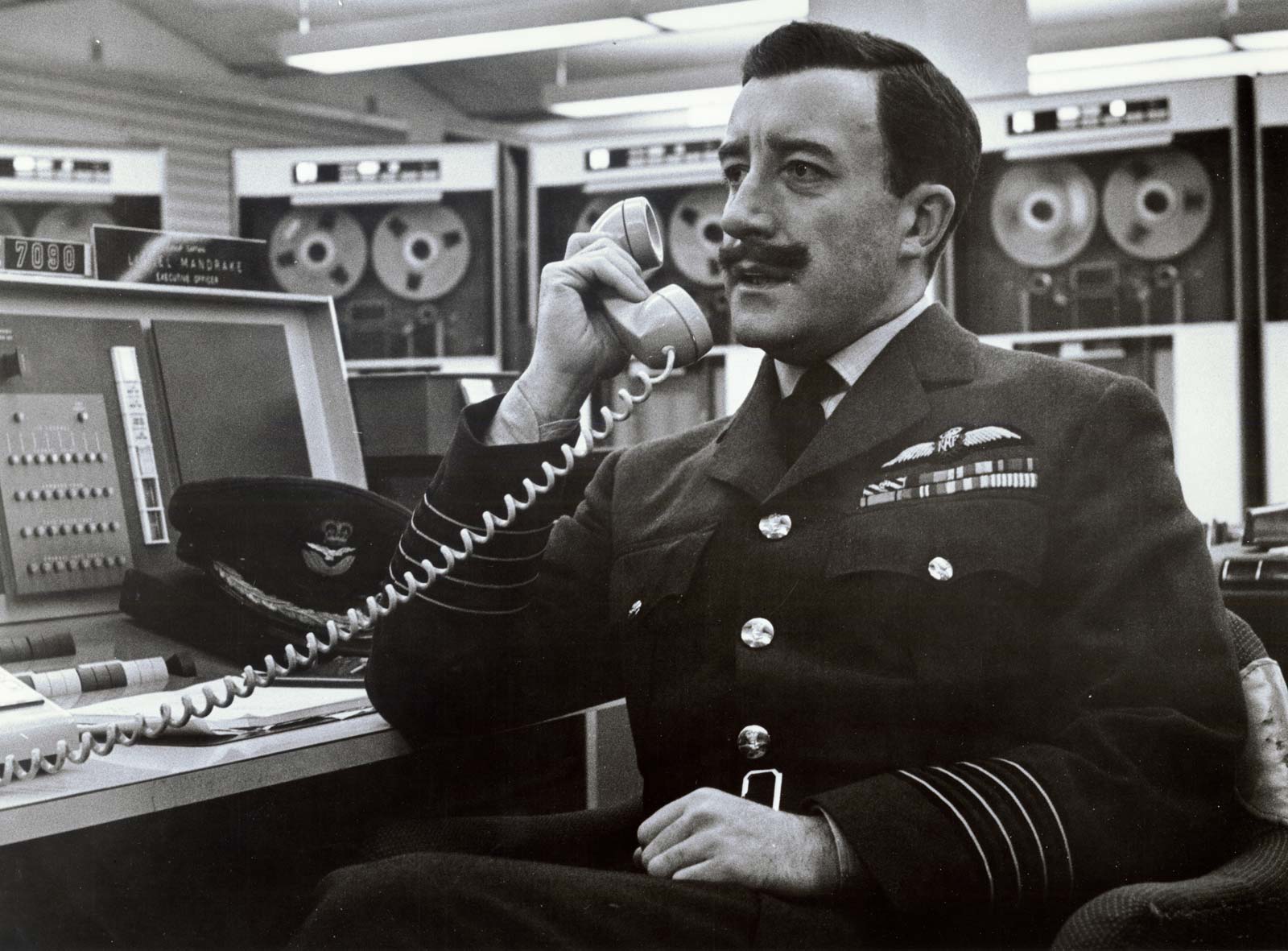
Group Captain Lionel Mandrake (Sellers), on loan from the Royal Air Force, soon realises that the attack is Ripper’s doing and no orders have come from the President or Pentagon. He tries his best to stop the general before a full blown nuclear war breaks out, but this proves difficult as Ripper is the only one able to communicate with the attacking B-52 bombers.

strange
“Hello? I need to talk to the President! What do you mean he’s busy impersonating a British RAF officer?”

Source

Meanwhile at the Pentagon an emergency meeting is called, with President Muffley (Sellers) and General Buck Turgidson (Scott) in attendance. And also former nazi scientist Dr. Strangelove (Sellers). As if things aren’t complicated enough, the assembly learns that the Soviets have a “doomsday machine” which, if struck, will render the entire earth uninhabitable for close to 100 years.

strange3
While this might be problematic for most people, some see the dismantling of society as a perfect dating opportunity

Source

This. This is the movie which sparked our love of classic movies back when we were young. It is just so damned entertaining, and strangely accessible, despite its serious subject matter (and black and white photography which will on occasion put people off).

strange5
However, usually a bona fide war room will bring them right back in

Source

From the opening, to Vera Lynn, you will be completely engaged. It is beautifully and interestingly shot and the characters are utterly amazing – not just the ones played by Peter Sellers. Also, there’s a cowboy riding a bomb.

strange4
Would we lie to you?

Source

Dr. Strangelove is frightening (the scenario was not entirely improbable and outlandish for a while), but also hilarious, sad and brilliant, and we love everything about it.

What we learned: Peace is our profession.

Next time: Goldfinger (1964)