Watched: October 7 2025
Director: Federico Fellini, Louis Malle, Roger Vadim
Starring: Jane Fonda, Brigitte Bardot, Alain Delon, Terence Stamp, Peter Fonda
Year: 1968
Runtime: 2h 1min
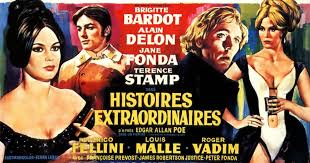
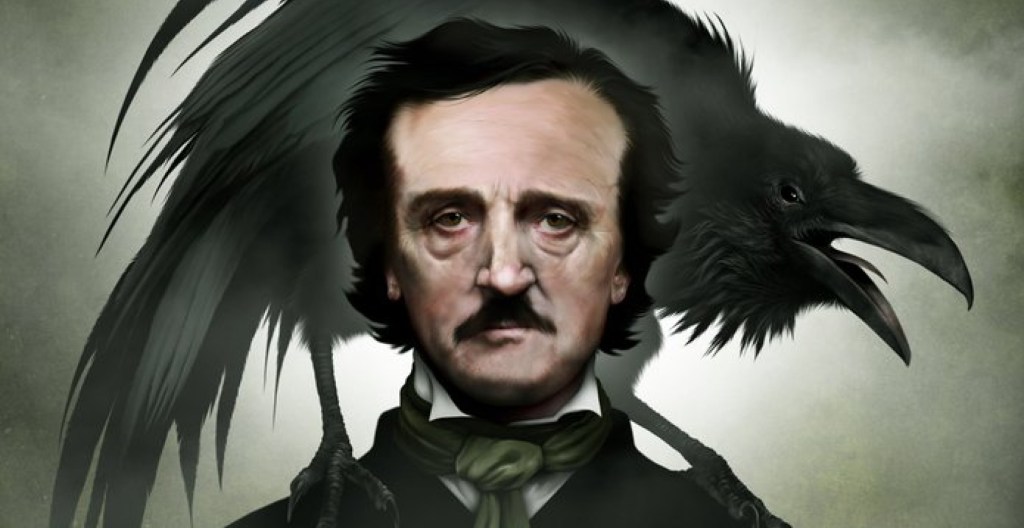
Spooctober continues (we expand it into November as well. And occasionally December. Not to mention January! There’s nothing scarier than a blank slate and new opportunities, after all…), and coincidentally there are quite a few fitting films coming up on the list. Such timing! In Spirits of the Dead, three directors have each made a short film based on the works of our child- and adulthood hero Edgar Allan Poe. Artistic liberties have been taken, but in each entry Poe’s spirit is present. And he is in fact dead. So the (English) title checks.

Director Roger Vadim is behind the first segment, “Metzengerstein.” Here, cruel, oversexed countess Frédérique de Metzengerstein (Fonda) falls for her cousin/enemy/rival/neighbour Wilhelm Berlifitzing (also Fonda, but this time Peter), burns down his stables when he rejects her, then grows obsessed with a horse that appears out of nowhere just as Wilhelm accidentally dies in the fire. Well, technically the horse seems to appear out of a tapestry. Either way, clearly a supernatural horse. It does not end well for her.

The second adaptation, Louis Malle’s “William Wilson,” follows the titular character (Delon) as he is confronted by kindness and positive qualities, things he himself does not possess in the slightest. As he goes around bullying and torturing school mates, trying to start a serial killer career by dissecting a random (and still alive) woman he picked up from the street (with a willing audience of equally psychotic medical students, it seems? WTF, guys???), and cheating at cards (ok, this one sounds relatively mild compared to the others, but he does it in order to strip and whip a woman (Bardot) in front of yet ANOTHER audience of men before offering her up for them to rape. So the cheating really was just a means to an end), he is repeatedly thwarted by a doppelganger (or the Jekyll to his Hyde, if you will). And Wilson is pretty darned indignant about it! It does not end well for him.

The final, and in our opinion best, entry is Fellini’s “Toby Dammit,” based on the story “Never Bet the Devil Your Head.” Now, while it might be the segment that diverges the most from the story on which it is based (it is also the only one where they did not keep the title or the historical setting), it is also the most successful (in our opinion). Toby (Stamp) is a messed up, alcoholic actor visiting Italy to star in a Catholic western and drive a Ferrari, who keeps seeing the devil everywhere. This devil is in the form of a little girl with a ball as opposed to Poe’s old man with just a girly hairstyle (actual quote: “his hair was parted in front like a girl’s”). Toby’s behaviour becomes increasingly unhinged as he falls deeper into the bottle as well as his own visions, climaxing in a wild Ferrari ride. It does not end well for him.

Poe’s original story “Never Bet the Devil Your Head” is a hilariously passive aggressive response to his critics who accused him (and/or his tales) of lacking morals. So he wrote the most blatantly moral tale he could come up with. It is definitely worth reading if you have not – the tone is hilarious. However, it may not be the easiest story to make into an interesting film, so Fellini’s decision to basically keep only the ending and a slightly morally dubious protagonist is an understandable one. And as stated, this entry was our favourite, despite us being Poe-purists at heart.
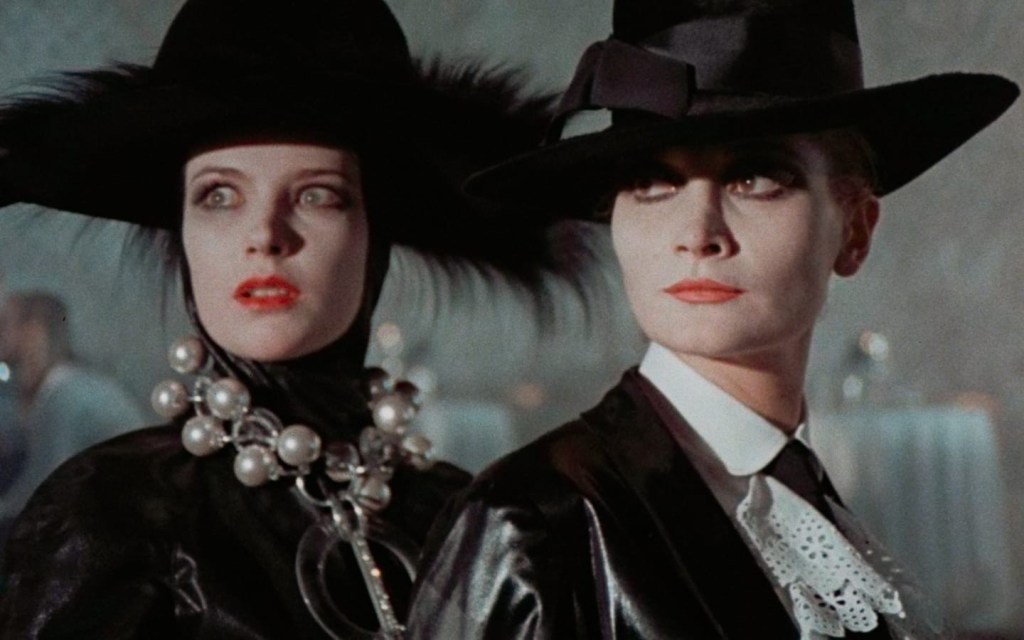
While the three shorts have varying degrees of connection with the source material, they have all definitely tried to sex it up quite a bit. Poe wasn’t really known for his spicy content – he was more about the implied incest and necrophelia than explicit sexual stuff. So, much more pure. In Vadim’s “Metzengerstein,” the young count Frederic has become sexy Frédérique, and the old neighbour Berlifitzing has become young, alluring, and a cousin to boot. So at least Poe’s incest motif has been honoured, we guess. William Wilson, while always an unlikable character has, in Malle’s version, become a sexual sadist in addition to your ordinary, run-of-the-mill everyday sadist from the short story.

We loved the costumes, Terence Stamp, Jane Fonda, the Devil, the stressful Ferrari ride, the Catholic Western that Toby’s set to star in (complete with cowboy Jesus and all), the award ceremony and basically everything about Fellini’s entry. We also enjoyed the fact that these filmmakers have chosen relatively unknown Poe tales to adapt (at least, lesser known compared to “the big ones”). This may of course be related to the fact that there were supposed to be more directors and stories filmed for the series, but one by one they all dropped out, leaving the three we have today. While the project may not have reached the heights originally envisioned, the ones that were completed are definitely worth a watch, and the film is a perfect choice for Halloween (which, as you all know, is celebrated from October 1st through (at least) November 30th).
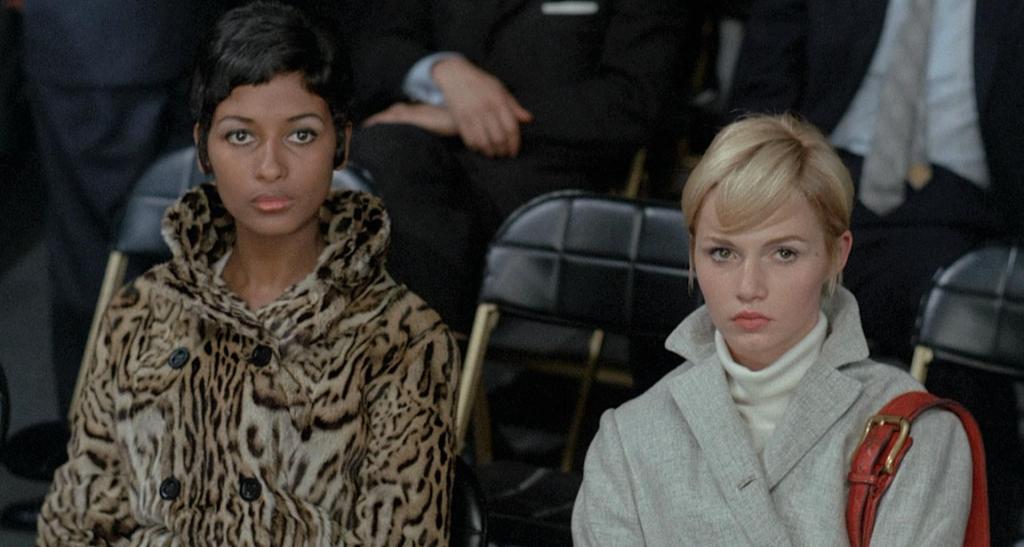
What we learned: Dammit, Toby! Also, if you stand by and do nothing, or participate in the slightest, when people are trying to rape or kill, you’re as culpable as the perp. Do better!
MVP: Terence Stamp. And Edgar himself, obvi.
Next time: The Boston Strangler (1968)


 1000 Films Blog