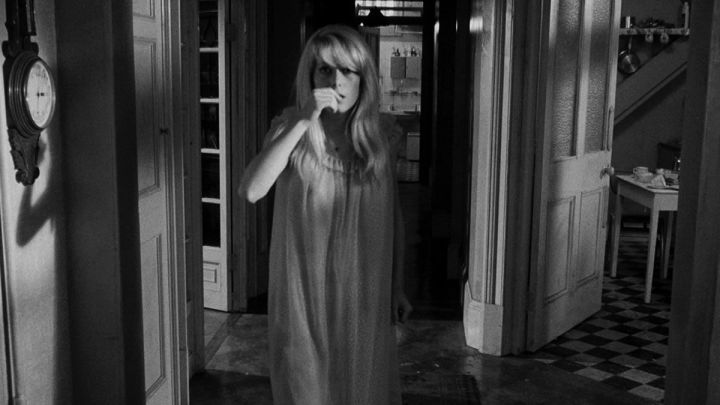
So, here’s the thing. We enjoyed the movie. We loved Catherine Deneuve. The story is intriguing, and the men are sleazy and disgusting. However, watching Polanski-movies is difficult in light of, well, him… (And yes, we know this might seem a bit hypocritical seeing as we actually did review Knife in the Water. We have just given it a bit more thought since then. And sure, there are probably lots of other problematic directors as well, but in this case there is so little doubt and it is so well publicized that it cannot be ignored.)
It’s the continuous debate of whether one can truly separate the artist from the art. Considering that he still goes free and is even rewarded (and awarded) despite being a rapist piece of shit, viewing and reviewing his movies is conflicting. Especially when they involve sleazy men trying to take advantage of mentally ill women. But, like, sexy mentally ill women. So that makes it ok, apparently…
Cause as we all know, nothing is sexier than a spiralling woman. She probably just needs a penis to set her straight.
We’re not going to tell you whether to watch this or not. It’s entirely up to you. The film itself is intriguing and beautifully shot, but it is also problematic in oh so many ways.
What we learned: Watching (old) Polanski movies is difficult…
Every year in March our glorious city of Trondheim hosts a film festival, Kosmorama. Thus, this week we’re too busy trying to catch as many movies as possible inbetween work and other engagements to have time to write much. Or eat. Or sleep. We’ll be back on Sunday (if we’re still awake) with a new update and possibly a recap of the highlights of the week.
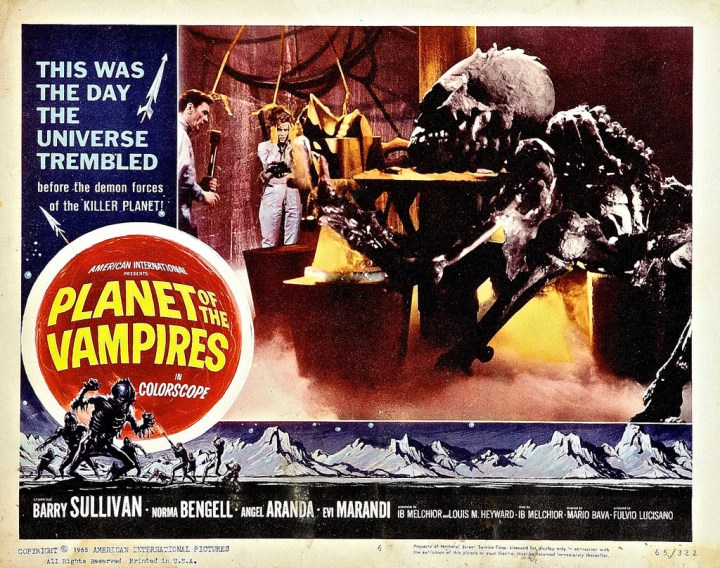
Back to civilization after winter break, we dive into the magical and stylish world of Mario Bava with Planet of the Vampires (pronounced vampyres, like Andrew’s documentary in the Buffy episode “Storyteller“. At least in our minds).
Unfortunately, despite a good start, the female heroes in this this movie tend to scream, faint, and/or run away at the first sign of the undead. Buffy would not approve.
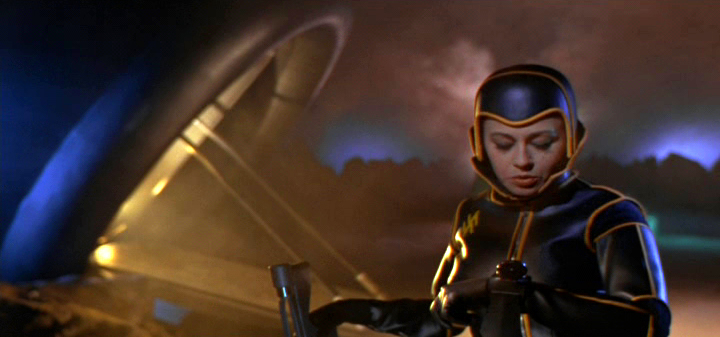
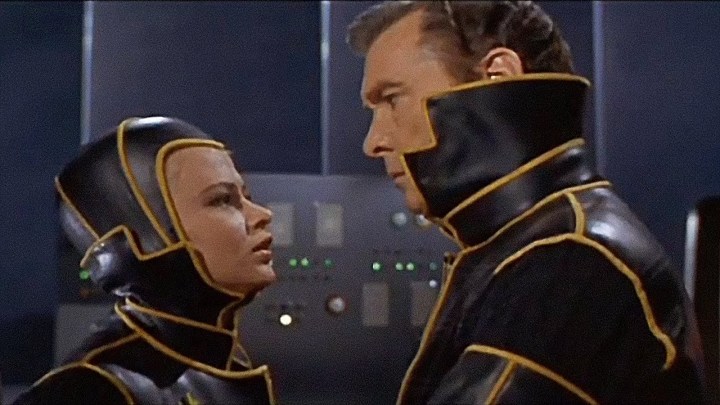
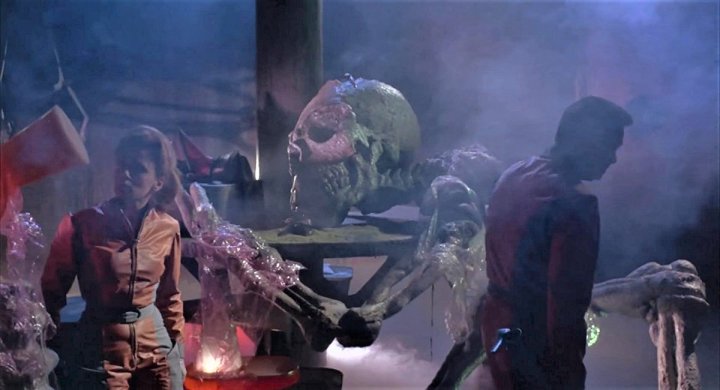
Argos, a spaceship filled with beautiful people in fabulous leather outfits, approaches an unexplored planet together with its sister ship Galliott. Both ships are sucked into the planet’s atmosphere and go in for a rough landing, and then the crew members try to kill each other once they wake up from the crash.
“I’m sure glad someone designed these high necked and traditionally vampire proof outfits for our space journey. Their reliance on perfect peripheral vision is exactly what has gone wrong with earlier expeditions.”
A knock on the head is enough to bring them back to themselves, and the Argonauts go out onto the new planet to see if they can find and rescue the crew of the Galliott. However, strange things start to happen – voices are heard, dead and living bodies both disappear, and massive skeletons are discovered. What is going on?
“I wonder how these giants died…” “Isn’t it obvious? No high necked, sexy leather outfits anywhere! It was only a matter of time before they perished.”
Bava always hits the spot for us, although we have never seen this particular movie before. The costumes are amazing, the concept is great (and clearly an influence on later works in the genre), the sets are awesome and there are some very cool shots and visual effects.
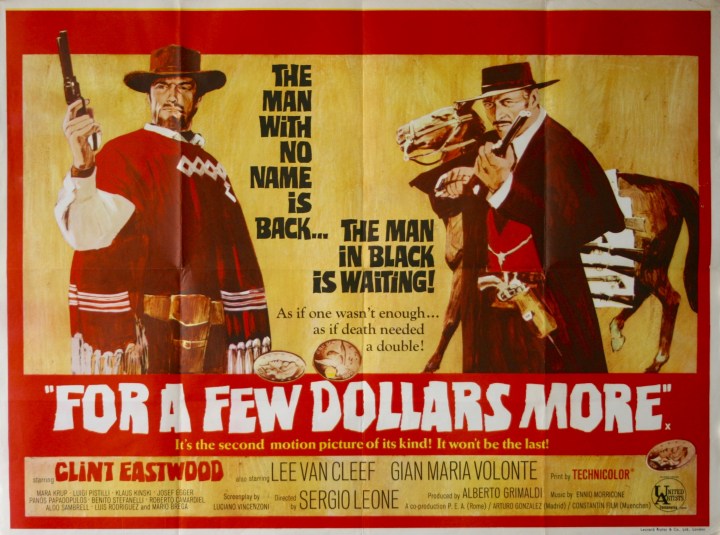
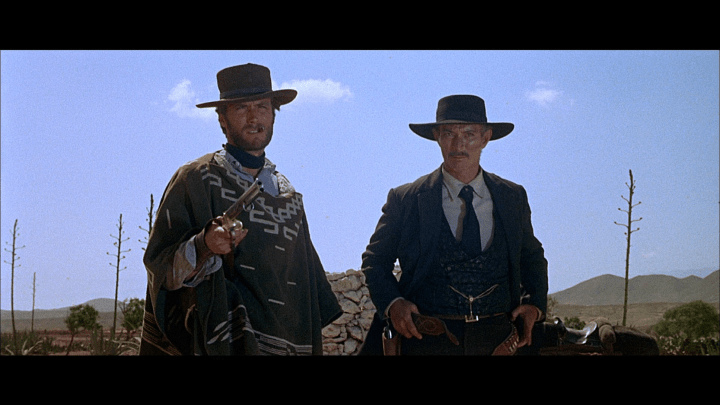
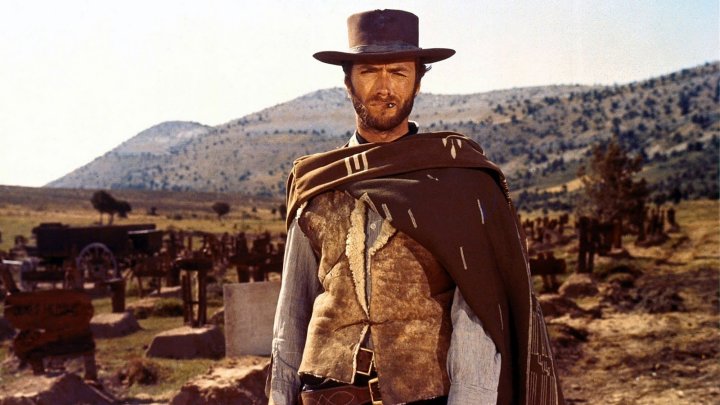
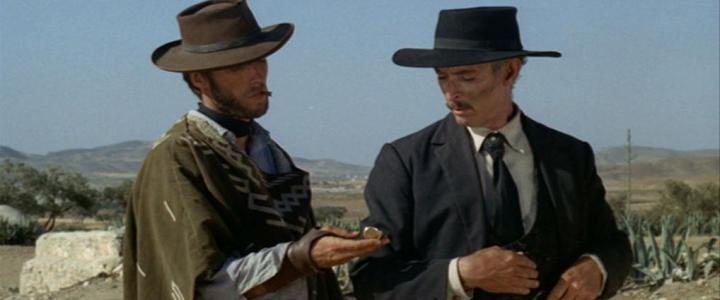
The Man with No Name (Eastwood), a.k.a. Manco or Monco (so… The Man with Potentially Several Names then..?) is now a professional bounty killer, roaming the wild west looking for bad guys to kill. For money, obviously. He’s not a complete psycho. He is not alone in this noble pursuit though – The Man in Black (van Cleef), a.k.a. Colonel Douglas Mortimer is a formidable rival.
“Let’s make a deal. Whoever kills the most bad guys gets to wear the poncho for a day!”
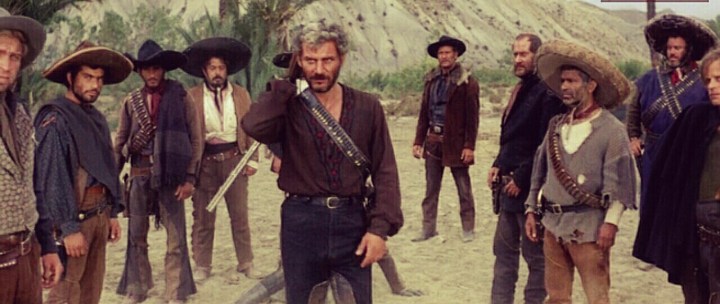
Notorious criminal El Indio (Volontè) escapes from jail and reunites with his followers whom he preaches to about carpenters from a pulpit… Seems like an oddly familiar pastime. Manco/Monco/TMWPSN and Mortimer alpha off and then join forces to stop El Indio’s evil bank robbing plans.
“My name is El Indio, and these are my ten discipl… eh, gang members.”
The Man with No Name goes undercover in the gang, and then gets into hot water – quite literally as they ride to Agua Caliente, the unfriendliest town in the west. But who will outwit whom? What is the significance of El Indio’s pocketwatch and his flashbacks? And who will eventually Über-Alpha the other Alphas and become the one Alpha to rule them all?
The sequel to A Fistful of Dollars, later followed by The Good, the Bad and the Ugly (1966), For a Few Dollars More has everything you could possibly want in a western. Strong, silent men, lots of pregnant pauses and tense silences, a fantastic soundtrack by Ennio Morricone, saloons with easily distracted piano players (is there a union rule that they all have to stop every time a new person enters the room?), hat shooting duels, and lots of violence and horses. What’s not to love?
Even The Man with No Name has upgraded from his mule to a proper horse. Well done, you!
We loved Mortimer’s arrival in Tucumcari, Indio’s flashbacks and backstory, the soundtrack, all of Clint Eastwood, the twists and turns, and the tension. Can’t wait for the next one!
“So, we’ll meet up again in 8765 hours for the sequel?” “Sure. Can I play a different character though?” “Well, we can certainly change our names for it if that helps.” “Dammit, I’m in!”
What we learned: Keep your friends close and your frenemies closer. And would it kill you to call your frenemies once in a while..? They might be getting lonely you know.
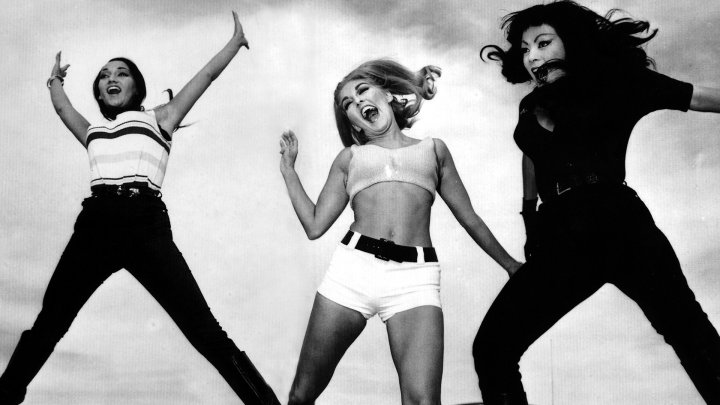
Go-go dancers Varla (Satana), Billie (Williams) and Rosie (Haji) like it fast. Fast cars, fast men, fast living. While joyriding out in the desert, they run into young couple Tommy (Barlow) and Linda (Bernard). Varla challenges Tommy to a race, and afterwards kills him in a fight.
“Unfortunately for you, I am both a sore loser AND a sore winner! You never stood a chance.”
After the murder of Tommy, the girls drug Linda and bring her along on their road trip. A chance encounter with and old man (Lancaster) and his son “The Vegetable” (Busch) at a gas station lead them to their farm where the three women plan to rob them and the other son Kirk (Trinka).
“A deltoid and a bicep, a hot groin and a tricep, makes me – Ooh! – shake!”
The crippled old man is rumoured to have a hoard of money. Unfortunately, he also has misogynistic and murderous inclinations which he has passed on to his son. With feigned friendliness, Varla and the old man start a power struggle over lunch, both plotting each other’s demise.
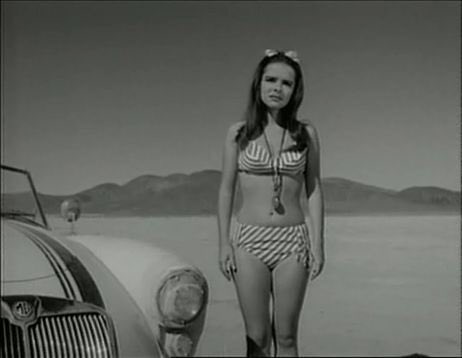
This movie is glorious, campy fun. We absolutely loved the diversity and blurred gender roles – the women are as badass and as bad as the men! The plot is filled with twists and turns, the dialogue is amazing and the music is fantastic. Also, Linda’s bikini is totes adorbs.
In fact, we loved every boobyliscious and swinging go-go outfit the women wore. And we could watch angry, violent women fighting misogynistic, violent men all day every day. We’re simple that way.
Slowly but surely we have reached another 50 film milestone! Huzzah! True to tradition, here’s a recap of those we enjoyed the most. Turns out the 1960s were a good decade for films, so there are quite a lot. Happy reading!
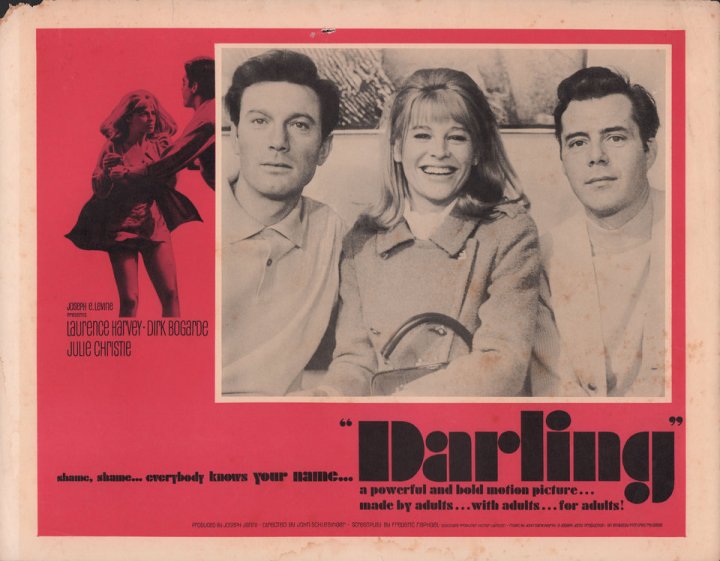
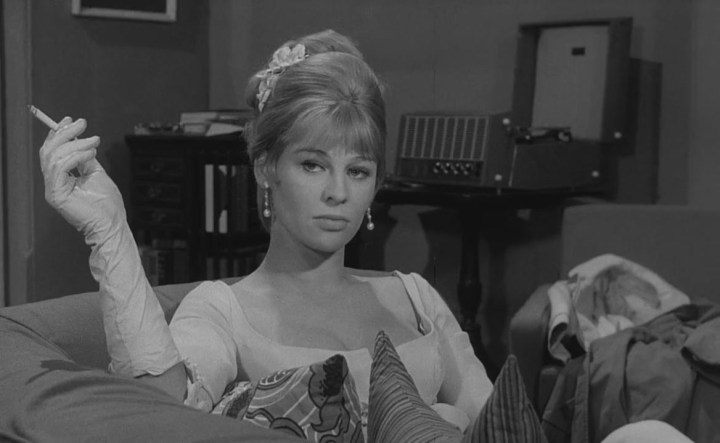
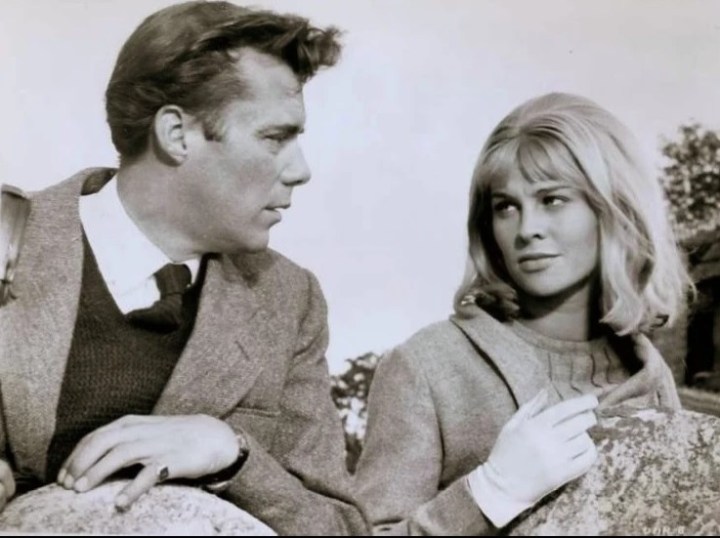
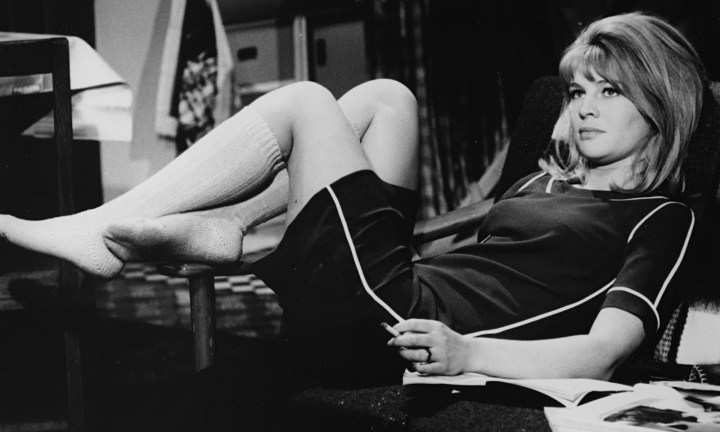
Diana Scott (Christie) is being interviewed for “Ideal Woman,” telling the story of her life. And what a life! From a “normal” life and a normal marriage, she becomes friends, and later lovers, with reporter Robert Gold (Bogarde). The two of them move through in the London art scene in the swinging sixties, partying and being adored.
“My career goals? Model, actress or princess. Yes, I’m a grown woman. Why do you ask..?”
They both leave their spouses for each other and move in together. However, Diana becomes very jealous when Robert goes back to his ex to see his kids. In fact, she decides to have her own child, but changes her mind when it becomes a reality.
“You know what they say – bringing a baby into a troubled relationship always saves the day.”
Diana, bored with Robert who likes to stay home and write, continues to seduce and be seduced to further her own modelling and acting career. She moves up in the world one man at a time while not playing very well with other women at all, all of whom she sees as threats. But what does she really want from life?
“Oh, I’m just like any modern woman trying to have it all. Loving husband, a family. It’s just, I wish I had more time to seek out the dark forces and join their hellish crusade.”
Darling is fascinating and engaging, and the contrast between Diana’s words and actions is very interesting to watch. The stories we tell ourselves and others are clearly just a version of the truth.
We loved the clothes, the decadence and hypocrisy, the out and proud gay people, and all the fake books hiding vices throughout the movie. Julie Christie and Dirk Bogarde are wonderful as Diana and Robert, with both good and bad qualities.
“Just think of all the ways we could eventually hurt and devastate each other!”
Thematically, there are parallels to Bitter Harvest, but Diana is treated much better than Jennie. Jennie is pretty much a victim, while Diana is the author of her own destiny – for better or worse.
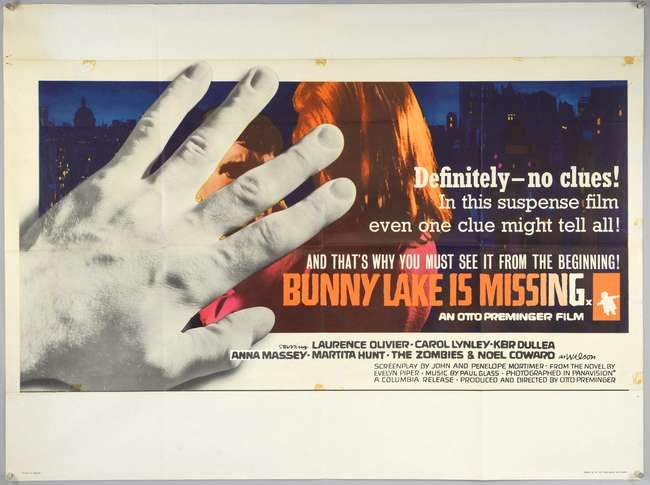
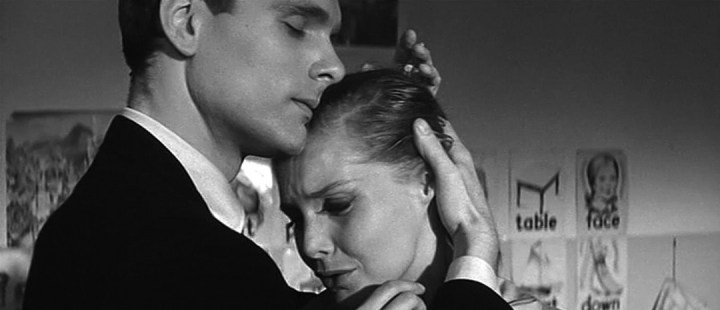
When Ann Lake (Lynley) comes to pick up 4 year old Bunny from preschool, the child is nowhere to be found. Not only that – she has not been seen by anyone the entire day.
“Hi! It’s my daughter’s first day of school in a new country! I couldn’t find anyone, so I left her to her own devices in an empty room. I’m sure someone will come find her eventually. If not, maybe you can check in on her at some point during the day, random stranger. Gotta dash! Ladida, mother of the year!”
As she desperately starts searching for her girl, Ann finds that she has trouble convincing people that Bunny really exists. Apart from her brother Steven (Dullea), no one in England has ever seen the girl since they came over from the USA – not even the audience.
“Darling sister – are you sure you remembered to take her with you when you moved..?”
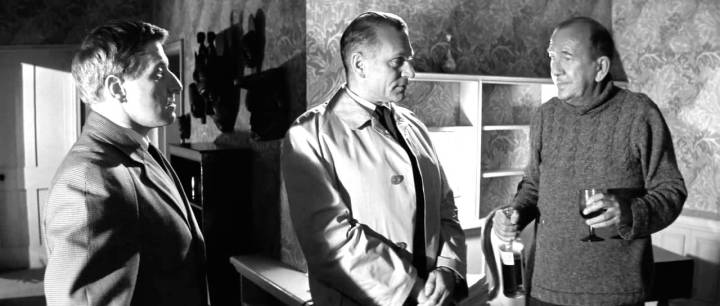
Even Bunny’s things have gone missing from their new house, and supercreepy landlord Horacio Wilson (Coward) cannot remember seeing them despite being very invasive while Ann was unpacking her toys and clothes. And now we are no longer sure there ever was a girl. But fear not! Superintendent Newhouse (Olivier) is on the case and determined to get to the bottom of the mystery!
“And when she said her daughter was missing, what did you do then?” “Well, I tried to dick her, of course!” “Ah yes, naturally. “
We loved this SO much! The characters are amazing and the mystery is very well done. Carol Lynley is wonderful as the increasingly frustrated and desperate Ann (while looking very much like a 1960s Keri Russell. Or the other way around, we suppose). Noël Coward is Creepy McCreeperson, Keir Dullea is slightly sinister, and Laurence Olivier’s Newhouse is likable from his very first appearance.
Trying to figure out who to believe and what is really going on was fun and kept us guessing (although our suspicions were eventually confirmed. Yay us!) Despite her slow start, Ann turned out to have agency and cunning – she was not just a damsel in distress!
Even surrounded by eerie dolls, she puts to shame all those men who question her sanity. Take that, woman-not-being-believed-by-authorities-when-she-worries-about-her-child-trope!
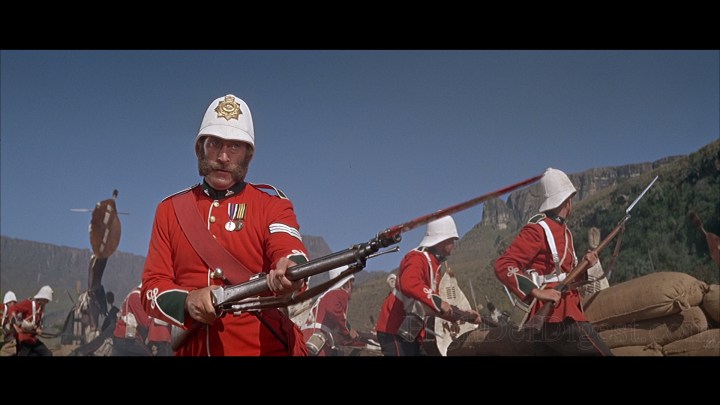
The year is 1879. In South Africa, imperialism rules, but Zulus have attacked a white settlement and won, which inspires another tribe to do the same to a nearby mission/military hospital.
At the mission, Lieutenants Chard (Baker) and Bromhead (Caine) must learn to work together and cooperate if they are to defend themselves from the 4000 advancing Zulus with their own measly 150 soldiers, many wounded.
“You think you’re so cool, riding in here with your title and rank and stupid sexy hair…”
Zulu is a famous epic depicting real events with surprisingly little racism considering the subject matter and the time. Sure, we do not really see the Zulus’ side of the story, and they are a nameless, faceless, personalityless mass for most of the movie. However, they are also intelligent, strategic, cultured and honorable, which makes the film a lot less dated than we’d expect.
Basically, they are people. And treated as people. Which should be a given but sadly is not.
The cinematography is gorgeous, the characters are great (Bromhead is a very shady queen!), and the suspense is real. Also, fun fact, the Zulu king Cetshwayo kaMpande is played by his real life grandson Mangosuthu Buthelezi.
However, no fun fact can compare to the glorious moustache of Colour-Sergeant Nigel Green
We loved the arrival of the Zulu, the British adherence to protocol even in a crisis (proper tunic etiquette is to be observed at all times!), the action, and the game we made up wherein we recast the movie using only Monty Python members (they all correspond perfectly with a character in the film!). And did we mention it is gorgeous? Well worth a watch!
“We’re knights if the round table, we dance whene’er we’re able. We do routines and chorus scenes with footwork impeccable…”
Elizabeth Lipp (Mercouri) has an obsession. Emeralds. And no emeralds are greater than the ones adorning the dagger of Sultan Mahmud I, currently on display at the Topkapi Palace in Istanbul. But how will she get her hands on it?
“No locks or security measures are a match for my intense stare.”
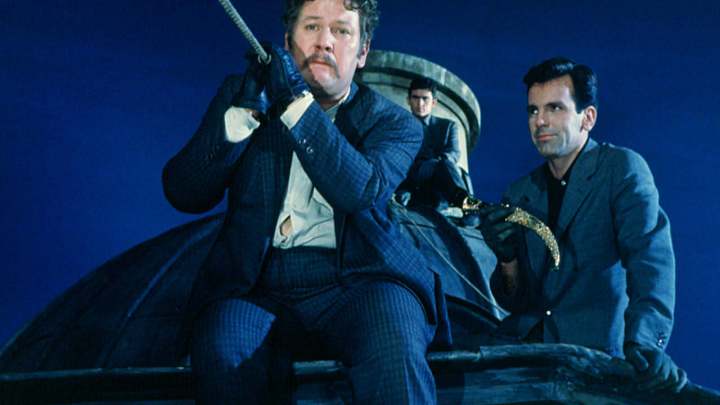
To execute a heist, she recruits ex-boyfriend Walter Harper (Schell) who in turn enlists a motley crew of amateurs. There’s mechanical magician and toy maker Cedric Page (Morley), mute acrobat Giulio (Ségal), and muscle man Hans (Hahn). Together, they will switch out the dagger with a replica and get away before anyone knows a robbery has even taken place. Or so they plan.
Before any heist can be done, one needs to find one’s James Bond-looking ex to sort out the details.
In order to get the weapons they need over the border from Greece, they pay small-time con man and designated “schmo” Arthur Simpson (Ustinov) to take a car across the border. However, when customs find the guns, the hapless Arthur is engaged as a spy for the Turkish government who fear an assassination is about to take place.
Few things scream “International Man of Mystery” like this guy
Arthur successfully infiltrates the group and becomes an integral part of their plan. But will they succeed? Will Arthur betray them? Will their cook Gerven (Tamiroff) ever shake his alcoholism? These are the questions which will haunt you. Until you watch the excellent Topkapi, that is.
This one had us hooked from the beginning. We loved the colourful, strange and magical opening and Elizabeth’s monologue to the camera. The kaleidoscopic filter added to the surreal feeling, and we were in for the ride!
The heist was very exciting, and we also loved the colours, the humour, the suspense, Gerven the drunken cook, the sunglasses-wearing Turkish agent-dude, and the homoerotic oily wrestling. Not to mention 1000-films favourite Peter Ustinov. The man won Oscars and a knighthood, and has even been quoted on Criminal Minds! Which is among the greatest honours a person can receive.
The only drawback was actually the person who promised to be the most intriguing – miss Elizabeth Lipp herself. Sure, the idea for the robbery was hers, and she opened the movie very strongly, but after recruiting her ex to plan the heist, she basically did nothing. Walter was the one to come up with the plan and get the others involved. Her role after the start was just to make out with all the men in turn and seduce a poor lighthouse keeper. And she had so much potential. Although she did redeem herself a bit in the end. All in all, another great heist movie from Jules Dassin.
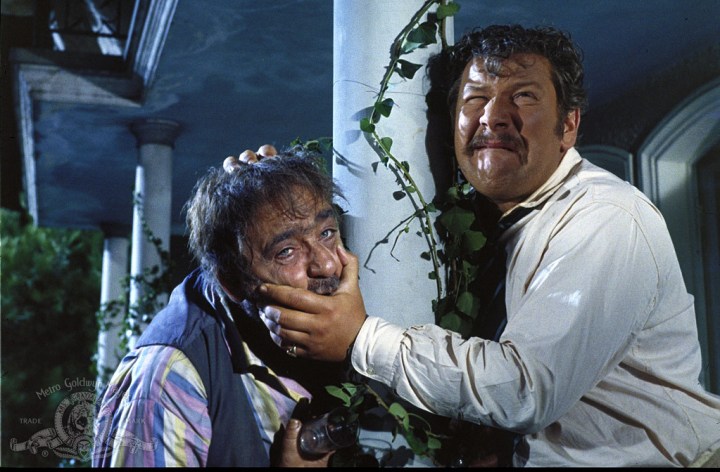
This scene alone is worth the investment of two hours of your life

















 1000 Films Blog