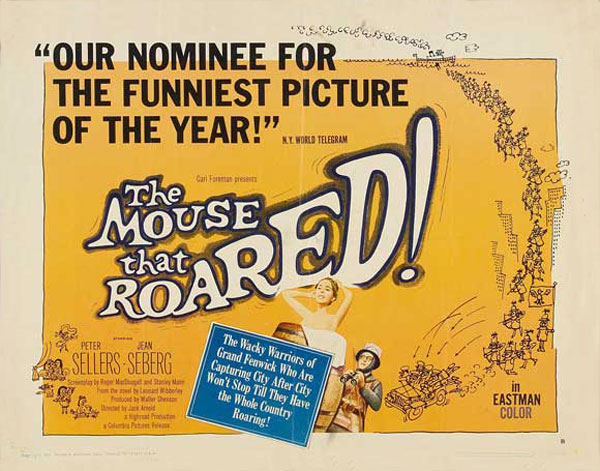
The tiny Duchy of Grand Fenwick is in a financial crisis after their sole export, Pinot Grand Fenwick wine, is priced out of the market by a cheap American imitation. Their solution: declare war on the United States, lose, and collect aid from their former “enemy.”
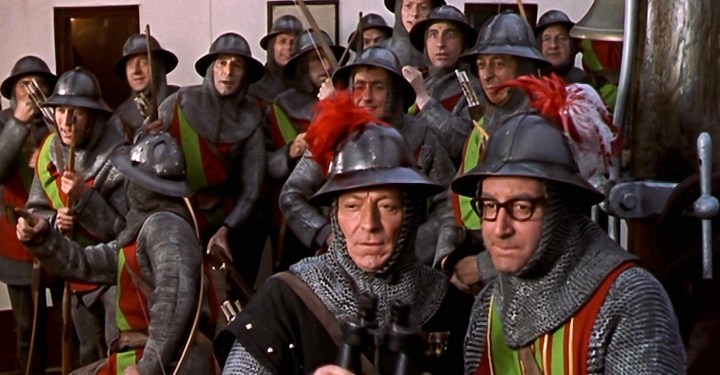
And with a well-equipped and modern army such as this, how could an invasion go wrong?
Unfortunately, through a series of unlikely events they end up winning, and Prime Minister Count Mountjoy (Sellers), Grand Duchess Gloriana (Sellers), and Field Marshall Tully Bascomb (Sellers) must find a way out of their newfound power and notoriety.
“Good lord! Only a true megalomaniac would want to rule to world! Or the USA…”
The Mouse that Roared is no longer on the list, but we post this in our we-already-bought-the-fucking-DVD-so-we’re-watching-it-dammit category. It’s a very silly and very enjoyable comedy with an excellent Peter Sellers. We loved all the characters, especially the Duchess; the narration, the fox, the army uniforms, and the peace treaty. While no longer deemed good enough to occupy a precious space on the list, it’s still very much worth watching. Such fun!
For those interested, this is how we usually dress up for a movie night. Furs, flags and all!
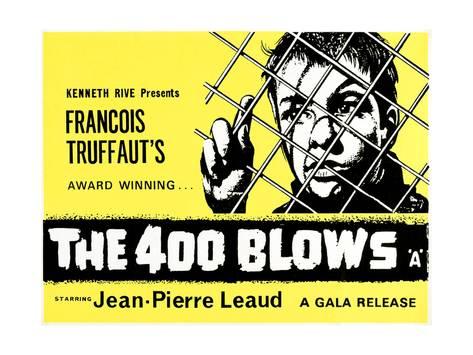
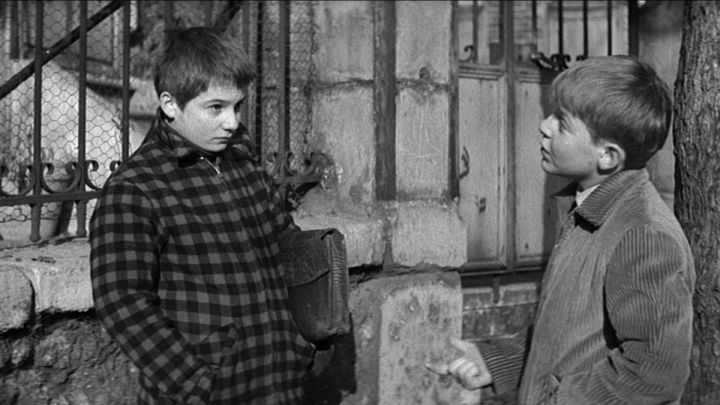
Antoine Doinel (Léaud) is a pretty average kid. He lives with his self-centred mother (Maurier) and nice enough, but very strict, stepfather (Rémy) in a small apartment in Paris. He doesn’t do too well in school and occasionally gets in trouble, although his best friend René (Auffay) seems to be the instigator at least some of the time.
“I’m thinking we should hire some hookers and then kill some puppies?” “Yeah, I was thinking more like skip school and go to the fair..?”
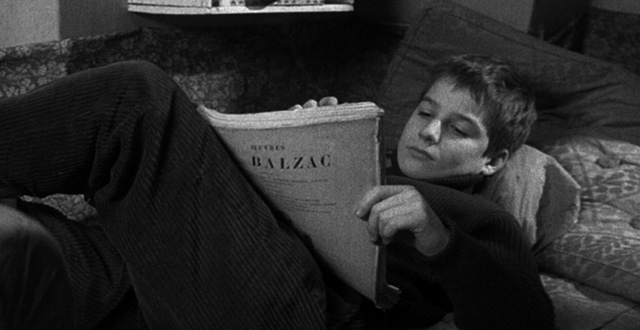
After he’s caught skipping school and lying about his mother’s death to cover for it, Antoine runs away from home. It only lasts for a day or so though, but when his teacher later accuses him of plagiarising Balzac, Antoine runs away again. This time for a while, and with more serious consequences.
Antoine is misunderstood and/or ignored throughout the film. None of the adults in his life take the time to listen to him, and his actions are very often misinterpreted and harshly punished, such as his homage to Balzac and his return of the stolen typewriter (which, granted, he did steal earlier).
Considering the irony of being caught returning stolen goods…
We loved The 400 Blows. While it’s a fairly tragic tale of a talented but misunderstood young boy who gets into all sorts of (quite serious) trouble, it’s not all bleak. We loved the P.E. sequence with the rapidly diminishing student body, the centrifugal carousel, the shrine to Balzac and the kids watching the puppet show.
Without spoiling it, the ending is also (possibly) optimistic, with Antoine standing at several thresholds and between two chapters of his life. There are four more films made about the same character played by the same (wonderful) actor, and we’re tempted to make a night of it and watch them all. In about ten years when we’re done with everything on the list…
In case you were wondering, we do bring this amount of energy and enthusiasm to every single film screening. Every. Single. One.
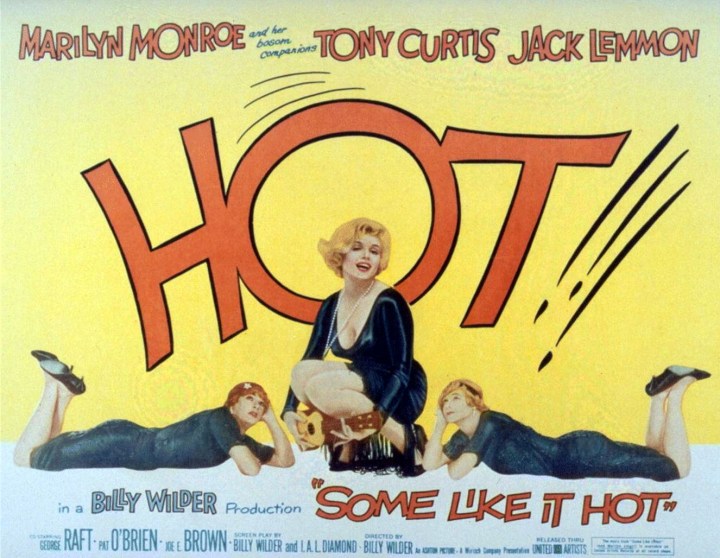
Joe and Jerry (Curtis and Lemmon, respectively), two musicians employed at a speakeasy in Chicago, witness a mob hit and must go on the run to avoid becoming the next targets. They look for out-of-town work, but the only one hiring is an all-girl band going on tour. What happens next should surprise absolutely no one who has ever seen a silly comedy.
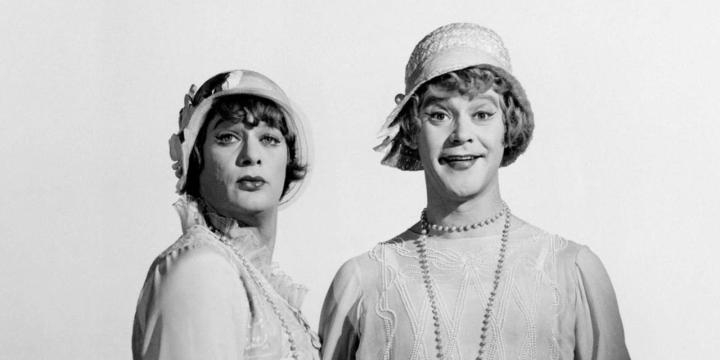
As with “all” best friends, there’s the pretty one and then there’s the funny one
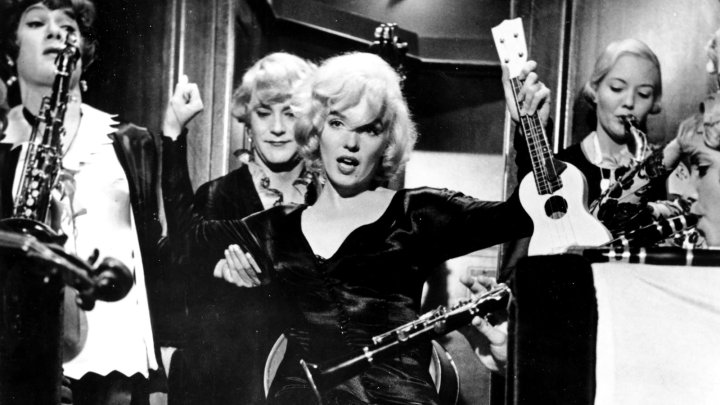
The pair take their new identities Josephine and Daphne (she never liked the name Geraldine) and join the band, where they meet charming ukulele player Sugar Kane (Monroe). On the way to Miami, both fall for Sugar, but are unable to act upon it as they are supposed to pass for women.
To be fair, you didn’t have to be a man to be attracted to Marilyn Monroe in her prime
Once in Miami, Joe assumes a third (male) persona, that of heir “Shell Oil Junior,” in order to woo Sugar. Meanwhile, Jerry is pursued by creepy (but ultimately quite sweet) millionaire Osgood Fielding III (Brown), to whom “Daphne” later becomes engaged. Also, to add to the complications, the Chicago mobsters the musicians are hiding from have decided to do their yearly meeting at the same Miami hotel the band is staying at. Hilarities ensue.
Hilarities include, but are not limited to, a rather scandalous dress and an even more scandalous seduction technique
Despite the fairly simple set-up, this movie truly is hilarious. Given their actions, all the characters should be repellent, but thanks to utterly wonderful actors they come across as strangely likable, and you find yourself rooting for them all.
Amid all the sexism (it’s from the ’50s and set in the ’20s) and deceit, there is a sweetness and tolerance in this film which might be more relevant than ever. We loved Sugar’s outfits, Daphne’s tango date, Osgood (post initial assault), and the dialogue. Also, the ending is perfect, without any of the hurt feelings and apologies we find in all contemporary romantic comedies. Everyone just accepts what has happened and how others have tricked them and they move on with their lives and their loves. Perfect!
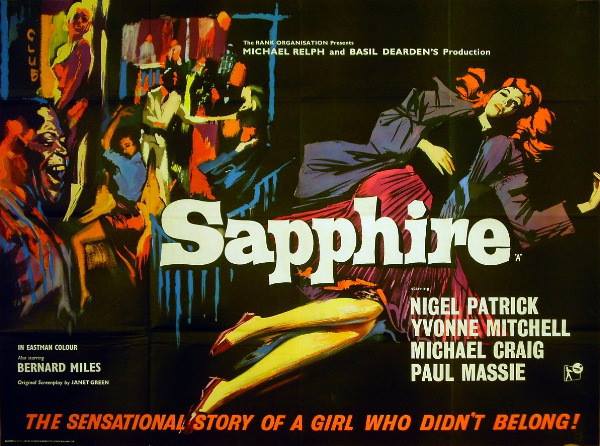
A young woman is found murdered in Hampstead Heath with nothing to identify her but a monogrammed handkerchief. Investigators Hazard (Patrick) and Learoyd (Craig) identify her as Sapphire Robbins and start trying to find the truth behind her death.
“Fill up on pipe tobacco! We shall get to the bottom of this!”
They track down her devastated boyfriend, David Harris (Massie), and her big brother Dr Robbins (Cameron), but surprises keep coming. First off, the autopsy reveals that Sapphire was pregnant at the time of her death, and the investigators are then baffled when her brother comes in as he is black and Sapphire appeared to be white.
“…and you’re absolutely sure none of you were adopted? And that you’re not using the word ‘brother’ in a wider sense..?”
These new revelations lead to an investigation which encounters racism and prejudice, both from the white and black communities and even from within as not all investigators manage to stay neutral. But was her ethnic background motivation for murder? And if so, who was enraged enough by her “transition” from black to white to murder the young girl?
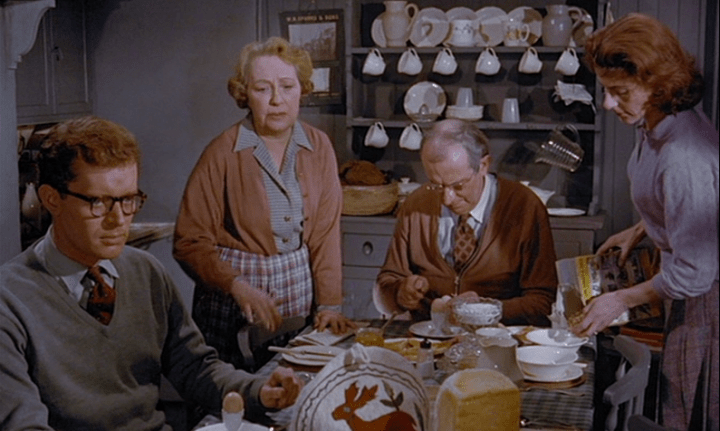
Look at this happy family she was about to marry into! There’s no way anyone in this blissful household would ever kill anyone.
We love a good murder mystery, and we love it even more when it deals with real political and social issues. Sapphire may be from 1959 and deal with racism and prejudice in the wake of the first waves of Commonwealth immigration in Britain, but there are parallels to be drawn to recent debates considering Brexit.
We’re sure there are lots of idiots out there who would love it if all non-whites had stayed in their own clubs like this one…
We were also reminded of Sarah Jane although her and Sapphire’s stories are different and so are their societies. A great mystery movie with real social and political commentary, we can definitely recommend this.
What we learned: School teachers are very respectable and a bit above the rest. Thank you! Also, racism sucks and we need to stop this shit already!
A brawl (of the murderous kind) in a saloon leads to the arrest of Joe Burdette (Akins), criminal brother of a local hot shot rancher. As many forces are looking to get Joe out, sheriff John T. Chance (Wayne) enlists the help of former deputy Dude (Martin) to keep him safely locked away, despite Dude’s alcohol problem and the fact that he was one of the reasons for the brawl in the first place.
Together with comic relief Stumpy (Brennan) they must defend the jail, the sheriff’s office and the town, something which proves difficult when Joe’s henchmen and Big Brother Nathan (Russell) get involved. Reinforcements (reluctantly) arrive in the form of young gunslinger Colorado Ryan (Nelson) and, in another way, poker player Feathers (Dickinson).
“Age gap? 24 years is no age gap! My last boyfirend was 78.”
How will this ragtag team of alcoholics, kids, oldies, cripples and (gasp!) women manage to survive until the Marshall comes to pick up the condemned prisoner? Why, with song and explosions, of course!
Rio Bravo has everything you could ever hope for in a western – rugged men; feisty women; fancy, semi-colour-coded hats; shootouts; explosions; horses; clearly defined bad guys and romance.
One man learns that there exists a different kind of romance than that between a man and his horse
We loved the silent scene at the start, the tension throughout, the character names (Chance, Stumpy, Dude and Feathers – are we sure this isn’t a cartoon?) and Angie Dickinson. Clocking in at well over two hours, this movie just flies by and was great family entertainment when we sat down to watch it with our parents and brother on May 17 – the Norwegian national day. After a day of wholesome fun with nephew and niece, what’s better than watching a bunch of manly, yet sensitive, men kill each other?
“Hear that, boys? The crowd is ready for an encore!”
What we learned: Wild West men were surprisingly sensitive and in touch with their feelings. Also, some will go to great lengths to ensure justice is served.
We would (once again – this is becoming a habit) like to apologize for the recent lack of posts. It is exam time, and while we no longer have to go through the hell that is taking exams, we are (un)fortunate enough to be greatly affected by other people’s misery as we both work with students in different capacities. Thus, we may not be able to write anything new until next week as we have to put a lot of time and effort into each blog post (as we’re sure is apparent to all readers). However, next week the exam period is over and we will run out of excuses to postpone posting any longer.
We’re looking forward to entertaining you again next week, and we love you all. Hopefully, you’ll be able to cope without us for a few more days. If not, hit us up on Twitter. Anything to help us procrastinate…
Ex-cop Dave Burke (Begley) hires two men to carry out a robbery. Both Earle Slater (Ryan) and Johnny Ingram (Belafonte) are debt-ridden, and they are promised the neat sum of $50 000 each for the job.
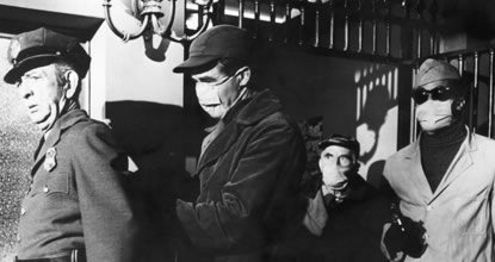
$50 000 may not seem much to risk your life for nowadays, but in 1959 it would buy you protection from several M*A*S*H cast members, which was a real threat at the time
Slater is a big, stinking racist, and is not happy working with Ingram who is black. Ingram himself is trying to stay on the straight and narrow, but has a gambling problem and owes a baddie $7500. Burke, the sly mo-fo, pulls strings to pressure the men and make sure he gets the crew he wants. Soon the three are preparing to rob a small bank.
The monetary loss was nothing compared to the humiliation of being held at gunpoint by three dentists, one of whom was clearly blind
As with all (or at least most) daring capers, despite their prep work and good planning, things go awry. This time though, it’s not because of a Dame or unplanned events, but because of Slater’s racism.
“Why does the black guy get the cool hat? He also got the sunglasses! It’s not faaaair!”
Odds Against Tomorrow is a very good and suspenseful noir with intriguing characters and a fantastic soundtrack. Johnny, though by no means perfect, is infinitely more likable than little bitch Slater, who is passive aggressive with his girlfriend Lorry (Winters) and plain aggressive with everyone else. That being said, he too shows vulnerability and humanity at times, and he is disillusioned and angry after a hard life.
“Honey, even though I try really hard to bang the neighbour, you’re my everything!”
It’s a caper movie, but it focuses a lot on the characters and what drives them, rather than the heist itself, though that too is tense and exciting. The ending (which we won’t reveal completely) is heavily symbolic and reminiscent of (slight spoiler alert!) White Heat, and we absolutely loved it! A great, late film noir.
If intriguing characters, great music, a tense heist and social commentary don’t do it for you, there’s also the glorious Gloria Grahame in a bra. You creep.
Roger O. Thornhill (Grant) is a busy adman with a slightly exasperated secretary and a fabulous mother (Landis). During lunch, he is mistaken for a Mr Kaplan by a couple of thugs and whisked away on an adventure.
“We’re off to see the Wizard! The wonderful Wizard of Oz!”
Despite Thornhill’s insistence that they have the wrong guy, baddie Phillip Vandamm (Mason) is convinced his captive is lying. His suspicions are confirmed several times as Thornhill starts investigating and finds himself in the mysterious Kaplan’s hotel room, accepting his laundry and answering his phone. Idiot.
Things go from bad to worse when Thornhill becomes a prime suspect for murder and must go on the lam. He ends up sneaking on to the “Twentieth Century” where he meets the mysterious and gorgeous Eve Kendall (Saint). She helps him elude capture, but now our hero is hunted by both criminals and law enforcement. What a pickle!
North by Northwest is definitely among the funnier Hitchcock movies. The whole thing plays like a farce, and Cary Grant’s amazing face, sass and sarcasm keep the audience laughing throughout. We also loved his darling mother.
As with several Hitchcock films (and others), the opening credits by Saul Bass are fantastic, and the movie is suspenseful and exciting from beginning to end. Love this!
What we learned: If you’re the victim of mistaken identity, try not to pretend to be that person… Also, high heels and rock climbing is a bad match. There goes our weekend plans.
On a busy beach, aspiring actress/model Lora Meredith (Turner) is looking for her daughter. She finds the girl in the company of an African-American lady, Annie Johnson (Moore), who she hires as a live-in babysitter after learning she and her daughter are homeless.
Ah – the good old days when you could invite random people you met at the beach to come live in your home and it didn’t end in murder-robbery but lifelong friendship.
Lora goes to see a theatrical agent, Allen Loomis (Alda), who basically tells her that to succeed she must prostitute herself, something she’s not yet quite desperate enough to do. However, she gets a break when a playwright likes her honest critique of his play, and is soon catapulted to stardom, much to the chagrin of love interest Steve Archer (Gavin) who’d rather have her be a stay-at-home mom and his wife.
“Why would you possibly desire to have your own career and make your own money when you can just shack up with me? I forbid it!”
Lora and Annie stay friends for the next 10+ years, as the former finds success and the latter eventually gets paid for being her maid. Their daughters grow up, but while Lora’s daughter Susie (Dee) is a well-adjusted blonde with a private school education, Annie’s daughter Sarah Jane (Kohner) is light enough to pass for white and develops some serious identity issues.
“This is America! There’s no way anyone will treat you differently just because they find out that you are black!”
As is tradition, we loved this Sirk film more than we thought we would. Sarah Jane, though an atrocious dancer and slightly annoying, is a tragically intriguing character, Annie is just the best, Susie is pluckily charming, and Lora is self-centred yet understandably ambitious. And there are also some men there, more often than not screwing up the women’s lives.
There are also gorgeous costumes and sunglasses to die for
Lora and Annie’s friendship seems to be fairly mutual even though Annie works for Lora, but we learn that Lora knows absolutely nothing about her friend’s life outside of the house, which is very telling.
“Friends? What friends? But you cease to exist when I leave the house, don’t you?”
Imitation of Life is about friendship and family and heritage and sexism and racism and authority. And probably lots of other things as well. We loved it, and we’re now off to plan our funerals. Those things are not to be left to chance.
What we learned: If you love someone, apparently it gives you the right to decide for them. And control them. And be petulant if they make their own decisions. Also, racism sucks!
In those days Caesar Augustus declared that everyone throughout the empire should be enrolled in the tax lists. This first enrollment occurred when Quirinius governed Syria. Everyone went to their own cities to be enrolled. Since Joseph belonged to David’s house and family line, he went up from the city of Nazareth in Galilee to David’s city, called Bethlehem, in Judea.
“Uh, yeah, I’m here to register..? Yeah, with my wife. She’s about to give birth. No, no, I’m totally the father. Joseph. J-O-S-E-P-H. Know any good hotels hereabouts..?”
We all know that story. However, this is not that story, but set in the same time. In 26 A.D. (probably not called that at the time, to be fair) Judah Ben-Hur (Heston) was a Judean prince and childhood friend of newly returned Roman tribune Messala (Boyd). Despite the intense homoeroticism of their interactions, the two have a falling out over political issues (one wants the other to sell out his people. That sort of thing).
After an accident involving a Roman procession and rooftop tiles, Messala finally has an excuse to arrest the Ben-Hur family and send Judah away to the galleys. His mother Miriam (Scott) and sister Tirzah (O’Donnell) are thrown in a dungeon, the family home is raided, and Judah is sent off.
“I just thought I’d take a gap year. You know, to travel, sunbathe, grow my beard and learn about new cultures.”
Strange destiny eventually brings the eponymous hero back to his hometown, now as an adopted Roman with a new fortune, new status in the Roman Empire, and excellent horse racing skills. His hatred for Messala has not diminished though, despite an encounter with Jesus, and he is also out for revenge and for the salvation of his family…
We all know the best way to really humiliate someone is to beat them at their own game. And also kill them.
Sometimes it’s hard to get in the right mood to watch an almost 4 hour epic from the ’50s, and we must admit we didn’t rush to pick this one up despite all we’ve heard of it. However, we’re glad we did as it lives up to its reputation (despite Heston’s occasional overacting). We loved the Roman perspective on Jesus, the (possibly unintended) homoeroticism between Judah and Messala, the sheikh, the general epicness of the feature, and the fact that we never actually see or hear Jesus.
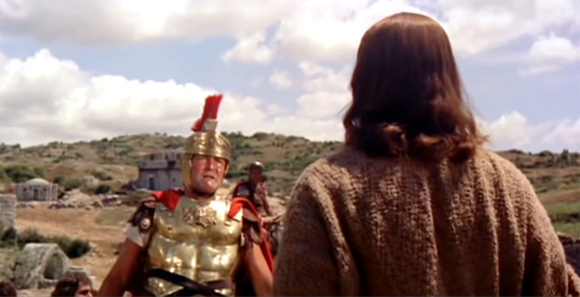
All we learn is that he has fabulous hair and can hypnotise Roman soldiers.
We also loved the Roman uniforms, but mainly because they reminded us so much of Asterix that we spent the entire film quoting Asterix chez les Bretons (1986) and had to pull some strings to get our hands on the Norwegian dubbed version (AKA the only version worth watching) of our childhood favourite. So thank you, Kristian!
“Er’re XVI her óg? Da har vi gått feil igjen, da.” – Classic!
It’s easy to think Ben-Hur is a movie about horse racing (it’s by far the most famous scene), but it is really an epic saga of revenge and redemption with Jesus hanging out in the background. And a badass chariot racing scene.
“Det skjærer meg i hjertet. Hører du, dekurion? Det skjærer meg i hjertet!” One for all Norwegian Asterix-fans. You’re welcome, people who don’t speak Norwegian and/or have no point of reference for this.















 1000 Films Blog
.jpg)