Washed up musical star Tony Hunter (Astaire) hasn’t made anything in 3 years but seems OK with it. He arrives in New York City, and although the journalists that greet him are actually there for Ava Gardner, his old friends Lily and Lester Marton (Fabray and Levant, respectively) show up to meet him with an idea for a new stage musical.
The Martons do everything with bells and whistles, including picking up an old friend from the train
The playwright couple have a plan to get the incredibly pretentious Jeffrey Cordova (Buchanan) to direct their play, and they are also hoping for ballerina Gabrielle Gerard (Charisse) to take on the female lead opposite Tony.
While the Mortons succeed in getting the people they want, Jeffrey decides to turn their fun musical comedy into a modern retelling of Faust, with himself playing the devil. In addition, the two stars don’t get along, both misinterpreting the other’s reverence for arrogance and acting accordingly.
Nothing like a shared smoke to fix a strained relationship
We’re suckers for good musicals and The Band Wagon delivers. Fred Astaire is impressive even in his fifties (which, for dancers, is like seventies) and the humour is on point. We loved Jeffrey’s version of Oedipus Rex, everything to do with Lily and Les, the gradual changes in the show, the murderous triplets and especially Dem Bones Café and the Noir in dance.
It’s hard to tell here, but these sweet, innocent darlings are actually plotting parricide
Funny and great musical numbers, glorious and colourful costumes, and fantastic performers – The Band Wagon is a wonderful musical adventure and we absolutely loved it.
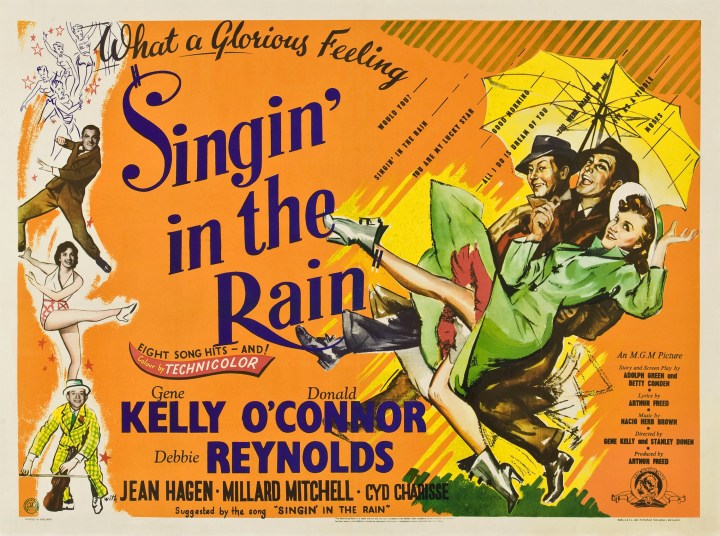
A musical classic which we, like probably most of you, have seen numerous times before, there’s nothing not to love about Singin’ in the Rain. In the late twenties, silent movie stars Don Lockwood and Lina Lamont (Kelly and Hagen, respectively) have to make the transition into talkies or fade into obscurity.
They have one problem though – Lina Lamont has the most grating, annoying voice in history, and an accent which in no way matches her glamourous image. The solution: get aspiring actress and Don’s love interest Kathy Selden (Reynolds) to dub all of Lina’s dialogue and singing, against the star’s wishes.
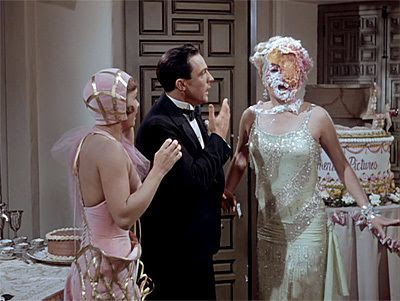
Unfortunately, the two women didn’t exactly get off to a good start
With the help of the studio heads and sidekick Cosmo Brown (O’Connor), Don and Kathy create a success with their musical version of the silent stinker Don and Lina were supposed to put out.
And they sing and dance their way through the process!
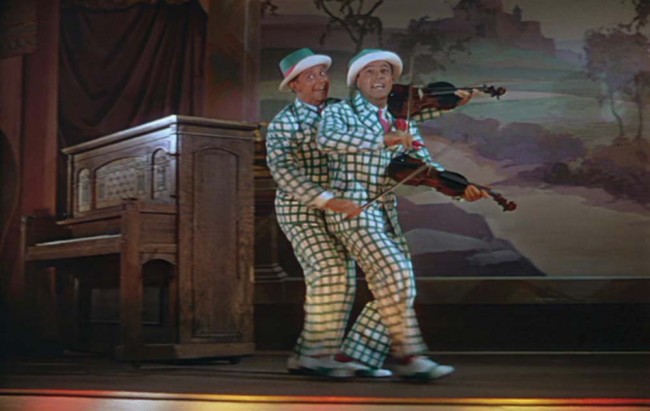
Gene Kelly is, as always, amazing, as are Reynolds and O’Connor. The romance between Don and Kathy is very sweet – after the initial bickering which all film romances must go through, they are actually adorable together. Meanwhile, Cosmo’s snarky one-liners, cheerful disposition and fantastic physical comedy and dance moves make him the ultimate sidekick.
We love the musical numbers, the many many films within the film, the discrepancy between the stories Don tells the media vs. the real version of events, the physical comedy and basically everything about this film. It’s just a magical experience which will make you happy no matter what, and if it doesn’t you might need to see a doctor because you have no heart and you’re probably dead inside.
This film is even better for curing the blues than pictures of puppies. Trust us – we’ve done a study
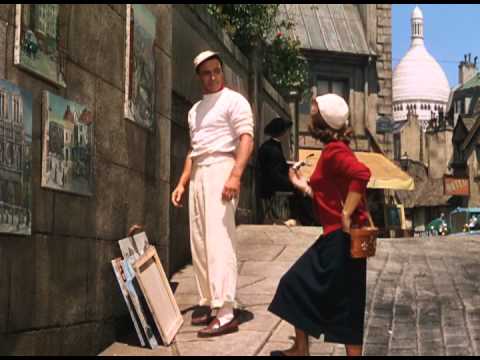
An American in Paris marks a return to the wonderful world of musicals, and it’s a great one at that. Jerry Mulligan (Kelly), an American ex-soldier and aspiring painter, has taken up residence in Paris after the war ended. While his accommodations are small, IKEA has nothing on this guy’s smart living solutions, and he spends his time sleeping, painting and trying to sell his work in the streets of the city.
His low sales numbers might be attributed to him berating and insulting potential customers
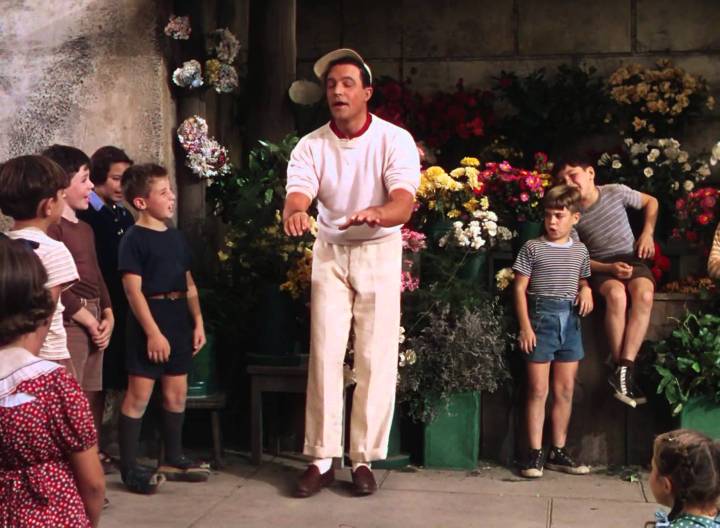
He also spends time with his pianist neighbour Adam Cook (Levant) and the latter’s associate, singer Henri Baurel (Guétary), and together the three dance with adorable old ladies and talk about their lack of success. In between all these fine activities, Jerry also makes time to teach local kids English through the medium of song and dance.
An elaborate dance routine really is the only way to teach kids these days
Mulligan finds himself a sugar mama in Milo Roberts (Foch) who promises to make him a household name, but falls in love with Lise Bouvier (Caron) who, unbeknownst to Jerry, is already engaged to marry Henri. Complications ensue, but so too do magnificent dance numbers.
Making the most out of the fact that it was filmed in colour
There are so many great scenes in this film, such as the introduction of Lise with the different sides to her shown through dance, the old lady Kelly dances with in the café, and of course the grand finale which we cannot even begin to describe. We have an affinity for musicals, especially ones with great dance numbers, and so this one was right up our alley.
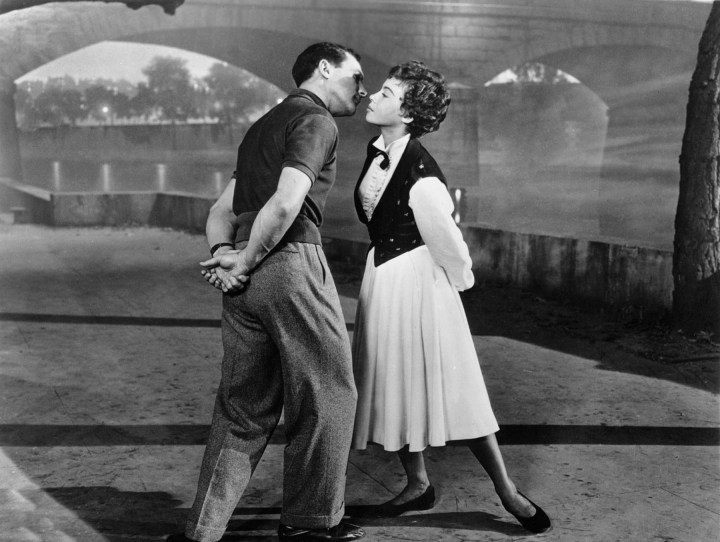
We also have a weakness for serial killer thrillers, so were ever so slightly disappointed when they both survived their first date by the river in the fog…
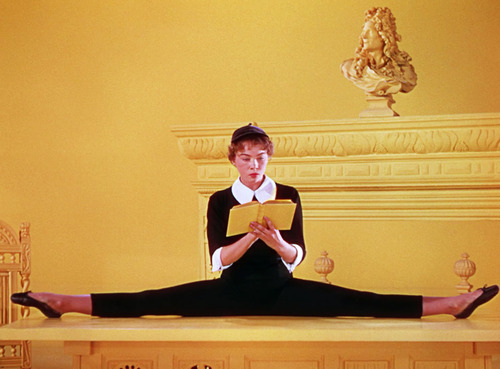
The story itself is fine, although it might just be an excuse to throw in some truly excellent dance scenes. That hardly matters though because the musical scenes are well worth the ticket price alone (in our case, borrowing a free DVD at the library – thank you social democracy!), and we’ve found new ways to enjoy another favourite pastime – reading books.
If you like dancing, music, Gene Kelly, Leslie Caron, romance, snarky pianists, fantastic costumes, clever solutions to small living spaces, or just interesting new ways of doing everyday activities, look no further than An American in Paris. It really does have it all.
Yes, fountain lovers – there’s even something in there for you
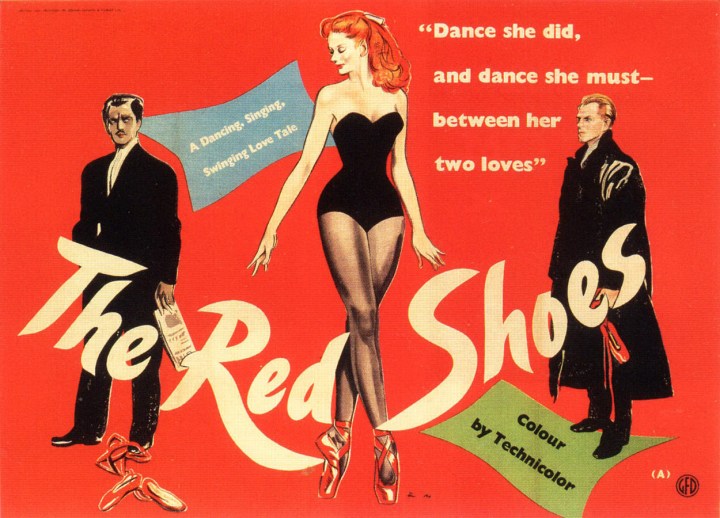
Victoria Page (Shearer) is a young, ambitious ballet dancer who, after a party, is invited by ballet impresario Boris Lermontov (Walbrook) to try out for his company. At the same time, young composer Julian Craster (Goring) gets a job with the same company coaching the orchestra. As Vicky rises to be the new prima ballerina (after the old one got married), Julian also rises through the ranks as a composer. The culmination of both their work is a new ballet, The Red Shoes, based on H. C. Andersen’s classic fairy tale. Julian composes while Vicky dances the lead.
While the others work, Lermontov does his very best impression of a creepy old man
The ballet is a great success, and its two rising stars fall in love, something Lermontov is none too happy about. He fires Julian, and Vicky, though torn, decides to go with her boyfriend. She marries him and he starts composing operas, also to great success. However, despite her meteoric rise to fame in Lermontov’s ballet, Vicky spends the following year out of work.
We strongly suspect Julian didn’t like other men’s hands this close to his wife’s hoo-ha..
Next season, Vicky goes back to Monte Carlo on holiday with her aristocratic aunt and runs into Lermontov again. He convinces her to dance The Red Shoes once more, but on the night of the performance, Julian comes and demands his wife choose between him and the ballet. Crazed (or possessed?) by this ultimatum, Vicky loses her mind and her control, just like the protagonist in Anderson’s fairy tale.
Ah – innocence ruined by the lure of passion. It’s like the fairy tale reflects the fate of the innocent ballerina…
It’s clear that Lermontov is supposed to be some sort of parallel to the shoe maker in the fairy tale, but honestly, he’s not the devil here. He encourages her ambition – an ambition that comes from her, not any outside force. Sure, his encouragement comes from mainly selfish reasons, and he may have some ulterior motive of his own, but at least he want her to follow her passion. Julian seems to think she should be content being the wife and muse of a talented composer, despite her own obvious talent which she is unable to develop once they leave the company. In our opinion, Julian is the bad guy here.
It doesn’t help our impression that he shows up for her performance wearing something very close to a Nazi outfit and goes straight for the boobs
This film is spectacular and definitely a new favourite of ours. It’s an intriguing story with great, often eccentric, characters (we particularly love the other members of the ballet company), gorgeous costumes and breathtaking dancing. The performance of The Red Shoes – a ballet within the film – is wonderful and somewhat reminiscent of the Berkeley musicals from the ’30s, beautifully incorporating cinematic effects with amazing dancing to tell the story.
We’re quite certain that the audience cannot be replaced by an ocean in a real live performance.
It seems to us that women’s ambition is a dangerous thing (in which case Lermontov is the devil), although we’re not sure for whom. Is it scary for the men who lose control over them, or for the (fragile) women who will crack under the pressure of trying to balance a traditional role (doting wife and house maker) with a professional career? Possibly both, but it seems like women tend to pay the price – especially in morality tales and fiction (let’s not even go into the sexual undertones of this film and, indeed, the fairy tale on which it’s based).
What we learned: A happy and full life should have room for love and ambition. To have to choose is unfair (especially when it’s one gender asking the other to choose while they themselves can have it all..). Also, things haven’t changed much for ballerinas in the last 7 decades, judging from the parallels between this film and Black Swan (2010).
We’re going back in time to catch up on a recent addition to the list, and what a great addition! Judy O’Brian (O’Hara) is an ambitious young club dancer with ballet dreams. However, when she goes to a meeting with Steve Adams (Bellamy) to audition for the American Ballet Company, she sees the professional dancers and is intimidated by their (very impressive) skills. Thus, she runs out before seeing Adams.
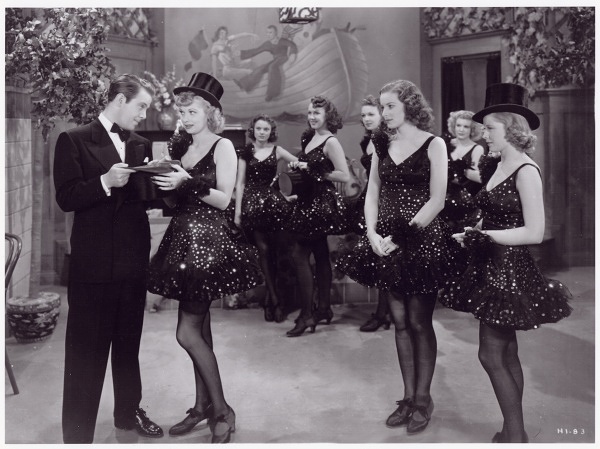
Adams leaves his office at the same time and tries out his smooth umbrella game on Judy, but is brutally rebuffed. She goes back to the apartment she shares with a fellow dancer and they are visited by Bubbles, aka Tiger Lily White, (Ball) – a former dancer in their troupe who has made a name for herself in Burlesque. She is looking for more girls and hires Judy as a stooge – she is to dance ballet during breaks in Bubbles’ set to rile up the men who have not paid to see art.
These people paid good money for a striptease and she doesn’t even have the decency to wear a short tutu!
As if Judy’s life isn’t complicated enough, she also starts dating Jimmy Harris (Hayward) – a rich drunkard who is still in love with his ex-wife. When Bubbles finds out she goes after Jimmy herself, and the humiliation of her job, Bubbles’ insensitivity and her crushed ballet dreams culminate to enrage the so far kind and sensitive Judy.
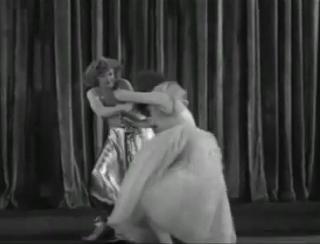
The audience finally gets their money’s worth when a cat fight ensues
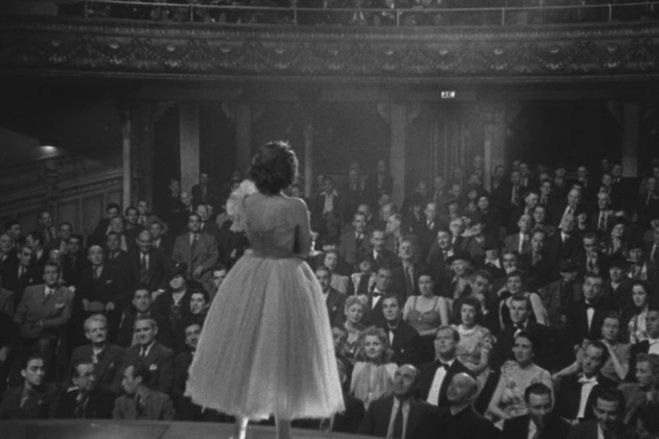
After an amazing speech to the leering audience, Judy gets into it with Bubbles who, after initially playing the outraged victim, reconciles with her fellow dancer and with herself. As for Judy, she has another encounter with Adams and things are definitely looking up.
Dance, Girl, Dance was a great addition to the list. It has strong female characters and great dance scenes – two things we absolutely love. The fact that this is the first film with a female director comes across as well (although there are of course male directors who can write and direct women – we’re not trying to be sexist here). The issues addressed in the film are interesting coming from a female perspective, and Dorothy Arzner handles the lives of dancing girls in the ’40s with a slightly different take than Busby Berkeley. Great dance movie – great movie!
What we learned: is it worth sacrificing one’s dignity for fame and money? Also, a double feature night of Dance, Girl, Dance and Split (2016) leads to strange dreams of James McAvoy as a ballet dancer…
P.S. Confused about numbering? Check out this handy disclaimer!
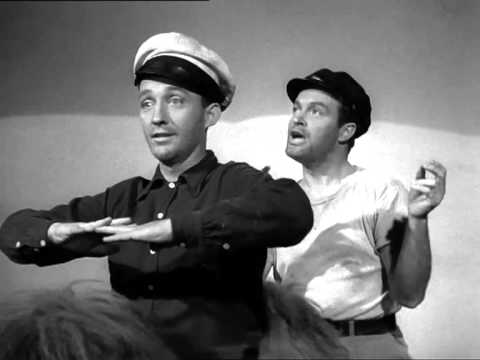
After their ship blows up, two stowaways find themselves on a raft discussing who will eat who first. Luckily, before it comes down to that, they find land and a very friendly camel to take them to Morocco. Yay camels!
You haven’t lived until you’ve sung a song on the back of a camel. Fact!
They arrive in a very Arabian Nights-inspired Morocco, complete with princess in distress and violent locals, where they get up to all sorts of zany antics including, but not limited to, selling each other into slavery. Ah – men, am I right?
At least, this particular form of slavery consisted of courting a beautiful princess. As far as human trafficking is concerned, it could be a lot worse.
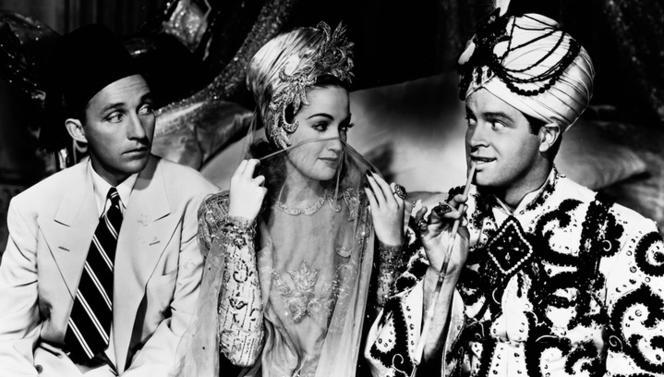
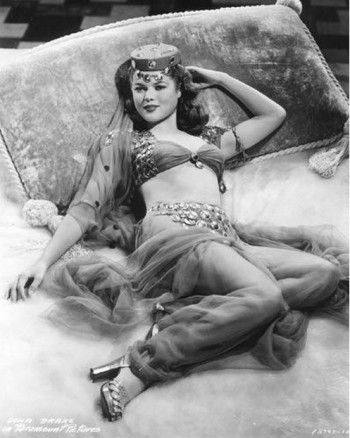
Once Jeffrey (Crosby) finds out the exact nature of the work he sold Orville’s (Hope) into, he inserts himself into the lives of the newly engaged couple to try to win princess Shalmar (Lamour) for himself. And he succeeds. Which is just as well, as Orville seems more interested in her handmaiden Mihirmah (Drake) anyway.
Now, this is when things get really complicated for the two old friends. It turns out the princess is only interested in marrying Orville because a prophecy has foretold that her first husband will die after only a week of marriage, and she is really engaged to a local sheikh, Kasim (Quinn). However, the sheikh cannot compete with the natural charm and musical talents of Bing Crosby, and the princess decides to go with the penniless American instead. The sheikh does not take kindly…
He kidnaps the princess and her entourage, and leaves Jeff and Orville to die in the desert. It’s up to them to rescue their loves and save the day!
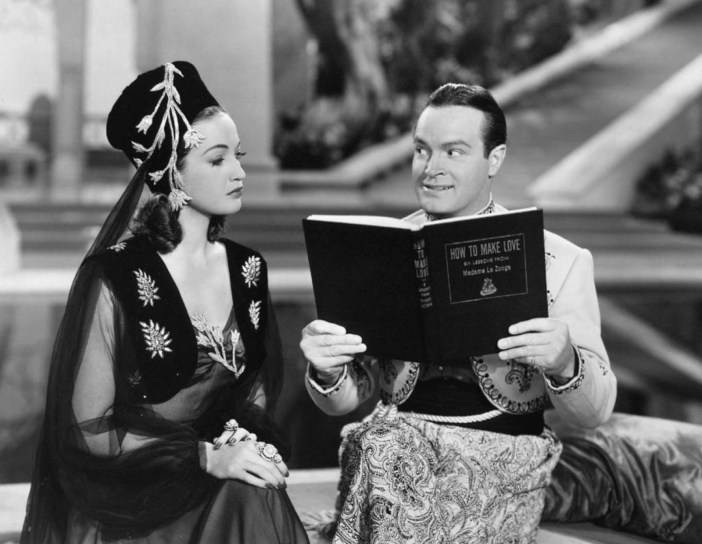
Road to Morocco is very silly, quite raunchy at times, and it breaks the fourth wall masterfully. There’s dancing, action, romance, and cool costumes as well as sometimes sweet, sometimes fun, musical numbers. A great hangover film for early Sunday afternoon. Or Tuesday morning. Whatever rubs your Buddha.
We all know what he will be rubbing. Ooo – naughty!
Directors: James Algar, Samuel Armstrong, Ford Beebe Jr., Norman Ferguson, Jim Handley, T. Hee, Wilfred Jackson, Hamilton Luske, Bill Roberts, Paul Satterfield, Ben Sharpsteen
Starring: Leopold Stokowski, Deems Taylor, Mickey Mouse, various creatures and instruments.
We cannot do this film justice in a text post, so we recommend you watch it (if you haven’t already). It’s a Disney classic (and the first Disney animated feature on the list) for very good reasons – it’s a love letter to the magic of music and an (a?) homage to human creativity and artistry.
For those of you whose tastes run darker than Disney, it also features this guy
Various animators and directors have visualized works of classical music by Bach, Beethoven, Tchaikovsky, Stravinsky, Ponchielli, Mussorgsky and Schubert (hopefully we didn’t forget anyone… Either way, they’re dead so no harm done!) in various styles and the results are mesmerizing, beautiful, therapeutic, educational, and at times funny, sad or scary.
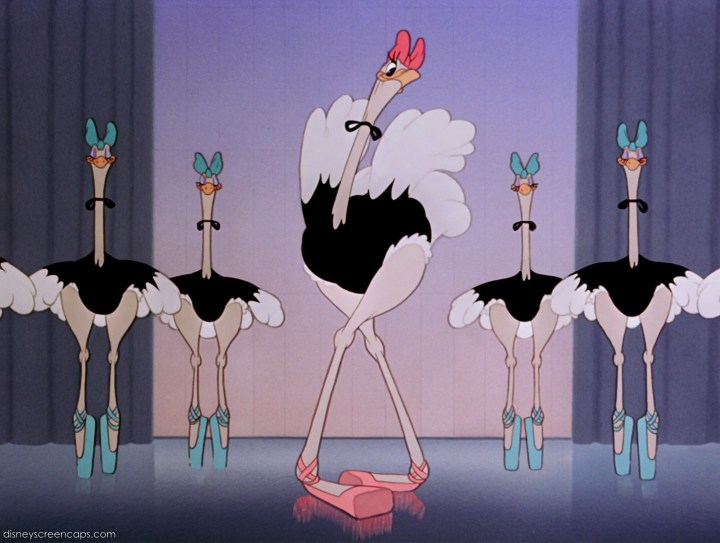
The clumsy elegance of the ostrich and hippo ballerinas ticks the boxes for both beautiful and funny
The different segments are introduced by Deems Taylor and the music is performed by the Philadelphia Orchestra and conducted by Leopold Stokowsky (our classical musician friends have informed us that it is vitally important to credit the conductor). Some of the sequences tell a story while others are more abstract interpretations of the music, but they are all lovely and entertaining to watch.
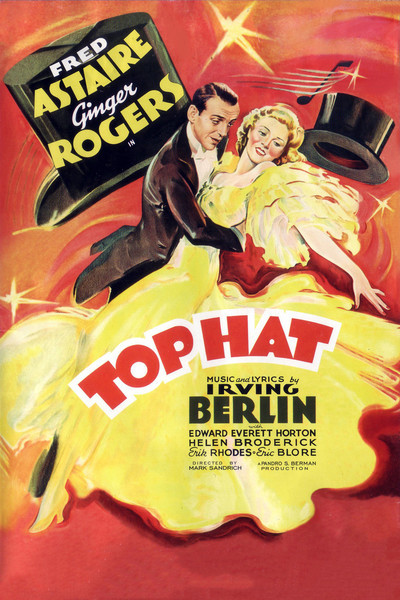
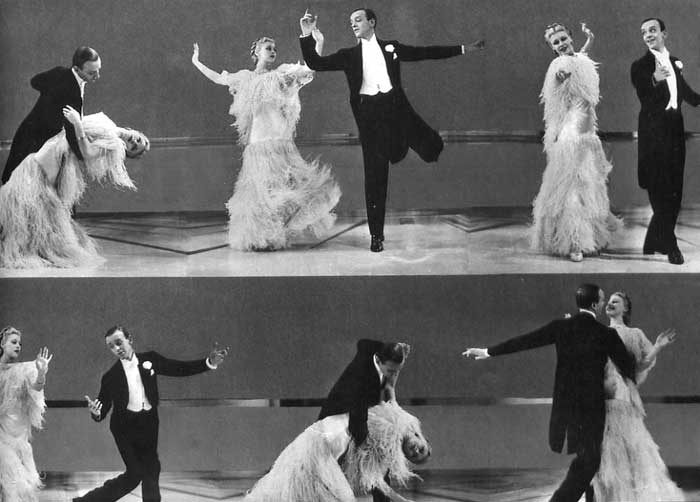
Jerry Travers (Astaire), an American dancer and Broadway star, is bringing his talent to Britain. Producer Horace Hardwick (Horton) and his wife Madge (Broderick) have a plan that their newly imported star should be married (and Madge has an idea as to who his wife should be), but Travers politely disagrees. So of course he falls in love. With the downstairs neighbour Dale Tremont (Rogers) who he annoys by tap dancing on her roof before he drowns her in flowers and sort of kidnaps her. This being an old-timey romantic musical screwball comedy though, he does these things in a very charming and endearing way
“In dealing with a girl or horse, one just lets nature take its course” – actual quotation
Their romance is complicated further when Dale (who incidentally is the Jerry’s intended wife) mistakes Jerry for Horace and believes him to be married to her friend Madge. She goes off to Venice with designer Alberto Beddini to meet up with the “betrayed” wife, followed by the admirably dedicated valet Bates (Blore – our favourite).
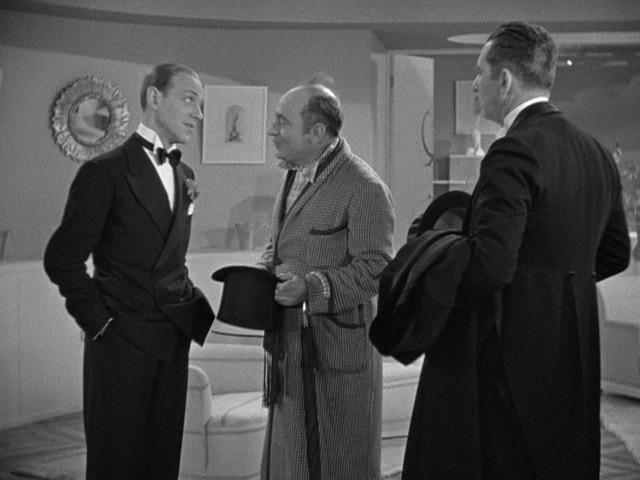
“May we take your hat, your coat, and stalk your crush for you, sir?”
After the very successful opening night performance, Travers and Hardwick charter a plane to Venice themselves, and Tremont decides to play a trick on her “dishonourable” suitor, which backfires horribly and leaves her even more confused. However, this being a comedy, it all works out in the end (thanks to Bates).
“Thank God Beddini and I never got around to actually…dancing.”
The plot is farcical and frustrating but it has its moments, some of them laugh-out-loud. Top Hat has an excellent cast of characters – mainly Madge Hardwick and Bates, both of whom we now adore and want to spend our lives with. The real reasons to watch the film though, are the spectacular dance numbers and the amazing costumes. If you like that sort of thing. And let’s face it – who doesn’t.
Ezra Ounce (Herbert) has got it going on. He’s rich, eccentric (but he can afford to be), and he has a purpose in life: to raise American morals and more specifically, get rid of Broadway shows. He decides to give his sister and brother-in-law $10 million on the condition that they live up to his standards of “clean living” and help him with his foundation.
“We need to get rid of the filth that is cleaning ladies who actually enjoy their work!”
Alas, Ounce’s niece Barbara (Keeler) and his more distant relative Jimmy (Powell) have already fallen to The Theatre (and for each other) and are busy putting on a production which Ounce decides to sabotage. However, star of the show Mabel (Blondell – who also steals the show in the film) has dirt on Barbara’s father Horace (Kibbee) and blackmails him into financing the show.
Never has a man been more mortified at finding a half naked burlesque girl in his bed. His views do in no way represent the views of the studio or the producers.
Eventually, the Ounce Foundation for the Elevation of American Morals attend the opening night of Jimmy’s musical and, unwittingly drunk on Dr. Silver’s Golden Elixir, enjoy every minute of it, causing them to change their views on both Jimmy and Broadway shows.
Strange how scantily clad dames have that effect on sexually frustrated middle aged men
In many ways, this seems like the most honest of the Berkeley musicals we’ve seen. “The Girl at the Ironing Board” is an unabashed male fantasy of the perfect woman whose happiest times are cleaning men’s clothes, and in the titular number “Dames” they’re not even trying to pretend that the selling point for all these films is anything other than the pretty dames. Still, we enjoyed it a lot although, in our opinion, Footlight Parade and Gold Diggers of 1933 had slightly better musical numbers.
But fewer beds on stage, so we’ll call this a win.
























 1000 Films Blog