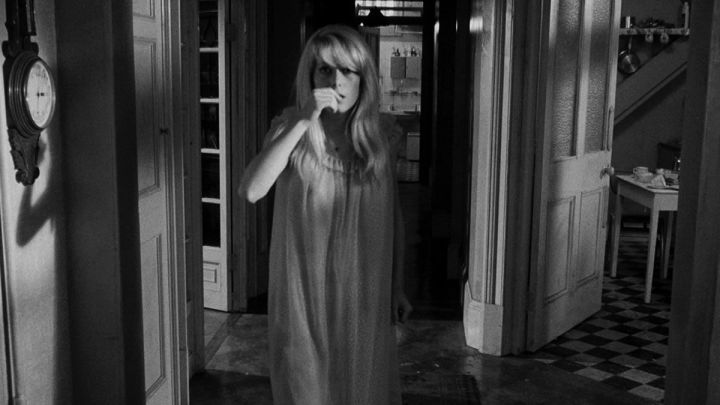
So, here’s the thing. We enjoyed the movie. We loved Catherine Deneuve. The story is intriguing, and the men are sleazy and disgusting. However, watching Polanski-movies is difficult in light of, well, him… (And yes, we know this might seem a bit hypocritical seeing as we actually did review Knife in the Water. We have just given it a bit more thought since then. And sure, there are probably lots of other problematic directors as well, but in this case there is so little doubt and it is so well publicized that it cannot be ignored.)
It’s the continuous debate of whether one can truly separate the artist from the art. Considering that he still goes free and is even rewarded (and awarded) despite being a rapist piece of shit, viewing and reviewing his movies is conflicting. Especially when they involve sleazy men trying to take advantage of mentally ill women. But, like, sexy mentally ill women. So that makes it ok, apparently…
Cause as we all know, nothing is sexier than a spiralling woman. She probably just needs a penis to set her straight.
We’re not going to tell you whether to watch this or not. It’s entirely up to you. The film itself is intriguing and beautifully shot, but it is also problematic in oh so many ways.
What we learned: Watching (old) Polanski movies is difficult…
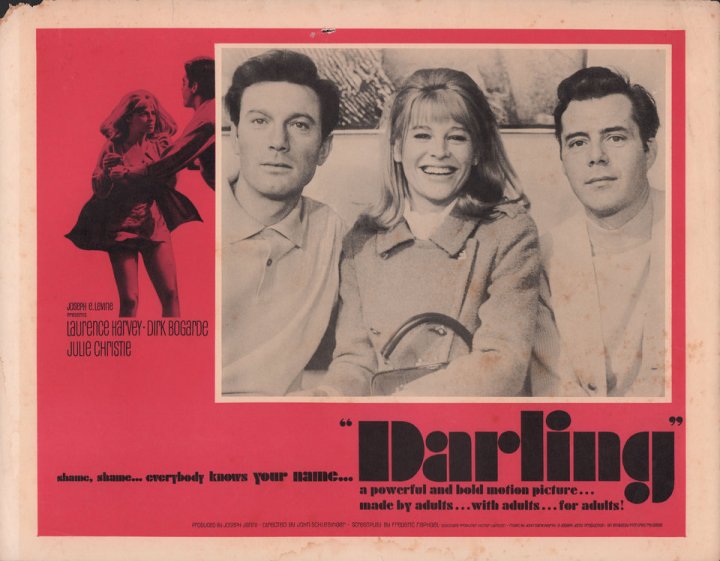
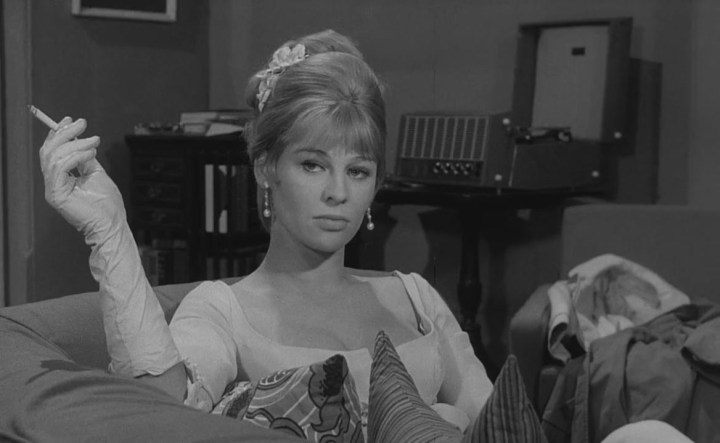
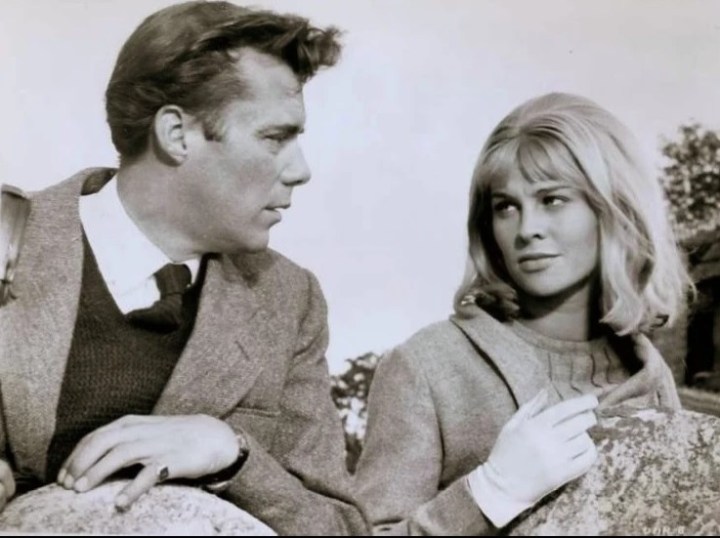
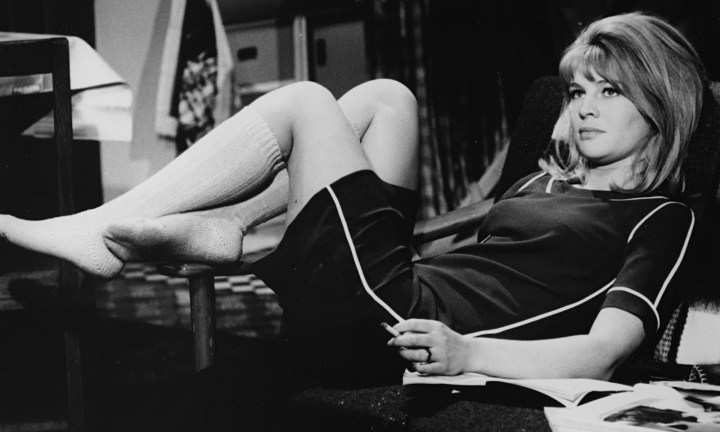
Diana Scott (Christie) is being interviewed for “Ideal Woman,” telling the story of her life. And what a life! From a “normal” life and a normal marriage, she becomes friends, and later lovers, with reporter Robert Gold (Bogarde). The two of them move through in the London art scene in the swinging sixties, partying and being adored.
“My career goals? Model, actress or princess. Yes, I’m a grown woman. Why do you ask..?”
They both leave their spouses for each other and move in together. However, Diana becomes very jealous when Robert goes back to his ex to see his kids. In fact, she decides to have her own child, but changes her mind when it becomes a reality.
“You know what they say – bringing a baby into a troubled relationship always saves the day.”
Diana, bored with Robert who likes to stay home and write, continues to seduce and be seduced to further her own modelling and acting career. She moves up in the world one man at a time while not playing very well with other women at all, all of whom she sees as threats. But what does she really want from life?
“Oh, I’m just like any modern woman trying to have it all. Loving husband, a family. It’s just, I wish I had more time to seek out the dark forces and join their hellish crusade.”
Darling is fascinating and engaging, and the contrast between Diana’s words and actions is very interesting to watch. The stories we tell ourselves and others are clearly just a version of the truth.
We loved the clothes, the decadence and hypocrisy, the out and proud gay people, and all the fake books hiding vices throughout the movie. Julie Christie and Dirk Bogarde are wonderful as Diana and Robert, with both good and bad qualities.
“Just think of all the ways we could eventually hurt and devastate each other!”
Thematically, there are parallels to Bitter Harvest, but Diana is treated much better than Jennie. Jennie is pretty much a victim, while Diana is the author of her own destiny – for better or worse.
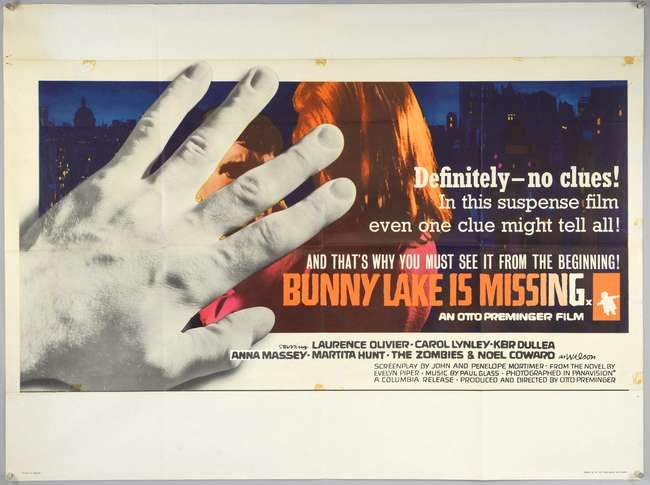
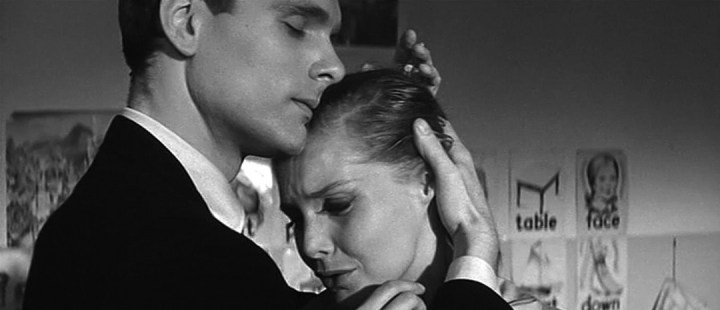
When Ann Lake (Lynley) comes to pick up 4 year old Bunny from preschool, the child is nowhere to be found. Not only that – she has not been seen by anyone the entire day.
“Hi! It’s my daughter’s first day of school in a new country! I couldn’t find anyone, so I left her to her own devices in an empty room. I’m sure someone will come find her eventually. If not, maybe you can check in on her at some point during the day, random stranger. Gotta dash! Ladida, mother of the year!”
As she desperately starts searching for her girl, Ann finds that she has trouble convincing people that Bunny really exists. Apart from her brother Steven (Dullea), no one in England has ever seen the girl since they came over from the USA – not even the audience.
“Darling sister – are you sure you remembered to take her with you when you moved..?”
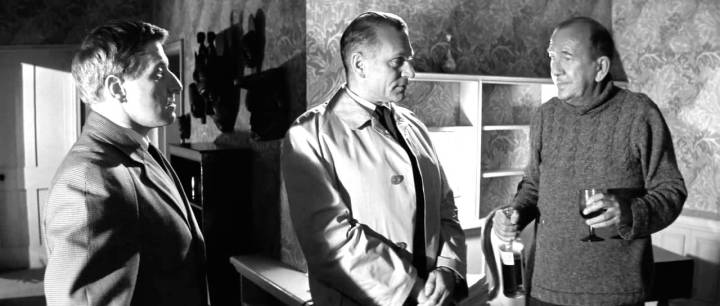
Even Bunny’s things have gone missing from their new house, and supercreepy landlord Horacio Wilson (Coward) cannot remember seeing them despite being very invasive while Ann was unpacking her toys and clothes. And now we are no longer sure there ever was a girl. But fear not! Superintendent Newhouse (Olivier) is on the case and determined to get to the bottom of the mystery!
“And when she said her daughter was missing, what did you do then?” “Well, I tried to dick her, of course!” “Ah yes, naturally. “
We loved this SO much! The characters are amazing and the mystery is very well done. Carol Lynley is wonderful as the increasingly frustrated and desperate Ann (while looking very much like a 1960s Keri Russell. Or the other way around, we suppose). Noël Coward is Creepy McCreeperson, Keir Dullea is slightly sinister, and Laurence Olivier’s Newhouse is likable from his very first appearance.
Trying to figure out who to believe and what is really going on was fun and kept us guessing (although our suspicions were eventually confirmed. Yay us!) Despite her slow start, Ann turned out to have agency and cunning – she was not just a damsel in distress!
Even surrounded by eerie dolls, she puts to shame all those men who question her sanity. Take that, woman-not-being-believed-by-authorities-when-she-worries-about-her-child-trope!
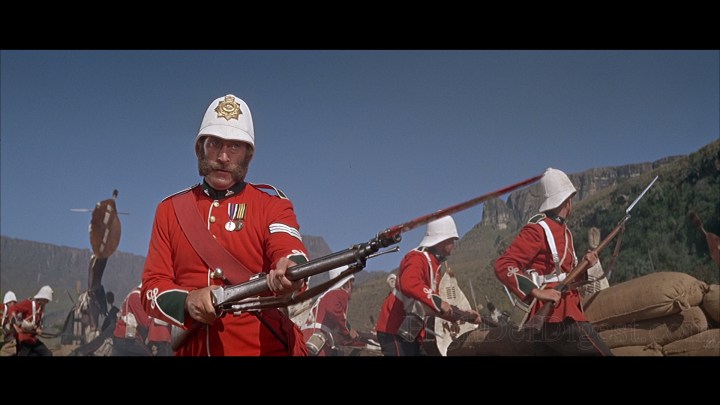
The year is 1879. In South Africa, imperialism rules, but Zulus have attacked a white settlement and won, which inspires another tribe to do the same to a nearby mission/military hospital.
At the mission, Lieutenants Chard (Baker) and Bromhead (Caine) must learn to work together and cooperate if they are to defend themselves from the 4000 advancing Zulus with their own measly 150 soldiers, many wounded.
“You think you’re so cool, riding in here with your title and rank and stupid sexy hair…”
Zulu is a famous epic depicting real events with surprisingly little racism considering the subject matter and the time. Sure, we do not really see the Zulus’ side of the story, and they are a nameless, faceless, personalityless mass for most of the movie. However, they are also intelligent, strategic, cultured and honorable, which makes the film a lot less dated than we’d expect.
Basically, they are people. And treated as people. Which should be a given but sadly is not.
The cinematography is gorgeous, the characters are great (Bromhead is a very shady queen!), and the suspense is real. Also, fun fact, the Zulu king Cetshwayo kaMpande is played by his real life grandson Mangosuthu Buthelezi.
However, no fun fact can compare to the glorious moustache of Colour-Sergeant Nigel Green
We loved the arrival of the Zulu, the British adherence to protocol even in a crisis (proper tunic etiquette is to be observed at all times!), the action, and the game we made up wherein we recast the movie using only Monty Python members (they all correspond perfectly with a character in the film!). And did we mention it is gorgeous? Well worth a watch!
“We’re knights if the round table, we dance whene’er we’re able. We do routines and chorus scenes with footwork impeccable…”
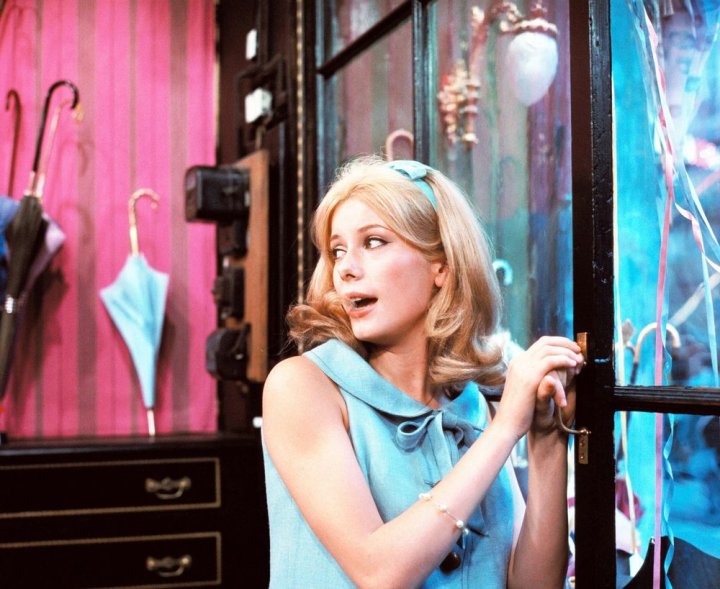
Geneviève Emery (Deneuve) lives with her mother Mme Emery (Vernon) in Cherbourg, selling umbrellas. Not umbrellas, bags, shoes, and raincoats, or anything which might help them actually earn a living. Nope. Just umbrellas. We’ve never been to Cherbourg, but now our impression is that of a rainy town filled with forgetful and/or wasteful people.
“Maman! Maman! I think I see a raincloud! If someone didn’t check the forecast before they left the house today we might actually eat something this week.”
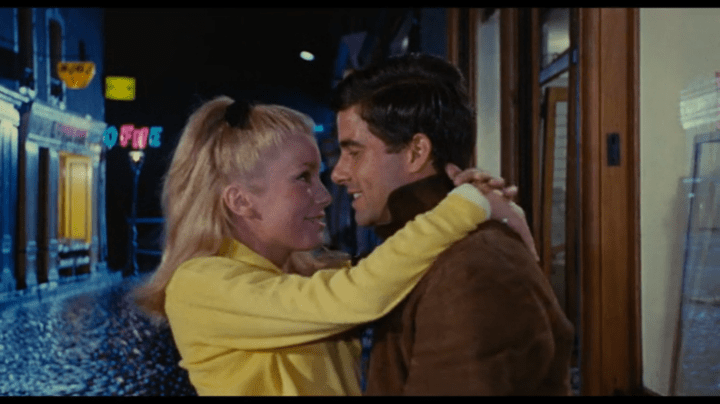
Not surprisingly, the mother-daughter-team struggle to make ends meet and Maman wants her daughter to marry rich. Specifically Roland (Michel), a character we remember from Lola, who has taken a fancy to the young umbrella salesgirl. Geneviève on the other hand is in love with mechanic Guy (Castelnuovo) and plans to marry him, money be damned!
“Don’t worry about money, my love. The constant rain makes the roads very slippery, so my mechanics business is thriving!”
Then, Guy is drafted into the army and sent off to fight in the Algerian War. A few months later, Geneviève confesses to her mother than she is pregnant. She is also worried about Guy who only answers her letters sporadically.
“You did actually get something in the mail, but it’s possible all the wallpaper in this house has damaged your eyesight to the point that you cannot read simple letters”
Roland (who may or may not have grown up a bit since the last movie where he famously made his unrequited feelings for Lola her problem instead of dealing with it on his own) is still willing to marry Geneviève despite her being pregnant by someone else. He offers security and comfort. So what should she do?
Just try to blend in and wait for all this to blow over.
Oh, and did we mention that all of this is conveyed to us through the medium of song? Because it is. Every single word in this movie is sung (not necessarily by the actors), and continuously accompanied by the wonderful score. Additionally, the photography and colours are so bright and vivid that you can’t help being sucked into the story.
It’s enough to give you a toothache. But, like, a good one.
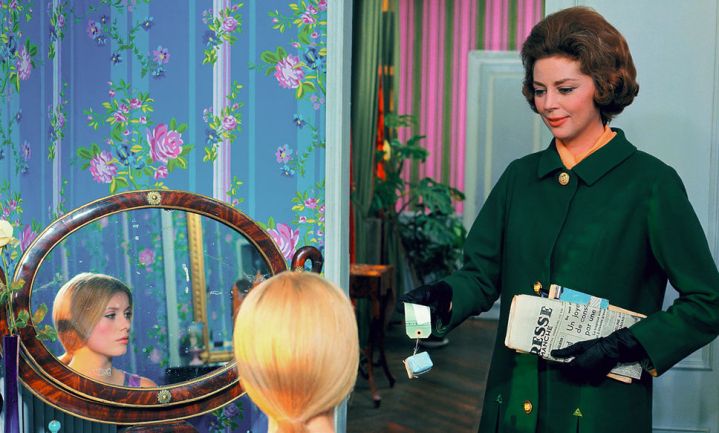
We loved the colours, the music, the random interruptions by passers-by during Geneviève and Guy’s date, the wallpaper (we want ALL of it – we don’t care if it blinds us!), and drama queen Auntie Élise (Perrey).
“As I keep saying, I’ll probably die soon. Most likely when you’re away. When that happens, be a dear and send all my capes to a couple of sisters in Trondheim, Norway.”
The Umbrellas of Cherbourg is a sort of continuation of Lola (1961), and also connected to the upcoming The Young Girls of Rochefort (1967). It’s an intriguing universe filled with men befriending the mothers of young girls, and storylines that don’t always go where you expect them to. It is a universe we recommend you visit at some point.
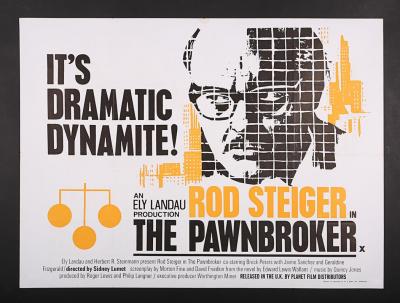
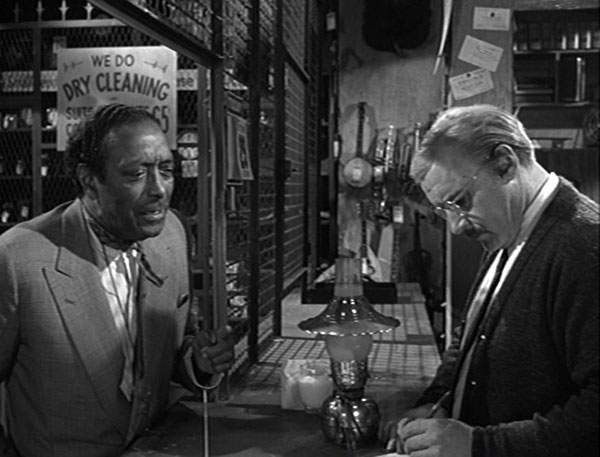
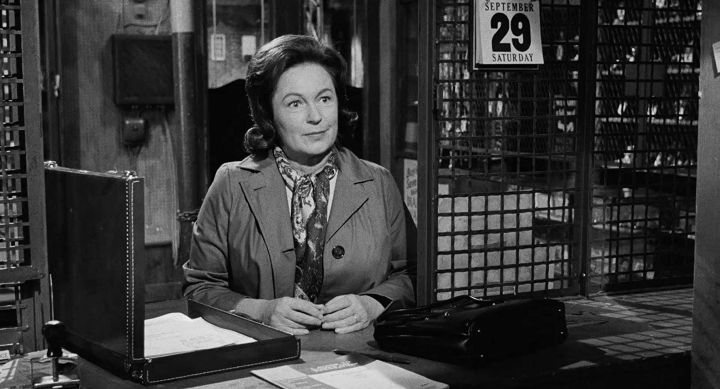
Sol Nazerman (Steiger) is a holocaust survivor (with a slightly unfortunate name) living in New York. There, he runs a pawnshop while dabbling in whitewashing money for local gangster Rodriguez (Brock). Other than the business, he’s just going through the motions after losing his family, his friends and his will to live in Auschwich.
No, we’re not able to identify various concentration camps on sight, but we are aware of the not-so-fun-fact that Auschwich was the only camp to use prison number tattoos. And we wish we didn’t have to know this sort of thing.
Sol’s only employee Jesus (Sánchez) looks up to his boss, but he is also ambitious and has some less-than-savoury contacts. So he’s a bad choice waiting to happen. Meanwhile, Sol has repressed his memories and emotions, and that always ends well. Basically, you’re sitting on tenterhooks for 116 minutes, ready for tragedy.
Look, we realise that you have nothing left to give to your fellow man, but please be nice to poor old Mr Smith. We love him.
Ok, while this didn’t exactly get us into the Christmas spirit, The Pawnbroker is a really good movie. Sol, while anti-social and detached, is an intriguing character and we can see why everyone who came into contact with him was drawn to him. Probably mainly due to Steiger’s excellent performance – he’s marvellous.
“I know you want nothing to do with me or any other human being, but you’re hypnotic and magnetic and I’m dying to be your friend”
We loved the jazzy soundtrack, the menace of the lawnmower pawners (whose names escapes us), the quick-cut flashbacks with scenes from the camp, Mr Smith, and the contrast of the two sex scenes. It’s heartbreaking and horrible, but oh so good. Watch it, and then take a page out of the book of Penelope Garcia and go stare at pictures of puppies for a good half hour. You’ll need it.
Alternatively, enjoy this photo of our late, great doggo watching “The Last of Sheila” and trying to figure out who dunnit.
What we learned: Everyone has a breaking point. And pushing people away has consequences…
Apologies for the long break – there have been some family stuff as well as day jobs which have required all our energy for a while. So our posts might be a tad sporadic for the time being, but we have not given up. Promise!
Kelly (Towers), a working girl, arrives in a new town. First off, she makes good (i.e. sleeps) with local law enforcement Griff (Eisley) who advises her to practise her profession in the neighbouring town, lest she destroy the reputation of this one. The men of this town only like to fuck harlots – not see them around when they go shopping!
“Sure I’ll sample the goods, but then you have to leave”
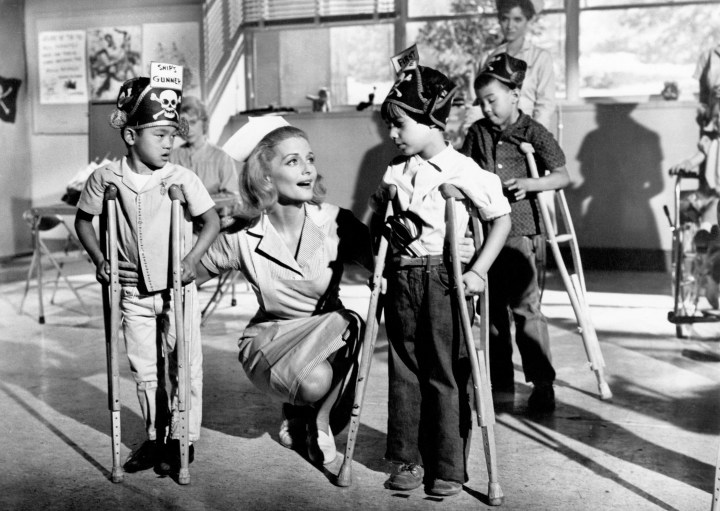
But Kelly is traumatised by and tired of her days as a prostitute and wants a different life for herself. She is also smart, strong and resourceful. So when she sees that the town has a children’s hospital, she applies for a job and is hired on the spot. Not only hired – she is a huge success!
“If you’re happy and you know it, stomp your fe… Oh…”
Through her work and her new friends, she is introduced to Grant (Dante), the richest man in town, and the two fall hard for each other. However, Grant’s best friend Griff is not too impressed by his friend’s choice of romantic interest…
“I’ve done things. Things I’m not proud of.” “Like what? Wear white after Labour Day..?”
From the jazzy opening scene onwards, we were thoroughly enthralled by The Naked Kiss. Melodramatic though it may be, it is also intensely watchable and engaging. It constantly goes off in unexpected directions and keeps you on your toes.
You’ll never guess who she’ll end up with in the end!
We loved Miss Josephine, Mac, Kelly – basically all the women in this. We also loved the noiry feel of the movie, and the sense of doom and destruction we felt throughout. It’s shocking and pulpy in just the right ways, but it also has great performances, gorgeous cinematography, a musical number, and a bald prostitute beating a man with a frying pan. So if that doesn’t make it a must-watch, we don’t know what will.
“Honey, you know you wanna watch me kick some ass!”
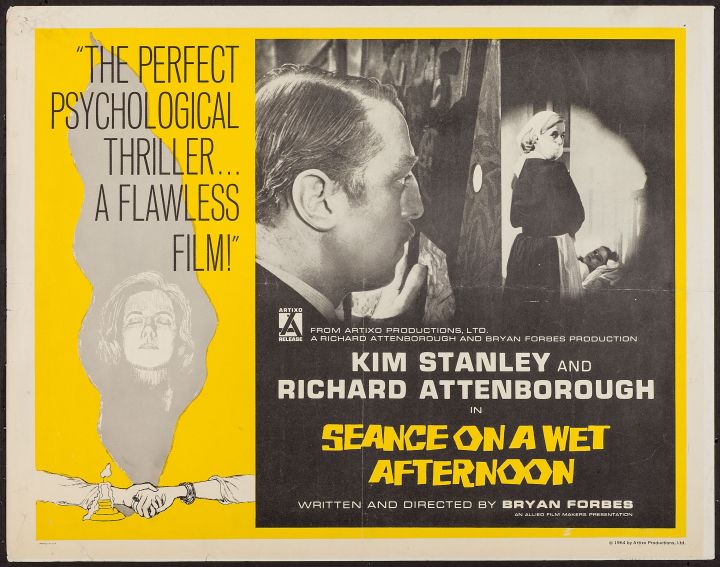
Myra Savage (Stanley) holds seances in her house for a living, but she feels very underappreciated. With her gift she should be more famous! Luckily her “spirit guide” has an excellent idea. Why not assist in a kidnapping case and get loads of publicity?
“It is my right. I am a special snowflake. The spirits tell me so.”
The unfortunate lack of local missing children will not stop this gal – if no children are willing to go missing for such a noble cause, she will just have to rope her submissive husband Bill (Attenborough) into taking care of it.
“Don’t think of it as a felony. Think of it as a bonding exercise to save our marriage. 9 out of 10 therapists recommend trying new things together!”
With little Amanda Clayton safely stashed in the nursery, Myra contacts the anguished parents to offer her services. For free, of course. She would never consider making money off of other people’s misery.
“Why, officer, that would be completely immoral. I would not dream of charging this wealthy couple for helping them. But there’s nothing wrong with getting my name in the paper, is there?”
This movie is so good! It’s an intriguing and engaging psychological thriller, and very atmospheric. Thematically (and atmospherically) it would go excellently with The Haunting and The Innocents for a creepy-and-suspenseful-with-possible-supernatural-elements British triple feature extravaganza. A little Halloween tip for all you non-party people out there.
This is our perfect Halloween. Preferably with even fewer people.
We loved the mysterious start and the gradual exposition. The relationship between Myra and Bill is fascinating, manipulative and very unhealthy, and it is extremely well portrayed by the two stars.
“Look dear, when I said I wanted you to dress up in a nurse’s uniform this was NOT what I had in mind!”
What we learned: The best laid plans… Also, does “The Swan and Edgar” still exist? ‘Cause that’s a name we can get behind! (Apologies if this is like a super-famous place that we Norwegians have somehow missed. Our cultural knowledge is vast yet limited.)
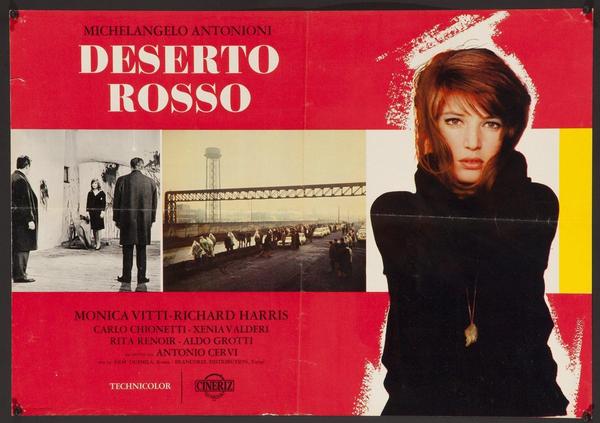
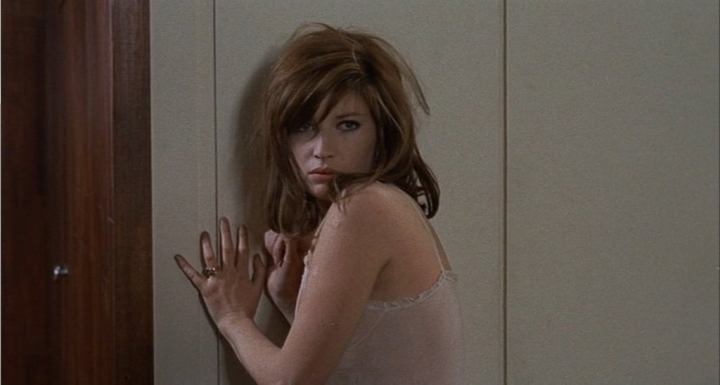
Giuliana (Vitti) is not doing too well. After a car accident she has not been herself, according to her husband Ugo (Chionetti). But was it the accident that changed her? Her conversations with her hubby’s business partner Corrado Zeller (Harris) reveal that all may not have been peachy even before the incident.
“Oh, I’ve never had any ill effect from being the only dab of colour within miles. Never bothered me at all, no way!”
Whatever the reason might be, she is clearly not completely stable, and Ugo is incapable of helping – or even understanding his wife. Corrado seems more sympathetic but he cannot help her either. Even the prospect of group sex cannot cheer her up, so you know it’s serious!
Just one pineapple short of being a proper swingers party! (Yeah, this will probably only make sense to people in Molde, Norway. Thanks, Eirik!)
All around Giuliana, nature is being ruined by industry and she is falling apart with it. She is utterly diconnected from her husband and most other people – even (or perhaps particularly?) her son. The only one she does connect with is Corrado, but it is a relationship which can’t save her.
You cannot be saved by a man who enthusiastically engages in breaking apart and burning up your sexy, red bedroom cave for momentary warmth and comfort.
Red Desert is beautiful, fragile and mesmerizing. The bleak environment feels a bit alien in many ways and the film is strangely hypnotic. As often before, we weren’t overly keen to start it (two hours of Italian drama is a lot on a Wednesday night after work) but we were drawn in from the beginning and we really loved it.
We loved the music, the long takes, Monica Vitti, and the slow development of the affair. Although we found the sex scene very uncomfortable – we’re still not quite sure this was what she wanted..?
Her look suggests “trapped animal” more than “sexually aroused woman”, but perhaps we’re reading her wrong…
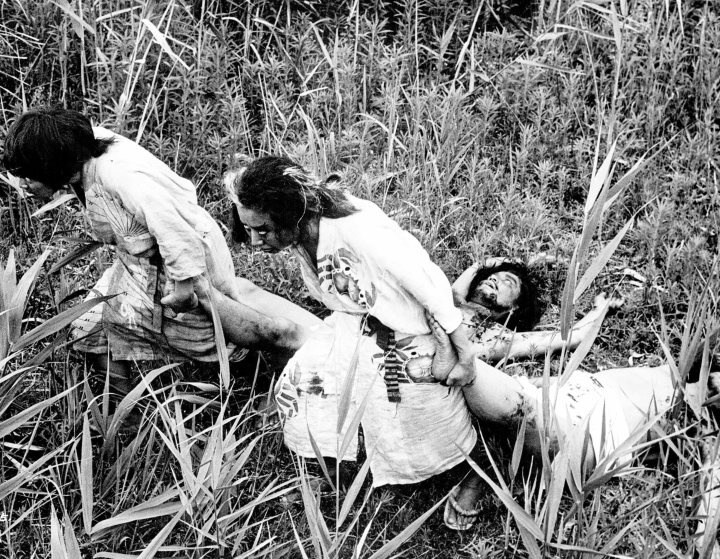
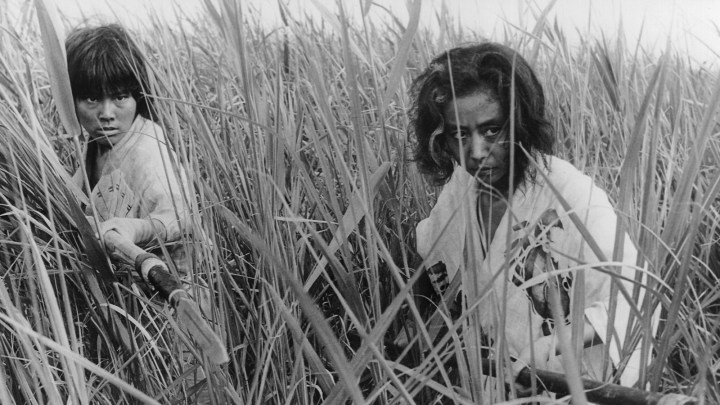
Sometime in the fourteenth century (we think) a mother-and-daughter-in-law team kill stray samurai and sell their stuff for food. The bodies? Dumped in a convenient hole and left to rot.
Our disbelief was not quite suspended yet five minutes into the film, so the only thing we could think of at this point was that the dry grass must have really cut into the actors’ backs! Tres uncomfortable!
A neighbour returns with news of their son’s/husband’s death, and the two women dispair. For a few days. And then the new widow starts sneaking off in the night to get her rocks off with the neighbour.
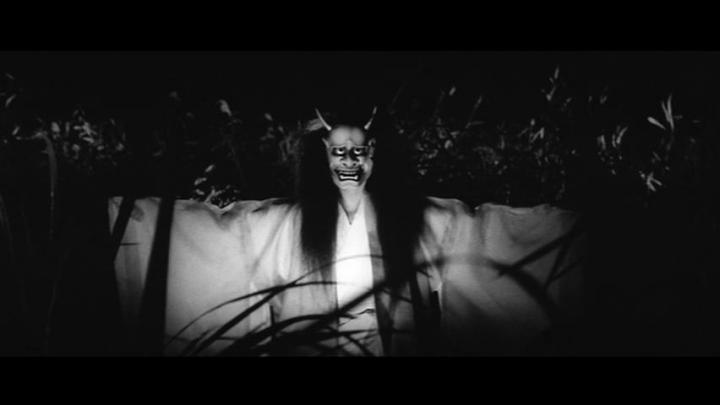
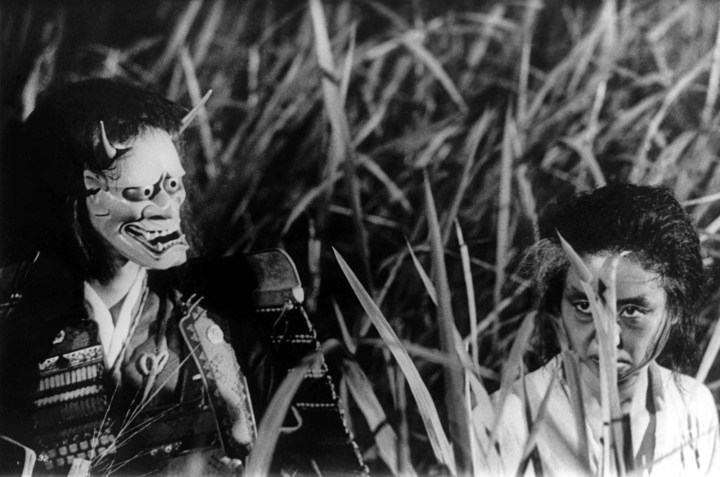
Mother worries that her partner in crime will leave her to her own devices now that she has a new lover. But when she meets a strange samurai with an even stranger mask she hatches a devious plan.
Her new hobby: hanging out in fields at night with an unknown light source popping up at just the right time!
Onibaba was strangely unsettling and it stayed with us for a long time after the credits rolled. From the animalistic lives of the two women in the beginning, to the demonic mask and the creepy ending, we were completely engaged.
Admittedly, we thought Sir Brags-a-lot kind of had it coming, the way he treated his guide
We loved the contrasts of light and dark, the intense music, the non-sexualised nudity, the mask, the epic eyebrows, and the general disconcerting feel of the entire piece. This is one of those movies we would probably never have watched if it weren’t for the list, so thank you Edgar. We loved it!
If you’re wondering, the sexually frustrated tree-humping women did not strike a cord as much as the horror elements of the demon mask. That’s our story and we’re sticking to it.