#372 The Swimmer

Watched: November 4 2025

Director: Frank Perry, Sydney Pollack

Starring: Burt Lancaster, Janet Landgard, Janice Rule, Marge Champion, Joan Rivers, Nancy Cushman, House Jameson, Tony Bickley

Year: 1968

Runtime: 1h 35min

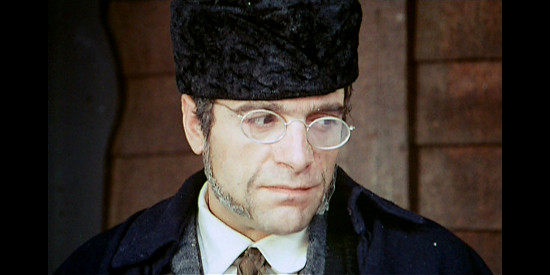
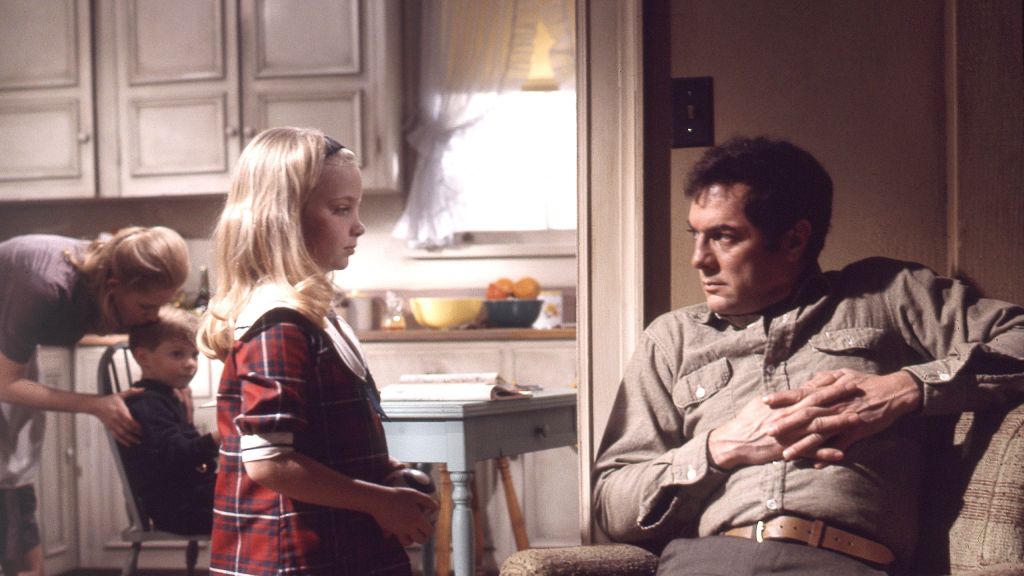
Welcome to the surreal world of The Swimmer. You’re in for quite a ride… Ned Merrill (Lancaster) is running around in his bathing suit in a gorgeous woodland, as people do. He drops by some old friends’ backyard and goes for a swim in their pool. The friends are hungover from the night before, and have not seen Ned for aaaaages. But they love him, and he’s such a great guy. While reminiscing with them, Ned has the brilliant idea to swim all the way home, by way of his neighbours’ pools which form a “river” the entire way. Off he goes!

But not without a drink in his hand. He’s not an animal.

As he makes his wet way towards his house he meets several old friends and acquaintances, but the vibe changes discernibly as he gets closer and closer to home. In the beginning, all the people he meets are old friends who clearly see him as a good guy, although they all get a bit weird whenever his wife or daughters are brought up. But as he gets closer to home, the people he encounters are increasingly hostile and keep hinting more and more to something that clearly has gone wrong in Ned’s life. Our “hero” also goes super sleazy with Julie (Landgard), a young girl who used to babysit for his kids. Things get gradually darker and weirder until he finally reaches “home.”

It starts off so innocently. Even bringing along his very young former babysitter seems wholesome at first. Until it’s not…

We had no idea what we were getting ourselves into, but we were hooked from the start. We loved how our view of Ned changed throughout the movie – from seeming to be a nice enough man (and just a little bit inappropriate with all the women he knew) in the beginning, to a creepy, cheating, horrible narcissist at the end.

This scene with his former mistress is the best depiction we’ve seen of a man completely unravelling when he finds out a woman has faked her orgasms. Actual quote: “You loved it. You loved it. We both loved it. YOU LOVED IT!” And she’s just there like “Sure, Jan.”

The Swimmer kept us questioning throughout, and we came up with about 271 theories on what was actually going on. What happened to his daughters? His wife? Is this a sort of “life flashing before his eyes” scenario? Are we in purgatory? Is he senile? Is this a portrayal of his gradual corruption and entitlement throughout his life told through a swimming pool voyage? ‘Twas a mystery wrapped in an enigma. In the end, things start coming together and some questions are answered, but we’re still not 100% sure what exactly we just watched. That being said, we loved it (actually loved it. It wasn’t just a man telling us we did).
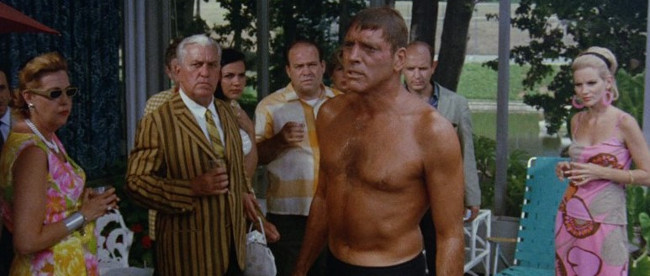
Another bit of unravelling: at the first pools people find him quirky and charming for going around in his swim trunks at a clothed event. As he progresses, not so much…

Among our favourite things were the ’60s parties he kept crashing (such a vibe!), the Hallorans, the way we liked Ned less and less as we went along, his increasingly fragile ego and psyche, and the many mysteries hidden in the plot. Also, the beautiful scenery added to the film’s dreamlike quality which, granted, gradually descended into a nightmare. Watch it!

Preferably through a closed, rusted fence with an anguished look on your face as you gradually realise the reality of your existence and slowly descend into madness and despair. It’s what we did.

What we learned: Dude! No means NO!!!

MVP: The pools. Or, possibly, the narrative technique. Or Ned’s fragile male ego.

Next time: The Thomas Crown Affair (1968)
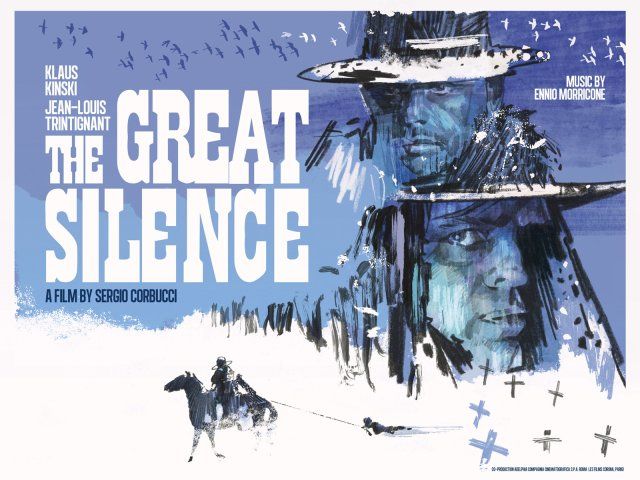
#371 The Great Silence/Il grande silenzio

Watched: October 26 2025

Director: Sergio Corbucci

Starring: Jean-Louis Trintignant, Klaus Kinski, Vonetta McGee, Frank Wolff, Luigi Pistilli, Mario Brega, Marisa Merlini, Carlo D’Angelo

Year: 1968

Runtime: 1h 45min

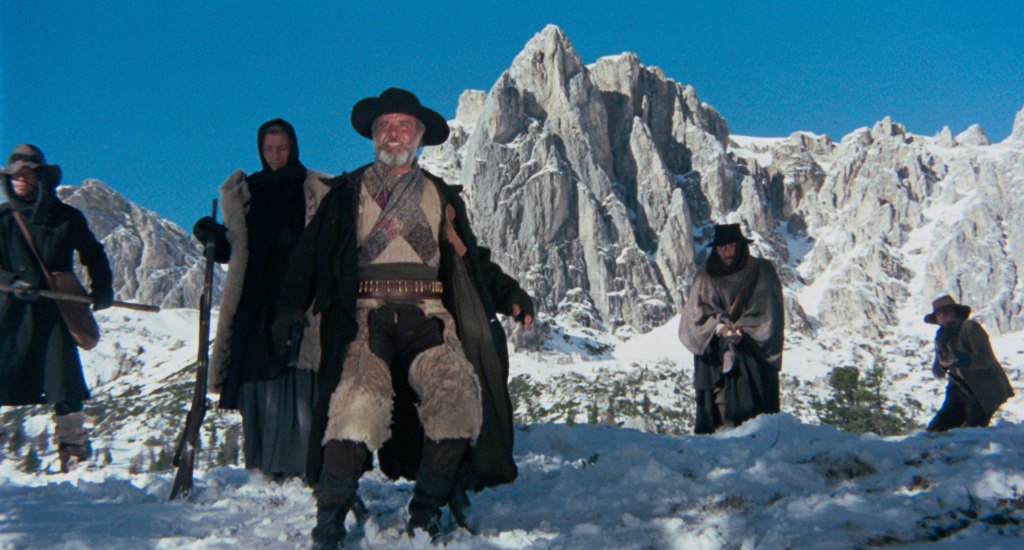
Snow. Horse, Rider. Norway? (Probably not, but looks like our landscape.) Crows. Shootout. Blood. Death. So starts The Great Silence. The eponymous Silence (Trintignant) is a mute gunman who makes bounty hunters tremble with fear. This (un)lucky Luke draws faster than his own shadow (well, at least faster than anyone else’s shadow), and his method is simple: be an annoying bitch until the other person gets fed up and draws their gun, and then kill them before they can pull the trigger. Thus, he only acts in self-defense and is completely within his rights to kill.

Way to hack the system, Silenzio!

The society in which Silence/Silenzio (we’ve heard it both ways) operates is run by corrupt politicians, greedy business owners and ruthless bounty hunters who prey on the little people. The worst one is Pollicut (Pistilli) – a banker and Justice of the Peace who uses his seemingly infinite (but very local) power to be a cunt to everyone and kill the guys who own things he covets, or who he simply doesn’t like. Of which there are many.

He wants their land, their houses and often their wives. And he will literally cut children’s throats in order to get what he wants. Among his many sins, that sorry excuse for a “beard” also ranks in the top three…

As a result of Pollicut’s greed and corruption, as well as problems caused by a severe blizzard, the people of Snow Hill are having a really bad time of it, and many are forced to turn to crime in order to feed their families. Pollicut uses these circumstances to make them outlaws and to place prices on their heads in order to take over their property. This attracts bounty hunters, chief among them being “Loco” (Kinski). He is, as the name suggests, utterly Loco. And racist. And a psychopath. And just an all ’round bad guy.

But his headgear game is on point

The women of this ravaged community, mainly newly widowed Pauline (McGee), hire Silence to defend them and help/avenge their sons/fathers/husbands, most of whom are either already dead or LARPing Robin Hood and his Merry Men in the woods surrounding Snow Hill.

In fact, let us talk about the name “Snow Hill.” Who came up with that name? Is it also called that in summer? Is this place perpetually snowy? In which case, why would anyone settle there? (OK, we realise that this is probably a bit rich coming from a couple of Norwegians. Nevertheless, we feel these questions are justified. The public needs to know!)

Enter player five, newly appointed sheriff Gideon Burnett (Wolff). From the start, he seems a decent enough guy, which is a rarity in this town. His mission is to restore order in Snow Hill before the governor declares amnesty on the merry men of the forest (and by “merry,” we mean “miserable” and “starving”). He is basically the only character in this entire movie who both operates within the law and does the right thing. Will his and Silenzio’s efforts be enough to save the town?

Look at this jovial face and icy ‘stache! Clearly one of the good guys.

We are enjoying the westerns a lot more than we thought we would when we started this project. We grew up watching some of them as our dad was a western fan, but it was never really “our” genre. However, each one we’ve watched so far has been incredibly engaging, and there’s so much interesting social commentary within them. For us, The Great Silence ranks as one of the best ones so far.

🎵 The hills are aliiiiive… With the sound of outlaaaaws 🎶

First off, we loved the women in this. From the bereaved mother who first asks for Silenzio’s help, via Pauline, to Regina (Merlini), they are bad ass, capable and vengeful – exactly how we like our female characters. We also loved sheriff Burnett, Silence’s method of being a little bitch until people try to kill you, the costumes, the snow, and the portrayal of people dealing with corruption and greed. As in a lot of westerns, on the surface it’s very easy to tell the bad guys from the good guys – there are no doubts about who we’re supposed to root for. But at the same time, the bad guys’ actions are “all according to the law,” which poses some interesting philosophical quandaries about laws and morality, and makes this a movie which is frighteningly topical and current…

They also managed to throw in a bit of (interracial) romance, so we’re pretty sure everyone can find something they enjoy in this film. Well, good people can, at least.

By the way, without spoiling the ending too much (we hope… You can wait to read the rest of this until you’ve seen the film if you want absolutely no hint of a spoiler), if you have the DVD/Blu-Ray version of this movie, we recommend you also watch the alternate ending which you can find as a bonus. It is the most ridiculously over-the-top happy denoument we’ve ever seen, and we got the strong feeling that this was filmed as a sort of mutinous “fuck you” to people who thought the original finale was too bleak…

Side note: we felt really bad for all the horses forced to struggle through the snow throughout. That looked like really hard work.

What we learned: The law is not always right. There is no such thing as an ethical billionaire. And sometimes the bad guys win…

MVP: Whoever made all those shawls. Or Klaus Kinski. Also, shoutout to our boy Ennio Morricone!

Next time: The Swimmer (1968)

#370 The Devil Rides Out

Watched: October 22 2025

Director: Terence Fisher

Starring: Christopher Lee, Charles Gray, Nike Arrighi, Leon Greene, Patrick Mower, Sarah Lawson, Paul Eddington, Rosalyn Landor, Gwen Ffrangcon Davies

Year: 1968

Runtime: 1h 36min

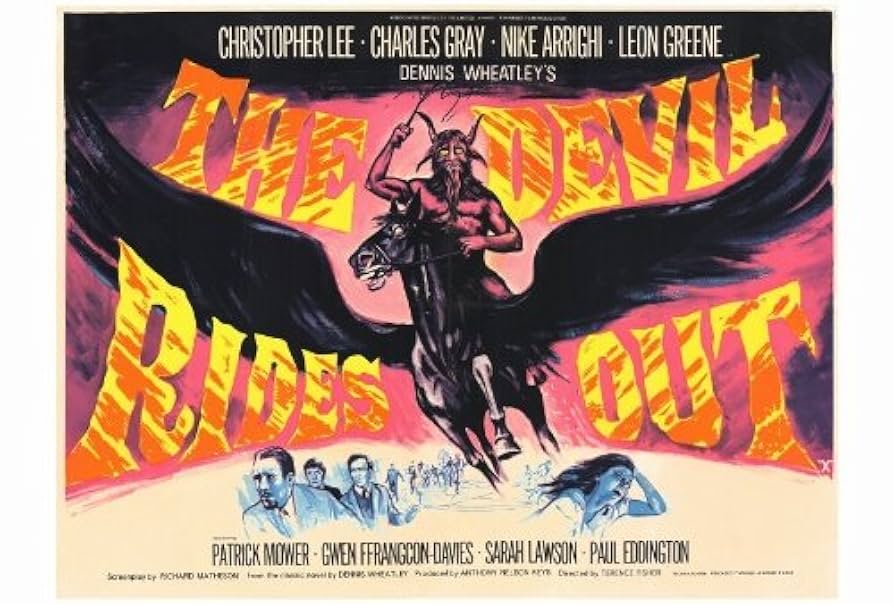
We’ll just come right out and say it: The Devil Rides Out is the perfect double feature companion piece with Rosemary’s Baby. While wildly different in execution, they are two sides of the same coin thematically, with ethnically diverse devil worshippers happily sacrificing others for their own benefit.

Sure, still predominately white, but still more diverse than your average high society gathering in 1968. We swear some of these people wore clothing from other countries in a previous scene!

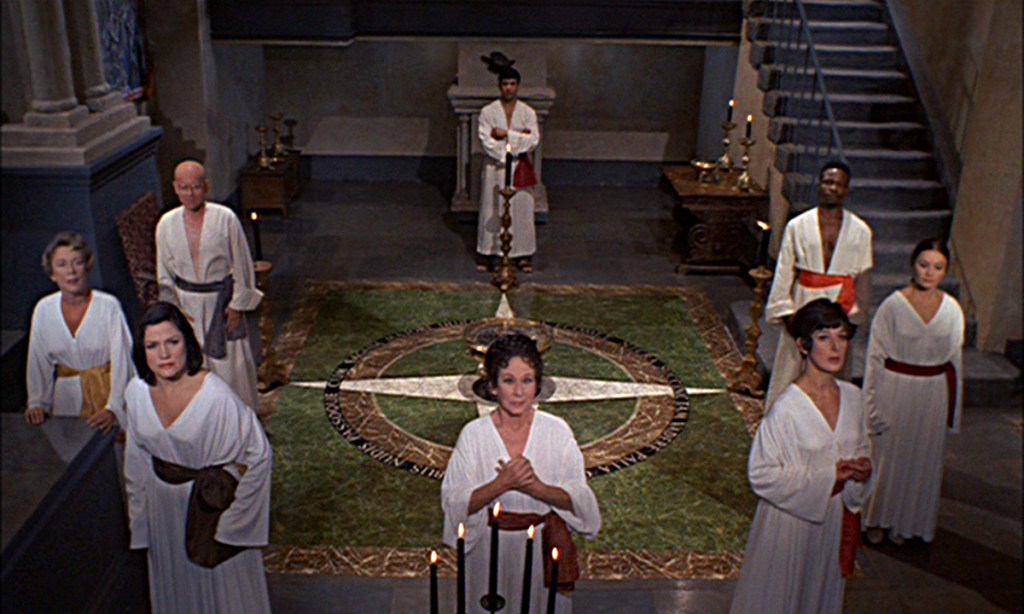
Nicholas, Duc de Richleau (Lee) and his old friend Rex van Ryn (Greene) are worried about their departed friend’s son Simon (Mower), who they have promised to look after. They take a ride (in a very cool car) to Simon’s place, only to find him in the company of twelve strange guest. De Richleau immediately recognizes them as devil worshippers (after using British politeness to finangle his way to the observatory), and the two friends embark on a mission to save Simon’s soul. And also the soul of Tanith (Arrighi), because Rex thinks she’s hot.

There’s a bit of a consensus on that. She has that certain je ne sais quoi that appeals to both satanists and useless sidekicks.

Satanic cults were apparently all the rage in 1968, but while Rosemary’s Baby is subtle in its execution, leaving most of the devil-related stuff to the imagination, The Devil Rides Out goes completely in the opposite direction. There are actual goat-faced devils, huge ass spiders, orgies, and at one point the Angel of Death himself (herself..? We’re not sure if it’s Death or Susan) rides into the living (ironically) room. We loved that Fisher went very visual and literal about it – both approaches work really well for their respective films.

He looked at subtlety and laughed right in its face

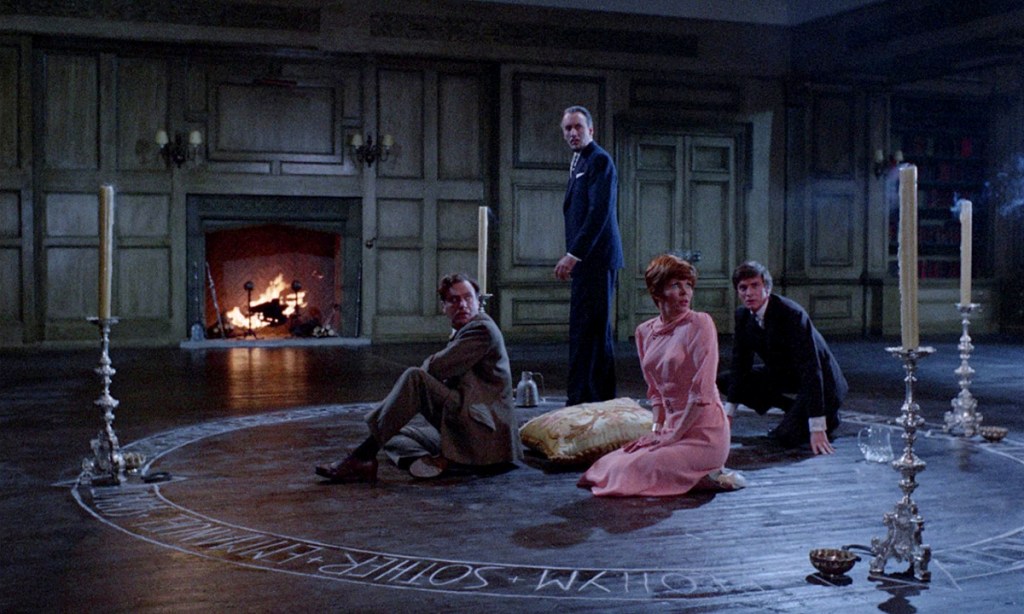
Christopher Lee is simultaneously giving Vincent Price and Rupert Giles as the no-nonsense expert on the occult, and he is such a magnetic presence on screen that it’s hard to focus on anyone else whenever he is on. Rex is however fucking useless… They both make some questionable choices though – who thought it was a good idea to bring your Satanic “date” to a house with a young child? And then perform a ritual in the same house, with all the adults safe and sound in the protective circle, but just leave said child asleep in her room? With no protection save the butler??? It’s almost as though they wanted to get rid of Peggy (Landor). Even after she saved them all by breaking the spell/hypnosis placed on her mother by the big bad himself, Mocata (Gray). Still, the two men are extremely good and loyal friends to go through all of this to save the son of their departed homie.

“What was that? You think we should put Peggy in the protective circle with us? Oh, I’m sure she’ll be perfectly fine in her bedroom. Whoever heard of devils and fiends going up the stairs?”

This movie is a tense, fun and scary ride. We loved the sets and the vibe, the performances and the special effects – sometimes it’s nice to see such a classic depiction of the devil himself. We’re also intrigued by the upper classes’ obsession with the occult in the ’60s, particularly the destructive occult, that both this and its sister movie (RB) portray. Are these people rich because they worship? Or do they worship because they are rich..? Perhaps you can only be in a Satanic cult if you have the budget to get a custom made mosaic seal built into your floor? These are the questions that beg answering.

Can we DIY it? How accurate must it be? If we end up summoning a heckhound from one of the minor circles, we honestly wouldn’t mind to be completely honest with you…

We love the British politeness in this as well – the whole “she woke up and tried to strangle me” reminded us a bit of In the Earth (2021), when the main character is trying to persuade the maniac in the woods not to cut off his foot. IYKYK. And we always, always love a good ritual. Love, love, love this!

We’d pay good money to attend this slumberparty

Quote of the day: “I think we’re behaving like a pack of idiots!”

What we learned: Every friend group needs the Nurturer, the Entertainer, the Advocate and the One Who Knows About Devil Worship and Rituals For When a Satanic Cult Inevitably Comes After Someone You Love (the OWKADWRFWSCICASYL).

MVP: Nicholas, Duc de Richleau. And Peggy.

Next time: The Great Silence (1968)

#369 The Boston Strangler

Watched: October 11 2025

Director: Richard Fleischer

Starring: Tony Curtis, Henry Fonda, George Kennedy, Mike Kellin, Hurd Hatfield, Carolyn Conwell, William Marshall

Year: 1968

Runtime: 1h 56min

From 1962 to 1964, Boston was terrorized by a serial killer who raped and murdered women, dubbed “the Boston Strangler”. Albert DeSalvo confessed to the crimes in 1965 and only three years later The Boston Strangler was released, detailing the crimes and the investigation. While this could have been a sensationalized and exploitative movie trying ot cash in on horrific events, it luckily comes across as a respectful and very accurate portrayal of a horrible case of serial murder.

It’s still gruesome – don’t get us wrong. Just not overly salacious.

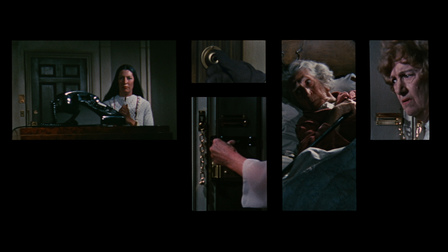
Right from the start, this drew us in. We loved the different angles/framing/multiple images (whatever we should call it – if you’ve seen the film you understand what we mean) used throughout the film. The first part of the movie depicts the investigation, and we really enjoyed having the focus on the investigators rather than the culprit – let’s highlight the heroes, not the monsters! We appreciated that the sexual violence suffered by the victims was only implied rather than explicitly shown. Fleischer manages to convey the horrific nature of the crimes without sexualizing the scenes, which is something more filmmakers should attempt at times…

This is what we mean by the whole different angles/framing/multiple image-thingy we mentioned. No idea what it’s called, but we loved it!

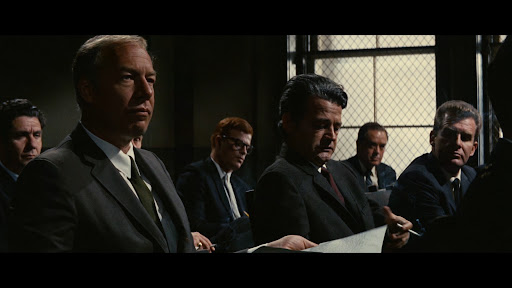
The main investigator, Phil DiNatale, is played by George Kennedy, which we have to admit took some getting used to. We found ourselves waiting for lieutenant Frank Drebin to come along and (hilariously) solve the crime… Instead, he is joined by John Bottomly (Fonda), the newly appointed head of the Strangler task force. It’s always beautiful to see when different branches of law inforcement manage to coordinate their efforts and come together to solve a case.

One might even say they formed some sort of… Police Squad!
…we’ll see ourselves out.

And effort was definitely made! We loved seeing a bunch of creeps being arrested and/or interrogated for doing creepy stuff. Now, we don’t mean to kink shame – you do you, boo – but once you make your kinks someone else’s problem without their consent, you deserve to be made (at least) as uncomfortable as the ones you drag into your sexual fantasies.

Although questioning a man for murder simply for owning the collected works of the Marquis de Sade might be overstepping a bit… Who doesn’t have that on their bookshelf?

Eventually, the POV switches from the investigation to the killer himself. We are brought along as DeSalvo (Curtis) tricks his way into women’s apartments where he sexually assaults and strangles them. But we also get to see his family life, as he was married and had young children at home. Finally, the last part of the movie is focused on his confession and his mental state.

His seemingly normal and happy family life somehow makes the crimes even more unsettling… (Also, side note, his wife looks like Liv Ullmann… Well, Carolyn Conwell, the actress, did at least.)

There’s so much here we loved. Visually, it’s very stylish and cool, and we feel it tells the story without exploiting the victims too much. The Boston Strangler has no score and the silence works really well. It’s also extremely quotable, and we enjoyed the critique of the inherent violence in U.S. society. The pacing is a bit uneven, and the last act felt a bit long and is less engaging than the first part. Still, the final reenactment by DeSalvo/Curtis is very chilling and an unnerving end to an excellent movie.

Turns out making him take a long hard look in the mirror actually had the desired effect. Have we tried this in other interrogations..? Like, really tried it? Has this solution been staring us in the (mirror image of our) face all this time?

Ok, we know this is dodgy, but we love serial killer stories… What can we say – we’re white women, it’s our culture. So we know quite a lot about this case, and as far as we can remember The Boston Strangler is a very accurate depiction of events. There has been a lot of speculation about DeSalvo’s guilt though. Part of his confession contains details that he would be unlikely to know unless he was there, but other in other parts he gets very basic things wrong. However, a few years ago DNA evidence proved his involvement in at least one of the rapes and murders, so he was certainly not entirely innocent. The question remains though – was he the only strangler? Or were there several killers stalking the women of Boston? We may never know for certain.

We only know that thirteen women between the ages of 19 and 85 were sexually assaulted and brutally murdered, possibly by the same perpetrator…

What we learned: As fascinating as we admittedly find them, serial killers are pretty much pathetic in real life…

MVP: Probably Edward W. Brooke (Marshall). Assembling a task force is never wrong. Shoutout to DiNatale and Bottomly as well though!

Next time: The Devil Rides Out (1968)